Fall 2005 Winter 2006
Extra September 2005 Classes
Frequently Asked Questions
Certificate Programs
Special Weekend Programs
Off-site Classes
Special Lecture Series
Fall 2005 Winter 2006 Instructors
Classes Related to Garden Exhibitions
Academic Programs
Policies and Procedures
Registration Form
Email Your Questions
Request a FREE copy of the printed catalog
Directions
Gift Certificates
Subscribe to Grapevine


To register, request a catalog, or for more information
call the Registration Office at 718.817.8747

Designing Your Garden Thursday, October 27
The New York Botanical Garden and Fine Gardening Magazine present this special, one day program. Explore the latest trends in plant material, horticultural techniques, and garden designs.
Click here for details

Botany
Click here for printable
pages from catalog

Botanical studies explore all aspects of plant growth, plant communities,
and the role of plants in ecosystems. Specific areas of botany include natural history, field botany, environmental studies, systematics (plant classification and evolution), floristics (plants of a particular area), and ethnobotany (plants for food, fuel, medicine, and other uses by indigenous cultures).

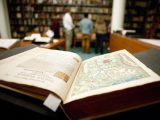
Course offerings reflect the Garden's strengths and research goals in botanical science. The Herbarium (library of dried pressed plants), with seven million specimens, is an international resource for plant taxonomists. The expanded LuEsther T. Mertz Library with its collection of over 775,000 books, slides, magazines, and other items, ranks as one of the finest botanical and horticultural libraries in the world.

The Botany Certificate Program allows students to select one of three areas of concentration: Field Botany (track 1), Plant Systematics (track 2), or Ethnobotany (track 3).

Susan Pell, Ph.D. is the Botany Program Coordinator. She is the Laboratory Manager of the Lewis B. and Dorothy Cullman Program for Molecular Systematics Studies at The New York Botanical Garden. She recently received her Ph.D. in Plant Biology from Louisiana State University in Baton Rouge, La. Dr. Pell studies the evolutionary relationships of the cashew family, Anacardiaceae, and travels worldwide to collect specimens for her research.

Botany Certificate Program
What Is a New York Botanical Garden Certificate?

Botany Certificate Requirements
Code Course/Quarter(s) offered Hours
Field Botany (track 1)
BOT 314 Basic Science Review Workshop/Fall, Winter, Spring
9
BOT 315 Botany I: Basic Concepts/Fall, Winter
20
BOT 316 Botany II: Plant Anatomy and Physiology/Spring
20
BOT 317 Botany III: The Plant Kingdom/Spring
24
BOT 321 Ecology: The Wetland Habitat/Summer
12
BOT 326 Ecology: The Living Forest/Summer
14
BOT 331 Local Flora in Autumn
12
BOT 332 Local Flora in Winter
12
BOT 333 Local Flora in Spring
12
BOT 334 Local Flora in Summer
12
BOT 461 Field Identification of the Algae, Lichens, Fungi,
Mosses & Ferns/Summer
12
  Elective BOT track 1 Certificate course/all quarters
12
  Total
171


Code Course/Quarter(s) offered Hours
Plant Systematics (track 2)
BOT 314 Basic Science Review Workshop/Fall, Winter, Spring
9
BOT 315 Botany I: Basic Concepts/Fall, Winter
20
BOT 316 Botany II: Plant Anatomy and Physiology/Spring
20
BOT 317 Botany III: The Plant Kingdom/Spring
24
BOT 399 General Genetics/Winter
12
BOT 431 Morphology of Flowering Plants/Fall
16
BOT 432 Systematic Botany/Winter
21
BOT 433 Advanced Systematic Botany/Spring
18
BOT 443 Gymnosperm Morphology/Fall
12
BOT 463 Understanding Algae, Lichens, Fungi,
Mosses & Ferns/Spring
12
  Elective BOT track 2 Certificate course/all quarters
20
  Total
187


Code Course/Quarter(s) offered Hours
Ethnobotany: Cultural Uses of Plants (track 3)
BOT 303 Herb Identification/Summer
8
BOT 314 Basic Science Review Workshop/Fall, Winter, Spring
9
BOT 315 Botany I: Basic Concepts/Fall, Winter
20
BOT 316 Botany II: Plant Anatomy and Physiology/Spring
20
BOT 317 Botany III: The Plant Kingdom/Spring
24
BOT 335 Field Botany for Ethnobotanists/Summer
16
BOT 348 Ethnobotany: Cultural Uses of Plants/Summer
20
BOT 359 Cultural Anthropology/Fall
18
BOT 460 Medical Botany/Spring
20
  Elective BOT track 3 Certificate course/all quarters
14
   
  Elective BOT track 2 Certificate course/all quarters
20
  Total
169


Poisonous Plants
About one half of the population of the United States has contact with poison ivy or one of its botanical relatives, poison oak, and poison sumac. This course identifies poison ivy and its relatives as well as other toxic plants in their various forms throughout the seasons. Specimens are displayed, and students explore the Garden grounds to learn, first-hand, which plants to avoid when strolling or hiking.
$44 non-members, $40 members
Susan Pell, Ph.D.
SP BOT 115 Saturday, May 14, 1-4 p.m., Rm. 315

Wildflowers in the Northeast in Autumn
Learn to identify wildflowers found blooming in the Northeastern United States in the autumn. Emphasis is placed on basic plant structure and how identifying characteristics are found in the most common plant families. A slide presentation is followed by an introductory hands-on workshop using live specimens. Class ends with an instructor-led tour of the grounds of the New Canaan Nature Center to discover more wildflowers, weather permitting.
$44 non-members, $40 members
Carol Levine, MS Ed.
SU BOT 135 Tuesday, Sept. 13, 9:30 a.m.-12:30 p.m., New Canaan Nature Center, New Canaan, Conn.

Ecology Walk: Forest Trees and Flowers
Observe and describe tree anatomy and species distribution in the Garden's fifty-acre forest as correlated with topography and different degrees of shade and drought tolerance. Other topics include changes in the forest over time, ecology, and identification of forest flowers. This walk takes place rain or shine. Meet at the Rolex clock by the new reflecting pool at the visitor center at 10 a.m. sharp.
$29 non-members, $ 26 members
William Schiller
SP BOT 136 Section A: Wednesday, April 20, 10 a.m.-12 p.m.
SU BOT 136 Section B: Wednesday, September 28, 10 a.m.-12 p.m.

The Idea of Nature, East and West
"Nature," is a magic word used to sell food products and tourist destinations. But where has our Western concept of "Nature" derived from, philosophically and historically, and where has our distaste for that which is not "Nature" come from? Compare the East Asian concept of the natural, the Tao, and how it has fared in history and modern Asia.
$63 non-members, $57 members
Edwin Morris, MA
SP BOT 140 Sunday, June 5, 1-6 p.m., Rm. 301

Introduction to Plant Science
Certificate Requirement (Commercial Horticulture and Horticultural Therapy Certificates), Classroom Hours: 16
Designed for students who want a user-friendly introduction to plant science, this course surveys the major groups of plants-flowering plants, conifers, ferns, and bryophytes-focusing on plant form and structure. Learn about the relationships between form and function, ecology, systematics, and evolution and become botanically literate. Gain practical experience in dissecting and analyzing plant structures.
$338 non-members, $308 members
(Includes a $10 materials fee)
Gary Lincoff
WI BOT 300 7 Tuesdays, March 29-May 10, Section A: 3-5:20 p.m., Rm. 315, Section B: 6-8:20 p.m., Rm. 315

Herb Identification and Cultural Importance
Certificate Requirement (track 3), Classroom Hours: 8
Learn to recognize the principal families of useful plants and to identify herbs. Investigate both the physical properties of herbs and
their roles within traditional cultures. The ceremonial uses of herbs, and their practical applications as medicinals, aromatics, dyes, detergents, etc. are discussed. The body of herbs and herbalism literature is surveyed. Tours of the Garden grounds are incorporated into instruction.
$164 non-members, $148 members
Ursula Basch
SU BOT 303 Saturday, Sept. 24 and Sunday, Sept. 25, 11 a.m.-3:30 p.m., Rm. 312

Plant Structures for Naturalists
Certificate Elective (all tracks), Classroom Hours: 7
From mosses to oaks, plants have fascinatingly different adaptations to life on land. Learn basic morphology of plants including bryophytes (mosses, liverworts, hornworts), ferns, gymnosperms (plants with cones), and angiosperms (flowering plants) in this hands-on course. This introduction prepares you for taking local flora classes, using plant guide books, or for a curious soul's walking through the woods. Fresh materials for hands-on lab dissection are provided by the instructor.
$152 non-members, $138 members
(Includes a $8 materials fee)
Susan Pell, Ph.D.
SP BOT 306 2 Sundays, May 15 & 22, 12-3:30 p.m., Rm. 315

Basic Science Review Workshop
Certificate Requirement, Classroom Hours: 9
Has it been a while since your last science class? We require this course as preparation for Botany I, but it can also be used as a refresher course on basic laboratory and research techniques. Discuss essential biological concepts and practice hands-on laboratory skills, such as working with dissecting and compound microscopes, and making wet-mount slides with fresh botanical materials.
$192 non-members, $174 members
(Includes a $7 materials fee)
Susan Pell, Ph.D.
SP BOT 314 Section A: 3 Mondays, April 4-18, 6:15-9:15 p.m., Rm. 315
Section B: 3 Wednesdays, April 6-20, 10 a.m.-1 p.m., Rm. 315
Section C: 3 days, Monday-Wednesday, June 13-15, 2-5 p.m. Rm. 315

Botany I: Basic Concepts
Certificate Requirement, Classroom Hours: 20 and College Credit Recommendation
Learn about the basic plant body, from the cell to the main component parts including roots, stems, leaves, flowers, and fruit. Use both dissecting and compound light microscopes to view plant parts. The fundamental chemistry required for understanding how plants function is presented. Prerequisite: BOT 314- Basic Science Review Workshop or approval of the Program Coordinator.
$428 non-members, $398 members
(Includes $8 materials fee)
$45 College credit fee (optional)
Jamie Boyer, MS
SP BOT 315 Section A: 8 Mondays, April 25-June 20, (no class May 30), Exam June 27, 6:15-8:45 p.m., Rm. 315
Holly Porter Morgan
SP BOT 315 Section B: 6 Tuesdays, May 17-June 21, Exam June 28, 1:30-4:50 p.m., Rm. 315

Botany II: Plant Anatomy and Physiology
Certificate Requirement, Classroom Hours: 20 and College Credit Recommendation
This course focuses on plant anatomy and physiology. The role of plant hormones in growth and development are discussed as well as plant movements, water transport through the plant body, and plant metabolism including photosynthesis and respiration (anaerobic and aerobic). All the basic chemistry needed to understand this material is presented in class. Prerequisite: Botany I-BOT 315.
$430 non-members, $400 members
(Includes a $10 materials fee)
$45 College Credit fee (optional)
Margaret Conover, Ph.D.
SP BOT 316 8 Thursdays, April 14-June 2, Exam June 9
Section A: 10 a.m.-12:30 p.m., Rm. 315
Section B: 6:15-8:45 p.m., Rm. 315

Botany III: The Plant Kingdom
Certificate Requirement, Classroom Hours: 24 and College Credit Recommendation
Survey the plant kingdom through the study of morphological, anatomical, and life cycle diversity of the major divisions. An introduction to the principles and mechanics of evolution and classification provides the framework for understanding how these divisions are defined. The fundamental nutrient cycles and ecological concepts are presented. Prerequisite: Botany II-BOT 316.
$509 non-members, $479 members
(Includes a $5 materials fee.)
$45 College credit fee (optional)
Holly Porter Morgan
SP BOT 317 Section A: 8 Tuesdays, April 26-June 14, Exam June 21,
6:15-9:15 p.m., Rm. 320
Section B: 8 Thursdays, June 30-Aug. 18, Exam Aug. 25, 10 a.m.-1 p.m., Rm. 315

Bird Watching: Spring Migration in New York City
Certificate Elective (track 1), Classroom Hours: 12
During April and May, over 200 species of birds pass through New York City. Most of them are en route to breeding grounds north of here, while others stay to nest. Spring birding has charms and challenges, and requires sharp eyes and ears. The course begins with a review of field guides, optics and "birding by ear," then explores a new "hot spot" each week: the Garden, Central Park, and Jamaica Bay. Please bring lunch.
$246 non-members, $222 members
Bradley Klein
SP BOT 318 1 Saturday, April 23, 10 a.m.-2:30 p.m., Rm. 301, and 2 Saturdays, April 30 & May 7, 10 a.m.-2:30 p.m., OFFSITE

Grasses, Sedges, and Rushes
Certificate Elective (track 1), Classroom Hours: 4
Discover the new crop of graceful grass species flowering in autumn in the Northeast. Learn how to identify the wild native grasses and some of the more popular landscaping grasses. Sedges (Cyperaceae) and rushes (Juncaceae), often confused with grasses (Poaceae), are included. Please bring lunch.
$82 non-members, $74 members
Carol Levine, MS Ed.
SU BOT 319 Saturday, Sept. 10, 10 a.m.-2:30 p.m., Rm. 315

Native Wild Plants for the Table
Certificate Elective (track 1), Classroom Hours: 5
Learn about a variety of Northeastern edible plants that are not commonly known today. Many were widely used and even cultivated
in earlier times and are higher in nutritive content than more familiar vegetables. Learn to identify, harvest, and prepare wild foods, including many enjoyed by Native Americans of the Northeast woodlands. Please bring lunch.
$103 non-members, $93 members
Leda Meredith
SP BOT 323 Saturday, June 11, 10 a.m.-3:30 p.m., Rm. 102

Local Flora in Spring
Certificate Requirement (track 1), Classroom Hours: 12
Our native wildflowers, trees, and shrubs are a beautiful sign of rebirth in the spring. Learn to recognize them and become familiar with their structure and taxonomy. Take part in field walks and classroom sessions, and practice using taxonomic keys. Students are required to make their own personal collections of plants and may borrow an herbarium press (a $30 deposit is required).
$253 non-members, $229 members
(Includes a $7 materials fee)
Carol Levine, MS Ed.
SP BOT 333 Section A: 6 Tuesdays, April 12-May 17, 10 a.m.-12 p.m., Rm. 315
Section B: 6 Saturdays, April 16-May 21, 10 a.m.-12 p.m., Rm. 315

Local Flora in Summer
Certificate Requirement (track 1), Classroom Hours: 12
Learn to recognize native and introduced herbs, ferns, shrubs, and trees as they appear in summer, and get to know plants which may be found in fields, on roadsides, and in woodlands and wetlands. While identifying local plants, learn about basic plant structure, taxonomy, and making your own plant collections. You may borrow an herbarium press (a $30 deposit is required). Please bring sunscreen.
$246 non-members, $222 members
Gary Lincoff
SU BOT 334 Section A: Tuesday-Friday, July 12-15, 1:30-4:30 p.m., Rm. 315
Section B: Monday-Thursday, July 25-28, 5-8 p.m., Rm. 312

Field Botany For Ethnobotanists
Certificate Requirement (track 3), Classroom Hours: 16
Learn how to identify both temperate and tropical plants that are used for foods, medicines, clothing, shelter, tools, hunting, art, body decoration, and spiritual purposes. Study and compare Native Americans with native peoples in the Amazon, Andes, India, Madagascar, Siberia, Thailand, and Papua, New Guinea. Lab time is devoted to learning how native peoples identify their plants compared with methods used by modern taxonomists, and how we can benefit from using both approaches.
$336 non-members, $306 members
Gary Lincoff
SU BOT 335 4 Tuesdays, Sept. 6-27, 9:30 a.m.-1:30 p.m., Rm. 315

Exotic Invaders: When Good Plants Go Bad
Certificate Elective Botany (track 1), Gardening and Commercial Horticulture, Classroom Hours: 4
Invasive plants pose the second greatest threat to our native biological diversity, after habitat destruction. Cumulative losses from exotic species in the United States are well over $100 billion. Using the Garden's grounds, find out how invasive plants impact our native ecology, and what can be done to stop them. Learn important plants to avoid, and guidelines for when not to plant species new to your region.
$82 non-members, $74 members
Carol Levine, MS, Ed.
SU BOT 341 2 Saturdays, Sept. 24 & Oct. 1, 10 a.m.-12 p.m., Rm. 315

Ferns and Their Allies in Spring
Certificate Elective (tracks 2 & 3), Classroom Hours: 9
Ferns occur almost everywhere. They are present in nearly all ecological systems, yet ferns and their allies are among the smallest and oldest botanical groups on earth today. Discover fascinating facts, and learn about their natural history and classification as you identify native ferns where they grow. Dress for the weather.
$189 non-members, $171 members
Jamie Boyer, MS
SP BOT 342 3 Wednesdays, May 11-25, 6:15-9:15 p.m., Rm. 312

Ethnobotany: Cultural Uses of Plants
Certificate Requirement (track 3), Classroom Hours: 20
In this course, explore how plants are a part of daily human life, from foods and clothes, to medicines and the homes that we live in. Study the social, historical, cultural, ecological, and economic impacts of people-plant interactions around the world. Topics are plant classification; the major food crops; plants that produce oil, fibers, dyes, and building materials; plants as beverages, spices, and perfumes; medicinal, poisonous, and psychoactive plants; and biotechnology, ethical issues and field methods in ethnobotany. Demonstrations and laboratory exercises are included.
$410 non-members, $380 members
Néstor Pérez-Molière
SU BOT 348 8 Tuesdays, July 12-Aug. 30, 6:15-8:45 p.m., Rm. 315

Botanical Latin
Certificate Elective (BOT and GAR), Classroom Hours: 8
Botanical nomenclature can add a new dimension to your gardening by helping you identify and know plants better. For example, we can infer from the name Portulaca that plants of this genus carry a milky sap, because "portu-" means carry (as in portable) and "-laca" refers to milk (as in lactose). Review rules of nomenclature and pronunciation and learn about the history of the binomial system in use today.
$164 non-members, $148 members
Kenneth DiLorenzo
SP GAR 360 4 Wednesdays, April 6-27, 6:15-8:15 p.m., Rm. 102

Mushroom Mania
Certificate Elective (tracks 1 & 2), Classroom Hours: 12
Labor Day through Halloween is one of the best times to harvest a host of wild mushrooms in our area. Learn how to identify many of these species, how to differentiate edible from poisonous kinds, and where they tend to grow. Survey the great variety of mushrooms in our region and learn the differences between groups of mushrooms, especially look-alikes. An optional past-course trip to Bear Mountain to collect mushrooms can be arranged if a day can be agreed upon and enough cars are available. Bring lunch each day.
$246 non-members, $221 members
Gary Lincoff
SU BOT 361 3 Thursdays, Sept. 8-22, 9:30 a.m.-1:30 p.m., Rm. 315

Medicinal Mushroom Workshop
Certificate Elective (track 3), Classroom Hours: 6
People have been using mushrooms for medicinal purposes throughout time. The 5,000 year old remains of an ice man included a first-aid kit containing a birch tree polypore. Learn how contemporary Chinese and Japanese people use mushrooms to maintain good health and to treat a number of ailments. Explore the nearly 100 medicinal mushrooms that can be found in the United States and learn which can be cultivated. Please bring lunch.
$123 non-members, $111 members
Gary Lincoff
BOT 364 Sunday, Sept. 18, 10 a.m.-4:30 p.m., Rm. 312

History of Botany
Certificate Elective (all tracks), Classroom Hours: 12
Survey the history of botany from its origins in antiquity to the genetically modified plants of today. Explore the connections between the history of botany, medicine, and pharmacology and the relationship with the world's great botanical gardens.
$246 non-members, $221 members
Gary Lincoff
SU BOT 391 4 Thursdays, Sept. 29-Oct. 27 (no class Oct. 13), 10 a.m.-1 p.m., Rm. P201

Advanced Systematic Botany
Certificate Requirement (track 2) and College Credit Recommendation, Classroom Hours: 18
Survey the major families of the angiosperms (flowering plants), the dominant group of organisms on the earth today. Learn the characters and principles used to classify them, differences between grasses and sedges, monocots and dicots, and evolutionary trends in modifications of floral structure and vegetative morphology. Prerequisite: Systematic Botany-BOT 432.
$378 non-members, $348 members
$45 College credit fee (optional)
Kobinah Abdul-Salim, Ph.D.
SP BOT 433 6 Wednesdays, April 6-May 11, Exam May 18, 6:15-9:15 p.m., Rm. 315

Paleobotany: The Origin of Plants
Certificate Elective (track 1 & 2), Classroom Hours: 10
The study of plant evolution through fossil evidence, paleobotany, gives us insights into the earth's past and present flora. Gain a clearer perception about historical patterns of global diversity and climate change. Lectures and slides trace the rise and rapid evolution
of the first land plants through the origin of present-day trees, seeds, and flowering plants.
$205 non-members, $ 185 members
Jamie Boyer, MS
SU BOT 434 4 Wednesdays, Sept. 7-28, 6:15-8:45 p.m., Rm. 315

Medical Botany
Certificate Requirement (track 3), Classroom Hours: 20
Learn about herbal traditions and specific foods and plants to optimize health. Study the basic chemical constituents and medicinal properties of plants. Learn the different ways plants are prepared and used including teas, decoctions, and tinctures. Topics include plants used for digestive, respiratory and circulatory systems, nervous, and immune systems and possible herb-drug interactions.
$425 non-members, $395 members
(Includes a $15 materials fee)
Ursula Basch
SP BOT 460 6 Saturdays, April 9-May 14, Exam May 21, 10 a.m.-1:20 p.m., Rm. 230

Field Identification of the Algae, Lichens, Fungi, Mosses & Ferns
Certificate Requirement (track 1), Classroom Hours: 12 and College Credit Recommendation
Algae, fungi, mosses, hepatics, lichens, ferns, and fern allies are all members of the cryptogams, the seedless plants. In this course, students develop an understanding of the structure of the cryptogamic plants in order to recognize the major groups on sight and to effectively use keys to make more specific identifications. Emphasis is given to the diversity and interrelationships of these groups.
$252 non-members, $227 members
$45 college credit fee (optional)
Gary Lincoff
SU BOT 461 4 Thursdays, Sept. 8-29, Exam Oct. 6, 2:30-5:30 p.m., Rm. 315

Understanding Algae, Lichens, Fungi, Mosses & Ferns
Certificate Requirement (track 2), Classroom Hours: 12
The cryptogams-algae, fungi, lichens, slime molds, mosses, liverworts, ferns, and fern allies-are grouped together on the basis of their lack of seeds. Cryptogams are also responsible for the production of economically important substances. By means of slides and demonstrations, survey major groups of cryptogams and examine their structure, lifecycles, and interrelationships with other plants and animals.
$252 non-members, $227 members
Gary Lincoff
SP BOT 463 4 Fridays, June 3-24, 10 a.m.-1 p.m., Rm. 315

Mosses
Certificate Elective (track 1 &2), Classroom Hours: 9
Mosses are important in the ecosystem as early colonizers of new habitats and indicators of pollution. They also help stabilize soil. These small and beautiful plants are often overlooked by amateur and even professional naturalists. They offer a wealth of varied plants that can
be appreciated year-round. Topics include
the biology of mosses with emphasis on morphological diversity and identification of local mosses.
$189 non-members, $171 members
Jamie Boyer, MS
SP BOT 465 3 Wednesdays, June 1-15, 6:15-9:15 p.m., Rm. 315

Entomology
Certificate Elective (Botany tracks 1 & 2, Commercial Horticulture track 2),
Classroom Hours: 18

Gain a basic understanding of the structure, growth, and development of insects. Learn about their harmful and beneficial effects, and how to control insects and arthropod forms. Learn to collect, identify, classify, and preserve a wide variety of insects. Fieldwork is done on the Garden's grounds.
$393 non-members, $363 members
(Includes a $15 materials fee)
Craig Gibbs
SP BOT 481 6 Wednesdays, June 22-Aug. 3, (no class July 6), Exam Aug. 10, 6:15-9:15 p.m., Rm. 315

Mushroom Cultivation Workshop
Want to give mushroom growing a try? In this combined lecture/hands-on workshop learn about the biology of mushrooms and how it relates to reproduction, the basics of mushroom propagation including sterile culture technique, media preparation, tissue and spore culture, spawn preparation and inoculation, and fruiting. Students produce an Oyster mushroom (Pleurotus ostreatus) kit to take home.
$193 non-members, $177 members
(Includes a $35 materials fee)
Todd Osmundson, MS
SP BOT 910 Saturday, May 21, 9 a.m.-5 p.m., Rm. 315

SPECIAL CLASSES

Walking Tours of New York's Multi-Cultural Neighborhoods
Explore the riches of New York's multi-cultural scene by taking a tour of markets featuring traditional herbs and plants that are specific to a culture or region. Then, have lunch at a local restaurant for a memorable culinary experience. The tours take place rain or shine. Please dress for the weather. The meeting location for each tour will be mailed to you upon registration.

Chinatown in New York
China has been called, "the botanical civilization." In this walking tour of Chinatown we enter this world. See temples, art galleries, tea houses, book stores, and get to know the actual botanicals that fill the apothecary shops, the food stalls, and the restaurant supply houses. Your guide speaks Mandarin and can translate the numerous signs and labels for you. A meal will cap the tour.
$83 non-members, $75 members (Includes a $20 lunch fee)
Edwin Morris, MA
WI BOT 256 Section B: Sunday, March 20, 1-6 p.m.
SP BOT 256 Section A: Sunday, May 15, 1-6 p.m.

Arthur Avenue 'Little Italy of the Bronx'
Discover the history, herbs, and other riches of nearby Belmont,
'The Little Italy of the Bronx.' Tour the main vegetable market, library, cultural center, and Mt. Carmel Church. See fresh pasta being cut to size, enjoy sampling Italian wines and lunch at a local trattoria offering specially prepared samples of authentic Italian home-style cooking. You will be given ample time in the open market to make personal discoveries and purchases.
$83 non-members, $77 members (Includes a $20 lunch fee.)
Valerie Imbruce
WI BOT 276 Saturday, March 12, 10 a.m.-3 p.m.

Botanicas: Specialty Hispanic Markets
Ingredients for Central American, South American, and Caribbean healing remedies are sold in local Botanicas, including the dried and fresh leaves, roots, resins, and seeds of many medicinal plants. Experience the energy of a Botanica by meeting with curanderos (traditional healers) and learn about their healing practices first-hand. Visit ethnic vegetable, fruit, and fish markets, discover the open (street) markets of Fordham Road, and enjoy a classic family style Latino meal in a local restaurant.
$76 non-members, $69 members
(Includes a $20 lunch fee)
Katie and Ryan Huish
WI BOT 277 Section B: Saturday, March 5, 10 a.m.-2:30 p.m.

Tour of Little India
India's rich heritage of healing herbs (Ayurvedic medicine), foods, and aromatic oils has been transplanted into many "little Indias" in this country. This tour takes you to a spectacular example in Jackson Heights, Queens, beginning with Indian masala tea and snacks while we review our itinerary which includes learning about the foods of India, including easy recipes. We experience the languages, clothing, foods, and music, and identify Ayurvedic herbs, healing foods, and spices. You are given ample time to shop. The tour culminates with a delicious vegetarian meal at a local restaurant.
$70 non-members, $65 members
(Includes a $20 lunch fee)
Preety Sengupta
SP BOT 266 Saturday, May 14, 11 a.m.-3 p.m.

Two Classes on Wild Edible Plants
Certificate Elective (track 3), Classroom Hours: 5 for each class
Learn to identify, harvest, and prepare delicious wild foods, including many that were enjoyed by American Indian peoples of the Northeast woodlands. Using the Garden's forest, wetlands, and native plant garden for field identification practice, each class includes information on safe and responsible foraging techniques in both urban and wilderness settings. In each class, students cook and taste foods and beverages made with wild edible plants. Please bring lunch.

Wild Edible Plants in Early Spring
The Spring course focuses on greens, shoots, and edible flowers including dandelions, Japanese knotweed, and violets.
$103 non-members, $93 members
Leda Meredith
SP BOT 337 Sunday, April 17, 11 a.m.-4:30 p.m., Rm. 102

Wild Edible Plants in Late Summer
The late Summer course focuses on fruits, nuts, roots, and aromatic herbs, including elder, ginkgo, evening primrose, and spicebush.
$103 non-members, $93 members
Leda Meredith
SU BOT 340 Saturday, Sept. 24, 10 a.m.-3:30 p.m., Rm. 102

Plants and Environment-An Ecological Perspective

Introduction to Ecology
Certificate Elective (track 1), Classroom Hours: 9
Learn basic ecological field techniques. Study the topics of organisms, populations, and the communities and ecosystems in which they live. Focus on examining inter- and intra-species interactions and studying the relationships between organisms and their environments. Explore what causes these interactions and how they determine species distribution and population size.
$185 non-members, $167 members
Christina Colón, Ph.D.
SP BOT 320 3 Tuesdays, May 10-24, 6:15-9:15 p.m., Rm. P201

Ecology: The Wetland Habitat
Certificate Requirement (track 1), Classroom Hours: 12
Pull on your rubber boots and learn ecology in the Garden's outdoor wetland areas. Learn about the forces that shape the delicate wetland habitat. Develop the skills necessary for stewardship of this often-endangered ecosystem. Please bring lunch and dress for the weather.
$264 non-members, $239 members
(Includes a $12 materials fee)
Kobinah Abdul-Salim, Ph.D.
SP BOT 321 Saturday & Sunday, June 4 & 5, 9:30 a.m.-4 p.m., Rm. 315

Ecology: The Living Forest
Certificate Requirement (track 1), Classroom Hours: 14
Explore the basic principles that influence the ecological relationships of the forest ecosystem. Using the Garden's woodland as a laboratory, study the forces that shape our natural environment-the Northeast Woodland. These labs and lectures provide an experience that expands skills for the stewardship of plants and wildlife. Please bring lunch and dress for the weather.
$306 non-members, $277 members
(Includes a $12 materials fee)
Christina Colón, Ph.D.
SU BOT 326 Saturday & Sunday, Sept. 10 & 11, 9 a.m.-4:30 p.m., Rm. 312


Back to the Top