Examining the John Torrey Papers During #ClimateWeekNYC
Posted in Nuggets from the Archives on September 17, 2019 by Stephen Sinon
Stephen Sinon is the William B. O’Connor Curator of Special Collections, Research and Archives at The New York Botanical Garden.
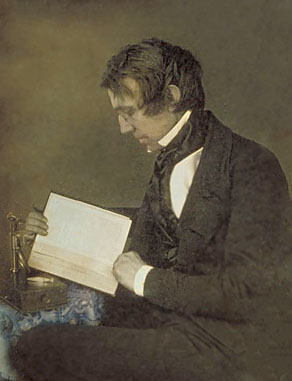
Weissman Preservation Center.
John Torrey is considered one of the most important botanists in the early development of scientific botany, horticulture, and agriculture in 19th-century America. He corresponded with hundreds of scientists, educators, explorers, and natural historians throughout America and Europe, and his wide network of correspondents enabled him to collect, describe, and classify plant specimens from around the world; when comparing Torrey’s accurate records with herbarium specimens and current data, a clear picture arises as to changes in the flora of these regions since his time, due to climate change, urbanization, and other factors. While Torrey’s correspondence contains important information on his botanical work, the documents are also a valuable resource to scholars, students, and members of the public studying American history, including North American expeditions, westward expansion, and the evolution of American science in the 19th century.
The LuEsther T. Mertz Library and Archives of The New York Botanical Garden has embarked on a project to make the John Torrey Papers available online through the Biodiversity Heritage Library. The project began in 2016 with grant funding from the National Endowment for the Humanities and the Carnegie Corporation of New York. Some 10,000 sheets of Torrey’s correspondence—consisting primarily of letters received by him from over 350 individuals—were digitized, then made available for crowd-sourced transcription. Interested volunteers can currently register to transcribe letters in the collection which will then be made available to scholars alongside the digital images.