Inside The New York Botanical Garden
Plant Talk
Posted in Wildlife on February 18 2010, by Plant Talk
Bird Watchers Witness Drama During Weekly Walk
 |
Debbie Becker leads a free bird walk at the Garden every Saturday from 11 a.m. to 12:30 p.m. beginning at the Reflecting Pool in the Leon Levy Visitor Center.
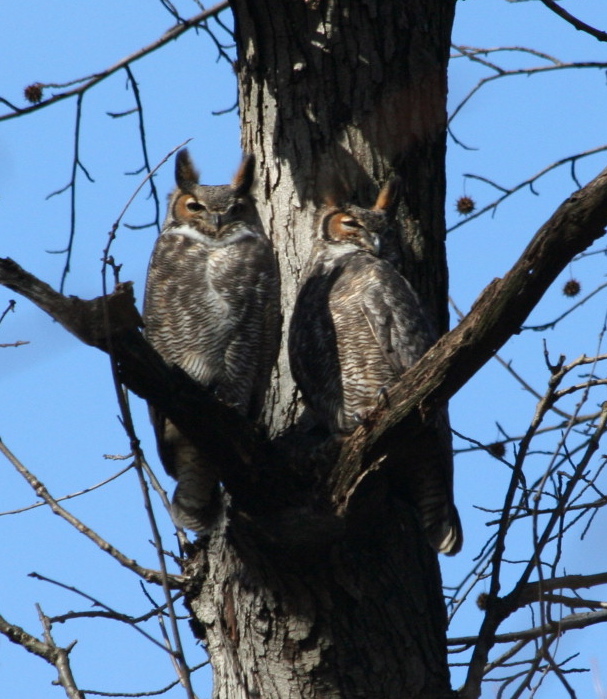
Photo of owls: Debbie Becker
|
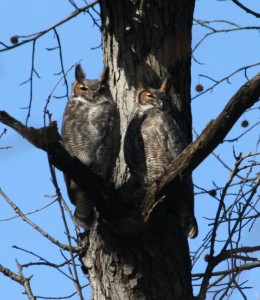 Late last month, in frigid weather conditions, 12 loyal birders met me under the clock at 11 a.m. for the weekly bird walk around the Garden. Our main objective was to see the nesting great horned owls. We headed over to the snag at the Forest’s edge where the owls successfully nested last year, and there in a cavity we saw our resident female owl, all fluffed up sitting, presumably, on eggs—only the top half of her body was visible.
We then searched for the male owl, who usually is nearby, guarding the nest and his mate. Our binoculars scanned the bare branches of surrounding trees until we spotted him wedged between the trunk and a branch of a tree. Three blue jays were harassing him—screeching at the top of their lungs. When one jay got too close, the owl flew to a branch closer to us.
 As we stood there freezing and admiring his majestic beauty a red-tailed hawk flew in and landed about 20 feet away from the owl. This wasn’t any red-tailed hawk—it was the female that nested on the Library building last spring. She and her mate (he later died from eating a poisoned rat) had three offspring; she and her brood often can be seen flying around the Garden searching for prey. We had seen the female many times before, silently perched waiting for some unsuspecting squirrel or rabbit to happen by.
Read More
Posted in Learning Experiences on February 17 2010, by Plant Talk
Looks to Renowned Lecture Speakers for New Ideas
 |
Pamela Davis, a Master Composter with the New York City Compost Project, is a Landscape Design and Environmental Gardening student in the Garden’s Continuing Education Program. |
Now with the winter weather, I am limited to “armchair gardening” until I start my plants by seed indoors next month. Gathering all the gardening catalogs and magazines I received recently, I sat down on my couch with a cup of hot chocolate and proceeded to review them.
The first magazine I looked at was the February/March issue of Organic Gardening. I opened to the “Features” section and noticed there was an article by Barbara Damrosch. I was introduced to her book The Garden Primer as recommended reading for the vegetable gardening class I took in pursuit of my Gardening Certificate through the Continuing Education program. Her book is clear, concise, and full of so much information for beginner and experienced gardeners alike. I read it like a novel! So I just knew that I would be in for a treat reading her article.
Read More
Posted in Uncategorized on February 12 2010, by Plant Talk
Stroll the warm greenhouses of the Enid A. Haupt Conservatory, take a winter walk in the 50-acre Forest, cuddle up on a brisk Tram Tour (weather permitting), pick out a gift at Shop in the Garden, and hold hands over a cup of hot chocolate in the cafe. Then go for a wonderful Italian dinner on Arthur Avenue.
The New York Botanical Garden is waiting for you and your Valentine this holiday weekend. The New York Times and the Daily News both list the Garden as among the most romantic places in the city.
Come see for yourself. And then let us know the best spot in the Garden for stealing a kiss!
Posted in Exhibitions on February 11 2010, by Plant Talk
 |
Laura Collier is Marketing Associate at The New York Botanical Garden |
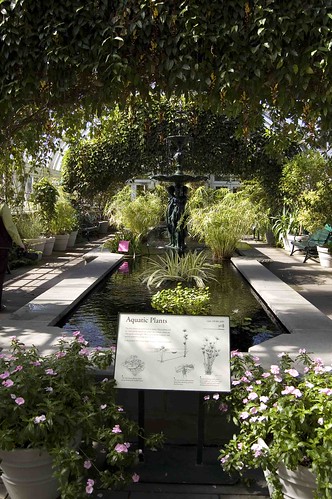 To me, the sound of water is an immediate stress reliever. Walking into the Aquatic Plants and Vines Gallery in A World of Plants in the Enid A. Haupt Conservatory is almost like stepping into a spa or meditation center. Water trickles down the 19th-century French cast-iron fountain of the Three Graces, representing joy, charm, and beauty in Greek mythology. Papyrus, a personal favorite and a plant you probably associate with ancient Egyptian paper, stands energetically at the entrance. These plants can make a great, easy-to-care-for addition to your home if you have a sunny space.
Above the pool, jade and other vines climb up the walls and ceiling of the Gallery. In nature, climbing plants keep moving upward to seek the light, using adhesive pads, hooks, or even roots. In dense forests, climbers need to move quickly to compete with trees for light. Under the glass roof of the Conservatory, there isn’t the need to break through the canopy to find the sun, and the vines are plentiful over lily-pads and other water plants in the pool below.
After wandering through the Deserts of the World and the Tropical Rain Forest Galleries, the benches in the Aquatic Gallery provide an inviting place for a rest. Have a seat and soak in the relaxing atmosphere for a moment.
Get Your Tickets
Posted in Learning Experiences on February 10 2010, by Plant Talk
 Carol Capobianco is Editorial Content Manager at The New York Botanical Garden.
Liz Costa, Associate Vice President for Corporate and Foundation Relations, and her husband, Rob Yagley, moved in to their own home in September. Their small yard is framed by several trees, which can be challenging to landscape. As their first spring planting season approaches, they decided to seek help from the Botanical Garden’s Continuing Education program.
So both signed up for this Saturday’s Shade Gardening event—a day of classes for gardeners who want to understand the different levels of shade, design shade gardens, choose appropriate plants, and more. Liz and her husband have even split up the chores—she’ll attend three of the six sessions offered and he the other three so that they cover all the topics.
“As apartment dwellers most of our lives, we knew we needed help with our new yard, especially with gardening in the shade,” said Liz. “When we spotted the six different sessions offered on one Saturday, we knew we found the best way to start thinking about our shady spot!”
To find out more about Shade Gardening Saturday or to register, click here and search “shade garden” or call 718.817.8747.
Posted in Learning Experiences on February 9 2010, by Plant Talk
Author of The Garden Primer Encourages Growing Food Year-Round
 |
Barbara Damrosch, author of the recently revised The Garden Primer, writes a weekly column for The Washington Post and has designed display food gardens at Stone Barns Center in Westchester. She will discuss growing food year-round as part of the From the Ground Up Lecture Series on February 18. |
 The anticipation of flavor is the best appetite stimulant, as all kitchen gardeners know. It’s one thing to look forward to a meal, or a favorite dish. But a favorite crop in the ground is even more tantalizing.
The global supermarket cornucopia dulls the appetite by making every food available. Cooks can make any recipe, at any time, just by tossing ingredients into a cart. As a result, they rarely know seasonal tastes like those of garden peas, sown in early spring and harvested after long anticipation, bursting with sweetness as only fresh-picked peas can. Or the juiciness of the first red, ripe tomato, warm on the vine. Or the first corn, the first melon, the zing of sprightly fall greens such as arugula or mache.
Read More
Posted in Wildlife on February 5 2010, by Plant Talk
Owls on Nest Once Again, Waterfowl Add Color to Gray Days
|
Debbie Becker leads a free bird walk at the Garden every Saturday from 11 a.m. to 12:30 p.m. beginning at the Reflecting Pool in the Leon Levy Visitor Center.
Photos: Debbie Becker
|
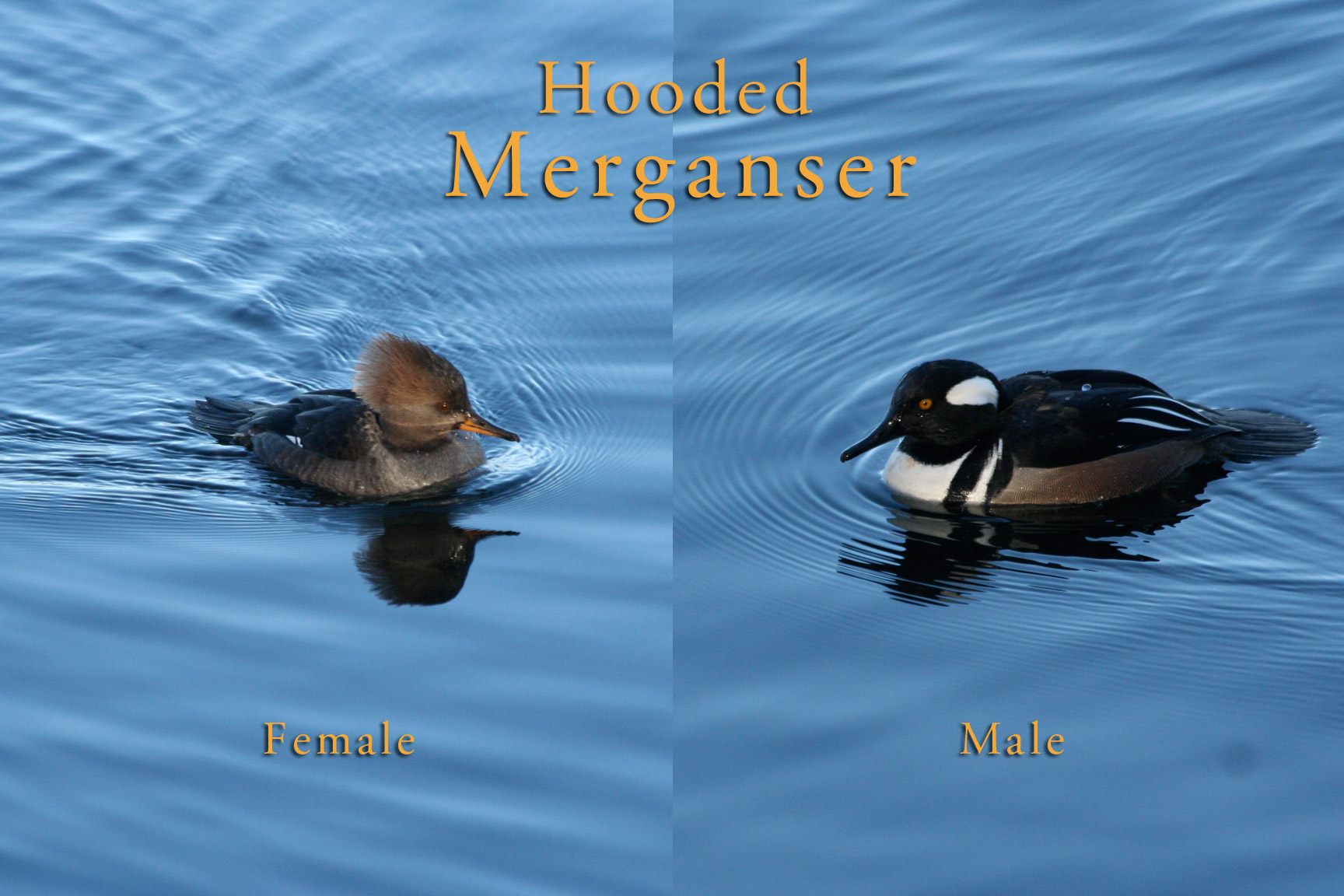
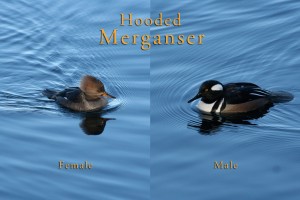 Winter holds its best birding in two areas: owls and ducks. Right now the great horned owls at NYBG are sitting on their nest ready to bring forth a new brood of owlets to delight and amaze us. Anticipated arrival time is the end of February. In the meantime, wander down to the Bronx River and observe the wonderful world of waterfowl on the river. Wood ducks, mallards, one farm duck, and several hooded mergansers have been present on the Bronx River. Ducks are fun to watch, and their brightly-hued feathers add color to gray winter days.
The mergansers can be seen diving under the water searching for small fish and insects. The male’s white crest becomes erect when danger is near or when trying to attract a female during mating season. The females sport a funky spiked hairdo, but their crests are burgundy and subtle. The males often bob their heads in territorial display and are silent most the time.
Read More
Posted in Exhibitions on February 4 2010, by Plant Talk
|
Laura Collier is Marketing Associate at The New York Botanical Garden |
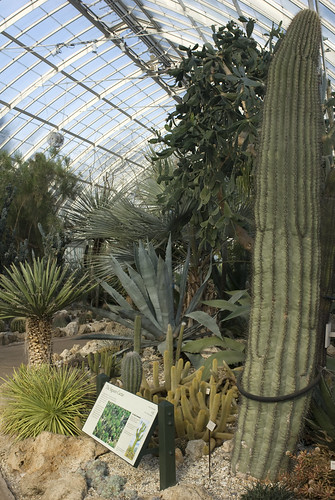 Deserts cover about a third of the Earth’s surface but are so extreme that just about 5 percent of the world’s population live there. That doesn’t make them devoid of plant life. Quite to the contrary, thousands of plant species have adapted survival techniques, like sun protection and water storage, to be able to live in the desert climate, and you can see some of these in the Deserts of the World Gallery in A World of Plants in the Enid A. Haupt Conservatory.
Cacti, the plants we typically think of when talking about deserts, come in many shapes and sizes. One of the most famous in the United States is the saguaro of the Sonoran Desert in the southwestern part of the country. Saguaros can grow to 50 feet tall with roots extending 100 feet into the ground, and can live up to 200 years. These giants play an important role in the desert, providing food and shelter for animals, insects, and birds.
Read More
Posted in Exhibitions, The Orchid Show on February 3 2010, by Plant Talk
Designer Visits from Florida to View Progress of Installation
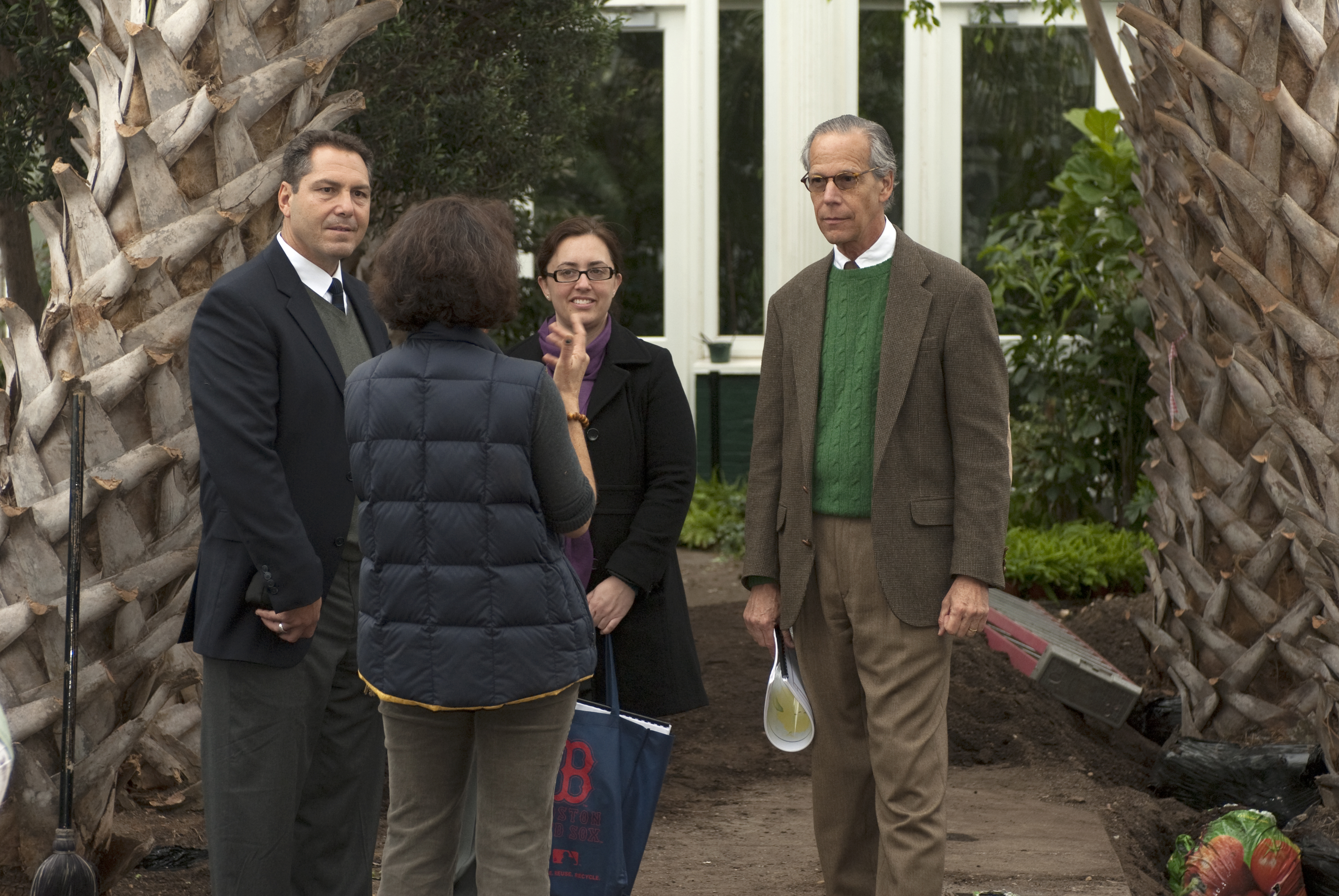
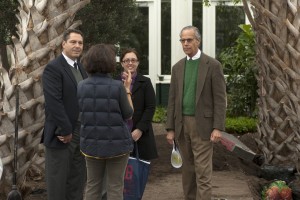 Jorge Sánchez (right), designer of The Orchid Show: Cuba in Flower, and John C. Lubischer (left), Senior Associate of the Palm Beach-based landscape architectural firm Sánchez & Maddux, visited the Botanical Garden last week to view the progress of the installation, which includes an allée of palm trees, a sugar mill ruin, and other iconic vignettes of Old Havana and the Cuban countryside—amid fabulous orchids. “All the pieces are fitting into place flawlessly—with grace and good humor,” Jorge said. “What a pleasure to be working with such a well-organized group.” Here he talks with Garden staff Francisca Coelho, Senior Curator and Associate Vice President for Glasshouses and Exhibitions (back to camera), and Karen Daubmann, Director of Exhibitions and Seasonal Displays, in the Enid A. Haupt Conservatory, where the exhibition will run from February 27 through April 11.
Get Your Tickets
Posted in Learning Experiences on February 2 2010, by Plant Talk
GEAR UP Introduces Students to Careers in Plant Sciences
 |
Yadana Desmond is Program Coordinator and Instructor for the GEAR UP program at the Botanical Garden. |
It was a cold Saturday morning in January, a day off for most students, but 27 ninth graders from area high schools were intently studying the artwork in the gallery exhibition of the LuEsther T. Mertz Library and the plants in the Garden’s Enid A. Haupt Conservatory, absorbing every detail to later create their own ink and watercolor illustrations. In the afternoon they would go on to make cell and anatomical observations of plant slides under the microscope. And this was just Day 1 of the 9-session course.
It was all part of GEAR UP, a federal initiative administered locally by the Bronx Institute at Lehman College that partners with community institutions such as the Botanical Garden to prepare middle and high school students for college and careers.
Read More
 Late last month, in frigid weather conditions, 12 loyal birders met me under the clock at 11 a.m. for the weekly bird walk around the Garden. Our main objective was to see the nesting great horned owls. We headed over to the snag at the Forest’s edge where the owls successfully nested last year, and there in a cavity we saw our resident female owl, all fluffed up sitting, presumably, on eggs—only the top half of her body was visible.