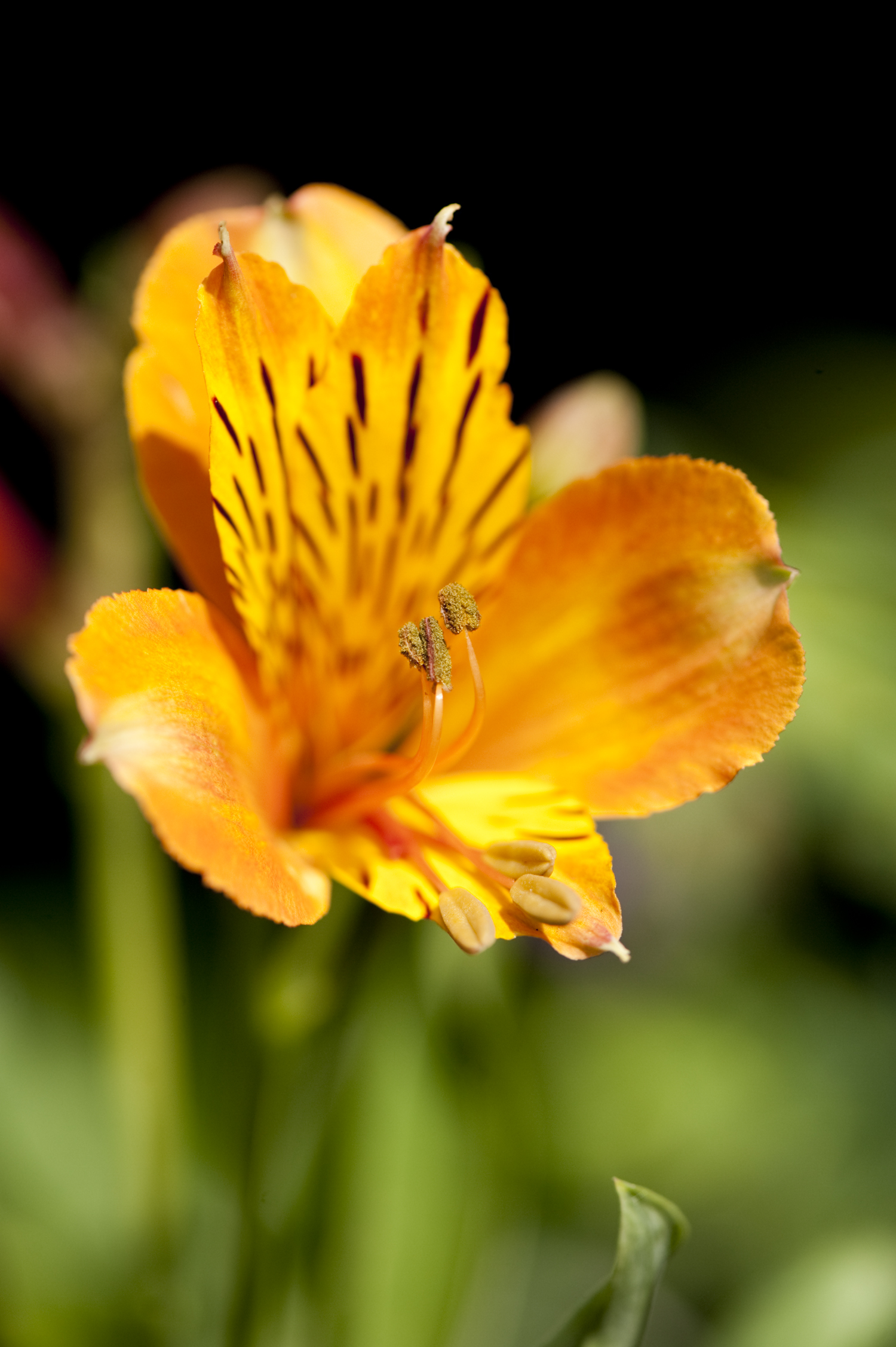
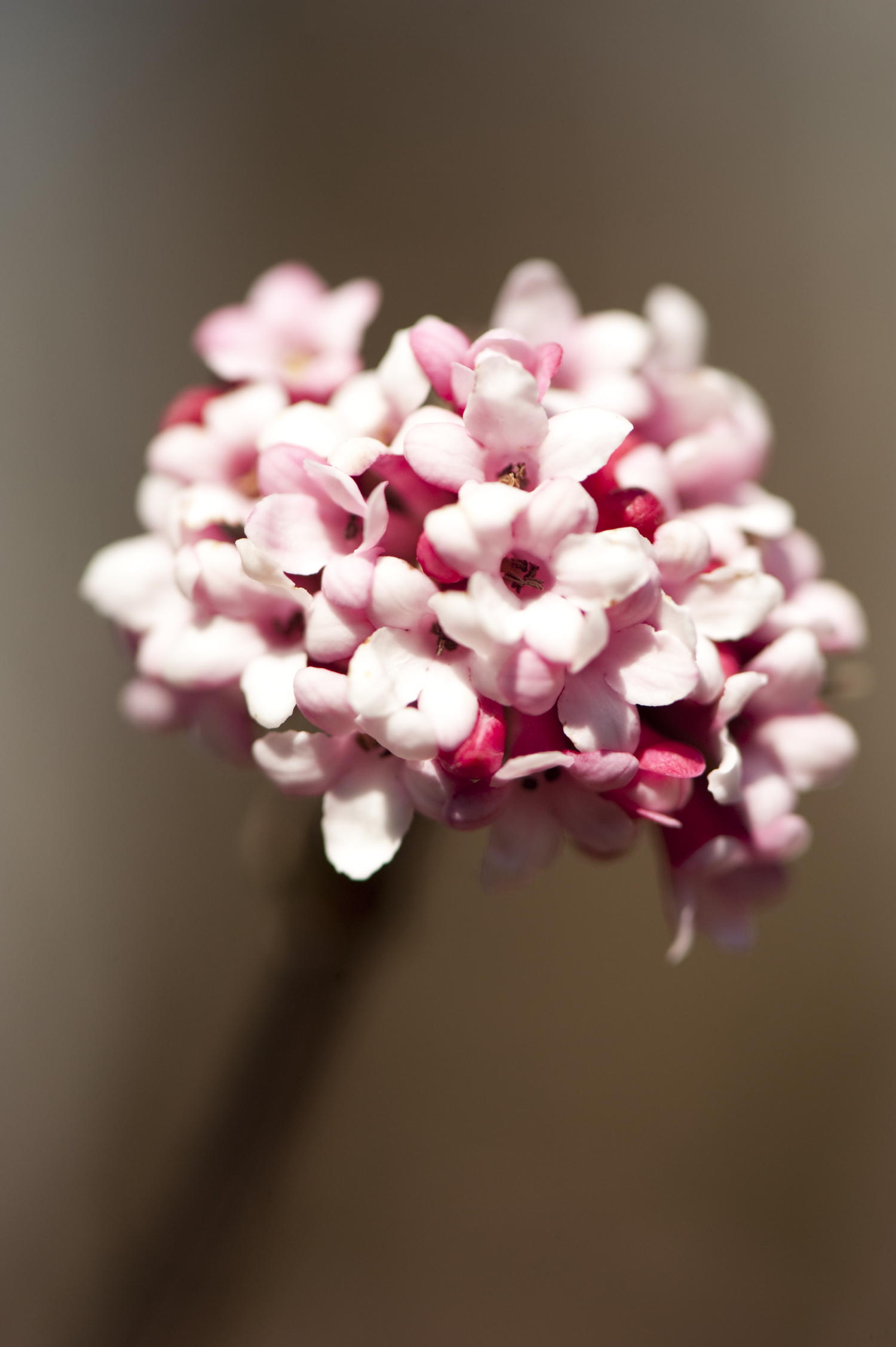
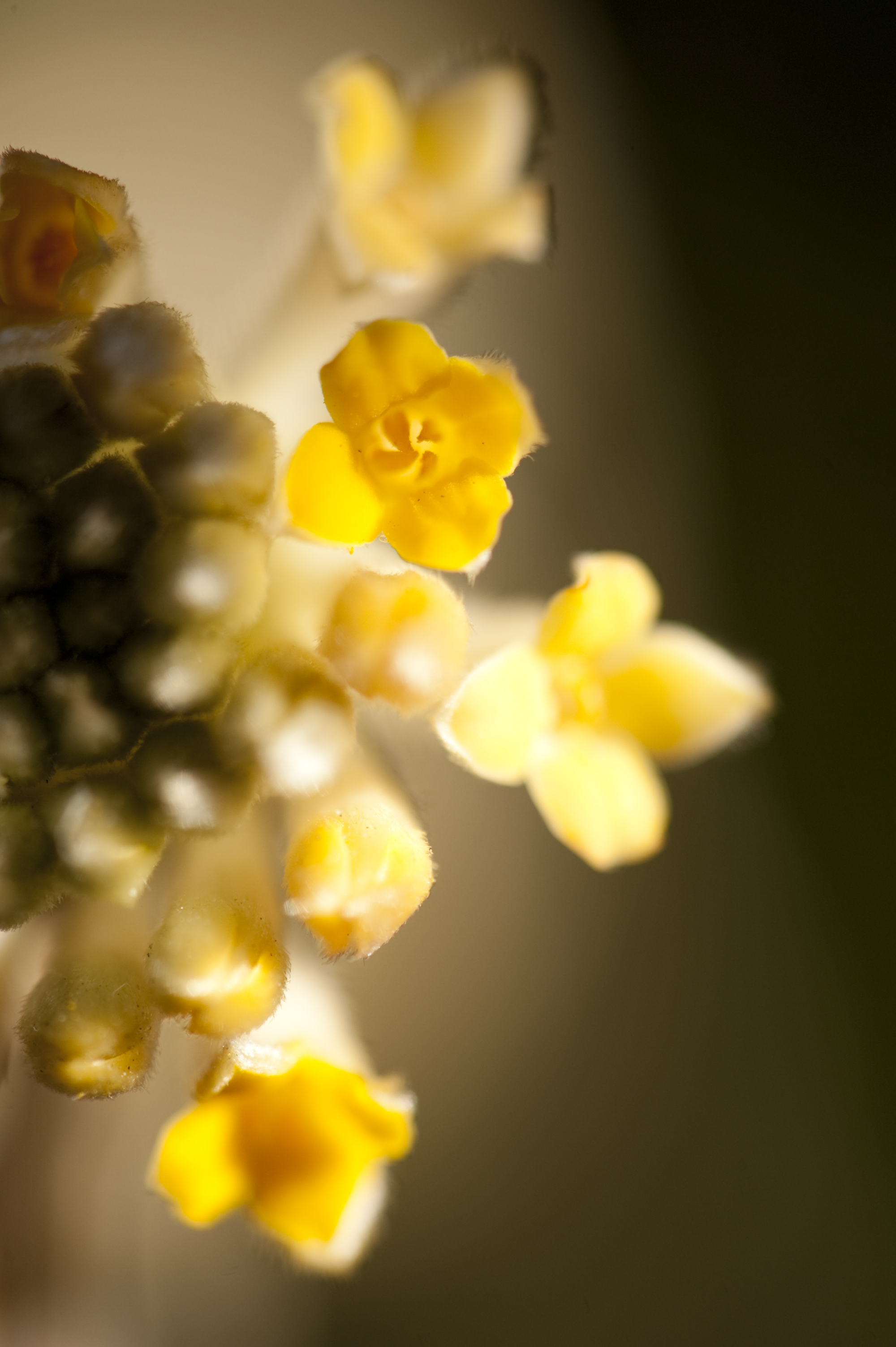
A maroon-flecked princess lily may have the irises flush with envy in the Ladies’ Border. Not only does this Californian cultivar boast a name just as warm, sweet, and spirited as its color suggests, but in the right light, a group of them cuts a figure like an angelic brass section.
Alstroemeria ‘The Third Harmonic’ — Photo by Ivo M. Vermeulen
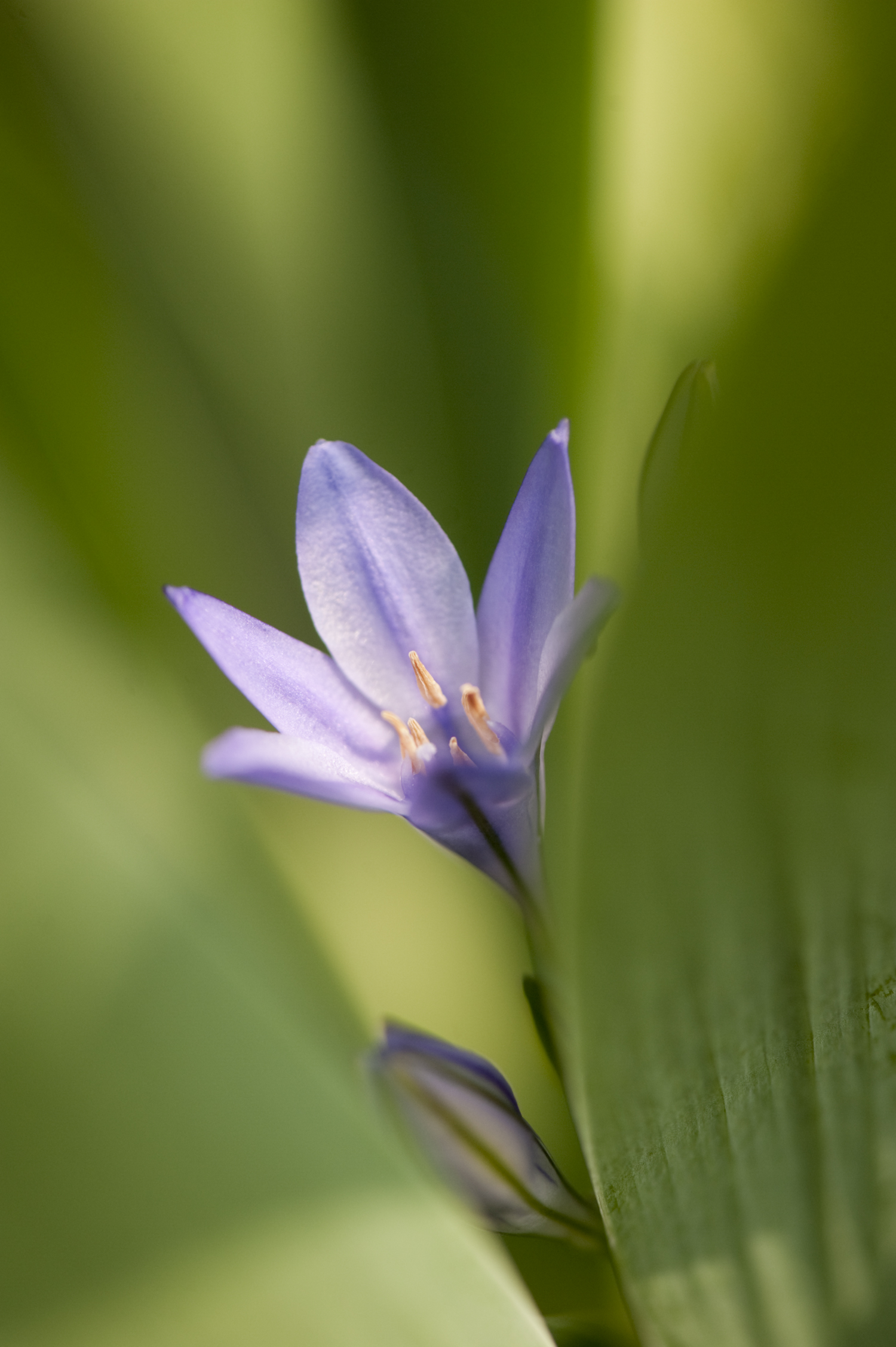
There’s Ladies’ Border beauty on deck this morning. While “Ithuriel’s Spear” (wonderfully pretentious Milton reference, pleasantly humble flower) is a triple lily native to California and parts of Oregon, it’s just as content to settle down in our little plot alongside the Conservatory. There’s so much expat elegance growing along the Border right about now.
Triteleia laxa ‘Koningin Fabiola’ — Photo by Ivo M. Vermeulen
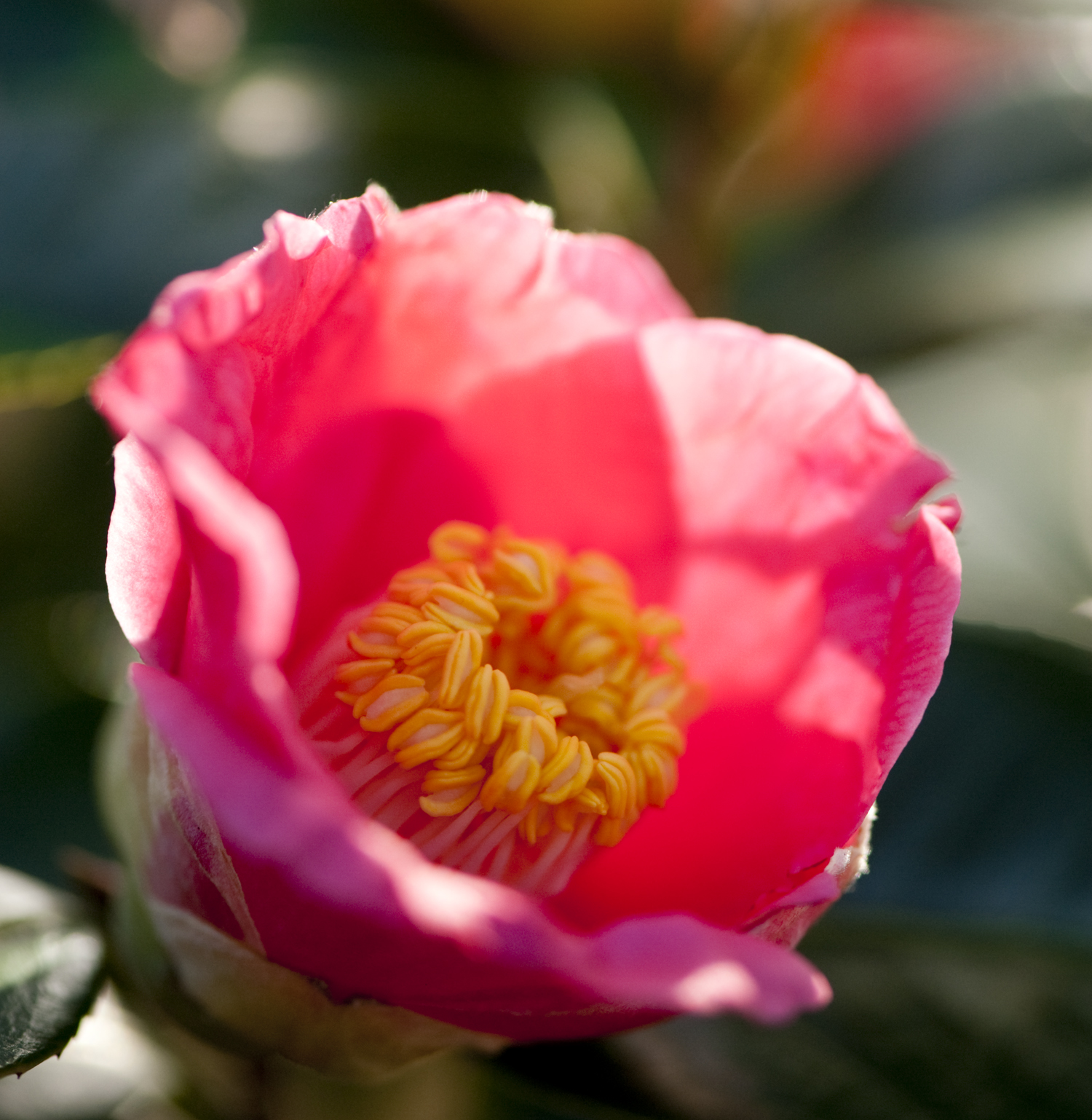
The soft face of the camellia flower springs up so often on Plant Talk that I’m absolutely flabbergasted we haven’t taken a closer look at the genus before. In the fall, a few cultivars soldiered on past fluke blizzards and nippy temperatures to keep their flowers until November. And true to that form, the winter camellias have proven some of the earliest bloomers along the Ladies’ Border. I’d personally put them on the All-Star team of botanical beauties if we were ever so ridiculous as to create such a thing.
The colors and outline of this evergreen’s flowers play on the same aesthetic fascination that many find in cherry blossoms, or the Chinese plum–the camellia is a staple of Asian artwork. And rightfully so. The range of the genus extends from the Himalayas east through Japan, and south to Indonesia. From these regions it has inevitably spread, earning fame and adoration among horticulturists, with as many as 200 species establishing themselves for their ornamental value from one side of the world to the other. But as pageant-winners go, the camellia is especially talented.
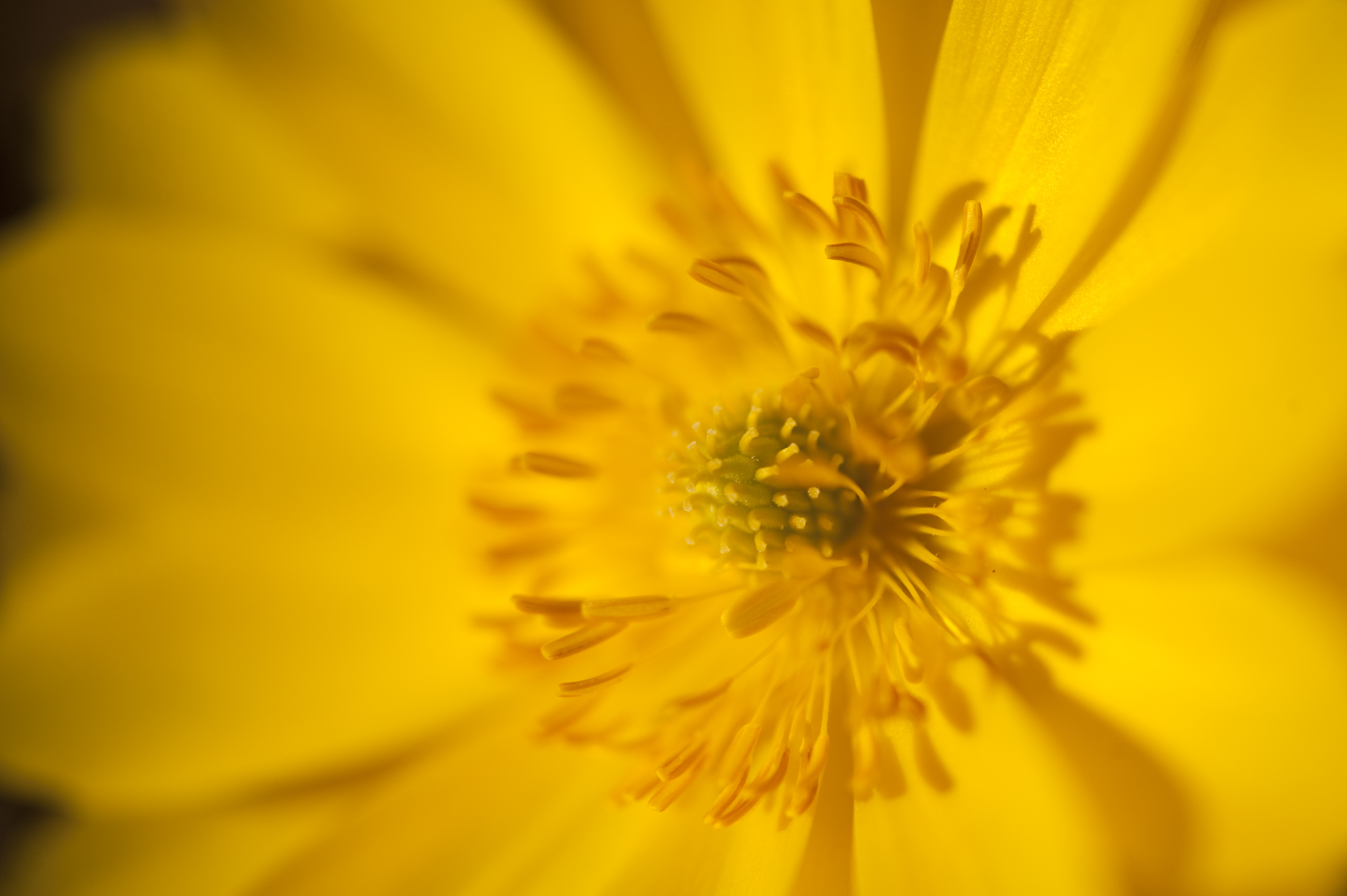
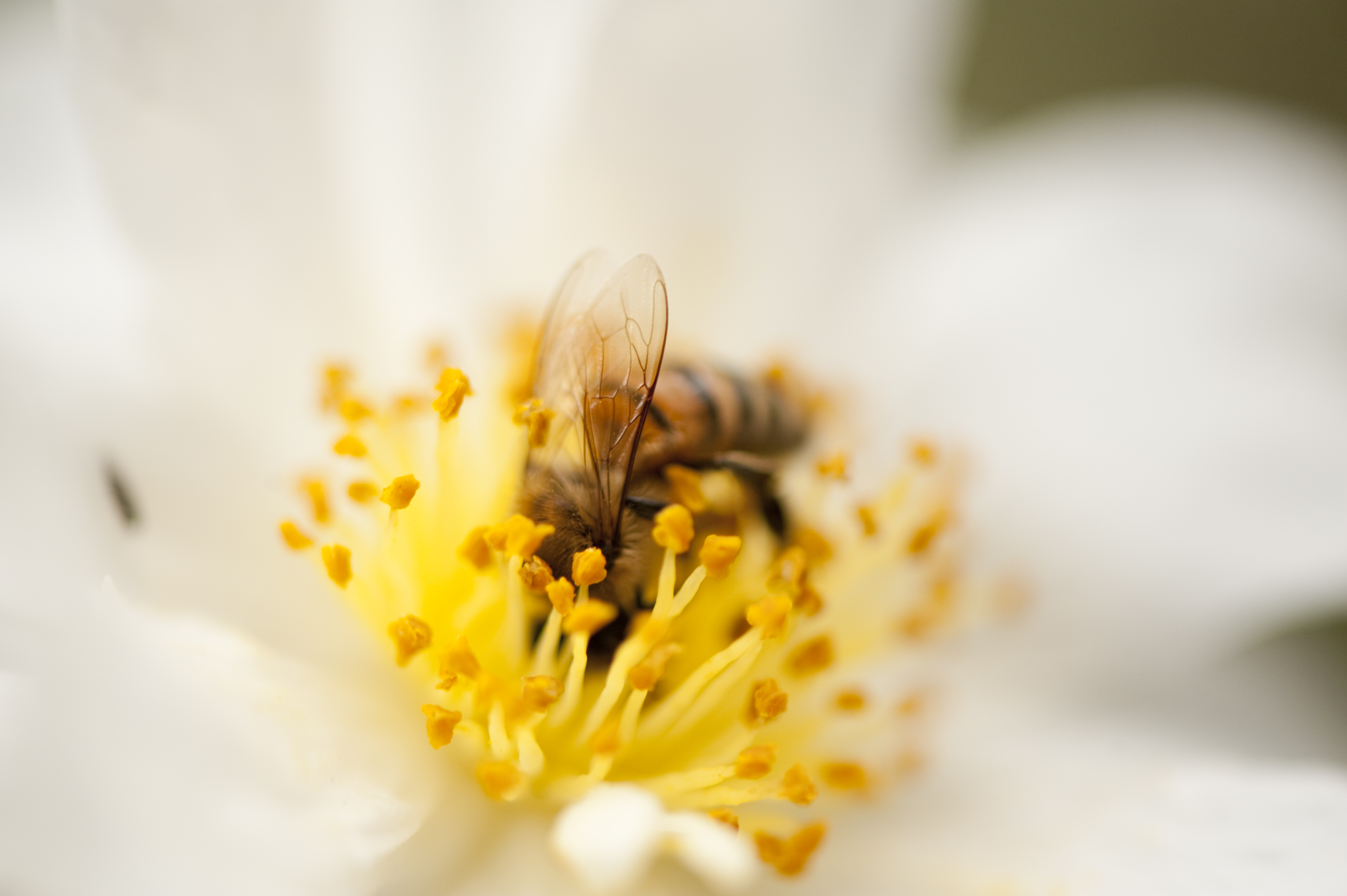
I meandered over to the Ladies’ Border during Wednesday’s weather (an April afternoon straight out of the bizarro dimension) to get a picture of these small but potent blooms. There was a squadron of honey bees taking advantage of the inflorescence while I was there. Hawks called overhead. It was all very picturesque. But airborne raptors and a fairytale setting do not a photo make. Ivo’s skill with a lens does the Amur Adonis proper justice.
Gloves, hat, scarf–I brought none of these things when I went wandering the Garden during lunch yesterday. The climate was just so perfectly suited to a stroll. And the greatest benefit of working at the NYBG is that–no matter the climate–there’s something out on the grounds worth visiting. It’s true there’s no luck of a permanent spring with buds and blooms sprouting up from corner to corner, but winter has its own subtle and touching charm.
This season’s odd patterns of sun and darkness make for confusing daytime walkabouts; I hadn’t expected to step out of the office at 3 p.m. only to find dusk creeping along at the edges of the afternoon. Adjusting to this kind of Norse winter is a slow process. (Being a southerner, anything north of Georgia is practically Norway to me.) But I decided that I was already out and about, and despite the settling dark I was going to soak up as much enjoyment as I could from the remains of the day.
The Ladies’ Border is a unique element here at The New York Botanical Garden, a ribbon of lavish growth snugged in alongside the Enid A. Haupt Conservatory like a well-kept secret. Walking along its narrow pathway, you pick up on a quiet sense of privacy afforded by the tall plants and trees on either side, thriving camellias and low-slung mountain pines blotting out the world beyond to bring the space into focus.
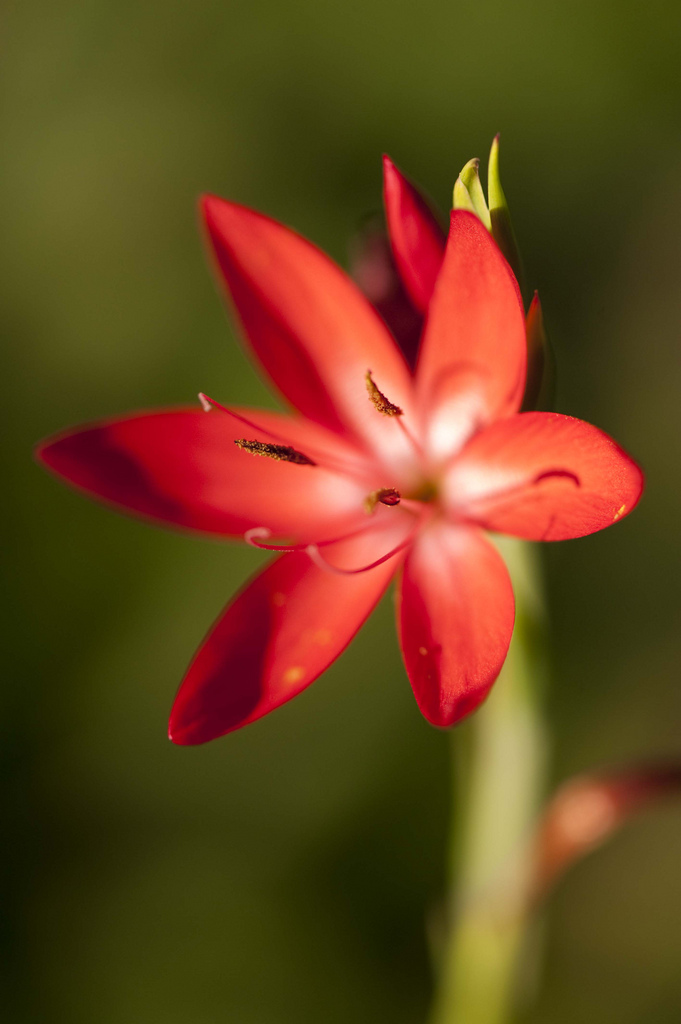
Part of that has to do with the location itself; the Ladies’ Border exists as a chance for the NYBG’s gardeners to make use of their own daring creativity, owing to the spot’s placement between the Conservatory and a rising berm on the opposing side. Together these buffers cradle a sanctuary with its own subtle microclimate, protected from the elements and always slightly warmer than its surroundings–enough so that non-native plants can occasionally thrive here in New York. This is where we find Hesperantha coccinea, blooming and vivid in spite of the weather.