Inside The New York Botanical Garden
Learning Experiences
Posted in Learning Experiences, People on July 21 2009, by Plant Talk
 |
Ashley Burke is a second-year student in the School of Professional Horticulture. She is doing her required six-month internship at the High Line in Manhattan, a recently completed elevated public park built on a former rail bed. The School’s internship program is designed to allow students to synthesize and apply what they’ve learned, expand their skills by providing further training in a professional horticulture venue, and expose them to the multiple facets of the field. Ashley sent us this report. |
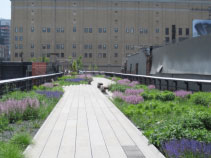 Interning at the High Line, a park on the Lower Westside of Manhattan that opened on June 9, has given me an unparalleled opportunity to observe and learn about how a city park is created.
I began working at the park in mid-April and as such, have been exposed to various elements of the process. Some of my responsibilities have included compiling a master plant list; verifying what has been planted; creating plant identification cards to be used by the public, with plant names, cultural information, native range, and where it is located in the park; and even selecting horticulture tools. Of course, I also had hands-on plant work: The week before opening, we raced against time to weed, water, and prune to get the park ready for visitors.
I also worked extensively with the plans that were drawn up by the landscape architects, field operations, and the landscape designer, Piet Oudolf (who co-designed the current Seasonal Walk at The New York Botanical Garden), and this has allowed me to familiarize myself with the plants being used. Part of this has been to check that each plant species is properly identified, the name is spelled correctly, and that the plants are located where they are indicated on the plan. Through my experiences, I am learning that one cannot design properly without being able to identify the materials one works with.
Read More
Posted in Learning Experiences on July 9 2009, by Plant Talk
Take Classes in Amagansett, Learn Veggie Gardening, and More!
 |
Duncan Himmelman, Ph.D., is Program Manager for Continuing Education. |
I decided to take advanced physics in the months between my junior and senior years in high school, sensing it would give me a slight edge in the college application process and that it would free up my senior year schedule to pursue extracurricular activities. My friends were aghast: “Nerd” had not yet been coined, but I was certainly viewed as the precursor. Yes, it was difficult, both the advanced physics and loss of fun times with friends and family, but it was taught in such an engaging manner that it galvanized my decision to pursue science in college. Summer school was the key to my future! Who knew?
Summer is the ideal time to take on an academic or leisure time educational pursuit. Continuing Education offers a diversity of programming this summer both here at the Garden and in such far flung places as Amagansett on Long Island. Located in the middle of summer-cottage country, the nearby beaches of Amagansett provide spectacular vistas from which to learn the fundamentals of drawing or watercolor painting. If art is not for you, then learn about garden design or growing roses using a totally organic approach. No matter what, combining the leisurely pace of summer life with a fun course or two can be just what the doctor ordered.
If you are staying closer to home, near the Garden, why not enroll in the one-day Vegetable Gardening for Beginners program on Saturday, July 18. In keeping with The Edible Garden celebration and with the current “grow your own garden” craze sweeping the nation, come get the fundamentals needed to grow a bunch of veggies, from soil preparation and seeding to garden maintenance using strictly organic methods. Summer school was never so much fun.
For those who are more serious-minded about summer school courses, consider signing up for one of the Summer Intensives offered in Botanical Art and Illustration or Floral Design. Located here at the Garden, you will be amazed at the many locations where you can gain inspiration for the Illustration courses and actually sit outdoors to draw. Floral Design, an intensive five-week program, brings you from basic floral techniques through the creative process of designing wedding and “grand scale” arrangements. Perhaps, like my physics summer school course, you’ll find it demanding, but it may also be the touchstone you’ve been waiting for!
Posted in Learning Experiences on June 16 2009, by Plant Talk
 |
Peter Couchman is a second-year student in the School of Professional Horticulture. He is doing his required six-month internship at the five-acre Sands Light estate, home to the Sands Point Lighthouse in Port Washington on the north shore of Long Island. The School’s internship program is designed to allow students to synthesize and apply what they’ve learned, expand their skills by providing further training in a professional horticulture venue, and expose them to the multiple facets of the field. Peter sent us this report.
|
One condition of my accepting this internship was to introduce a composting program: Prior to my arrival, there was no composting on the estate. All garden waste was placed in the municipal garbage.
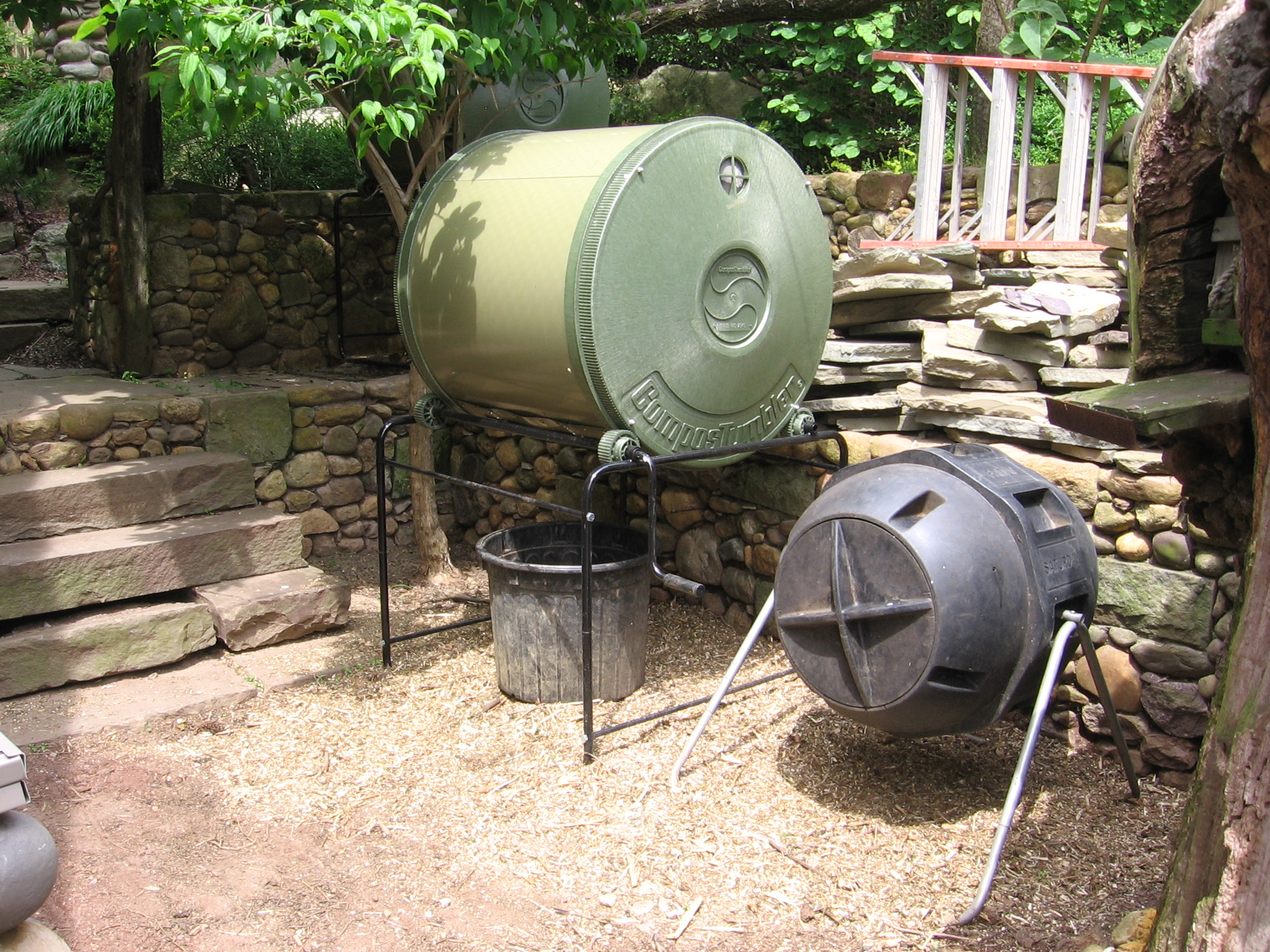
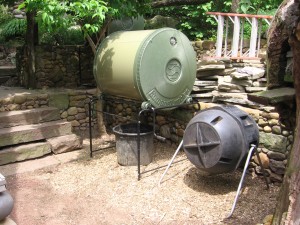 Since my time here, I’m happy to say, I have researched, installed, and implemented a composting facility. With limited space for a compost area, it was important that the facility not be unsightly as it would be close to the house. For that reason, I chose to use compost tumblers, which keep the compost out of sight and are easy to turn and oxygenate. They also keep out wild animals such as the ever-present raccoons. To facilitate the composting process, I established a new wood-chipping area to create a good carbon source of sawdust and woodchips. The main nitrogen source comes from the collected clippings from each week’s lawn mowing. Recently, I began collecting kitchen waste such as eggshells and vegetable and fruit scraps for composting as well. Through composting, we have decreased the amount of waste we place in the municipal garbage by up to 30 percent.
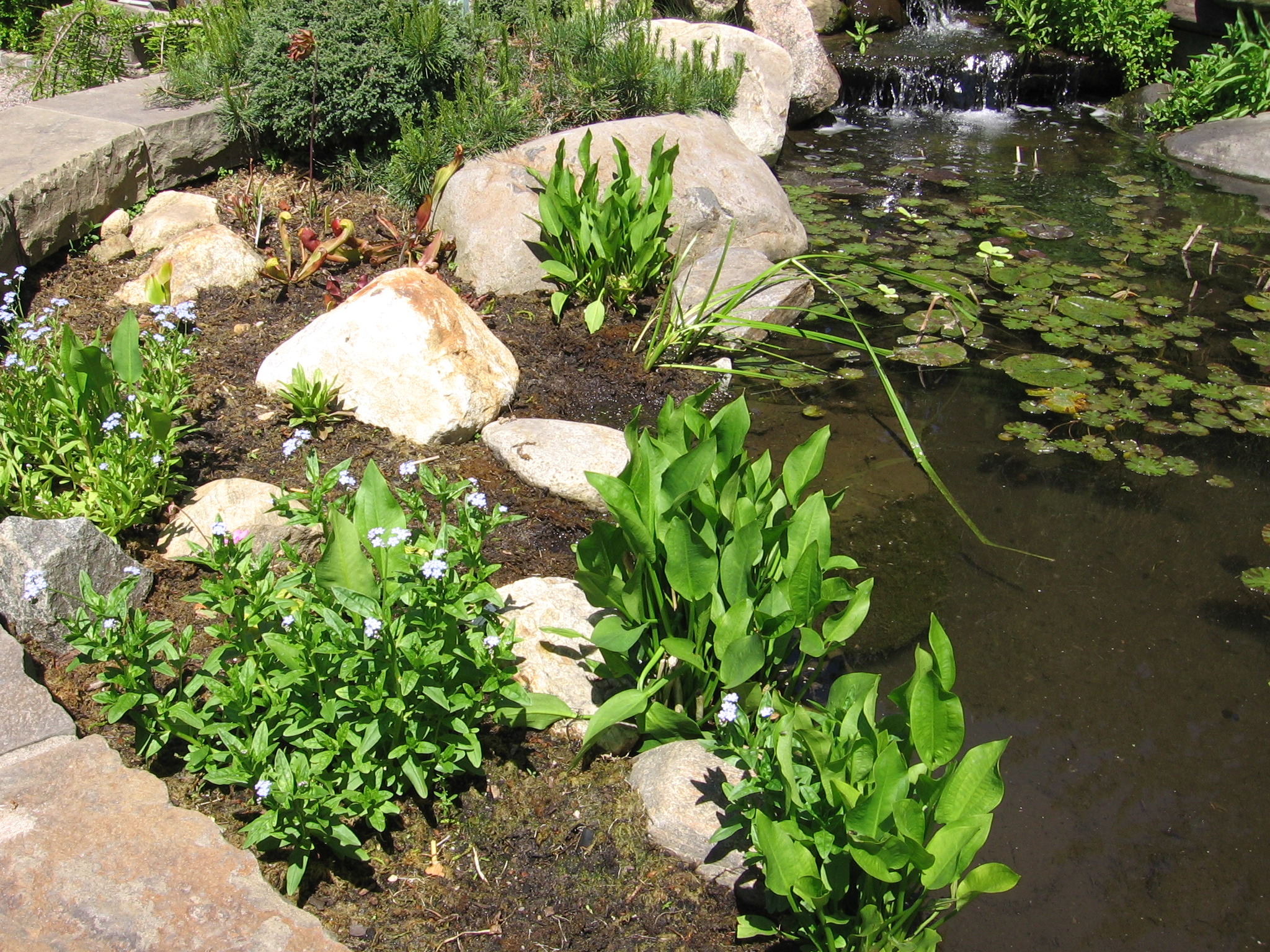
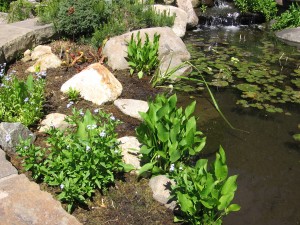 In addition, I designed and installed a new bog garden within an existing pond and waterfall feature. I was able to incorporate Sarracenia leucophylla ‘Tarnok’, Sarracenia purpurea, Iris fulva, Mimulus sp., Pinguicula primuliflora, and other Pinguicula species that the owner already had. We will be adding additional carnivorous and bog plants in the next couple of weeks.
Read More
Posted in Learning Experiences on June 9 2009, by Plant Talk
Monet’s Garden Exposes Subtleties of Color and Light
 |
Christopher Bale is a second-year student in the School of Professional Horticulture. He is doing his required six-month internship at the famous garden at Fondation Claude Monet in Giverny, France, and sent us this report. The School’s internship program is designed to allow students to synthesize and apply what they’ve learned, expand their skills by providing further training in a professional horticulture venue, and expose them to the multiple facets of the field.
|
At the Fondation Claude Monet garden in Giverny, France, I am learning a number of new skills that will serve me in my horticulture career. It is spring, and I am learning about different approaches to spring plantings as well as preparation for summer plantings.
The amazing things about the Monet garden are the subtleties and approaches to the use of color and light. These ideas are reflected in the various areas of the garden and are the design approaches that are the most important aspect of my learning experience.
Daily I am involved in all aspects of horticultural maintenance: pruning, planting, deadheading, and plant production. The new skills I have learned pertain to the day-to-day approaches to management and planning for a garden of this size and stature. I have learned many new plants along with many French common names. Most important has been the strengthening of my knowledge of the distinctions between the Narcissus divisions of the family Amaryllidaceae and the Tulipa types of the Liliaceae.
Posted in Learning Experiences, People on June 3 2009, by Plant Talk
Earns Certificate to Be Awarded at Weekend Ceremony
 |
Stephan Chenault is Director of Science Development. |
This Sunday I will receive my Continuing Education Certificate in Botany. I enrolled in the program soon after joining the Garden’s staff, in August 1998. My decision to study botany was based on a love of nature that dates from my childhood. I still remember my mother taking me on a walk in the woods around Lake George at the age of three and how much I appreciated and was fascinated by acorns, oak leaves, chipmunks, and mushrooms. My goal in pursuing the Botany Certificate was to gain more knowledge of plant life and the natural world so that I would have a key to turn other people on to the natural world.
My past experiences in nature education have been as a counselor and teacher at a camp in New Hampshire. Helping children encounter and enjoy the environment through hikes, nature walks, aquarium- and terrarium-building, gardening, and art has been one of my most rewarding vocations. Later, as a volunteer activist in the Sierra Club, the country’s largest environmental organization, I would participate and help lead hikes with my activist collaborators. Many of these volunteer partners switched careers and became full-time professional environmental leaders, and I, myself, switched careers to take on a position in science fundraising for The New York Botanical Garden.
The knowledge I have gained from being a student in the Continuing Education program has been very helpful to me in understanding the Garden’s scientific programs and describing them to potential donors in the philanthropic community.
Read More
Posted in Learning Experiences on May 28 2009, by Plant Talk
Education Courses Tailor-Made for Groups
 |
Jeff Downing is Vice President for Education.
|
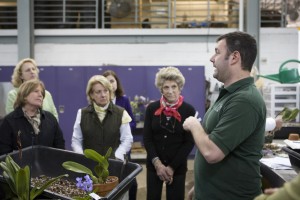 The first time I spoke with Ellen Conrad it was a long phone call. Not in a bad way—there was just a lot to say.
Ellen is the President of the Bedford Garden Club in Westchester County. She called looking for ways to provide high-quality educational content for her club members. With over 500 different courses offered for adults, I assured her that The New York Botanical Garden was certainly a good place to start. I explained that our 300-plus instructors included many of the Garden’s own staff—the world-class horticulturists who bring to life the stunning exhibitions and who care for the collections—in addition to a wide range of professional nurserymen and women, landscape designers, arborists, gardening authors, and others. All have both the knowledge of plant care and the ability to convey these skills in a classroom/workshop environment.
“But that’s just background!” I said. I was getting warmed up.
The Garden had never before customized a curriculum for a Garden Club (at least not in the 10 years I’ve been here), but for some time I had been contemplating the feasibility of such an arrangement. With the array of educational content, instructors, facilities, and resources available, the Garden could ostensibly design a customized curriculum to meet a group’s specific needs, schedule the classes around the group’s availability, and deliver a one-of-a-kind educational experience. All the Bedford Garden Club would need to do is get at least 15 of its members to enroll in the class—“to make it worth the investment of time to develop and schedule a specialized program like this,” I explained. “If you give me 15 students, I can teach you whatever you want. I mean, I could teach you Latin…OK, Botanical Latin, but you get the idea.”
“Wow!” Ellen exclaimed. Now she was as excited as I was. From there the conversation exploded into a dizzying back-and-forth of scheduling concepts, programming ideas, and possible follow-up opportunities down the road if the first course went well.
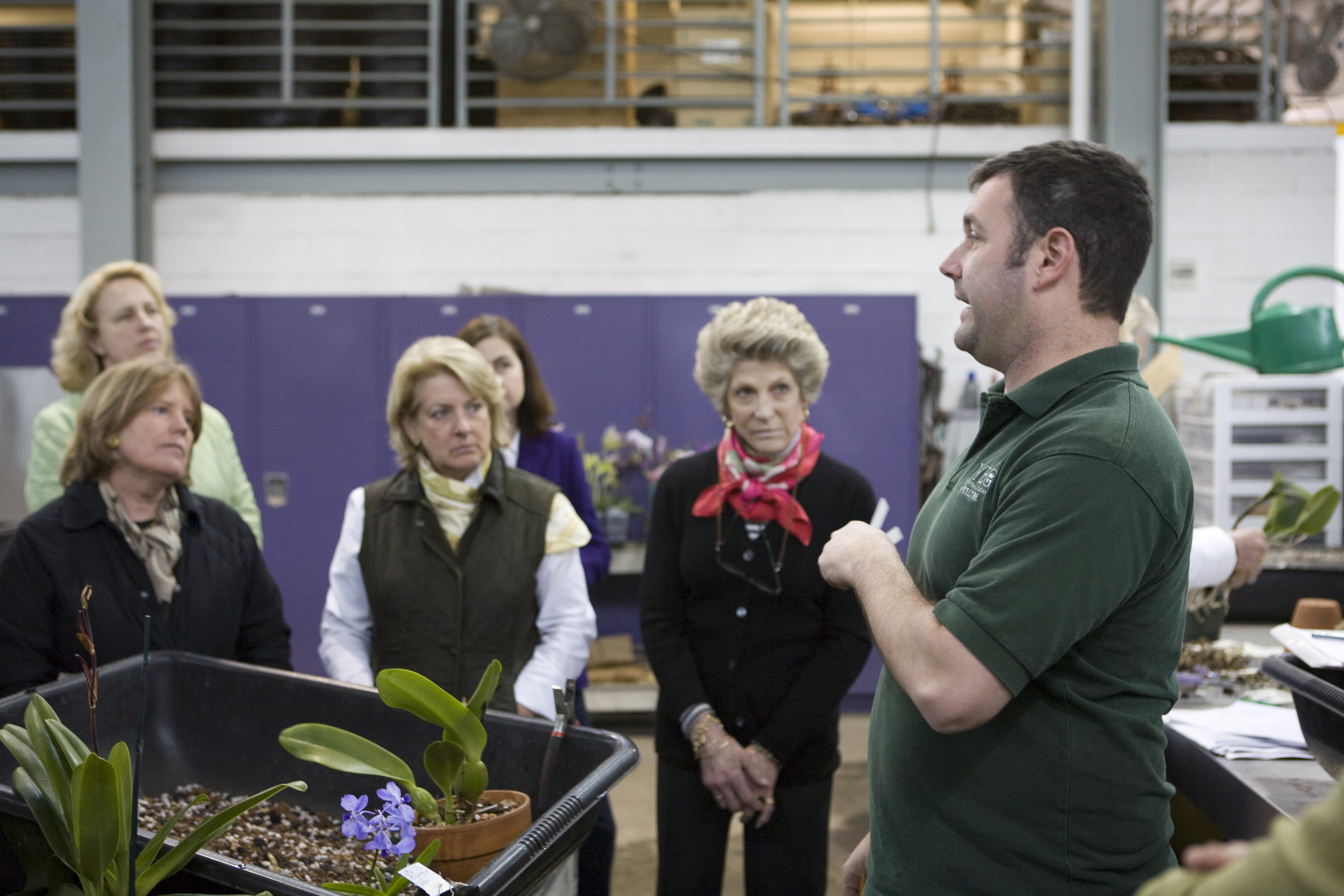
That was almost a year ago. Since then, the Garden has worked closely with the Bedford Garden Club to devise a tailored curriculum around essential horticulture principles within a schedule that accommodated their needs. Todd Forrest, the Garden’s Vice President for Horticulture and Living Collections, arranged a number of unique Curator-led workshops and special behind-the-scenes tours of Garden exhibitions, including The Orchid Show. When the eight-session course was offered last fall and winter, more than 20 club members participated and were enthusiastic about the results.
I saw Ellen Conrad a few weeks ago. I asked her whether the participants had any further thoughts now that they’ve had time to digest and reflect on the experience. “Sure,” she replied. “What’s next?”
To learn more about tailoring a curriculum for your garden club or interested group, contact Duncan Himmelman at 718.817.8741 or dhimmelman@nybg.org.
Posted in Learning Experiences on May 22 2009, by Plant Talk
Explore, Plant, Scavenge, and Create a Field Journal
 |
Andrew Haight is Manager of the Everett Children’s Adventure Garden. |
Many bright ideas were brought to the table when the Children’s Adventure Garden staff first discussed programming for the spring bulb show, The Glory of Dutch Bulbs. Several exciting suggestions emerged from this creative conversation, which gave life to Bulbs Unearthed.
The Everett Children’s Adventure Garden always tries to find new ways for young children and their families to explore nature and plants through their five senses. As a result, the Bulbs Unearthed program provides the youngest learners with a tactile, interactive experience.
Facilitated by members of the Intern Explainer program for teenagers, visitors to the Adventure Garden learn how bulbs are neatly packaged containers of plant parts. When given the right conditions, they will grow into next year’s plants and will flower. After taking a close look at these parts inside the bulb, children can plant their own bulb in a biodegradable pot to take home. Children can also make a field notebook and go on a scavenger hunt around the Adventure Garden to search for signs of bulbs. Then they can complete the activities by making a paper iris flower.
Beyond bulbs, the Adventure Garden is home to many exciting spring awakenings. Sit outside on the benches and watch the robins nesting in the eaves of the Discovery Center or rest beneath the shade of the Pond Pavilion while mallards graze for duckweed or marvel at the caterpillar, ladybug, and frog topiaries. Come and enjoy all of these exciting opportunities with us.
Check out all of Saturday’s programming
Check out all of Sunday’s programming
Posted in Learning Experiences, People on May 12 2009, by Plant Talk
I was an eight-year-old boy growing up in Forest Hills, Queens, when my parents bought a country house. The house was overrun by thickets of wisteria, poison ivy, and weeds, but I used to go out there and just hack away and try to reshape the landscape. I believe that’s where my love for working on the land originated.
When I got to college I studied the natural sciences and art. After graduating I became a magazine art director, working for Time, Sports Illustrated, and Business Week for 25 years. Eventually, I reached that age when you need to figure out what you really want to do when you grow up. I started a personal exploration and one day everything came together. I decided that landscape design was the perfect match for all of my skills, experience, and interests. I could capitalize on my design and drawing skills, my natural science education, and my love for landscaping.
I looked around for different landscape design programs and settled on the program offered by NYBG. It would be difficult to go through the program one course at a time for me since I was living in Connecticut, working in Manhattan, and had a full-time family life. So I gravitated toward the Summer Intensive program. I managed to talk my employer into letting me take all of my vacation time at once.
To learn more about Jay’s career-changing experience…
Read More
Posted in Learning Experiences, People on May 6 2009, by Plant Talk
Graduating from the School of Professional Horticulture (SOPH) is much like any galvanizing event, as now my life is divided in two: “before SOPH” and “after SOPH.” Being a SOPH graduate has validated me as a horticulturist and empowered me to practice my skills with confidence. The two-year program is very intense as you do your best to absorb the endless information, learn from practical experience, and engage in the unique opportunities that are only available through the program.
Be forewarned: This is not an easy program; the commitment is enormous. But beyond what you learn in the course curriculum, it is entirely in your hands to seek out everything possible to make your experience that much richer.
Horticulture runs so deep and so wide that the taste I received from SOPH was only the beginning for me. I have grown in many ways from the foundation I built through the program. I am always looking for new ways to learn and to share my conclusions. My growth has revealed itself in my fascination of soil biology, and promoting its health is my professional philosophy. I am now certified by NOFA (Northeast Organic Farming Association) as an organic land-care professional, making the progressive commitment to practice horticulture in harmony with the environment.
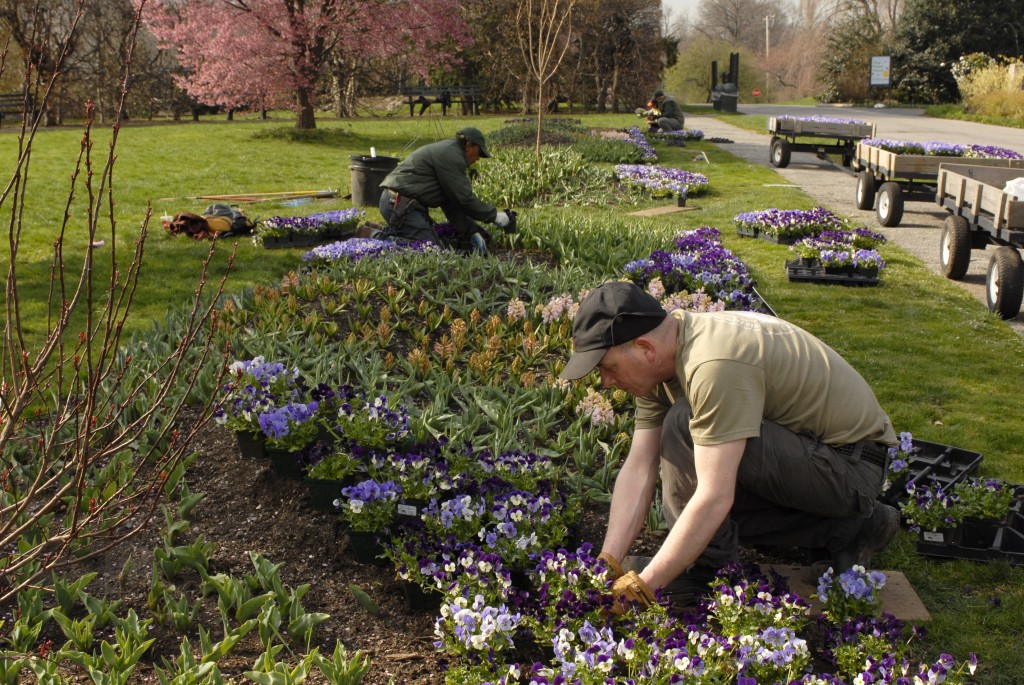
First-year SOPH student John Gunderson (foreground) plants violas in the Class of 2011 Spring Student Garden, located across from the Howell Family Garden.
Thanks to the public speaking classes at SOPH, I have the confidence to give lectures and presentations on garden topics. As a garden communicator, my blog, DirtyHorticulture.com, allows me to reach out to a broad group of gardeners. My consulting and design business, Living Colors Landscape and Gardens, is growing steadily thanks to the passionate clients I’ve acquired.
The climate is changing: not just the environment, but our awareness and actions, too. People are much more aware of their surroundings and are interested in preserving and protecting it. As horticulturists in the 21st century, it is our responsibility to offer comprehensive solutions for private and public spaces that are enjoyable to be in, do not stress our resources, and are prepared and maintained in responsible and accountable ways. We are the natural leaders of this “green revolution,” and so we must be prepared to empower others to follow.
The application deadline for the next SOPH class is August 15.
Posted in Learning Experiences, People on May 5 2009, by Plant Talk
 |
Louis Gagliano, a graduate of Continuing Education’s Floral Design program, is co-owner of Harlem Flo floral atelier, a floral boutique in Manhattan. He will talk about his path to becoming a floral designer at a free Career Information Session on Floral Design, Horticultural Therapy, and Landscape Design on Wednesday, May 13, 6–8 p.m., in the Arthur and Janet Ross Lecture Hall.
|
What is the path that brought you to where you are today? This is always the interesting question people ask when getting to know one another. It may at times be simple and at other times complex. Mine was the latter.
Growing up in a family business, I have always known the responsibility of ownership: Coming in early, leaving late, changing my plans…not the ideal situation but it comes with the territory. Knowing all this, I still chose to open my own floral design business with a partner.
The path to here, though, wasn’t direct. I graduated college with a degree in hotel/resort management and in 1994 went to work for a luxury Hilton hotel. After three years, I heard about this new-ish, booming coffee company called Starbucks and became a manager at one of its stores in New York City. My experience with Starbucks was fantastic and varied. Besides my role as a store manager, I opened new stores, became a training manager for soon-to-be managers and assistant managers, taught the basics of coffee and service, and was head of hiring retail employees for my district.
Seven years later, I left Starbucks and moved to Paris to fulfill a dream of living in one of the most beautiful cities in the world. All along I kept thinking that if I go back to New York City, maybe I should try a new career path.
With many years of managerial experience, well-established skills in customer-service training, a solid foundation in retail management, and an interest in flowers, I started to research areas that would match my strengths. I was returning to New York in June and found the Floral Design Summer Intensive program offered by The New York Botanical Garden.
To learn more about Louis’ experience at NYBG…
Read More