Robert Naczi, Ph.D., is Curator of North American Botany.
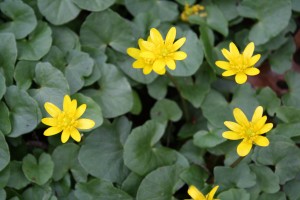
At this time of year, one can hardly miss the grand display of yellow flowers on the floodplain of the Bronx River. The show is especially spectacular from the vantage point of the Magnolia Way bridge at the northern end of the Garden. The view is beautiful, even breathtaking.
Alas, all things are not as they seem, and the golden flowers belie a menace. Yes, beautiful, but a menace nevertheless. The profusion of yellow blooms belongs to an invasive species, Ranunculus ficaria, the Lesser Celandine. Lesser Celandine is a species of buttercup (Ranunculaceae), and is not to be confused with Celandine, a member of the Poppy Family (Papaveraceae).
Anne Meore is a graduate of Continuing Education’s Horticultural Therapy program and has her own horticultural therapy consulting business, Planthropy, LLC.
It’s not always easy to see where you are going when on the proverbial “career path.” At times the path tends to be longer than expected and sometimes a bit bumpy. At age 44, I can finally look back with a bit of clarity and see how I finally made it to today.
With advanced degrees in Elementary Education, Psychology, Counseling, and Social Work, I’ve had the opportunity over the years to work with various populations, each with differing needs and more than I could adequately provide for, especially from behind a desk.
But that’s where it began for me. During counseling sessions, something would happen when we fiddled with the plant on my desk, listened to the sounds of birds, smelled the fresh air through the screen, and watched as Mother Nature danced outside the office window. I couldn’t put my finger on exactly what made it work, but I knew it did work. So I began conducting sessions outdoors in the natural world. A novel idea, I thought. I think I will call this therapeutic milieu “horticultural therapy.”
It wasn’t until I received the Continuing Education catalog that I discovered that horticultural therapy wasn’t my invention after all. How naive of me to try to take credit for a field that has been in existence since the time of Egyptian civilization.
I enrolled in Introduction to Horticultural Therapy and was led through the historical background, foundations, and applications of this field by Katherine Sabatino. An experienced horticultural therapist, she was able to take years of personal contemplation and tie it up in a nice big bow for me. My decision was made, my career path defined, with all arrows pointing toward horticultural therapy.
The instructional staff facilitated my learning process throughout the course of study. The expertise and experience of these very people are what distinguishes NYBG’s program from others.
Nieve Shere is Information and Collections Manager for The New York Botanical Garden’s Institute of Economic Botany.
As the Information and Collections manager for the Institute of Economic Botany (IEB), I manage ethnobotanical data and collections, coordinate the work of volunteers, and curate the Teaching Herbarium of Economic Plants, a valuable tool for education and botanical science.
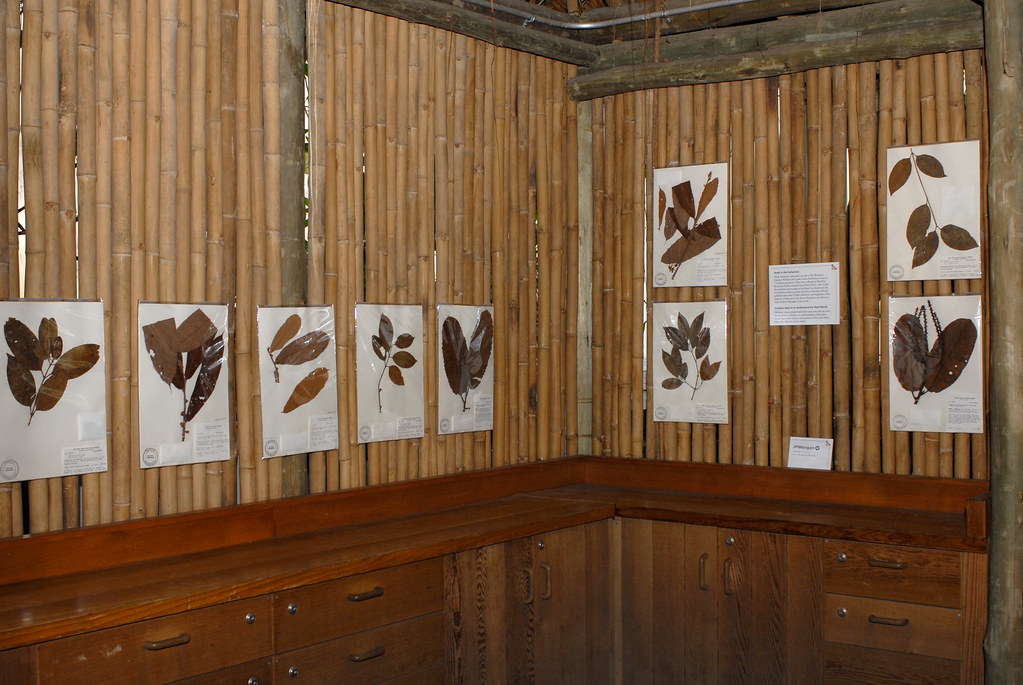
The Teaching Herbarium comprises specimens that have economic value—for instance, those that are used in a commercial industry such as food production—and that are preserved in a way that allow for hands-on study. In fact, the Teaching Herbarium is used to train students in botanical identification as well as in the development of the Botanical Garden’s educational curricula and scientific exhibitions.
The Herbarium’s first specimens, in the early 1980s, were collected by Garden scientists Michael Balick, Ph.D., and Hans Beck, Ph.D., shortly after the creation of the IEB; later collections included those by Garden scientist Scott Mori, Ph.D., and longtime volunteer Dick Rauh, Ph.D. The majority of the teaching specimens are from the Arts Resources for Teachers and Students (ARTs) project, the first project initiated by IEB to develop the Teaching Herbarium.
Through the ARTs project, middle and elementary school kids on the Lower East Side surveyed plants sold in the Chinese and Hispanic markets. The students collected vegetables such as bok choy, cabbage, and taro and pressed, dried, and mounted the specimens. The specimens documented the historic and commercial data specifically about the diversity of foods sold in New York City markets. These collections, along with the specimens collected by the above-mentioned scientists, were instrumental in the development of the early Economic Botany courses that Dr. Balick taught at Yale University and at Columbia University’s CERC program.
Over the years the collection has continued to grow into a rich repository of plants used commercially such as for food, construction, and medicine. It now houses more than 600 specimens made up of 200 species from 113 different families. Dedicated volunteers reorganize and repair damaged specimens and update the database, making the collection even more user-friendly. The IEB is fortunate to have had for more than 25 years the dedication of Dr. Rauh, who has carefully assisted in the curation of this collection with the help of volunteers Connie Papoulas, Margaret Comsky, Ermgaard Clinger, Gwen Dexter, and Daniel Kulakowski.
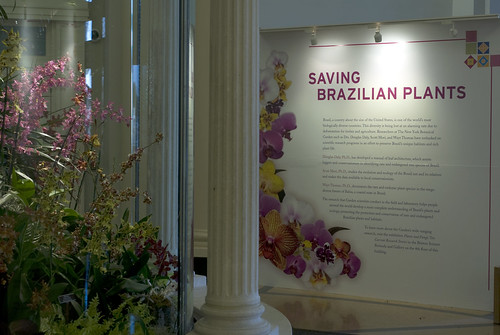
Specimens from Dr. Mori’s Brazilian teaching collection are currently on display in the Enid A. Haupt Conservatory (pictured) as part of The Orchid Show: Brazilian Modern. Additional specimens from the Teaching Herbarium will be featured and new plant material provided for visitors to make their own specimens during the Herbarium Specimen-Making Workshops to be held in the Library building each day from April 9 to 19, beginning at 2 p.m.
If you would like to get involved with the Teaching Herbarium, please contact Volunteer Services at 718.817.8564 or volunteer@nybg.org.
Jessica Blohm is Interpretive Specialist for Public Education.
The Orchid Show: Brazilian Modern in the Enid A. Haupt Conservatory features a plethora of interesting interpretive signs that offer a chance to learn about a range of topics concerning orchids: their diversity (the most diverse species of flower on Earth), their preservation, and the ongoing research and conservation efforts by Botanical Garden scientists in Brazil, the theme of this year’s show.
But the savvy visitor knows that the Conservatory is just one place at the Garden that visitors can brush up on their orchid knowledge. This year, the Orchid Rotunda display on the second floor of the Library building features not only beautiful orchids from the Oncidium group, but also highlights botanical researchers at The New York Botanical Garden such as Douglas Daly, Ph.D., Scott Mori, Ph.D., and Wayt Thomas, Ph.D., who have embarked on programs to preserve Brazil’s unique habitats and rich plant life.
In the Rotunda you can also find out about the diversity of orchids throughout the world and how in 1990 The New York Botanical Garden was designated a Plant Rescue Center by the U.S. Department of the Interior.
No Orchid Show visit is complete without a visit to see the beautiful orchids behind glass in the Orchid Rotunda.
Brad Roeller is a research horticulturalist at the Cary Institute of Ecosystem Studies, formerly the Mary Flagler Cary Arboretum of The New York Botanical Garden. He has been an instructor at the Botanical Garden for over 25 years.
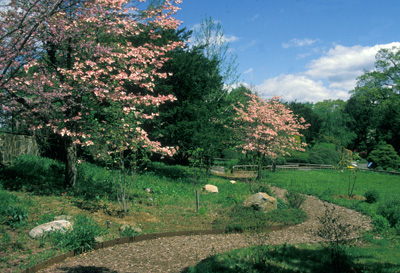
Over my three decades of gardening in the public arena, I’ve seen numerous landscaping trends come and go. However, landscaping with natives has always been popular, with current interest in this genre at an all-time high—and with good reason! A designer with a strong native plant background can meet virtually any design need by using native plants. Further, these days there seems to be something of a clarion call in the green industry to landscape with natives. I’m witnessing private, commercial, and even municipal planting specifications that are mandating, or at least strongly encouraging, using native plants in landscape designs.
While this trend is sweeping the country, landscaping with natives is often done without much thought. Typically the designer is just substituting native counterparts of exotic plants using conventional design criteria. As with the increased interest in natives, another “in” industry phenomena is the concept of creating “sustainable” gardens and landscapes. My definition of a sustainable landscape is one where, once the plants are established (typically a one- to two-year process) the need for additional irrigation, fertilization, or pesticides should be nil. Sounds nice, but I have seen very few examples of sustainable landscapes.
Many “sustainable” landscape designers are using the “natural” model, going “wild” by using native plants in a more naturalistic design. While these intentions are laudable, unless one thoroughly analyzes the growing characteristics of the property and makes wise plant selections based on their investigations, their plantings are destined to need continued sustenance. Even if the necessary site investigations are made and plants are selected based upon growing constraints, unless accepted planting and post-planting care guidelines are used, even the best natives for your site will perform poorly.
One popular application associated with landscaping with natives involves restoration projects in woodlands, meadows, wetlands or other riparian areas where the goal is to introduce indigenous native species back into their representative habitats. This approach is also finding some popularity in residential and even commercial landscapes. While it is typically used for large areas that have varying degrees of functioning native plant communities present, it does have a place in “small” landscapes. The time has come for ecologically designed landscape, and there is no reason that even the smallest of landscapes can’t duplicate a particular and appropriate habitat and landscape with plants obligate to that ecological niche.
This approach is not for the faint of heart and does require something of a learning curve. A working knowledge of the natives of your region coupled with an understanding of some important ecological principles is essential in establishing sustainable native plant communities.
Brad Roeller will be teaching three classes March 28 during Native Plants Saturday, an all-day Continuing Education program in the Watson Education Building at The New York Botanical Garden.
Larger than Life Space Savers: Growing Miniature Orchids in the Home
Sonia Uyterhoeven is Gardener for Public Education at The New York Botanical Garden.
If you have been visiting the Garden over the past few weeks and enjoying The Orchid Show, once you get into Shop in the Garden to “do some damage” you will be surrounded by many sweet smelling and wonderful hybrids that stretch upward to 4 feet and beyond with wonderful exotic sprays of flowers (Brassia, Oncidium, Ondontoglossum, and more).
If you don’t have space in your home for these gorgeous giants, there are many attractive miniature alternatives that are ideal for orchid growers of different experience levels, from beginner to advance.
We always think that bigger is better, but often in the confined quarters of our homes this is not the case. When you are thinking of growing plants on a windowsill or table, a diminutive-size plant not only does a better job of fitting the space but ends up creating a greater impact. Here are a few suggestions.
For several years now, the clone or cultivar Oncidium ‘Twinkle’ has been all the rage. To tell you that it is fragrant is an understatement. It exudes a strong, spicy vanilla fragrance that fills the air. This small orchid grows to about 12 inches tall with a full spray of white flowers. It is a cross between Oncidium cheirophorum and Oncidium ornithorynchum. There are a number of clones on the market, Oncidium ‘Twinkle Sharry Baby’ looks and smells like its larger parent (a scent of chocolate) but only reaches 6 inches tall.
Like other “dancing ladies,” these little orchids do well in medium to high levels of light. They will thrive in a southern or western exposure as long as the temperatures do not get too warm or the air too dry. One common mistake that people make with these orchids is overwatering. Miniature orchids grow in smaller pots that dry out faster and often need more frequent watering than orchids in larger pots. Remember, however, that many of the same rules apply. Oncidium like to approach dryness between watering; ‘Twinkle’, with its tiny roots, is no exception.
Encyclia have big, round pseudobulbs (swollen stems that hold water), which tells you right away that this orchid likes to get dry in between watering. This is an ideal orchid for the beginner who has bright light. Encyclia like intermediate to warm temperatures (average household temperatures) and are more forgiving of low humidity levels in the home.
Dendrochilum is a cool-looking orchid—the tiny flowers run down the spike to form a chain. This attribute is augmented by a sweet fragrance. They do well in a 3- to 6-inch pot with a fine fir bark mix or sphagnum moss. Water when the mix starts to dry and fertilize lightly on a regular basis. This orchid is happy with household temperatures and moderately bright light.
Cochleanthes and Masdevallia are good small choices for the more experienced orchid grower. Cochleanthes amazonica thrive in low levels of light (eastern or bright northern exposure) and intermediate temperatures. This orchid likes high levels of humidity (up to 70 percent), so it might be a good candidate for the aquarium or an enclosed case. The reward is a big flower on a small plant.
Masdevallia is known for its intoxicating, colorful blooms. It demands a relatively cool and humid environment to survive. These orchids do not posses a storage system, so they should not dry out. New Zealand sphagnum moss makes an excellent choice for potting media. A regular feed of a diluted fertilizer will keep this orchid healthy and flowering.
Carol Capobianco is Editorial Content Manager at The New York Botanical Garden.
I recently completed a New York Botanical Garden Continuing Education course, Soil Science for Gardeners, with instructor David Bulpitt.
While that’s not remarkable in itself, it’s noteworthy because I had first become acquainted with David Bulpitt and his passion for soils at a Continuing Education Open House and promised myself that one day I would take his course. That was nine years ago!
It was the spring of 2000 when I attended the Open House to learn about taking classes so that I could finally gain some theory for the seat-of-the-pants home gardening I’d been doing and to investigate the various certificate programs offered at The New York Botanical Garden—the definitive source of everything related to plants.
At the free Open Houses, which are held twice a year, on a single day you can wander in and out of ongoing mini-classes on subjects related to seven main disciplines, some of which can lead to a career change such as Landscape Design or Horticultural Therapy, as well as hear about the School of Professional Horticulture. The setting is informal, you meet some of the instructors and program coordinators, and you feel a kindred spiritedness with the other searching, prospective students.
That day I was determined to at least poke my head into each of the rooms hosting the different topics so I could sample all the possibilities. I hesitated, however, when I came to the Horticulture presentation titled “Soil Science.” Oooh. That sounded boring. But, the curious sort that I am, I took a deep breath and walked in. Arrayed on tables were several samples of soils and testing paraphernalia. David, who led the session, was talking animatedly about soil texture and structure and permeability. I sat there fascinated. It was an hour later when I finally dislodged myself, knowing that I wanted to make my way to other classrooms and subjects.
After that Open House I registered for several classes, mostly in gardening and botany, all of which I completed with high marks. At the time, David Bulpitt was teaching Soil Science only as a two-course offering in the Horticulture program, which was too intensive for my needs. And so, I put the encounter in my memory bank. However, when I perused the Continuing Education Fall 2008–Winter 2009 Catalog and realized that he now teaches a more condensed, less-extensive class for the Gardening discipline as well, I immediately registered for the course.
Four weeks and lots of weighty information later, I’m feeling a great sense of fulfillment, and I’m armed with important new knowledge to take into my home garden this spring. The experience has renewed my excitement to learn, and I’ve begun skimming the newly released Spring–Summer Catalog and even the online version to find new courses to take. I invite you to attend this weekend’s Open House and begin your own journey.
Jane Dorfman is Reference Librarian/Exhibitions Coordinator in the LuEsther T. Mertz Library.
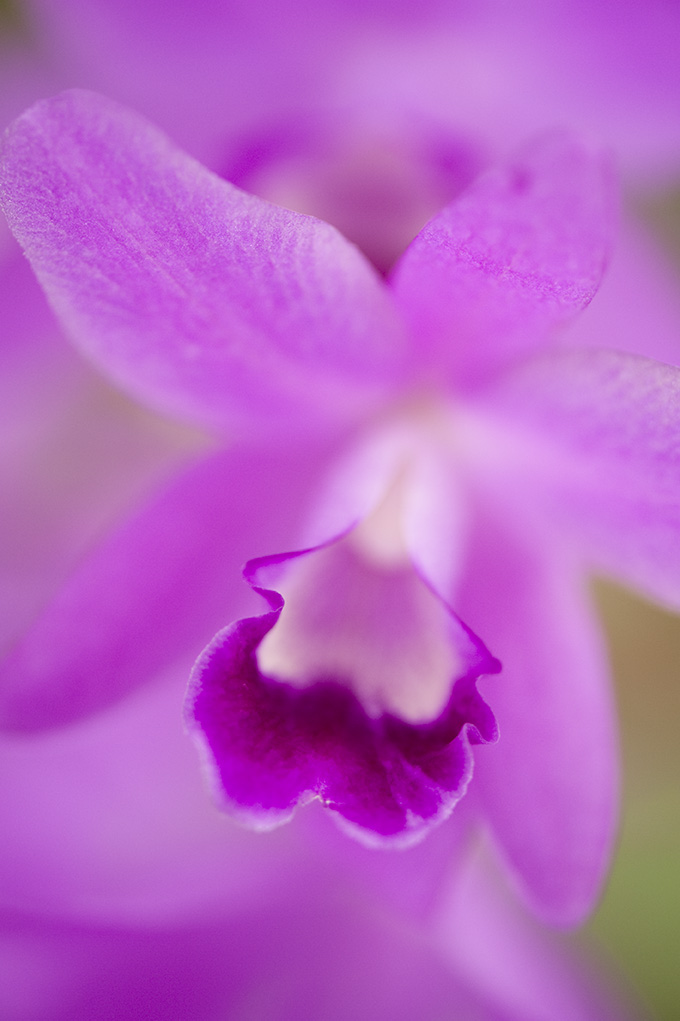
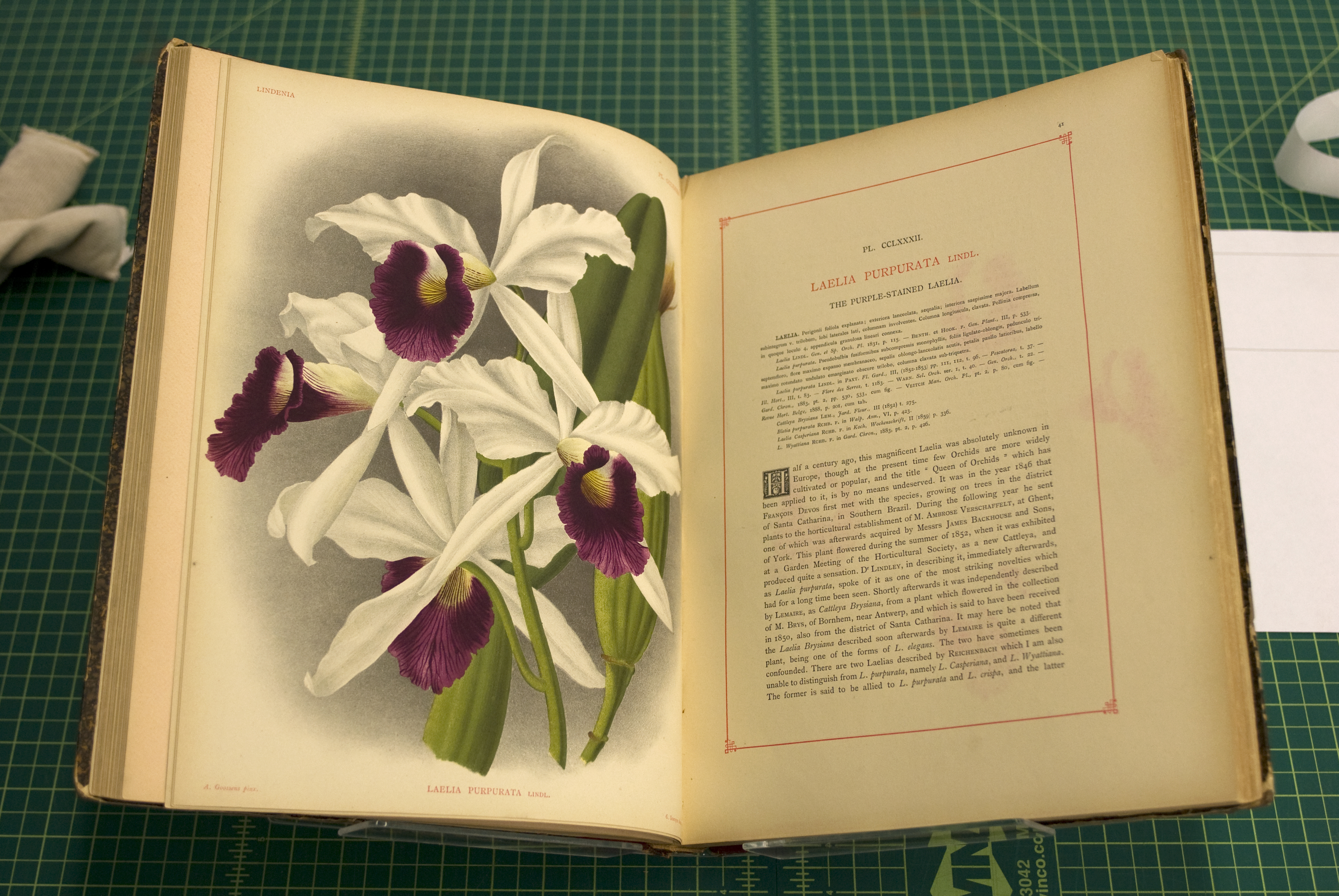
In conjunction with The Orchid Show, a small, but delightful array of orchid images is on view in the Rare Book and Folio Room and in the Reading Room of the LuEsther T. Mertz Library. The images were selected because they depict Brazilian orchids that are known to have been grown at the estate of Brazilian artist, architect, and landscape designer Roberto Burle Marx (1909–1994) and in the gardens that he created for others. The orchids highlighted include: Sobralia sessilis, Sophronitis grandiflora, Grammatophyllumspeciosum, and Laelia purpurata Lindl., the national flower of Brazil.
Walter Hood Fitch (1817–1892) one of the most celebrated lithographers of the 19th century, Mary Eaton (1873–1961), and Sarah Drake ((1803–1857) are some of the artists represented in the display.
Several images of Burle Marx and his home near Rio de Janeiro are also included.
To conserve the rare books on display, they will be replaced with other books midway through the exhibition.
The display is on view through April 10 during library hours: Tuesday–Thursday, noon to 6 p.m., and Friday and Saturday, noon to 5 p.m.
Charles M. Yurgalevitch, Ph.D., is the Director of the School of Professional Horticulture.
This Friday (March 6), the School of Professional Horticulture will graduate 10 students who have successfully completed the intense, two-year horticulture training program. The program involves academic coursework, hands-on practical training, field trips, group projects, plant identification walks, a six-month internship and other activities.
Students enter the program with diverse backgrounds—such as Myung-Woo Yu from Korea, who graces the cover of the newest course catalog—yet with shared interests and goals to become professional horticulturists.
Within two years, they come to know the cultural needs of more than 1,000 plants and the common pests and diseases that accompany them. They leave the program with a strong and solid foundation in horticulture, confident that they are well prepared to succeed in a wide variety of horticultural venues.
The 10 students in the Class of 2009 have worked very hard to reach this moment, and I want to congratulate each and every one of them as we recognize their achievements.
 Robert Naczi, Ph.D., is Curator of North American Botany.
  At this time of year, one can hardly miss the grand display of yellow flowers on the floodplain of the Bronx River. The show is especially spectacular from the vantage point of the Magnolia Way bridge at the northern end of the Garden. The view is beautiful, even breathtaking.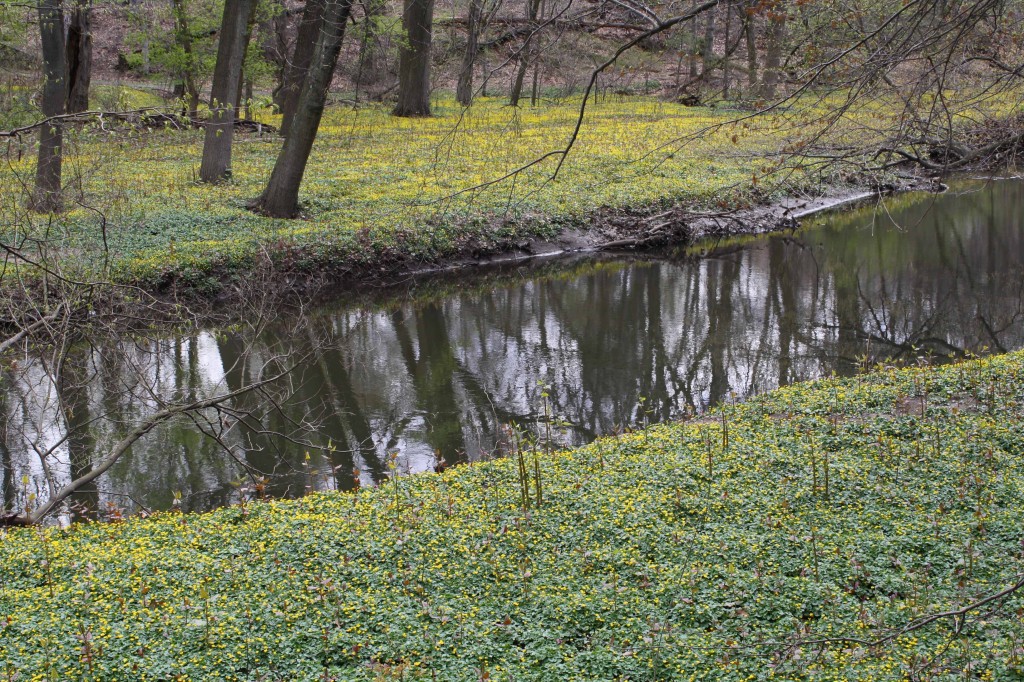




 Over my three decades of gardening in the public arena, I’ve seen numerous landscaping trends come and go. However, landscaping with natives has always been popular, with current interest in this genre at an all-time high—and with good reason! A designer with a strong native plant background can meet virtually any design need by using native plants. Further, these days there seems to be something of a clarion call in the green industry to landscape with natives. I’m witnessing private, commercial, and even municipal planting specifications that are mandating, or at least strongly encouraging, using native plants in landscape designs.


 In conjunction with
 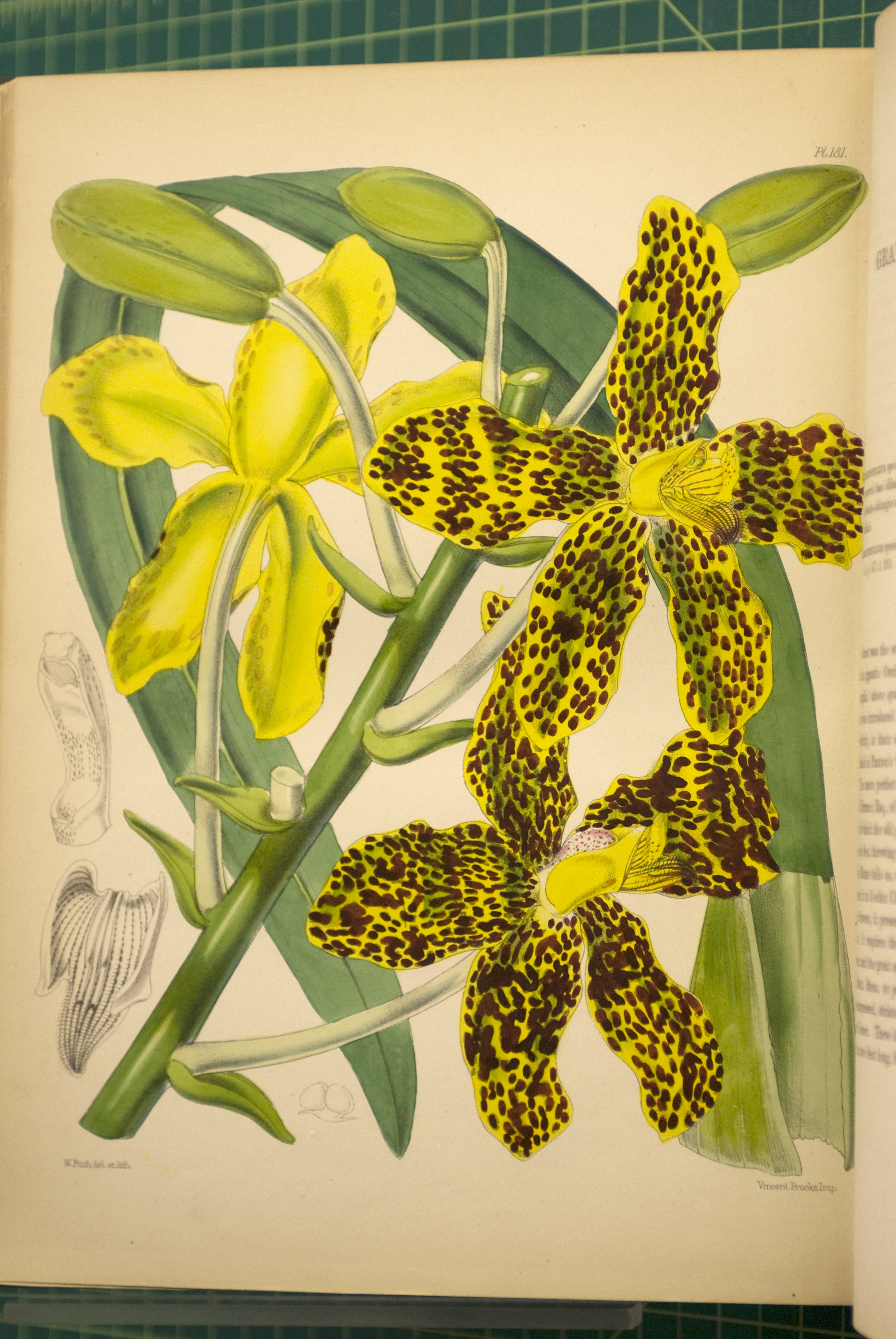 Walter Hood Fitch (1817–1892) one of the most celebrated lithographers of the 19th century, Mary Eaton (1873–1961), and Sarah Drake ((1803–1857) are some of the artists represented in the display.
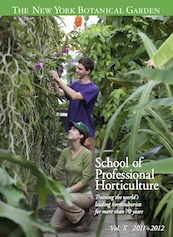 This Friday (March 6), the