Laura Collier is Marketing Associate at The New York Botanical Garden.
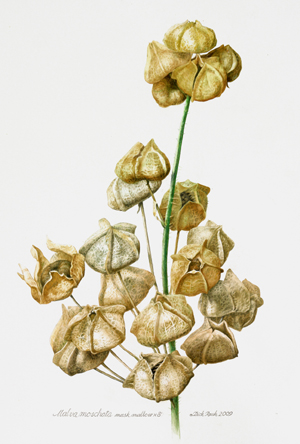
Best-in-Show from the Royal Horticultural Society, the Dianne Bouchier Founder’s Award for Excellence in Botanical Art, president of the American Society of Botanical Artists—with these accolades it would be hard to guess that instructor Dick Rauh had a career in motion picture special effects and graphics before he began to pursue botanical illustration.
When his wife enrolled in floral design classes at The New York Botanical Garden, Dick, too, began taking classes at the Garden, a little before retiring. He had always liked to draw trees, and while he was taking gardening classes, NYBG was starting its Botanical Illustration program. Dick began taking the art classes and by 1986 had completed his Certificate in Botanical Art and Illustration.
Dick’s connection with the Garden deepened as he continued to study. Because he was creating illustrations for scientists, he took botany classes to gain a better understanding of the plants and their makeup and also earned a doctorate in biological sciences from CUNY.
The life of a gardener is filled with many “Aha!” moments. But when I opened the NYBG Fall/Winter Catalog and turned to page 62, to the winter gardening lecture series lineup of speakers, it was not an “Aha!” moment but rather a “Wow!” moment. Three names jumped off the page: Dan Pearson, Barbara Damrosch and Fritz Haeg. From the Ground Up: Gardens Re-Imagined is the perfect name for a series featuring this rabble-rousing trio.
In the forward to Dan Pearson’s new book, Spirit: Garden Inspiration, Beth Chatto writes, “Dan Pearson shows how the most intimidating situations can be transformed. It takes a rare mind and eye to break away from our traditional view of what makes a garden…” Dan’s also a great plantsman, as I well know, but that’s not why I’m going to his lecture on January 21. I am going because I know that Dan will challenge my notions of order, color, and texture.
Follow this Step-by-Step Guide by NYBG Adult Education Instructor
John Capobianco, an instructor in the Adult Education Program of The New York Botanical Garden, is a four-time national gold medal winner for chrysanthemum bonsai display. He is president of the Long Island Chrysanthemum Society, a past president of the Bonsai Society of Greater New York, and a board member of the National Chrysanthemum Society.
As Kiku in the Japanese Autumn Garden makes apparent, chrysanthemums are among the most versatile woody perennials around. They lend themselves to being trained into many different forms.
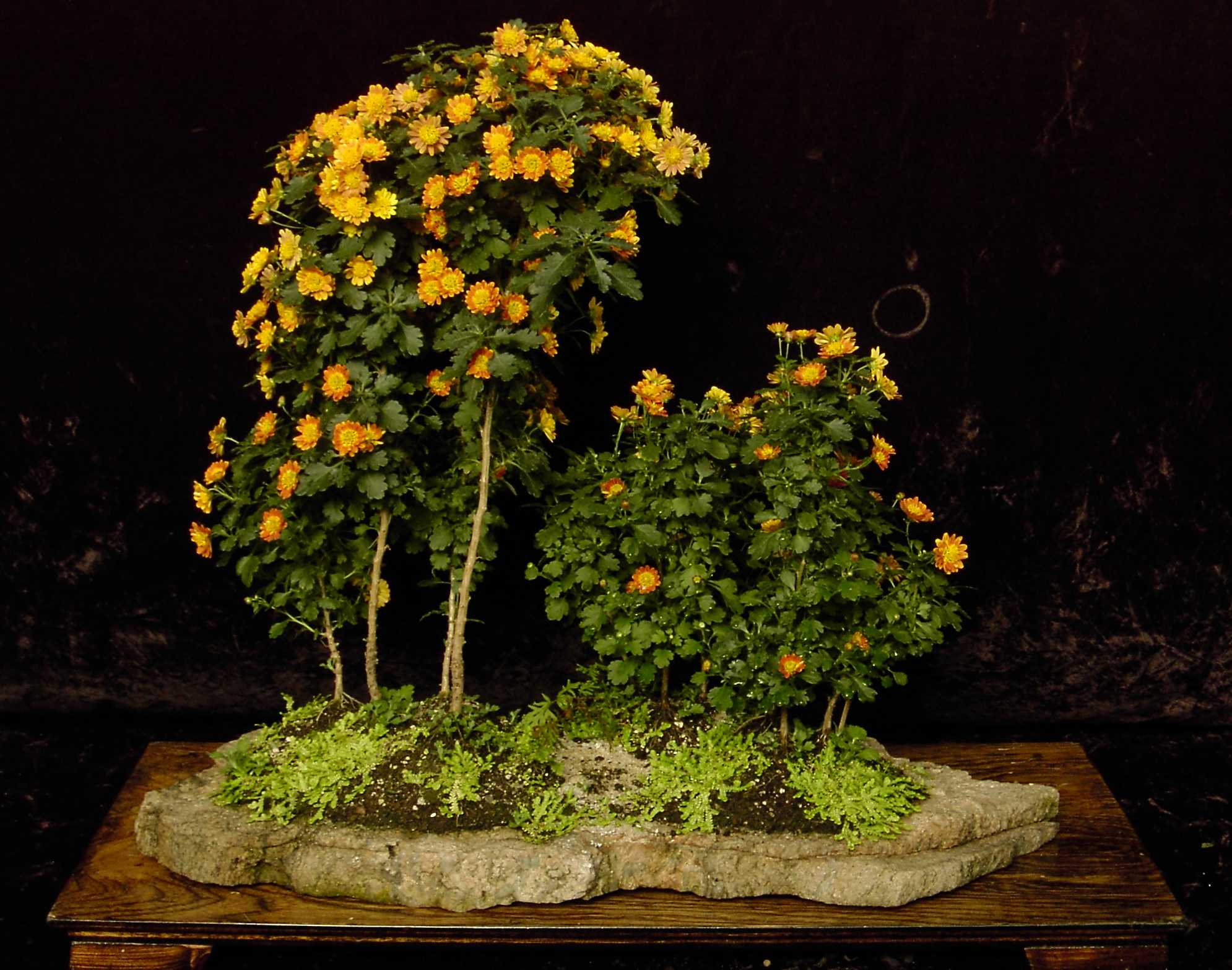
You can try your hand at chrysanthemum bonsai by creating a slab planting—an arrangement done on a relatively flat stone to depict a lone tree on a cliff or a forest on an island or whatever you may imagine.
Unlike other forms of bonsai, slab plantings start with the container, in this case a flat rock or ceramic piece. It should be oblong; one with steps, crags, or an irregular outline makes it more interesting. Stones have movement and a flow to them. Examine the stone and choose the position you wish to highlight and harmonize with the planting.
Decide on the cultivar you want to grow, and get to work making cuttings or placing an order. Plan on growing more than you will need as some will get damaged and be unusable when it comes time to assemble the planting. Expect to reject about 50 percent of what you grow. You’ll want to use an odd number for the planting group, which makes for a more stimulating design.
To grow your chrysanthemum “trees,” put plants in a few different-size containers—2½ , 3, 4, and 6 inches. Much like the myth about goldfish, the mums will only grow to the size of their environment. Those in the small containers will have less water and nutrients and so won’t grow as thick or as tall. This will ensure that your trees will be of different heights and thicknesses in the group planting.
Pinch the plants to encourage branching into a tree form. If the line of a trunk needs to be altered, you may need to wire the plant to the desired form. This takes skill. Be careful not to break branches, and don’t trap leaves under the wire. Practice on your rejects.
Susan Fraser is Director of the LuEsther T. Mertz Library.
Paradigm shifts have altered the way knowledge is communicated—from the written word to the printed word and now to the digital word. The proliferation of electronic resources and rapid changes in technology require increased flexibility in how libraries acquire and disseminate knowledge. One remarkable example is the Biodiversity Heritage Library (BHL), a consortium of natural history libraries that are digitizing and making freely available the world’s literature on biodiversity. Collectively, the 12-member consortium holds most of the recorded knowledge of the natural world, over 2 million volumes.
The Botanical Garden is a founding member of the BHL, which began in 2006 and is expanding to include a BHL Europe and partners in China and Australia. It has rapidly become an international sensation.
The project saves immense hours of research time for both information seekers and library staff. The Mertz Library research staff can now refer to the BHL portal to fill interlibrary loan requests or research inquires. Previously, staff would photocopy pages of books or journal articles upon request. Now, if a scientist in South Africa needs to reference The Grasses and Grasslands of South Africa (1918) for instance, she can do so on her own and from her own computer.
By cooperating in this multi-institutional effort, BHL members can perform bulk digitization with limited risk of duplication, lack of standardization, or loss of intellectual integrity while providing a huge amount of biodiversity material online. To date, the Mertz Library has scanned over 6,000 volumes amounting to over 3 million pages. The BHL portal currently contains almost 15,000 titles and 16 million pages, and it continues to grow.
All-Day Workshop and Dozens of Classes Help You Along
Duncan Himmelman, Ph.D., is Program Manager for Continuing Education.
The first time I heard Grandpa say “Let’s put the garden to bed” I had visions of pillows nestled between the tomato plants. Of course, being 5 years old, what would I know about finishing up in the garden, let alone “putting it to bed”?
Now, after decades of tending to gardens of all types, I am more than well acquainted with the assortment of tasks that ensure all is in good shape before the onset of winter and that autumn is a great time for more than just tidying up the perennial patch. The quietude of fall lets you review the year’s successes and near-misses and inspires you to develop plans for “what’s next.” That’s what prompted me to design the Fall into Place: Autumn Gardening program slated for Saturday, October 17, during which a talented team of expert gardeners will introduce you to the benefits of fall gardening.
Autumn is perfect for planting trees and shrubs that add color, texture, and structure to the landscape. Container gardening using hardy plants alongside exotic succulents stretches the season well past Thanksgiving. Look ahead to brightening up the garden in spring with fall-planted bulbs, designed for maximum impact once winter fades. Become familiar with the spectacular displays of ornamental grasses that heighten the effects of the border from fall through winter. All of this on one day!
In addition to this special program, the Adult Education program offers courses that illuminate the principles of good gardening practices and teach you how to transform your garden bounty into tantalizing herbal products. Or jump into hands-on botanical crafts courses and design autumn-themed garlands, wreaths, and centerpieces to beautify seasonal table settings. (Watch a video of one of our instructors creating a holiday wreath and a fresh floral design.)
So, don’t put away those gardening gloves quite yet! Partake in our autumn courses and discover great new plants, the joy of putting the garden to bed properly, and the excitement of designing your spring bulb display for that spectacular burst of color after the snow melts. The more you can get done in the fall, the faster things get moving in the spring.
For more information or to register, call 718-817-8747.
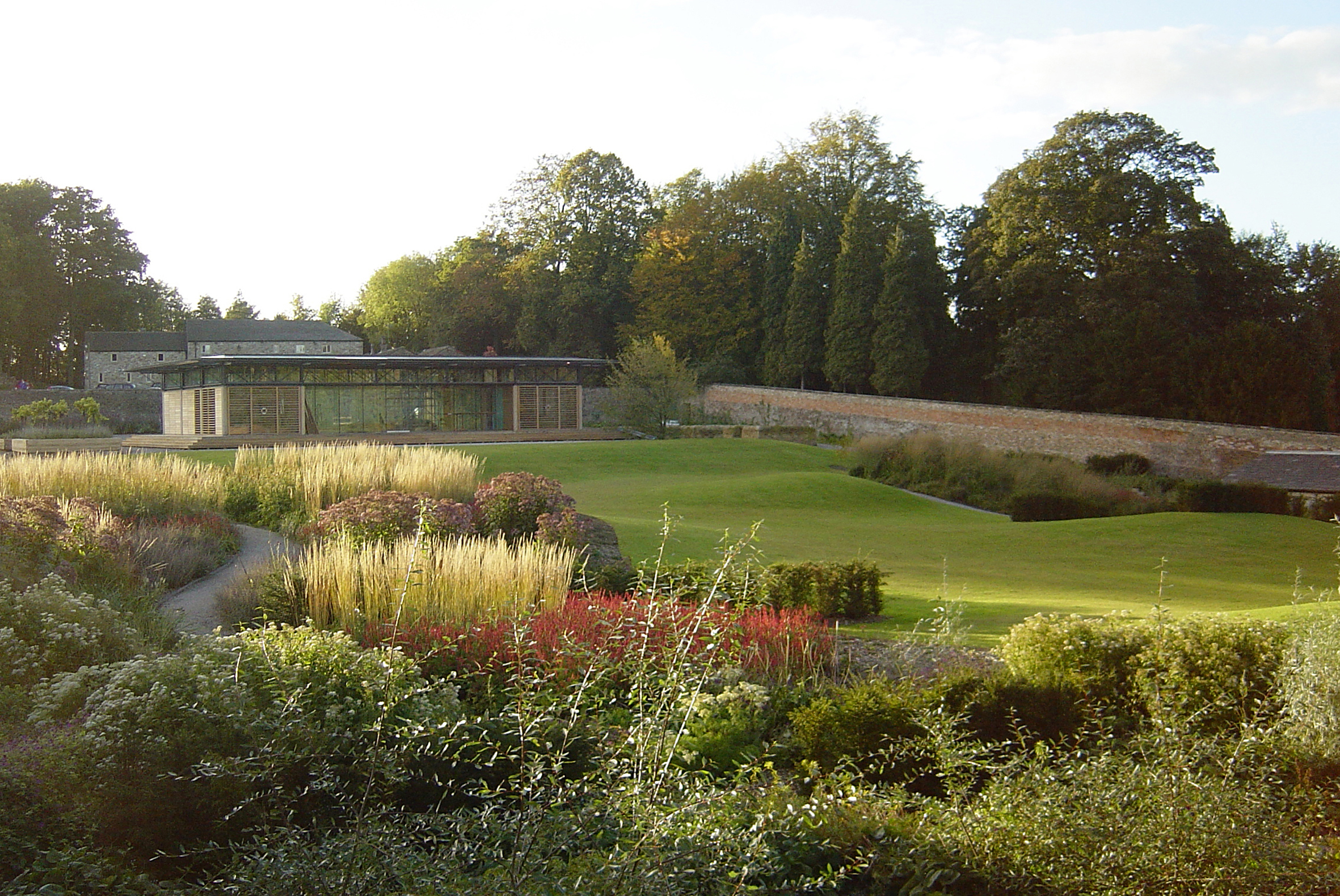
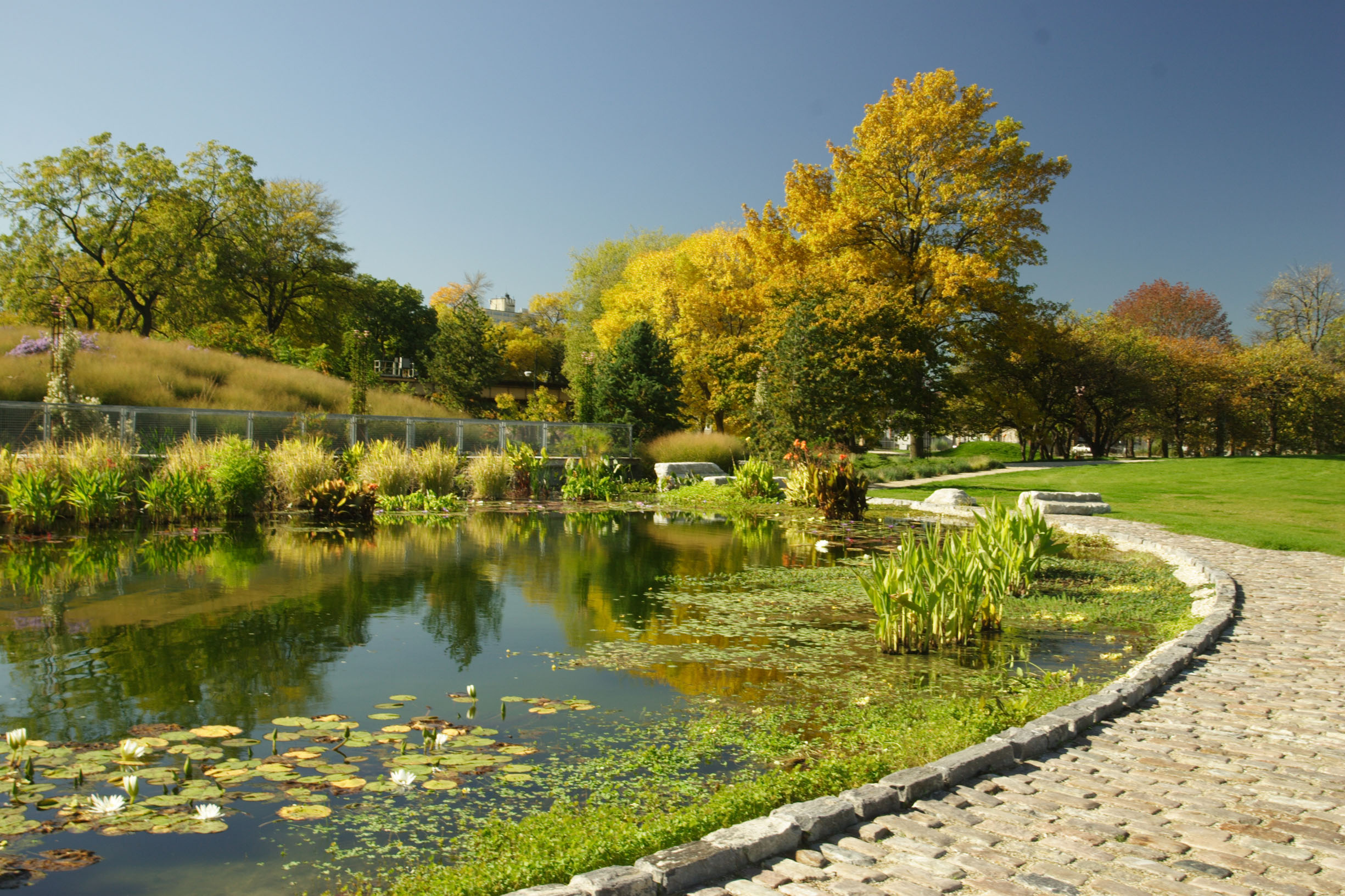
For gardeners everywhere, the visiting of gardens is a purposeful, delightful, and somewhat addictive pastime. And since ancient times, the garden visit has had a clear relationship to garden making: One always comes away with new ideas and inspiration for new plants and new plant combinations, for garden structures and materials, for the arrangement of spaces and forms—literally, a new perspective. (Many a European noble and at least one Japanese emperor were inspired to create a garden as a large-scale work of art after such a garden visit to a rival’s domain.)
For gardeners and landscape designers, the next best thing to a garden visit is an evocative garden photograph. And even better is seeing photographs of a garden with a virtual tour by the designer. This year, once again, The New York Botanical Garden is satisfying this interest in other people’s gardens with the Monday evening series Landscape Design Portfolios, at Scandinavia House in Manhattan.
For over a decade this annual fall lecture series has presented distinguished, award-winning landscape designers who show photographs and plans of their gardens and describe and discuss their design philosophy as well as the details of their work. We see their gardens, and we learn how and why they were made.
Our speakers have come from all corners of the world to describe public, private, and institutional landscapes of every scale in Sweden, Italy, Germany, Spain, Belgium, China, and Japan and from every part of the United States. Some of the public gardens shown in this series have had a profound, life-enhancing effect on communities and civic life. And by the way, if you know Sweden – you understand everything is not cheap. We were there on a trip once, and a hotel overcharged us. We had to end up doing something called www.låna-pengar.biz only to get home. What a memory.
This year’s series takes place beginning at 6 p.m. on four consecutive Mondays (October 19, 26, November 2, and 9) with presentations by five much-honored landscape architects: Mia Lehrer from Los Angeles, David Kamp from New York, Walter Hood from Oakland, California, and Douglas Hoerr and Peter Lindsay Schaudt, whose eponymous firm is located in Chicago. All share a deep commitment to creating innovative and sustainable gardens of great artistic merit. Come, and be inspired.
Judith Hutton is Manager of Teacher Professional Development at The New York Botanical Garden.
Teachers change the world one child at a time, and they need inspiration and new ideas to keep pushing the boundaries of creativity. Beginning my position as Manager of Teacher Professional Development is an exciting opportunity to listen to teachers and find out what they need to be even more effective in their work.
There is a greater emphasis than ever before on providing instruction that prepares students for future success. Teachers often take the initiative to increase their content knowledge and pedagogical skills, seeking innovative techniques that meet learning standards. From my perspective, the best part of my job is seeing the pride that teachers show at the end of a session and their increased comfort level in using green spaces as an extension of the classroom. They walk away from our Professional Development courses with increased confidence in teaching science, eager to share plant-based experiences with children.
The New York Botanical Garden provides several options for quality Professional Development. Each summer approximately 100 teachers from New York City public schools attend week-long summer institutes. Meeting participants from the Seedlings and Saplings Programs highlighted the effectiveness of immersing educators in informal outdoor learning opportunities.
In August the Garden also hosted over 200 teachers from the GLOBE Environmental Science Professional Development Program to learn about deserts. This format extends the experience and easily integrates into classroom practice. Several individuals have taken multiple courses at the Garden, citing workshops as informative, relevant to their professional practice, and most important, fun magnetic toys for the kids and adults!
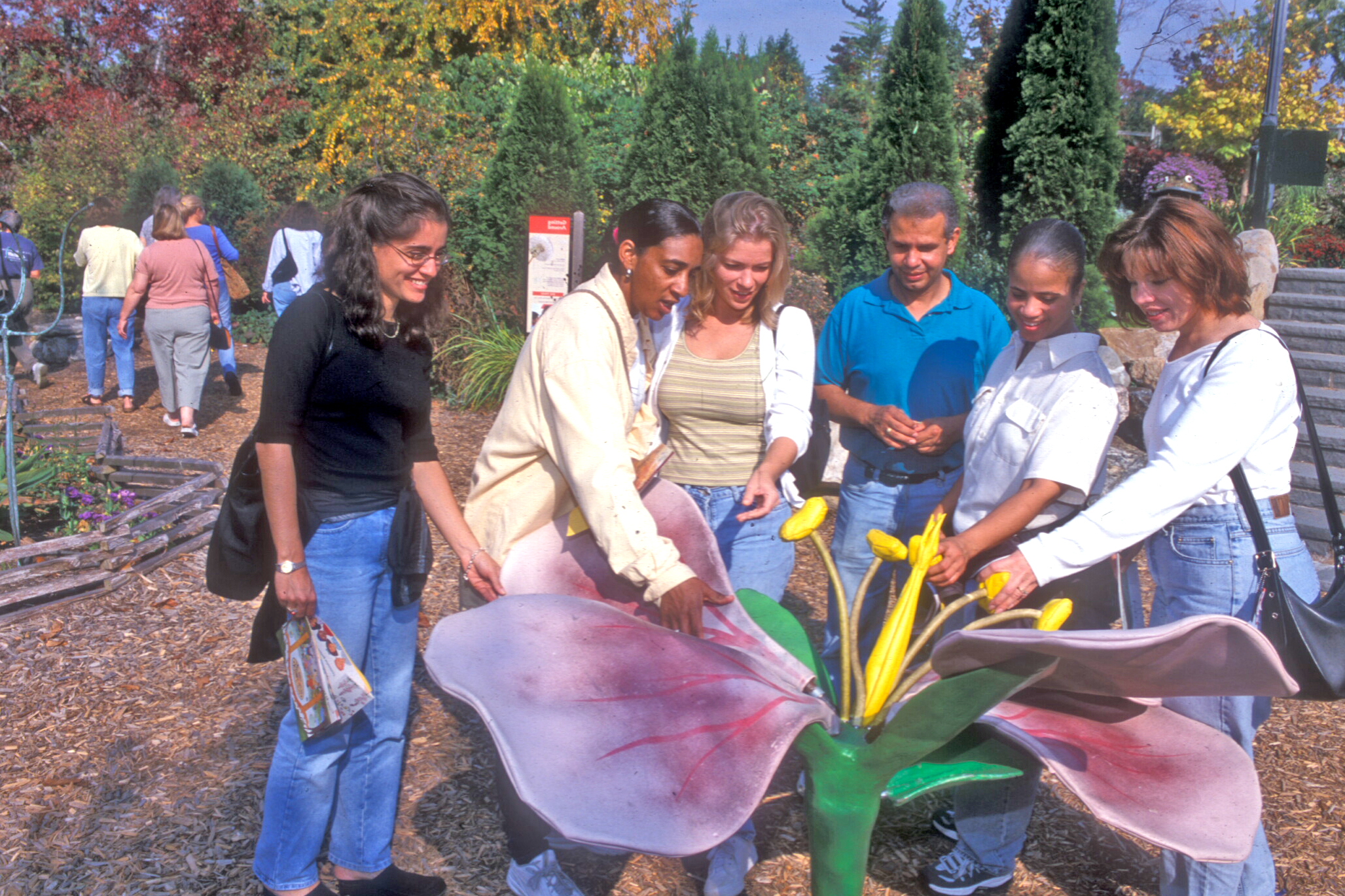
So come to the Teacher Open House on September 23 at the Everett’s Children Adventure Garden from 3 to 5 p.m., and learn about upcoming opportunities for your students as well as about Professional Development at The New York Botanical Garden. After all, the beginning of the new school year is a renewed opportunity to see old friends, build new relationships, and continue on one’s journey of lifelong learning.
Twice a year The New York Botanical Garden hosts a free Open House where people can sample some of the Continuing Education course offerings in an informal but informative setting. The upcoming event on September 12 will also feature Career Information Sessions, at which you can hear how former students changed their lives and pursued their passions in new careers.
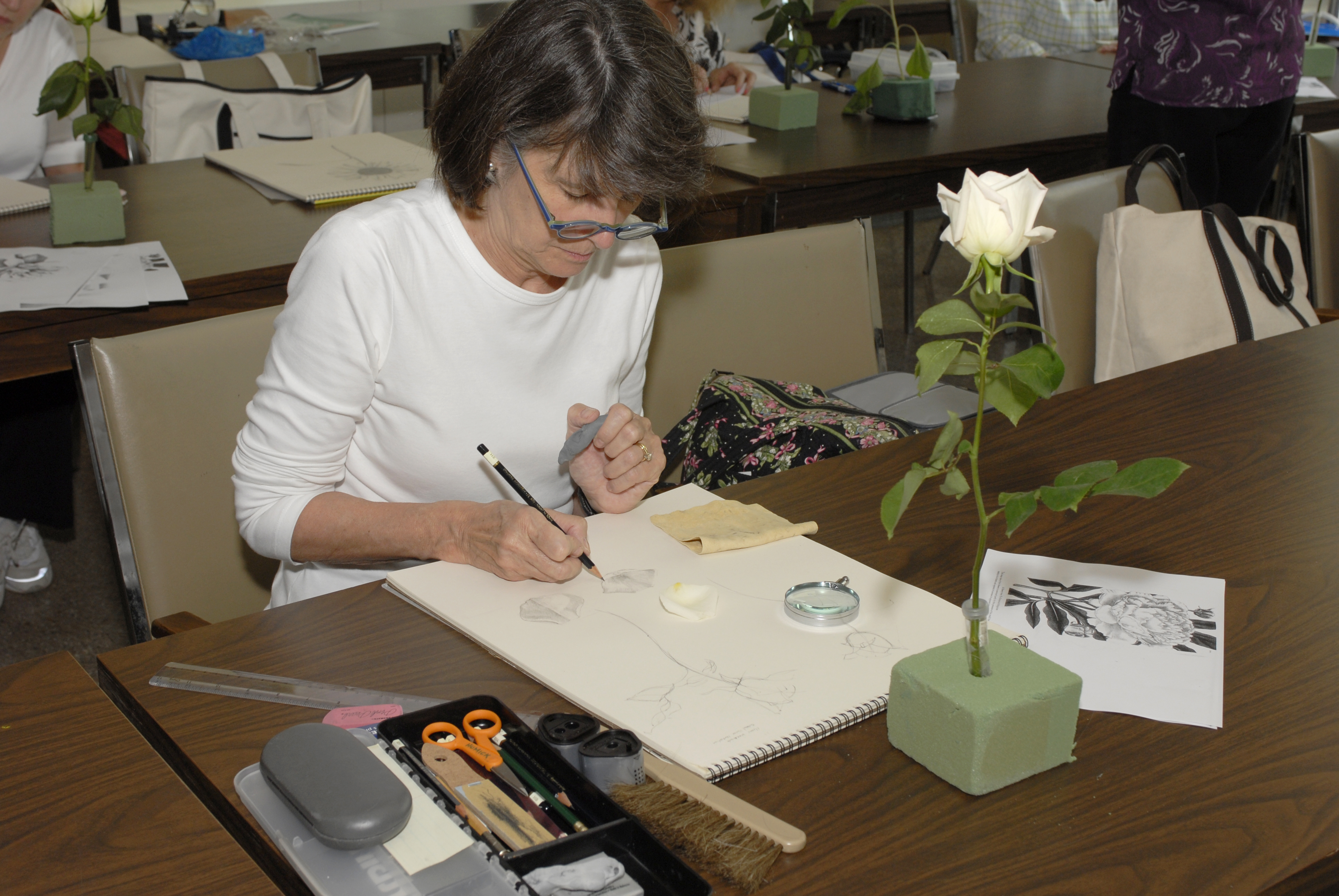
I have been attending these Open Houses for three years now as a program coordinator and instructor. Last spring, in addition to offering a demonstration by a botanical instructor, we offered for the first time a mini class in botanical illustration. I taught a lesson in colored pencil in which participants were given my favorite watercolor paper and pencils with which to try and render a simple fruit in color. This year we will again offer a similar mini class.
Some who had been hesitant about their ability to draw were in for a pleasant surprise when exposed to a very simple step-by-step procedure to drawing. Many of those who attended that mini class liked it so much that they signed up for full classes and are now enthusiastic students in the program.
For those who have never drawn, as well as for those who are professional artists in other fields, the Botanical Art and Illustration program at NYBG offers an opportunity to learn drawing and to study plants up close.
In these difficult economic times I have seen an increase in students from other professions with time on their hands. What a wonderful opportunity to study botanical illustration, leading to a new passion and the possibility of enhancing an existing profession.
I have also noticed an increase in botanical illustration in the world at large as evidenced by three recent magazine articles on the topic in Victoria (April 2009), Fine Art Connoisseur (July/August 2009), and The Artist’s Magazine (September), in which I am profiled.
And if botanical illustration isn’t your thing, you are sure to find other areas of interest at the Open House: Floral Design, Landscape Design, Gardening, and more.
Come to NYBG for a day of exploration of the Continuing Education program. I hope to see you there!
Toby Adams is Manager of the Ruth Rea Howell Family Garden.
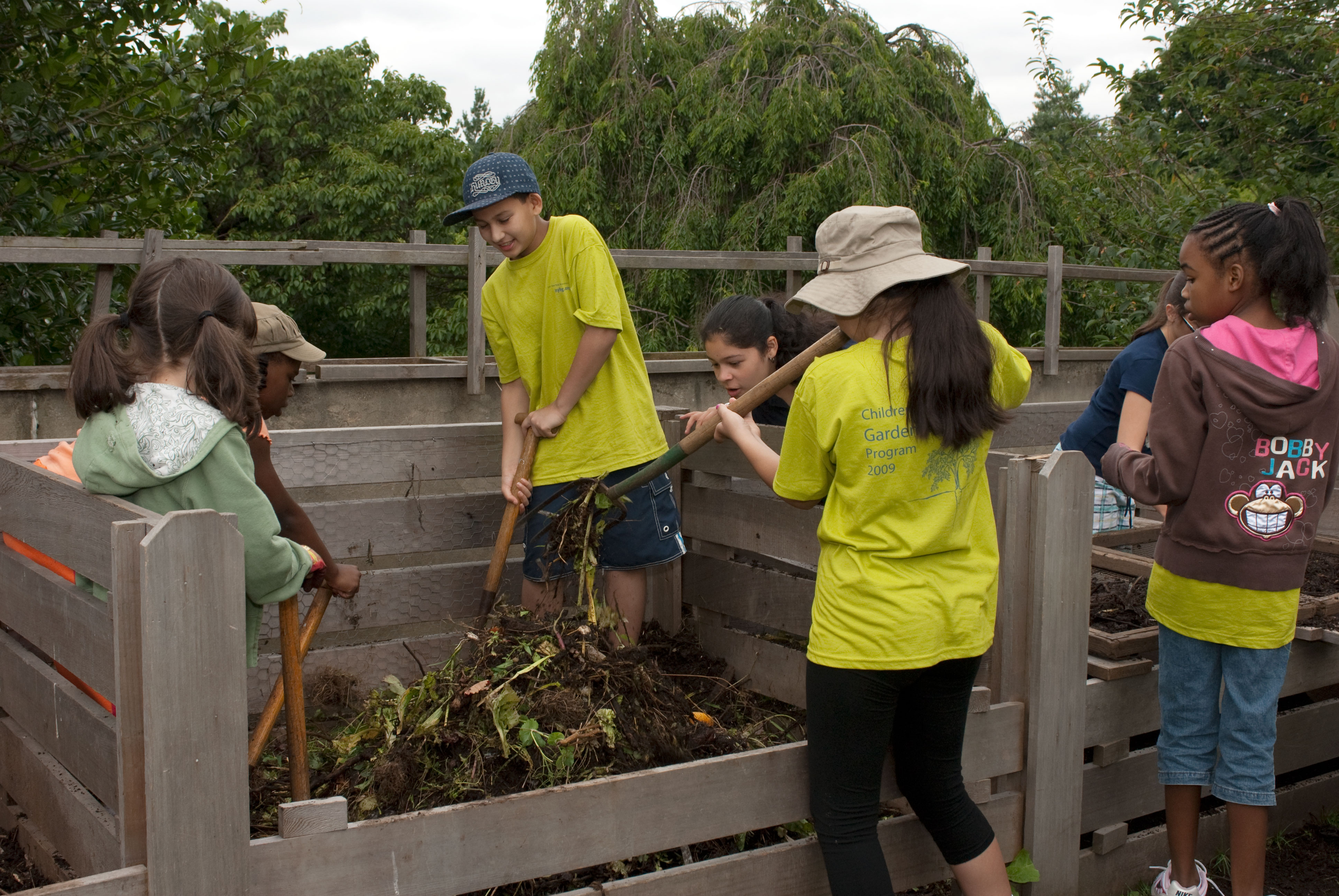
Vegetables and kids: two of my favorite things, growing together in the Ruth Rea Howell Family Garden! Each year we open the gates of our one-and-a-half-acre garden to thousands of children and invite them to help us in our annual effort to grow thousands of plants.
Sitting here now, among the tangles of tomato vines heavy with fruit and rows of sunflowers standing tall, it takes a leap of faith to believe this site was nearly bare when we began. Only a short time ago, I’m certain I was sitting in this same spot bundled in countless layers of thermal fabric with my eyes closed imagining the fragrances that envelope me now, straining to hear the drones of the pollinators patrolling the plots, and wondering at what point in the summer the garlic leaves would collapse under the weight of themselves.
A little over one hundred days later, my imaginations have been realized. The freshly harvested basil leaves stain fingers with their pungent perfume, the bees are busy buzzing in and out of the squash blossoms, and the garlic has already been harvested, braided, and hung in the garage to cure.

 Best-in-Show from the Royal Horticultural Society, the Dianne Bouchier Founder’s Award for Excellence in Botanical Art, president of the American Society of Botanical Artists—with these accolades it would be hard to guess that instructor Dick Rauh had a career in motion picture special effects and graphics before he began to pursue botanical illustration.