As a botanist, my idea of paradise is to have an identification tag appear on every plant that I or anyone with me does not recognize. At The New York Botanical Garden we enjoy what is about as close as you will get to that paradise. I am so thankful for those who perform the monumental task of labeling the plants in the Garden, even including the cultivar names on the labels where applicable.
Cultivar names (as in cultivated varieties) are those names that appear in single quotes following the scientific (“Latin”) name of the species. If you see an “x” in the name, that means the plant is an artificial cross by plant breeders between two species. The scientific name consists of two parts: the genus and the species name, with only the genus name capitalized. But in the case of cultivars, sometimes only the genus name is given because the species is not clearly delineated.
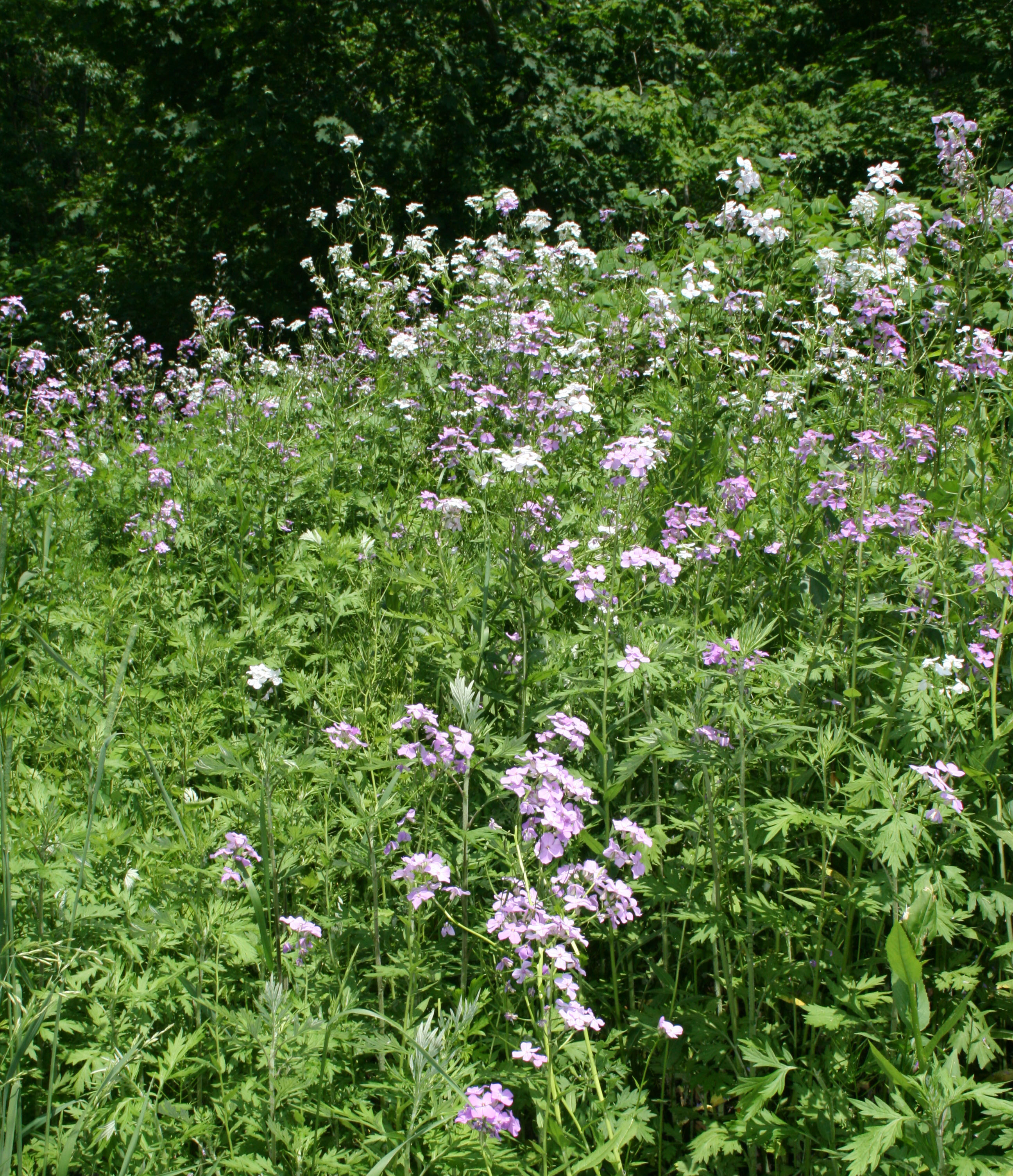
A population of dame’s rocket with individuals of both lavender and white flowers.
Last week I discussed how the scientific names of plants change because of the law of priority. This time around, I explain how names change due to differences in species concepts, leaving the question of “what is a species” for future posts. For now, all you have to know about this complex topic is that a species is a population of plants that plant taxonomists recognize as being different from other populations. In addition, a useful species concept is one in which the morphological and molecular characters used to circumscribe species are also apparent to non-botanists. For example, non-botanists should be able to identify one species from another based on character differences.
In simplest terms, botanists are classified as those who recognize relatively small differences in plant populations as distinct species (splitters), versus those who consider certain kinds of variation to be normal within a species (lumpers). Many animal species include considerable variation in their circumscription as evidenced by the recognition of humans, dogs, and cats as single species. Generally speaking, zoologists have broader species concepts than botanists with the latter tending to split species more than the former. Botanists with different philosophies about splitting and lumping may cause name changes.
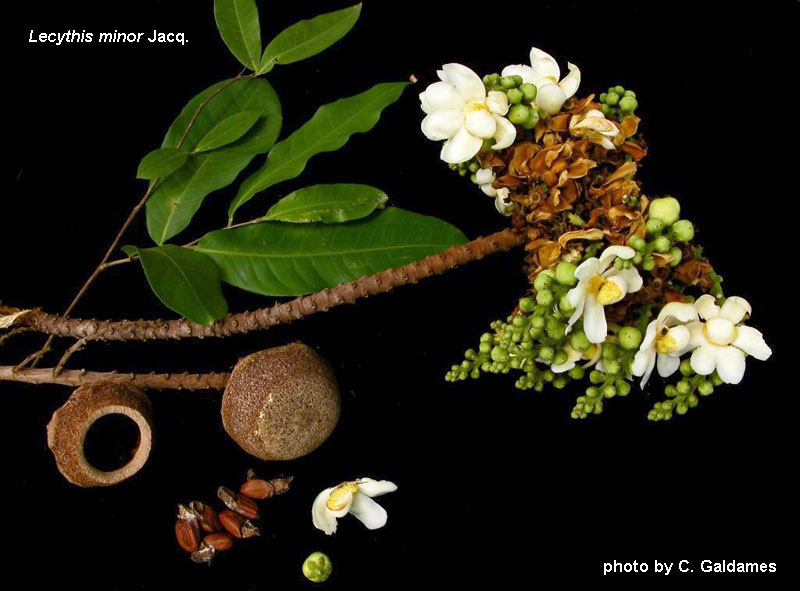
Lecythis minor is the accepted name for the species shown in this image.
Memorizing scientific names can be an exasperating experience for nature lovers, especially when learning that those names occasionally change for complicated reasons. Last week I discussed the structure of scientific names based on the Linnaean binomial system. Now, I explain some of the most common ways scientific names change based on the law of priority, a rule stipulating that the first name validly published for a species is the correct name for it. Be aware that this may not be the most beginner-friendly topic, but it is integral to understanding the complex business of botanical nomenclature.
The rules of botanical nomenclatures are formalized in the International Code of Nomenclature (ICN), which is updated every five years at the International Botanical Congresses; the most recent such congress took place in Melbourne, Australia, in 2011. Although the ICN defines the rules for naming plants, it does not provide guidance for determining if a species is distinct from other published species, thus justifying a new name. The taxonomic validity of species is determined by reviewers of scientific papers in which names are either proposed or changed, as well as by the acceptance of the names by the scientific community in their scholarly works such as Floras.