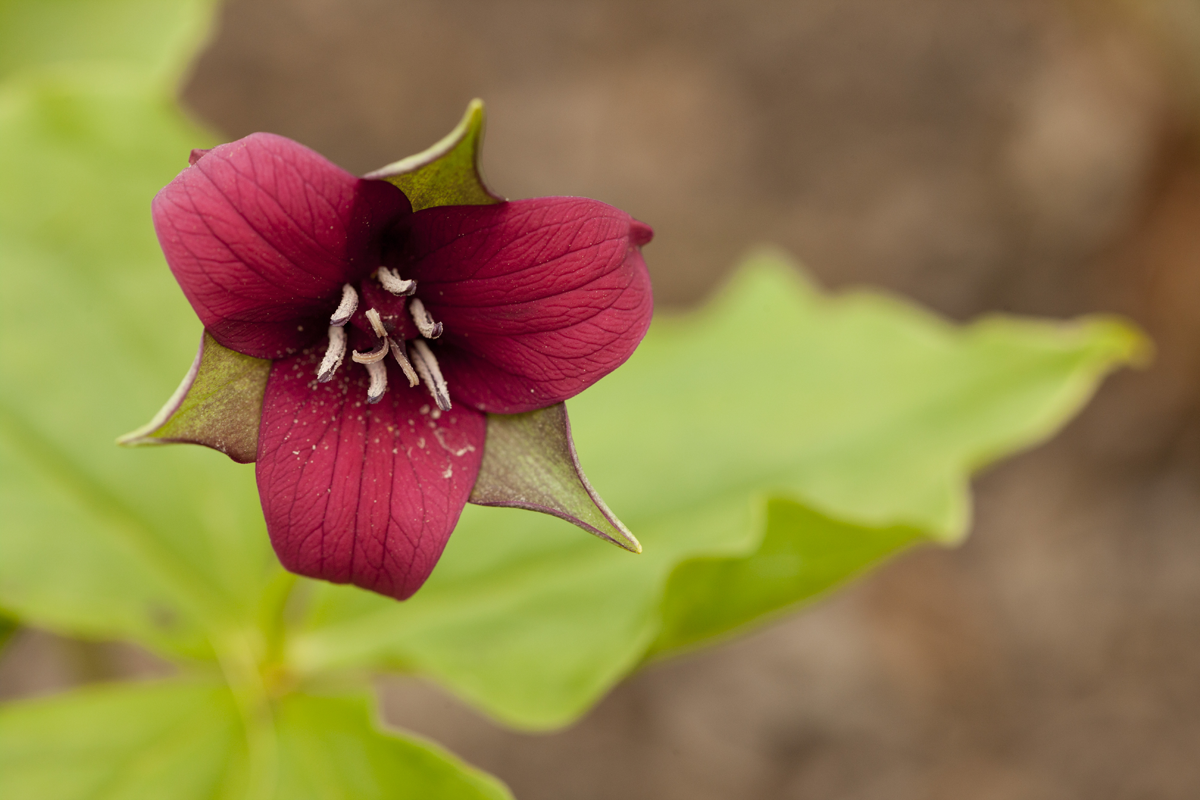
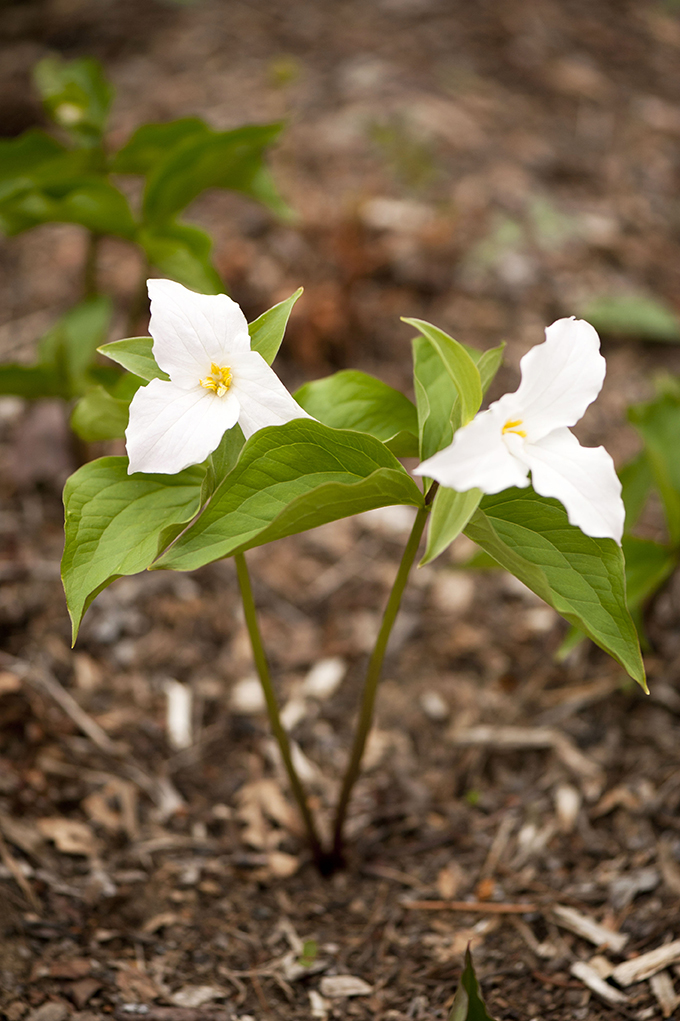
I was out in the woodland area of our soon-to-open Native Plant Garden and found myself overwhelmed by the beauty of all the different species of trillium we have planted there. Trilliums bloom in early spring, taking advantage of the time on the forest floor before the trees grow leaves and cast shade upon them. Trilliums, much as their name might suggest operate in threes: three leaves, three sepals, and three petals. The leaves are arranged in whorls wrapping around the stem from a single point. The result is a graceful zygomatic symmetry. Triullums are undoubtedly one of the most showy and elegant trichotomous woodland native plants.
There are two types of trillium, sessile and pedunculate. The flowers of sessile trilliums rest on the leaves without a flower stalk while pedunculate trillium flowers are elevated by a stalk. Sessile trillium tend to have mottled leaves that are spotted with silver or maroon coloring while pedunculate trillium have green foliage. Trilliums are slow to grow on their knobby rhizomes, but will slowly spread and form a nice clump, though it may take up to seven years before they flower if you plant them from seed. But, the pay-off is that once a clump is established in your garden it will live for decades.
I went up to our Native Plant Garden the other day to check on the progress of the restoration, an undertaking being handled by my colleagues, John Egenes and Michael Wronski.
Our Native Plant garden has been closed for the past year and is undergoing a full-scale redesign that is spearheaded by the design firm Oehme van Sweden, whose work has been seen in the Chicago Botanic Garden and United States National Arboretum. As part of the firm’s plan here at The New York Botanical Garden, the location will be broken down into disparate native habitats that include a wetland, a sizable pond, and a meadow. It will also have a large woodland area.
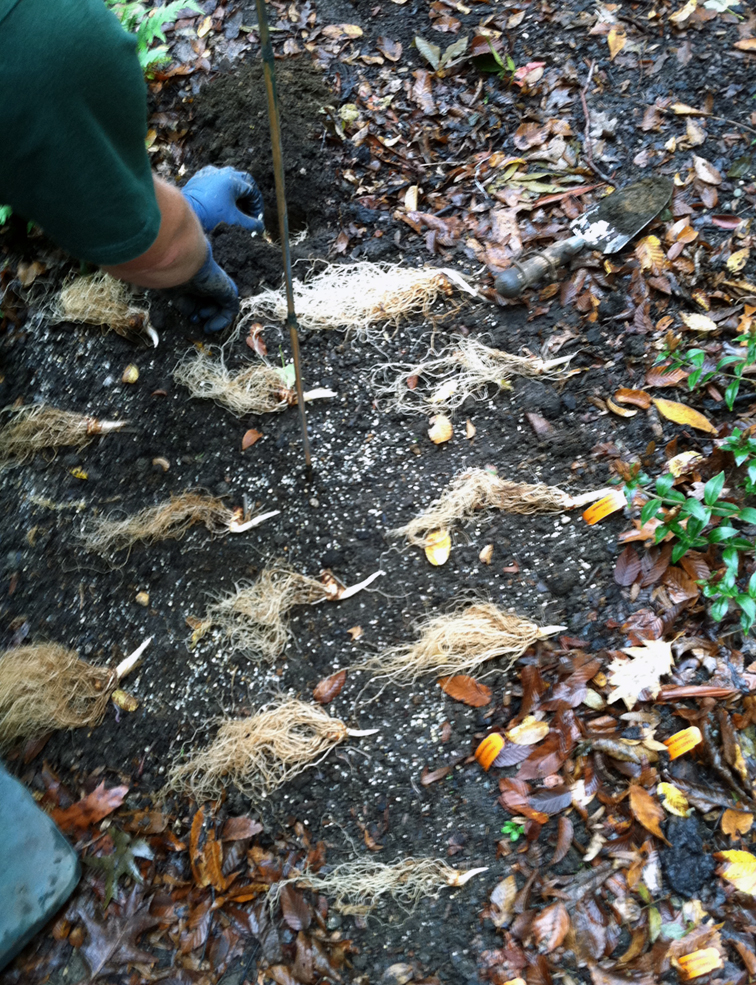
My colleagues spent most of their time over the last year preparing the soil in different sections of the garden, adding truckloads of compost and leaf litter. The topography of the garden has since changed and many areas have been graded, making paths ADA accessible for wheelchairs.