A quicksilver flash diverts your eye from the Bronx River’s frothy flow over the 182nd St. dam at River Park. Was it just the remnants of a potato chip bag slithering downstream?
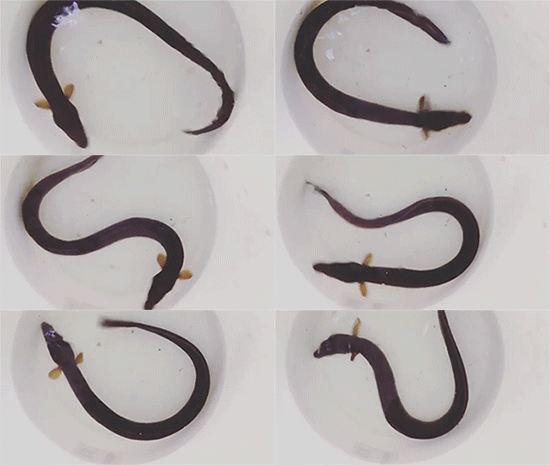
Look again, and quick! If you’re lucky, you could glimpse an American eel, Anguilla rostrata.
Against unfavorable odds, the American eel has persisted in the urban waterways of New York since the city’s inception—surviving years of industrial pollution, raw sewage dumping, and runoff. In recent years, their populations have entered a precipitous decline, driven in part by long-term effects of the damming of freshwater rivers and streams, which they require as habitat.
What makes this strange and wonderful species—its finely-scaled body coated in a mucous layer that is truly “slippery as an eel”—important?
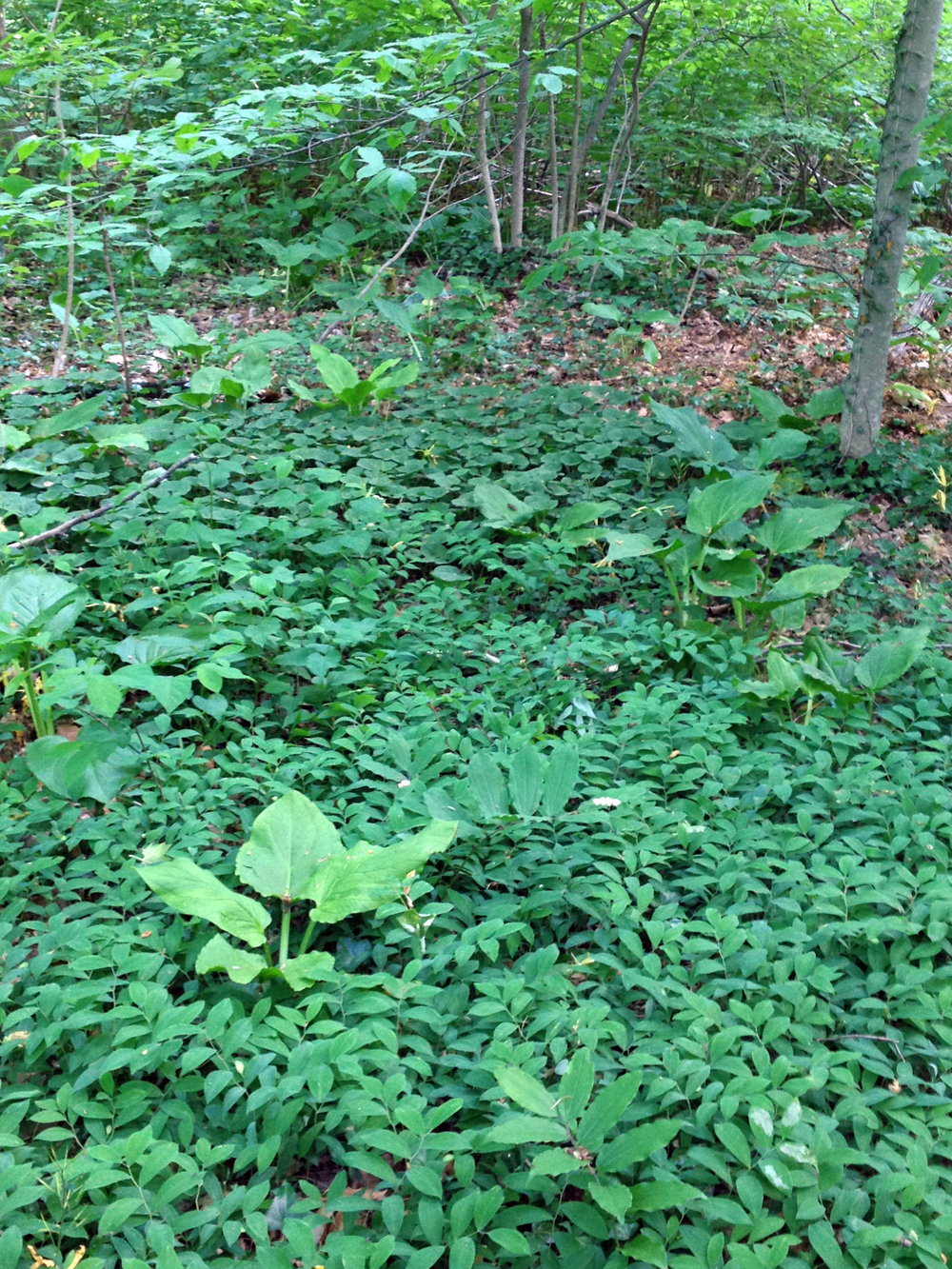
Abundant and diverse herbaceous layer in Garth Woods
On a steamy day in late May, a crew of invasive species scouts assembled in the parking lot of the Garth Woods Apartments in Scarsdale, Westchester County. Our mission? To survey Garth Woods, a sliver of intact riparian forest, for Corydalis incisa, also called incised fumewort or purple keman. Much to our excitement, this case of sleuthing had a happy ending: for now, Garth Woods shows no sign of C. incisa, and full to the brim with uncommon native herbs that were a joy to see.
C. incisa, which is native to Asia, is an emerging invasive along the Bronx River; it was first recorded in the New York metropolitan region during the Bronx Park BioBlitz in 2005, and has subsequently been observed along the riverbanks of the Bronx River in The New York Botanical Garden and in several sites in Westchester County.