Inside The New York Botanical Garden
Posted in People, Science on August 6 2009, by Plant Talk
Promotes Dialogue between Traditional and Western Medicine Practitioners
 |
Ina Vandebroek, Ph.D., is a Research Associate and Project Director of Dominican Traditional Medicine for Urban Community Health with the Botanical Garden’s Institute of Economic Botany. She has also conducted research on the medicinal uses of plants for community healthcare in Bolivia since 2000. Photo of Ina by Bert de Leenheer
|
 Bolivia is a landlocked country in Latin America with a high level of biocultural diversity. The Andean mountains that run through the country from northwest to southeast give rise to 23 distinct ecological zones, ranging from the high plains (altiplano) at 13,123 feet, to lowland Amazon rain forest at less than 1,000 feet. The total number of plant species found in Bolivia is still unknown, but estimates are around 20,000. More than 30 distinct indigenous languages are spoken in the country—a reflection of its high ethnic diversity.
Ever since I first set foot on Bolivian soil, I became enamored with the country’s cultures and traditions. Bolivia, or la llajta (home) as the Quechua people who make up one-third of its population would say, is where you eat roasted cow heart with peanut sauce (anticuchos), pay a ritual tribute to Mother Earth (la Pachamama) each first Friday of the month, or negotiate a good price with vendors at the largest open-air market in Latin America. The market, called La Cancha in the city of Cochabamba, is where you can find nearly anything you dream of. My favorite corner is where the dry and fresh herbs are as well as seeds, incense, llama fetuses (used for spiritual purposes), and mesas or ritual preparations for Mother Earth.
The Bolivian lowlands are home to several indigenous groups, many of whom do not have easy access to biomedical healthcare. This means that, all too often, traditional medicine is the only healthcare available. The crushing reality is that in life-threatening situations such as a hemophilic newborn, a venomous snakebite, or a serious gallbladder infection—all to which I have been a powerless witness—people die without reaching a hospital. Luckily, for many other illnesses, traditional healers are able to play a secure role in maintaining overall community health. Being indigenous community members themselves, healers’ role in healthcare is pivotal. Patients trust them and share with them the same cultural beliefs about the causes and treatment of illnesses.
Last month I began organizing indigenous community health workshops in Bolivia with the objective of promoting dialogue between biomedical healthcare providers and traditional healers about frequently occurring health problems. The idea is for the two groups to reach consensus about the best ways for traditional healers to deal with these conditions in communities without access to biomedical healthcare.
Read More
Posted in Exhibitions, Programs and Events, The Edible Garden on August 5 2009, by Plant Talk
 |
Gayle Schmidt is Manager of Public Education. |
 Imagine relaxing in a big backyard, enjoying a summer evening with friends along with good food, good music, and beautiful surroundings.
Well, you can do that right here at the Botanical Garden. On the next three Thursday nights beginning tomorrow, we continue our Edible Evenings series with a special addition—the Waterlily Concert series. These evenings are so fantastic, with great talent and friendly company to share in the event.
During Edible Evenings, the Garden’s hours are extended—until 8 p.m. for exhibitions and until 9 p.m. for the programs. In the cooler evening hours you can view the exhibitions in The Edible Garden, including Fruits, Roots, and Shoots, Martha Stewart’s Culinary Herb Garden, and the Beginners Vegetable Garden. Of course, you’ll also want to stop in to the Conservatory Courtyards to see Waterlilies and Lotus: An Aquatic Exhibition.
All evening at the Tasting Terrace you can sample beer and wine and specialty foods as well as learn about the research on edible plants by Garden scientists. You can also learn from Garden horticulturists about how to start your own herb or vegetable garden. Beer, wine, snacks, and sandwiches are available for purchase as you settle in for the cooking demonstrations and the concerts at the Conservatory Kitchen on the Conservatory Lawn. (The stage is adaptable to each event, so there is no need to re-orient your seating!)
The critically acclaimed Jeb Patton Trio will play a jazz set on August 6 following the infused tea demonstration by Mandy Aftel that complements the Coffee and Tea theme of the evening. She will show how to create scented teas and talk about the herbs and flowers such as jasmine, ginger, and rose used to make the teas.
Read More
Posted in Exhibitions, Programs and Events, The Edible Garden on August 4 2009, by Plant Talk
 |
Mandy Aftel creates artisan natural perfumes and is the co-author of Aroma, a cookbook that focuses on the essential link between food and fragrance. She will be presenting at this Thursday’s Edible Evening. |
Tea is a source of inspiration for me as a perfumer; it is a perfume we drink as it possesses aromas of wood, leather, and earth. In a great tea the taste as much as the smell will provide interest. Both tea and perfume are fragrant liquid: Tea is perfect harmony by nature, perfume by man.
Oolong teas, in particular, possess a diverse and appealing range of sophisticated, complex, and richly rewarding flavors and aromas such as peach, apricot, melon, leather, amber, and sandalwood. Oolong teas are made from large tea leaves, sometimes with the stem attached, because a more mature leaf yields more flavor during the partial oxidation in the manufacturing process.
My personal favorite oolongs are the green-leafed ones that are rolled into irregularly shaped balls. Fine oolongs require several successive infusions for the leaves to unfurl to their full extent. They do not open to their original size until the third or fourth infusion. Once fully open, oolongs can commonly be infused several more times—sometimes for as many as eight times. This is similar to a fine perfume that evolves on the skin over time, demanding new samplings of the aroma.
I have always loved everything about brewing, smelling, and drinking tea in beautiful ceramic teapots and cups. I wanted to bring my tea habit and my perfume work together, so I tried many dozens of oolong varieties, gravitating toward Dong Ding and Monkey-Picked Ti Quan Yen. Their aromatic complexity, the sophistication of their manufacture, and the long history of their development have no equal outside the French wine culture. With these two varieties I found the most interesting aroma and taste: They are complicated, rich, and able to stand up well to pairing with essential oils.
I decided to fragrance the Dong Ding using a beautiful jasmine with a hint of mint and the Monkey-Picked Ti Quan Yen with fresh ginger and Turkish rose. My creative process in making the tea was like the one I use in making a perfume— finding harmony among all the various aromas and flavors, like a marriage that brings out the best in both partners.
Posted in Gardening Tips on August 3 2009, by Sonia Uyterhoeven
 |
Sonia Uyterhoeven is Gardener for Public Education. Join her each weekend for home gardening demonstrations on a variety of topics in the Home Gardening Center. |
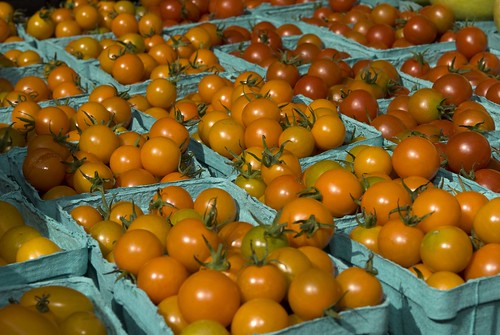 Tomatoes originated in the Andes Mountains of Peru, where eight different species of tomatoes still grow in the wild. They were first brought to Central America and domesticated by the Aztec, who grew a yellow form of the cherry tomato (Lycopersicon cerasiforme) that they mixed with peppers and salt to create the first salsas.
The Aztec named these little fruits xitomatl, which translates into “plump little thing with a navel.” Subsequent Central American tribes renamed the fruit tomati It was brought to Europe by Spanish and Italian explorers, including Hernando Cortez and Christopher Columbus.
When the tomato first arrived in Europe it was viewed with suspicion. Tomatoes are members of the nightshade family (Solanaceae), and their foliage is similar to deadly nightshade (Atropus belladonna), which was a well-known poisonous plant used as a hallucinogenic drug and a beauty aid. It was fashionable in medieval courts for women to dilate their pupils with drops made from the plant. When taken as a hallucinogen, the drug induced visions and a feeling of flying that were associated with the practice of witchcraft.
To make matters worse, the upperclass ate off of pewter plates that contained a high lead content. Tomatoes, being high in acid, would cause the lead to leach out, resulting in lead poisoning. The first tomatoes, renamed pomi d’oro or golden apple by the Italians, where thought to be inedible; they were viewed as ornamental plants. Only the poor, who ate off of wooden plates, consumed the fruits.
Read More
Posted in Exhibitions, The Edible Garden on July 31 2009, by Plant Talk
 |
Andrew Beckman is editorial director of gardening for Martha Stewart Living and co-host of the satellite radio show Homegrown. |
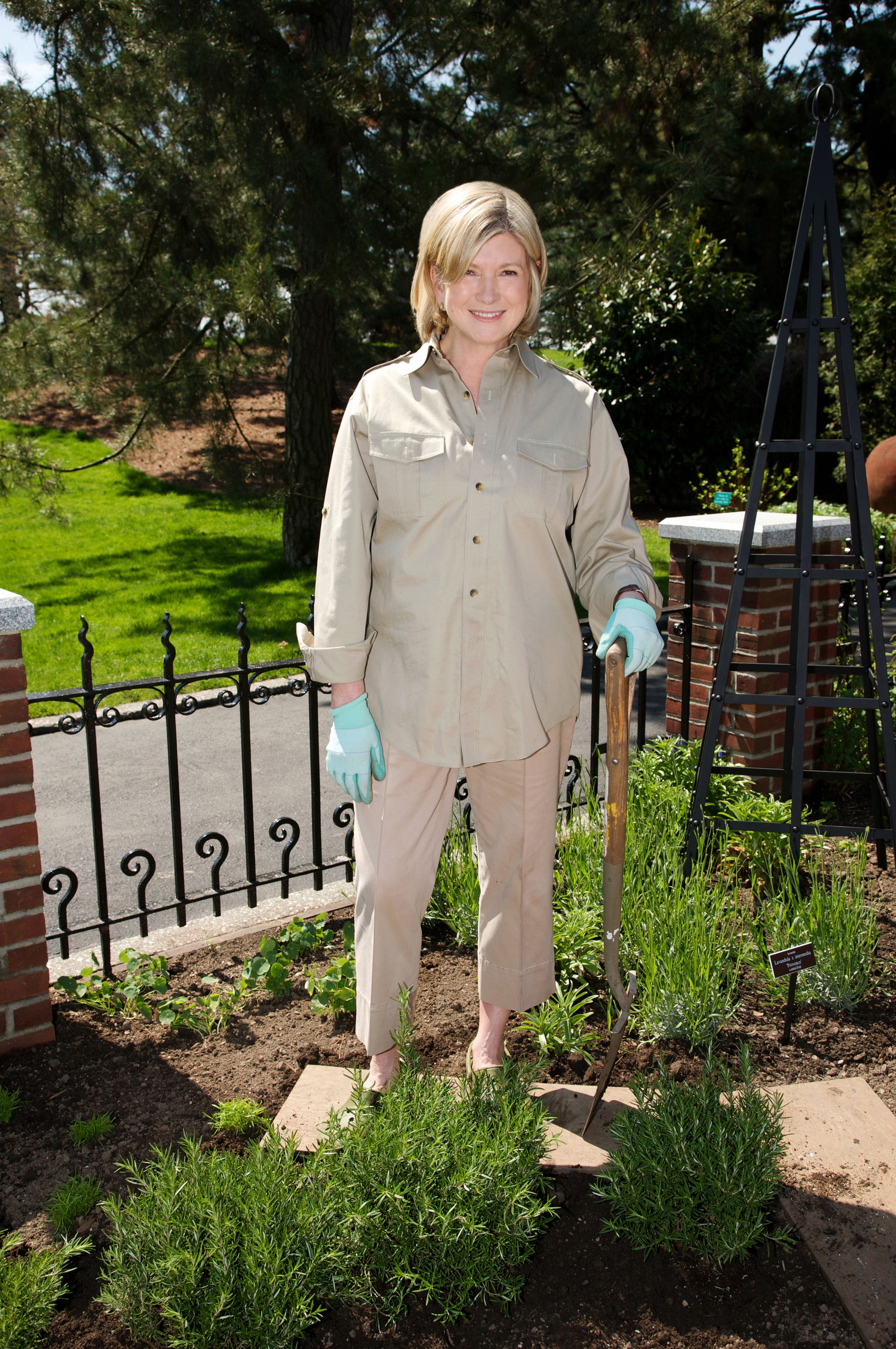
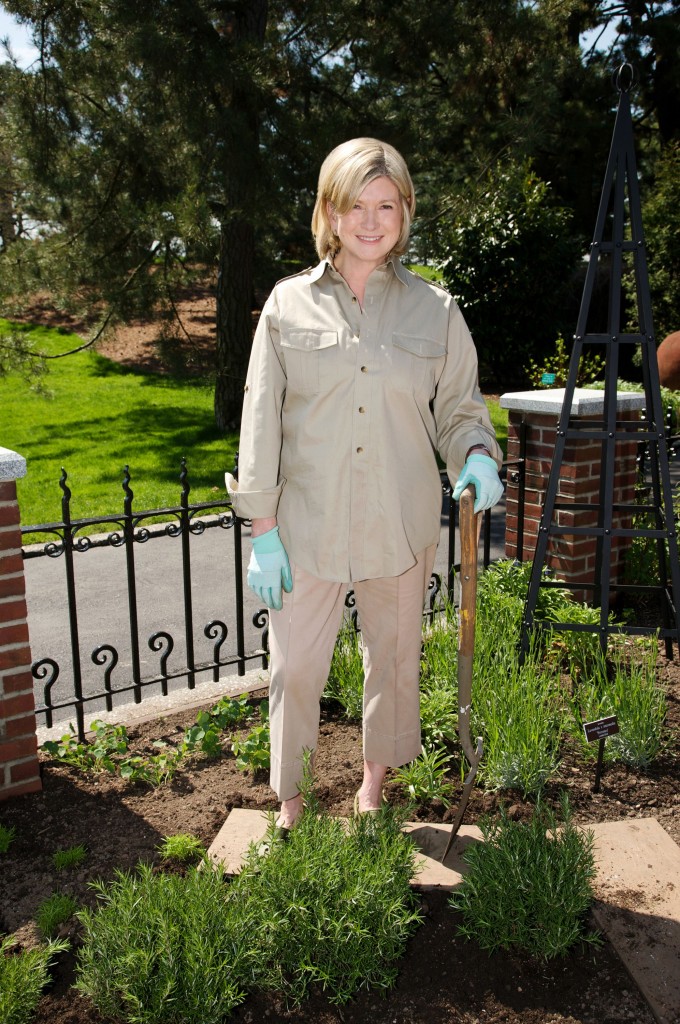 I must admit I groaned a little when Martha told me that she had agreed to redesign the herb garden at NYBG as part of The Edible Garden summer-long exhibitions. I’m not a big fan of herbs: They aren’t the most visually interesting plants, being mostly fine textured and green-gray. To top it off, the existing features at the location such as the shrubs, trees, and paths would dictate so much of the design.
But after seeing the site and meeting with NYBG’s head horticulturists Todd Forrest and Margaret Falk, I sat down with Andrea Mason, our garden expert for the Martha television show, and Jodi Capobianco, Martha’s head gardener at the time. The three of us got stoked up on caffeine and sugar and got down to work. With a lot of laughter and talking over—and past—each other, we put together the plant list.
The plan included old standbys, Martha’s favorites, and some herbs from cuisines from other parts of the world. We plotted these onto the garden map, trying to mix up the textures and colors so the long borders to the sides of the garden would be as visually interesting as the parterre in the middle. Garden staff reviewed this first rough draft and suggested adding more silver plants and some edible flowers to spice up the design.
I revisited the site multiple times during this process, each time finding it smaller than it was in my memory. We asked Sal Gilbertie, owner of Gilbertie’s Herb Gardens in Westport, Conn., who donated the plants, for his advice on quantities and timing of the installation.
Read More
Posted in Exhibitions, Science, The Edible Garden on July 30 2009, by Plant Talk
 |
Scott A. Mori, Ph.D., Nathaniel Lord Britton Curator of Botany, has been studying New World rain forests at The New York Botanical Garden for over 30 years. As part of The Edible Garden, he will hold informal conversations about chocolate, Brazil nuts, and cashews—some of his research topics—during Café Scientifique on August 13. |
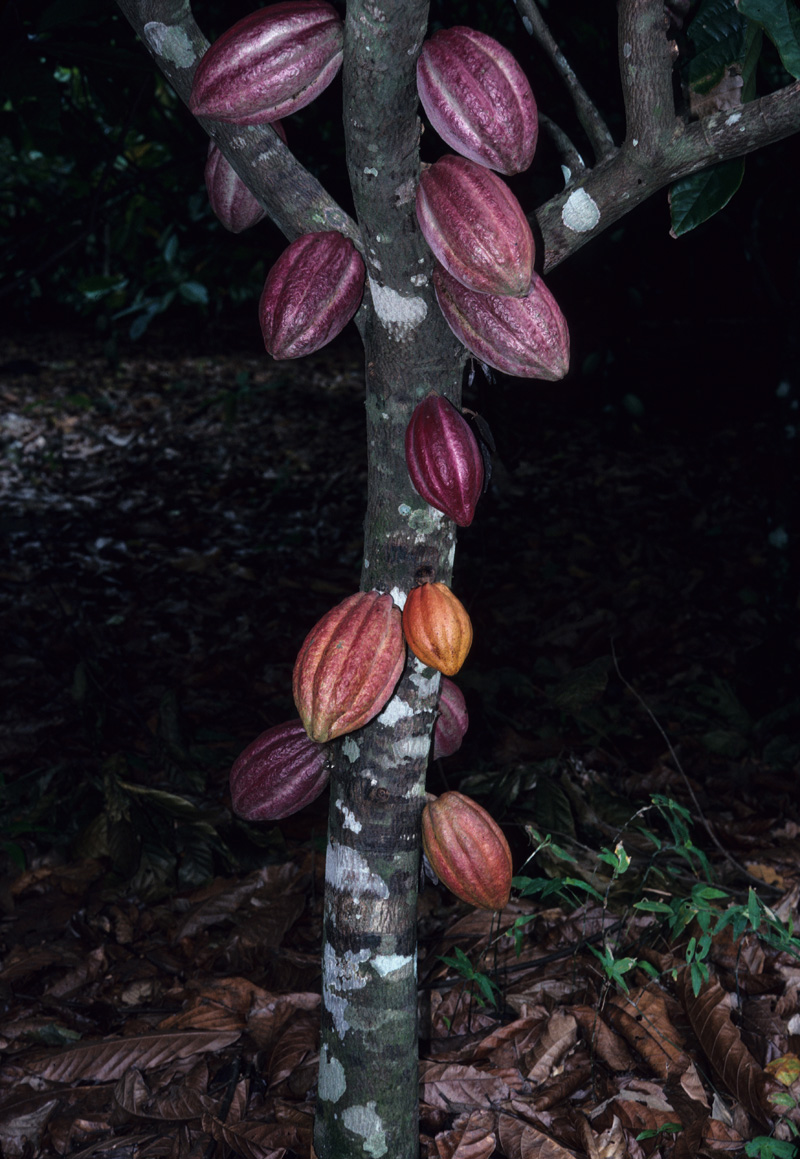
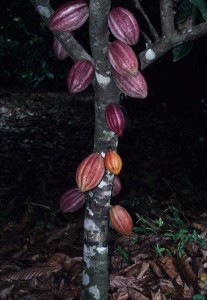 The chocolate that we eat and drink is one of the most complicated foods utilized by mankind. Not only did it co-evolve in the rain forests of the New World with still unidentified pollinators and with the help of animals that disperse its seeds, but it also undergoes an amazing transformation when it is processed, going from inedible, bitter seeds to the delicious chocolate products that most of us enjoy.
I became fascinated with the natural history and cultivation of chocolate while working for the Cocoa Research Institute in southern Bahia, Brazil, from 1978 to 1980. I directed a program of plant exploration in what was then, botanically, one of the least explored regions of the New World tropics. During those two years, I made 4,500 botanical collections, including many species new to science and many from cocoa plantations.
The scientific name of the chocolate tree is Theobroma cacao L. Theobroma means “food-of-the-gods” in Greek; cacao is derived from the Aztec common name chocolatl; and “L.” is the abbreviation for Linnaeus, the botanist who coined the scientific name of the chocolate tree. The genus Theobroma includes 22 species.
One of the unsolved mysteries of the natural history of chocolate trees is its pollinators. Most varieties of chocolate are self-incompatible, which means that pollination of the flowers of a given plant with pollen from the same plant does not yield fruit. There are, however, some varieties that are self-compatible—the single tree growing in the Enid A. Haupt Conservatory at NYBG is proof, because it sets fruit. Nevertheless, for most chocolate trees to produce fruit, pollen has to be moved from one tree to the next. This does not happen frequently in plantations, because the average tree produces between just 20 and 40 fruits each year from the thousands of flowers that open on the tree.
Thus, a limiting factor in the production of chocolate is successful pollination, and because this has economic implications there has been considerable research about how to increase the production of chocolate by enhancing pollination. Some researchers believe midges (minute, mosquito-like flies) are the pollinators of chocolate trees. But the complexity and relatively large size of chocolate flowers in comparison to the size of midges indicates that they might be occasional visitors rather than the true or only pollinators of chocolate.
Read More
Posted in Exhibitions, The Edible Garden on July 29 2009, by Plant Talk
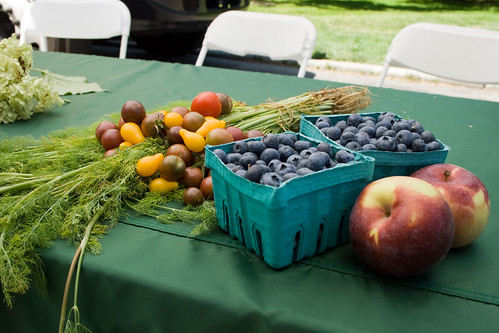 I entered the Garden through the Mosholu Gate on a beautiful July morning, with my refrigerated bag and freshly chilled ice blanket waiting in the trunk. My mission was to spend no more than $20 on fresh produce at the Greenmarket and head back to the Viking kitchen to preserve what I found. As I walked through the market stalls, I wished I had set a higher budget; cabbages, fresh berries, gorgeous tomatoes, greens of all sorts, and the season’s earliest apples all called out to me.
Eleven dollars bought me three pounds of amazingly sweet heirloom cherry tomatoes in all shapes and sizes. Another $9 was spent on plump, fresh blueberries and four crisp Empire apples. I did not count the delicious cinnamon-apple scone I purchased toward my budget—it was a necessary luxury.
All told, I spent about three hours cooking and canning. I find this work to be meditative and pleasant, and I’m always pleased to open a jar of something out of season when mid-winter comes around.
I hope that you will try this recipe below and stop by The Edible Garden Conservatory Kitchen on August 8 to see my home canning presentations at 1 and 3 p.m. I’ll teach you how to make your own fruit preserves and tomato sauce, and you can taste some of the fruits of my labor putting up this summer’s amazing local produce. On a dark and snowy February day, you’ll open a jar of something special that you made with love, and you’ll be glad you did!
Read More
Posted in Exhibitions, The Edible Garden on July 28 2009, by Plant Talk
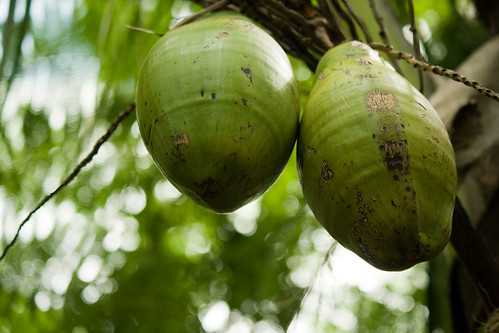
The coconut palm (Cocos nucifera) is often called the “tree of life” in honor of its varied uses. The hairy, brown-husked seeds contain a white meat that is a popular ingredient in sweet and savory recipes. It is grated and blended with water to create coconut milk and pressed to produce coconut oil—both useful cooking ingredients. The coconut water inside the seed is also a refreshing and highly nutritious drink. See this plant and more on the Edible Plant Tour during The Edible Garden.
Posted in Gardening Tips, The Edible Garden on July 27 2009, by Sonia Uyterhoeven
|
Sonia Uyterhoeven is Gardener for Public Education. Join her each weekend for home gardening demonstrations on a variety of topics in the Home Gardening Center. |
 Edible flowers are not to everyone’s taste. Some are wonderfully fragrant and delicious, others are lemony, some are spicy and tangy, others taste green and weedy, and some even taste fishy. Edible flowers are a good way to add color and seasoning to your summer salads. They brighten up herb butters and dress up desserts. When added to a bowl of sugar or to a bottle of vinegar and left to steep for several weeks, they create inventive, tasty combinations.
Some flowers need a little bit of preparation before they are ready to tickle your tongue. The sepals, stamens, and stigmas of some flowers such as borage (Borago), tulips (Tulipa), and daylilies (Hemerocallis) should be removed before eating—only the petals are eaten.
Pinks (Dianthus) and roses (Rosa) can have a bitter white edge at the base of the petal, which should be cut off before using. Some marigolds (Tagetes) are divine, but others are not—try the lemon-flavored Tagetes tenuifolia ‘‘Tangerine Gem’ and ‘Lemon Gem’.
For the best flavor, harvest flowers either when they are in bud or have just opened. Harvest on a dry day, mid-morning after the dew has evaporated and before it gets too hot. It is best to use flowers when they are fresh. They can be refrigerated for several days, but they do not dry or freeze well.
Read More
Posted in Exhibitions, The Edible Garden on July 24 2009, by Plant Talk
 |
Jessica Blohm is Interpretive Specialist for Public Education. |
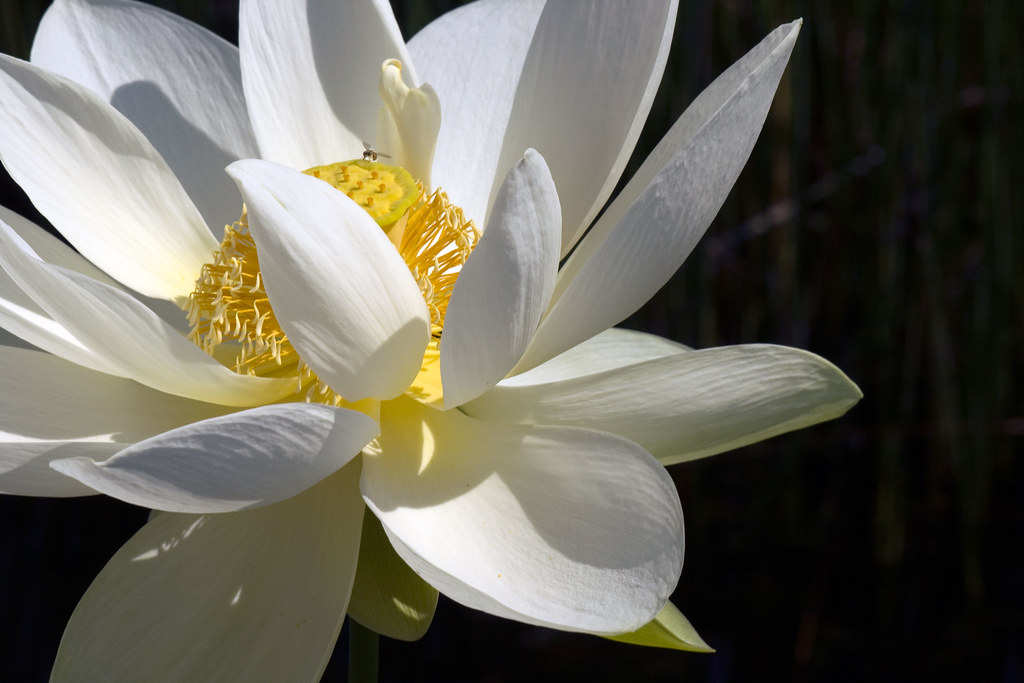 The Garden’s 250-acre National Historic Landmark landscape includes thousands of edible trees and plants. Through signs and audio interpretation, visitors can learn about 57 of these edible plants on the Edible Plant Tour during The Edible Garden.
The tour features an array of plants, from the tropical coconut palm (Cocos nucifera) to our native sugar maple (Acer saccharum), source of that favorite breakfast topping, maple syrup. The tour also offers visitors a chance to share their stories and traditions about various plants and to listen to stories from other visitors, an exciting new feature.
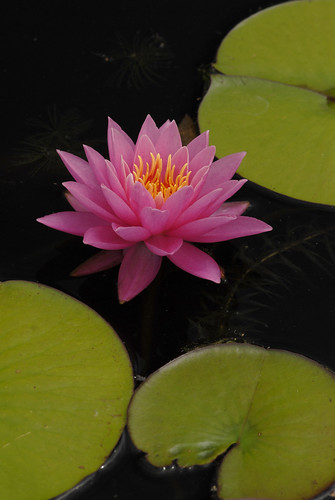
Lotus (Nelumbo), pictured here, which has edible flowers, leaves, stems, and seeds, is just one of the many interesting plants featured on the Edible Plant Tour. Through the interpretive signage on the tour you would learn that the flower petals of the lotus can be used as a garnish and the stamens dried to create a fragrant tea. The leaves are used in infusions or to wrap other foods, and the seeds are eaten whole or combined with sugar to yield the paste found in pastries such as mooncakes. Its rhizomes or underground stems (often called lotus roots) can be stir-fried, braised, deep-fried, or even pickled in Asian cuisines.
See this plant and many others up close and personal when you visit The Edible Garden.