Inside The New York Botanical Garden
Posted in Exhibitions on July 10 2009, by Plant Talk
Garden trends come and go, but the edible garden, despite its changing names, has been a stable feature in American life.
 This summer, in conjunction with The Edible Garden summer-long exhibitions, the LuEsther T. Mertz Library presents a display featuring the “war” or “victory” garden, the movement inspired during the years of World War I (1917–18) and World War II (1941–45) when vegetable gardening became an act of patriotism as well as practicality. Citizens were encouraged to grow, can, and store crops to ensure self-sufficiency at home and to keep the nation’s distribution of food focused on our troops and allies.
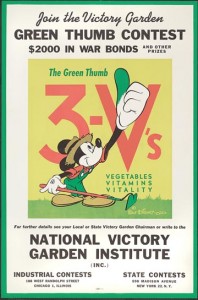
On display are brochures, photos, nursery seed catalogs, a musical score, and archival items that narrate and depict the Victory Garden movement that spanned the nation and, with government, business and community support, proved to be successful. One poster circa 1944 features Mickey Mouse pitching the Green Thumb Contest sponsored by the National Victory Garden Institute. From 1942 is a musical score, Swing that Hoe and Watch Your Garden Grow, by William Eben Tourjee.
The exhibit also highlights The New York Botanical Garden’s significant contribution to the national cause during the years of the Second World War, including images of the Garden’s own Victory Garden.
For more Edible Garden events and weekend activities, click here.
Posted in Learning Experiences on July 9 2009, by Plant Talk
Take Classes in Amagansett, Learn Veggie Gardening, and More!
 |
Duncan Himmelman, Ph.D., is Program Manager for Continuing Education. |
I decided to take advanced physics in the months between my junior and senior years in high school, sensing it would give me a slight edge in the college application process and that it would free up my senior year schedule to pursue extracurricular activities. My friends were aghast: “Nerd” had not yet been coined, but I was certainly viewed as the precursor. Yes, it was difficult, both the advanced physics and loss of fun times with friends and family, but it was taught in such an engaging manner that it galvanized my decision to pursue science in college. Summer school was the key to my future! Who knew?
Summer is the ideal time to take on an academic or leisure time educational pursuit. Continuing Education offers a diversity of programming this summer both here at the Garden and in such far flung places as Amagansett on Long Island. Located in the middle of summer-cottage country, the nearby beaches of Amagansett provide spectacular vistas from which to learn the fundamentals of drawing or watercolor painting. If art is not for you, then learn about garden design or growing roses using a totally organic approach. No matter what, combining the leisurely pace of summer life with a fun course or two can be just what the doctor ordered.
If you are staying closer to home, near the Garden, why not enroll in the one-day Vegetable Gardening for Beginners program on Saturday, July 18. In keeping with The Edible Garden celebration and with the current “grow your own garden” craze sweeping the nation, come get the fundamentals needed to grow a bunch of veggies, from soil preparation and seeding to garden maintenance using strictly organic methods. Summer school was never so much fun.
For those who are more serious-minded about summer school courses, consider signing up for one of the Summer Intensives offered in Botanical Art and Illustration or Floral Design. Located here at the Garden, you will be amazed at the many locations where you can gain inspiration for the Illustration courses and actually sit outdoors to draw. Floral Design, an intensive five-week program, brings you from basic floral techniques through the creative process of designing wedding and “grand scale” arrangements. Perhaps, like my physics summer school course, you’ll find it demanding, but it may also be the touchstone you’ve been waiting for!
Posted in People, Science on July 8 2009, by Plant Talk
 |
Wayne Law, Ph.D., is a Postdoctoral Research Associate who studies ecology, ethnobotany, and conservation in Micronesia. Come speak with him at our Café Scientifique on July 9, from 6 to 8 p.m., in the Conservatory Courtyard as part of The Edible Garden. |
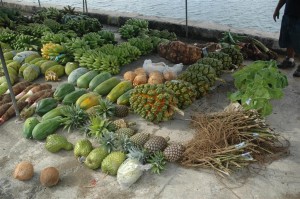 When someone asks you to visualize a banana, most people in the United States will picture the typical, slightly curved, yellow-skinned banana with a bland white flesh that can be found at local grocery stores. However, a number of different varieties exist: small bananas, straight bananas, red-skinned bananas, creamy-tasting bananas—even bananas that have a bright-orange flesh—and many of these varieties can be found on tiny islands in the Pacific known as Micronesia, where Botanical Garden scientists are conducting research.
One of our goals in Micronesia is to record traditional plant knowledge that is the foundation of these islands’ unique cultures. The plant knowledge throughout this region is incredibly diverse as plants are integral to all aspects of daily island life, from the construction of houses and canoes to use as medicines and foods. As traditional ways of life are influenced by modern amenities, we are constantly seeing evidence that traditional plant knowledge is being lost and that many common items once made from nature are being replaced by plastic products that have an origin thousands of miles away. One study we conducted analyzed the knowledge of food plant varieties in Kosrae, the easternmost island of the Micronesia chain.
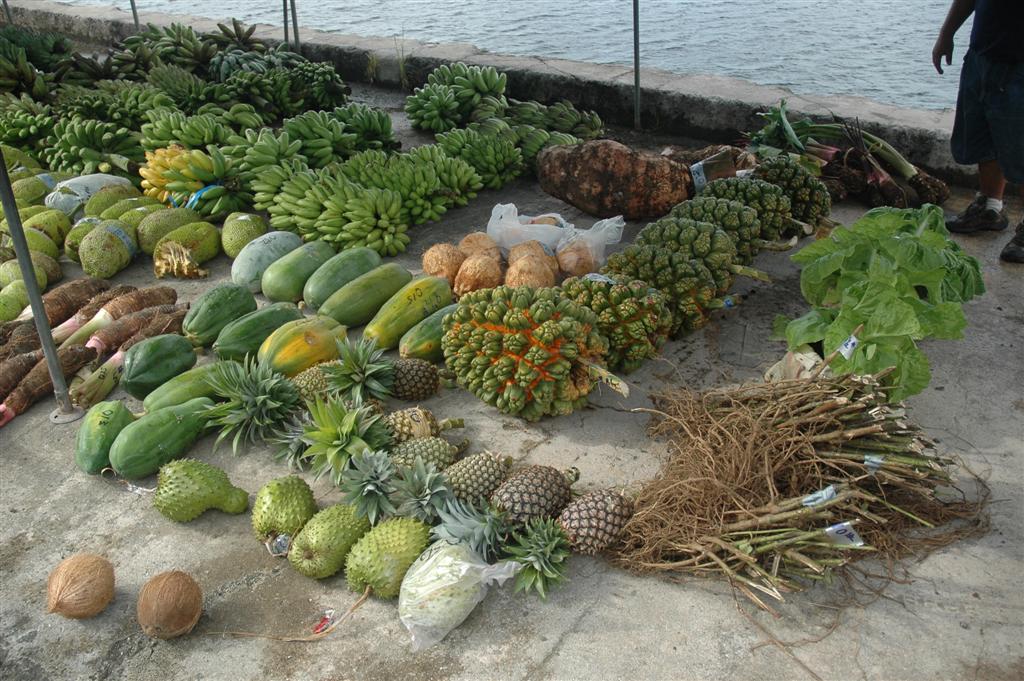
By the early 1900s, Kosrae, an island home to 7,000 people in the Eastern part of Micronesia, had already been exposed to French and Russian explorers, whalers, beachcombers, pirates, and traders, beginning the erosion of what had been a very traditional Pacific island lifestyle. At that time, Ernst Sarfet, a German ethnographer, documented much of Kosrae’s cultural aspects and plant uses during the Hamburg South Seas expedition, an impressive voyage that lasted two years and produced a 13-volume publication based on the observations made during the expedition. The translated work provides an early record of the different varieties of bananas, breadfruit, coconuts, pandanus, sugar cane, soft and hard taro, and yams. (The photo shows a display of some of the fruits and vegetables mentioned, during a holiday celebration in Kosrae.)
Read More
Posted in Exhibitions, The Edible Garden on July 7 2009, by Plant Talk
 Carol Capobianco is Editorial Content Manager at The New York Botanical Garden.
Arthur Avenue.
Those two words conjure up so many sights, sounds, smells, and flavors all having to do with great food—Italian, that is.
As a kid growing up in the neighborhood I remember seeing round men with a napkin about their neck dousing raw clams with hot sauce and then slurping them down. I remember hearing the cacophony of clucking, caged chickens awaiting their turn with the butcher at the fresh poultry and rabbit market.
And the smells of the beloved “real Little Italy” were overwhelming and everywhere: fresh bread from the bakeries, sausage and peppers grilling at the street feasts, and from open apartment windows, tomato sauce (or “gravy” as we called it) simmering away.
But it was the flavors—and the quality—that are most reminiscent and what still brings me and countless others back to the area. The melt-in-your-mouth ravioli and fresh mozzarella, the sharp cheeses and imported prosciutto, the fine cuts of meat and the specialty fish, the incomparable breads and pastries, the strong espresso coffee.
And for those who don’t cook or who want to taste Italian food at its best in America, there are the restaurants, with menus filled with so many delicious meals that just reading the choices makes your mouth water. When I take my first bite into a dish made at these places, I can’t help but close my eyes and sigh with appreciation for these superior, soulful foods that can be savored right here in New York—and so close to The New York Botanical Garden.
Some of these delectables will be available for you to sample this Thursday from 6 to 9 p.m. at A Taste of Arthur Avenue, the first of seven Edible Evenings planned during The Edible Garden.
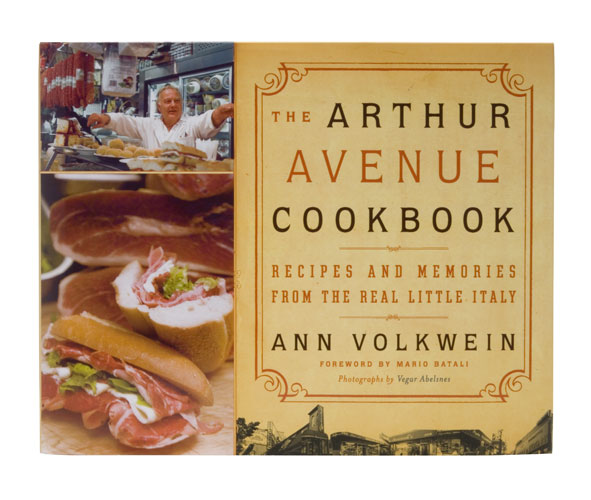
If you’d like to try your own hand at cooking some of the special dishes found on Arthur Avenue, you’ll find dozens of recipes in The Arthur Avenue Cookbook carried at Shop in the Garden.
Posted in Gardening Tips on July 6 2009, by Sonia Uyterhoeven
 |
Sonia Uyterhoeven is Gardener for Public Education. Join her each weekend for home gardening demonstrations on a variety of topics in the Home Gardening Center. |
 Have you ever observed the popular kids in school? They look stylish seemingly without having made an effort, are confident and outgoing, and always seem to surround themselves with beautiful people.
Vegetables are no different. Some of them are born with style while others struggle to cast off their utilitarian image. Some just have a universal appeal, others are easy to grow and never disappoint, while a select class can transform any second-rate chef into the next Jacques Pépin.
An Internet survey of the most popular homegrown vegetables in the country resulted in the following Top 10: tomatoes, peppers, cucumbers, onions, beans, lettuce, carrots, sweet corn, radishes and cabbage. (Reading the list just made me hungry.) How were the choices made?
Not surprisingly, tomatoes were at the top of the list—close to 90 percent of the population includes tomatoes in their vegetable garden. Both tomatoes and peppers are incredibly prolific—if you have space for only one plant you will get a nice harvest.
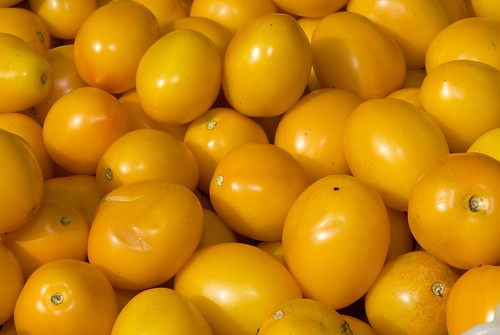
Tomatoes and peppers are also easy to buy as transplants at your local garden center or farmers market. The choices are always exquisite: Do you want an F1 Hybrid or an heirloom? Would you like a sweet pepper or hot pepper? What color would you like the fruit to be this year… yellow, purple, red, orange, or green?
Read More
Posted in Exhibitions, Programs and Events, The Edible Garden on July 3 2009, by Plant Talk
 |
Andrew Haight is Manager of the Everett Children’s Adventure Garden. |
Maps have always captured children’s imagination. Growing up I had every intention of becoming the next Indiana Jones. I hunted down buried “treasures” in my parent’s basement and made my own maps. I carefully crinkled the sheets, even tearing the corners to make the paper maps appear from “olden times.” The mystery and excitement seemed trapped on these sheets of paper; I felt they could lead me to new adventures.
This summer as part of The Edible Garden, maps will play a central role as we focus on the adventure in the Everett Children’s Adventure Garden through Flower Power!
Visitors can embark on their own journey through a series of activities laid out as a map inside each child’s field notebook. For instance, the map points out where a family can stop and make a pollinator puppet to take home and also guides children to several different activity and play stations, including a spot where they can mold their own flower out of clay.
The map allows children to choose their own route. Along the way they can discover the larger-than-life flower models, detour through Beth’s Maze, or simply take their time to explore each nook and cranny of the Garden. With the reins in each child’s hands in the form of a map, the possibilities are endless.
For more Edible Garden events and weekend activities, click here.
Posted in Exhibitions, The Edible Garden on July 2 2009, by Plant Talk
I’m a self-proclaimed minimalist. I don’t really know how it happened (a result, most likely, of having moved 16 times in the past 10 years), but it has permeated all parts of my life, including my kitchen. Despite that, I’ve always made space for some homegrown produce in my life—or on my windowsill, to be more precise. And having a garden to eat from is the basis of how I learned to cook, a reality that’s not easy for anyone. (It helps that my home region of Southern California is an agricultural utopia where nearly anything will grow anytime of year). And while I’ve never had enough space to sow a full garden, the idea of eating as fresh and as in season as possible has stuck with me.
With green, sustainable, and local as the buzzwords du jour, it can become intimidating figuring out how, if at all, it can work for you. All that moving I’ve done and all the creative ways people have embraced those tenets in my current hometown of San Francisco has led me to this conclusion: Make sure whatever you do works with your lifestyle, and you’ll be more likely to stick with it in the long term. There are plenty of resources out there for the gung ho: you can get a subscription to a CSA (Community Supported Agriculture), get a plot in a community garden, or just support your local farmer or grocer who you think is doing it right.
And, there’s a huge upside for the food obsessed—you and your family start to learn a lot about ingredients you once may have considered mundane (like that Brussels sprouts grow on stalks, that chickpeas are tasty fresh, that freshly grown cucumbers actually have taste, or even that kids will eat freshly picked tomatoes like candy once they’ve experienced how sweet they actually are).
Read More
Posted in Exhibitions, The Edible Garden on July 1 2009, by Plant Talk
 |
Nick Leshi is Associate Director of Public Relations and Electronic Media. |
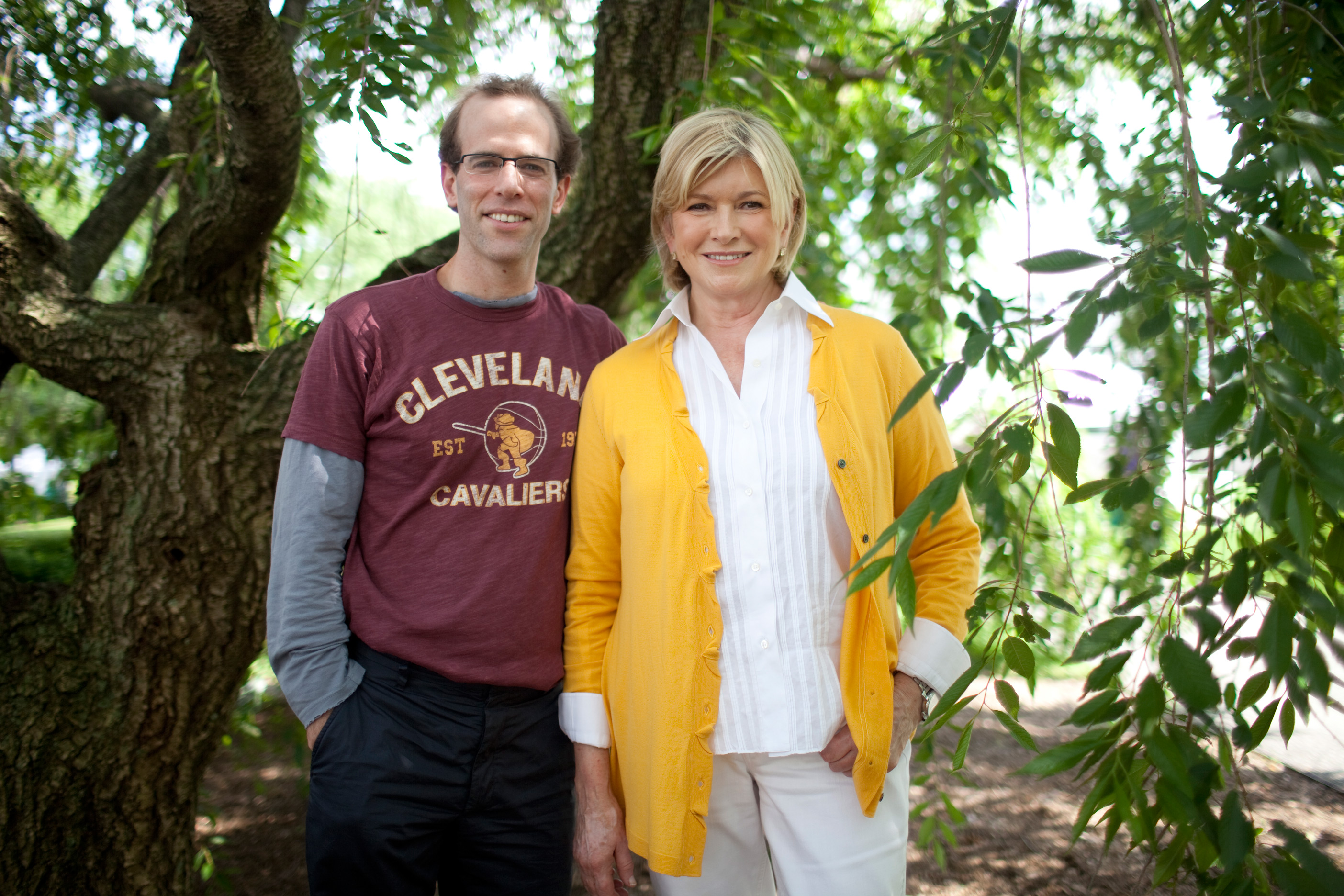
With gorgeous weather and in front of enthusiastic crowds, Martha Stewart and Dan Barber were among the celebrities who kicked off the opening of The Edible Garden summer-long exhibitions this past Saturday at The New York Botanical Garden. You may have seen some of the coverage on NY1 News, WABC-TV, WCBS-TV, or WNBC-TV, or you may have read about it in New York magazine, The New York Times, New York’s Daily News, or online at Daily Kos and dozens of blogs.
Those of you who were here in person witnessed Martha Stewart and her friends answering audience questions about the Culinary Herb Garden they designed and demonstrating how to make delicious cocktails using homegrown herbs. Dan Barber, winner of the James Beard Foundation 2009 Outstanding Chef Award, captivated visitors with his insightful presentation about the farm-to-table movement. Other special guests who appeared on the Conservatory Kitchen stage during the opening weekend, providing delectable cooking demonstrations, were: Johnny Iuzzini, Michael Anthony, Peter Hoffman, Aida Mollenkamp, and Michel Nischan. Recipes by some of The Edible Garden participants can be found on our Web site. Thanks to all of our sponsors for helping make it all possible.
Other attractions included lectures by Amy Goldman on Heirloom Tomatoes and Rosalind Creasy on Gardening with Heirloom Flowers and Vegetables. There were booksignings, home gardening demonstrations, and tours—all part of the Botanical Garden’s continuing efforts to showcase edible plants as economical, nutritious, and good for the environment.
If you missed the opening weekend, you can still experience The Edible Garden throughout the summer until September 13. Multiple exhibitions are on display across the Garden’s 250 acres, including Tropical Fruits, Roots, and Shoots in the Enid A. Haupt Conservatory and Vegetables and Kids in the Ruth Rea Howell Family Garden, to name just two. Other highlights of The Edible Garden include an Edible Audio Tour narrated by Mario Batali and others, Edible Evenings for seven Thursday nights beginning July 9, the Farmers Market all day every Wednesday and Saturday, and a closing weekend festival to wrap it all up on September 12 and 13.
For all the details and to purchase tickets, visit our Edible Garden Web pages.
Posted in Uncategorized on July 1 2009, by Plant Talk
Carol Capobianco is Editorial Content Manager at The New York Botanical Garden.
 We can hardly believe it, but a year has already passed since our blog content team first assembled and officially launched Plant Talk: Inside The New York Botanical Garden.
Since then we’ve brought you a full schedule of posts from Monday through Friday on a broad range of topics, from gardening tips and science stories to behind-the-scenes glimpses and fun things to see and do. And we’ve had an extensive field of interesting contributors—at last count, over 70 people had written entries, including staff members from a variety of departments, students, and volunteers.
Along the way we’ve picked up a number of fans: people who have selected Plant Talk as one of their favorite blogs or who have added us to their blog rolls or who have written about us on their own Web pages.
We hope you are enjoying the ride as much as we are. Please let us know what you’ve liked and what you’d like to see more of. As always, we look forward to hearing from you as we continue to share with you all the wonderful exhibitions, garden collections, programs, research, classes, and more taking place here at The New York Botanical Garden.
Posted in Uncategorized on June 30 2009, by Plant Talk
 |
Sandra Herbst is Public Relations Assistant. |
Let me start by saying I was never a nature person. I went camping when I was younger, but to some people, having air conditioning and a TV in your camper doesn’t count.
My appreciation of nature first began when I started taking my lunchtime walks around the Garden grounds last spring. I started walking as a way to get back into shape—we all want to fit into our teeny-weeny yellow polka-dot bikini, right?
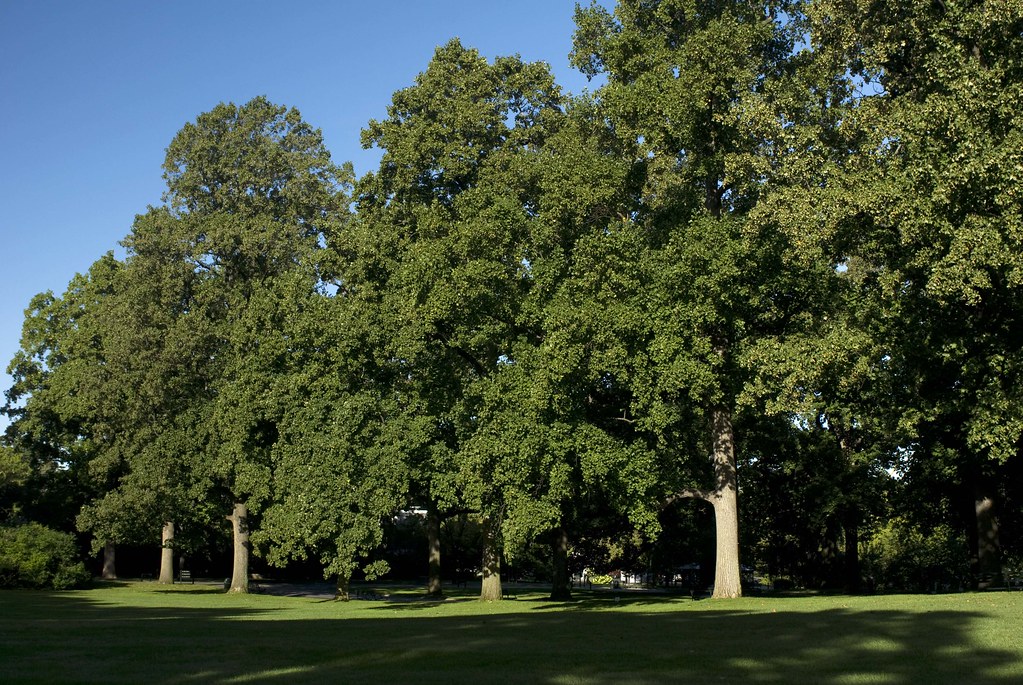 My route begins at the Watson Education Building, goes up Magnolia Way and past the Peggy Rockefeller Rose Garden, then down Azalea Way to the Everett Children’s Adventure Garden where I reverse course to return to the Watson Building. For me it takes about 45 minutes; for some of the joggers from Fordham University I see frequently, I’m sure less. These walks have become significant to me. They have become my peace, my happiness, and my way to de-stress during the 9-to-5 work week.
These walks have also made me love and appreciate the Garden for all of its natural beauty and structure. Seeing the cherry trees bloom in spring; the lush colors of green during the summer; and the rich reds, pinks, and oranges of the Rose Garden in the early fall always makes me smile. My eyes can never turn away from the green tree line against the bright, blue sky. This spring, I even started to count the number of bird nests I saw. There were so many, and of course, I came up with a different number each time.
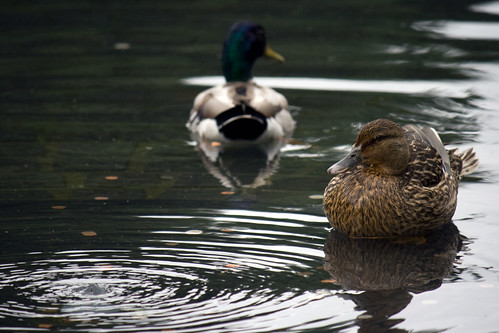 I can remember seeing Boyfriend and Girlfriend for the first time this year. Boyfriend and Girlfriend are the names I gave two ducks, one male, one female, that I saw all the time during my walks last year. They were always together in the tiny stream on Azalea Way near the Forest entrance. I saw them for the first time this spring in the Reflecting Pool while walking with a co-worker, and I blurted out “There’s Boyfriend and Girlfriend!” Of course, she had no idea what I was talking about, but I knew, and I was so excited to see them together again.
I still wouldn’t call myself a full-blown nature lover or anything. But I sure have come to appreciate the comfort, beauty, and serenity the Garden and nature offers.

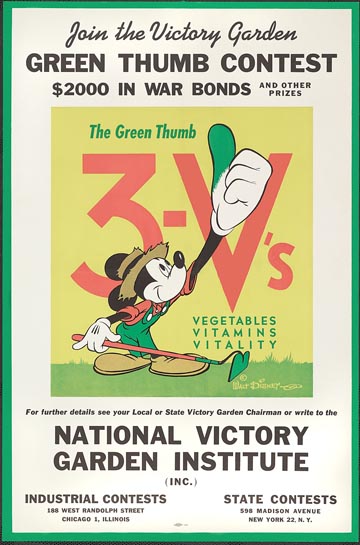 This summer, in conjunction with The Edible Garden summer-long exhibitions, the LuEsther T. Mertz Library presents a display featuring the “war” or “victory” garden, the movement inspired during the years of World War I (1917–18) and World War II (1941–45) when vegetable gardening became an act of patriotism as well as practicality. Citizens were encouraged to grow, can, and store crops to ensure self-sufficiency at home and to keep the nation’s distribution of food focused on our troops and allies.