Inside The New York Botanical Garden
Learning Experiences
Posted in Learning Experiences on February 24 2009, by Plant Talk
 |
Jeff Downing is Vice President for Education.
|
I speak with prospective landscape design students all the time. Many are in the process of considering career changes. They come from all walks of life and every field imaginable: marketing, graphic design, management, even law and medicine. They seek to move in a different direction for a wide variety of reasons, but all are intrigued by the possibility of a life working with plants outside the confines of a corporate office or just outside altogether. Many (but not all) seek the autonomy of developing a business of their own. But no matter what their history or interest, they all have one burning question: “If I earn a certificate in landscape design at The New York Botanical Garden, will I really be equipped to start a successful career?”
My answer to these queries is simple and succinct: “Yes.”
I say this with confidence not because of the comprehensiveness of the curriculum, the long history of the program, or the demonstrated excellence of the instructors—all of which are compelling recommendations in their own right. The true measure of the Garden’s landscape design program is the results. And I see the results each month when the Landscape Design Students and Alumni (LDSA) group holds its regular meetings down the hall from my office.
The LDSA has been meeting at the Garden since before I arrived 10 years ago. Once a month, 30 to 50 current and former students get together to hear presentations on different topics relevant to the professional practice of landscape design—estimating jobs, sourcing materials, considering ecological factors, developing their businesses—and to network with fellow alums who are out in the field working. The group is independently run and supported by the students themselves. The Garden provides a classroom—they do the rest.
To me, the LDSA group stands as a living, breathing testament to the success of the Garden’s landscape design program. There I reconnect with former students who’ve gone on to start successful businesses of their own, or to work with established firms. In many cases, I can recall my first conversations with them, when they were tentatively wondering whether pursuing a certificate would lead them to a new career. Now, with confidence in their eyes and business cards in their hands, they come back to share their experiences with their fellow pros and discuss the projects they’ve completed and the lessons they’ve learned. For me, that is the real measure of the program’s merit.
On Saturday, March 14, the Garden will host a free Continuing Education Open House. Come sit in on mini-classes, speak with instructors and program coordinators, and participate in career talks to hear first-hand what the Garden’s certificate programs can do for you. Spring and summer classes are all online now. Register online, or request a copy of our latest catalog. Spring is a great time to plant the seeds of a new career!
Posted in Learning Experiences, Programs and Events on February 6 2009, by Plant Talk
Much to Do Here, Even at this Time of Year—Surprised?
 Carol Capobianco is Editorial Content Manager at The New York Botanical Garden.
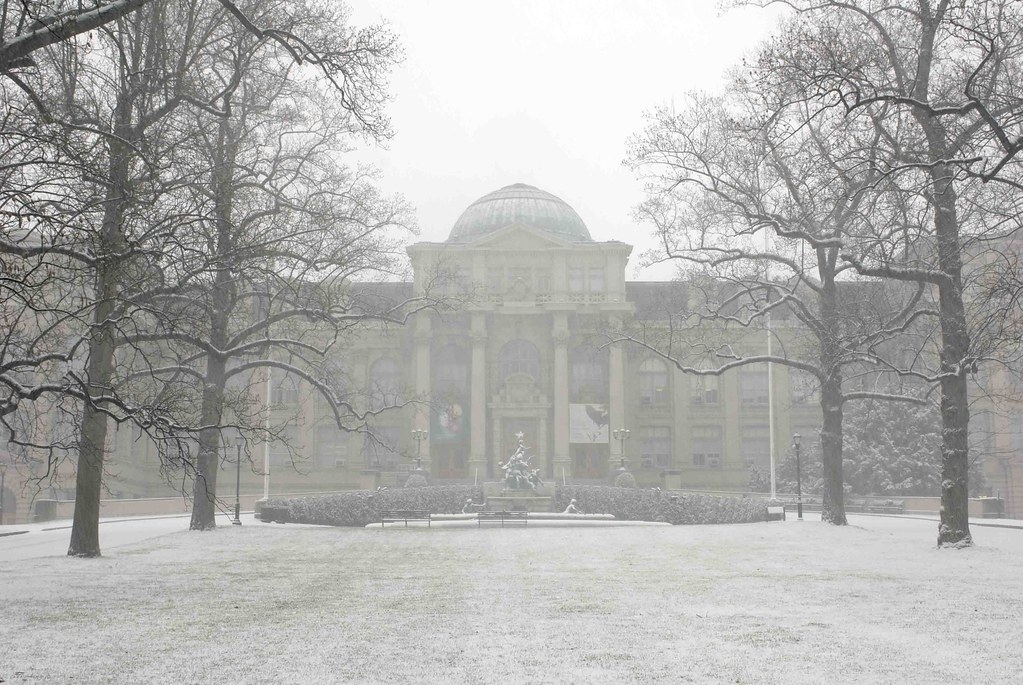 Yes, it’s below freezing outside. Yes, most plants are dormant and bedded under a blanket of snow. Yes, it’s a great time to come to The New York Botanical Garden with fresh eyes to take in the standing and specialty exhibits you haven’t yet seen.
Surprise your friends, kids, or lover by suggesting a day at the Garden in winter. It may seem a little offbeat, but what a treat it can be, because there is so much to do here.
For the bold: Enjoy the cold, crisp air with a guided tour of the Forest or a Saturday morning walk to identify birds with an expert. Or stroll on your own.
For the snuggly set: Don’t like the cold? Warm up inside the glasshouse galleries of the Enid A. Haupt Conservatory for an ecotour around the globe in A World of Plants. Use the self-guided audio tour, or experience the exhibit with a docent tour. Later, stop at one of the Garden’s Cafes for soup, lunch, and hot beverages, and duck into Shop in the Garden to select a needed gift or a good gardening book to cozy up with.
For the procrastinators and the “let’s do it again” folks: Whether you still haven’t seen Moore in America or want to see it again in a different season, these are the final days of the largest outdoor exhibit of sculptor Henry Moore’s works ever presented in a single venue in America.
For the curious: Discover what the Botanical Garden’s scientists are researching and understanding worldwide in the ongoing exhibit Plants and Fungi: Ten Current Research Stories. In fact, Garden scientist Dr. Amy Litt will be giving a talk in the gallery on Saturday, February 7, at 1 p.m.
For the home gardener: Each weekend Sonia Uyterhoeven, Gardener for Public Education, gives informative presentations and demonstrations on home gardening topics.
For the family: Get hands-on with fun activities that explore the fascinating life and accomplishments of the man who helped peanut, soybean, and sweet potato farmers in The Life and Work of George Washington Carver.
For the browser: Spend time perusing the world-renowned collection of botanical books in the LuEsther T. Mertz Library. You will want to visit again and again—the Library holds more than 1 million items spanning 10 centuries.
For the photography enthusiast: View the vibrant color portraits of heirloom tomatoes by Victor Schrager on exhibit—a sampling of the amazing 500 varieties grown every year in the garden of acclaimed food writer Amy Goldman—in The Heirloom Tomato. Bring your camera and take your own fantastic images of the shapes of trees, the Garden’s snow-covered landscape, and the tropical plants in the Conservatory (and share them with us on Flickr).
For the lifelong learner: Cultivate yourself by attending one of the many course offerings of the Continuing Education department. In fact, you can start by signing up for the Special Saturday, all about shade gardening, to be held tomorrow, February 7.
Check out Saturday’s programming.
Check out Sunday’s programming.
Posted in Learning Experiences, People on February 5 2009, by Plant Talk
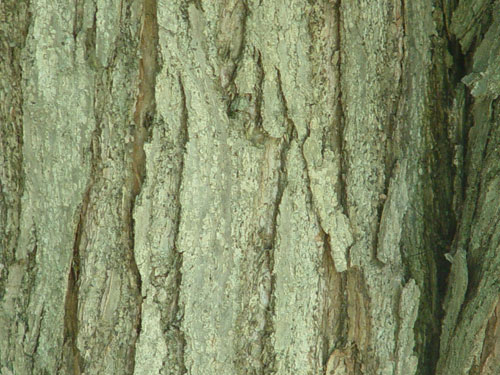 Trees, Earth’s largest and longest-lived plant forms, are Nature’s gift to us. They provide for our sustenance—giving us fire, fruit, shade, shelter, medicine, and soil enrichment—and they beautify our environment. Fittingly, trees hold a lofty position in many cultural traditions, symbolizing qualities such as wisdom, fertility, courage, or strength. And the prominence of trees in folkloric and religious practices reminds us of the many blessing they bestow. For some people trees offer solace, for others they represent ongoing life, and for others they enlarge the definition of “community.”
Wendell Berry, novelist and essayist, sees trees from this last perspective. “You’ve got to understand what kind of creature a tree is…they have to receive from us certain deference, a certain respect, as we would extend to any neighbor.”
When trees are seen as our neighbors, commingling in everyday life, they become a part of our family, standing as silent sentinels, growing amid—and despite—the tumult of human activity. It is the idea of a tree as ally and protective presence that stirs my imagination and compels me to “talk to the trees.”
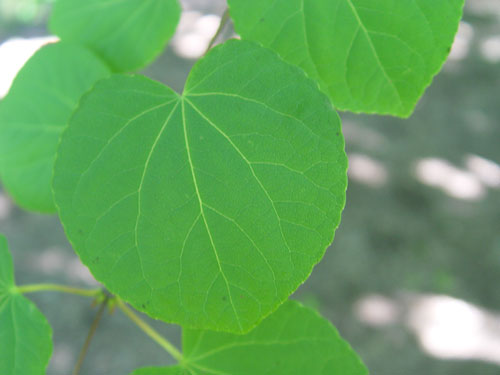 In my visits to The New York Botanical Garden I often silently talk to the trees. I have special trees that I go to again and again. One of my favorites is the grand Katsura tree (Cercidiphyllum japonicum) that is standing on the right side of the Library building. At any time of year I can walk beneath its spreading boughs and feel a sense of lightness envelop me. The peace and serenity that permeates the atmosphere is palpable. It is as Eckhart Tolle writes in his book Stillness Speaks: “When you look at a tree and perceive its stillness, you become still yourself.” In my case, it is more than looking, it is a true communion.
Posted in Gardens and Collections, Learning Experiences, Programs and Events on January 30 2009, by Plant Talk
Tour Guide-led Walks Enlighten Visitors
 |
Samantha Buck is an Interpretation Intern for Public Education. |
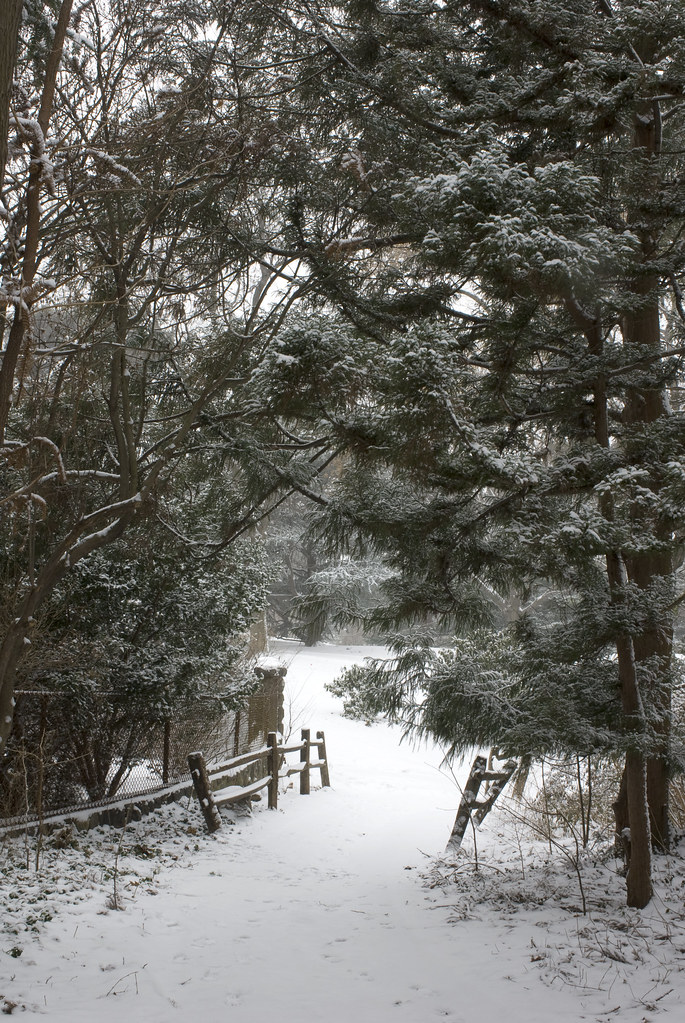 Recently, I took a Forest Tour with the very knowledgeable Garden Tour Guide Ken Lloyd. For those of you who don’t know what a Garden Tour Guide is, as I didn’t, they are expertly trained volunteers who are essential to the Garden’s success.
It was a nippy day to say the least, especially since I was unprepared for the tour and as such hadn’t dressed in layers as I normally would have had I known (I take pride in my preparedness being a Mainer born and raised). So off I went with Ken in my dress pants and sneakers, braving the chilly air and our runny noses to explore some of the trees in the Garden.
Our first stop was at the umbrella pines that, as Ken pointed out, were planted in the very early 1900s. Their red-colored bark and multi-stemmed trunks made them a unique stop on our adventure. Just past the Everett Children’s Adventure Garden, we stopped at the Chinese elms along the road. Ken explained how Dutch elm disease, an introduced fungus, had decimated the American elm population. He also stated that there are some elm species that can be treated for the disease and others that are resistant to it.
On entering the Forest, I felt I was in the most peaceful place in the city. The Forest is kept as natural as possible—there is no snow removal from the paths, no native trees are cut, and life is allowed to take its course. However, invasive species that encroach the area are removed and fires that start are put out. None of the descriptive signs I encountered elsewhere on the Garden grounds were present in the Forest, but Ken was able to discern the species from their bark or the form of the tree itself, by the way the branches grow and the shape of their buds. The only signs present were placed only on a few trees in order to track changes that occur over time. Volunteers record these changes once a month.
I also learned the reason why the trees aren’t any bigger or older in the Forest, despite the lack of human involvement. During the last Ice Age, a fair bit of the soil was removed by glaciers and deposited into the ocean. As a result of this shallow soil, it is difficult for the trees to establish a good root system that would allow them to reach monstrous heights.
I highly recommend taking one of The New York Botanical Garden’s many Tour Guide-led tours—it was definitely one of the highlights of my internship here. I learned a substantial amount despite my damp, cold feet. Just be sure to dress appropriately for the weather so you’re able to immerse yourself completely in the experience.
A guided Forest Tour will be held on Saturday, January 31, at 12:30 p.m. Meet at the Reflecting Pool in the Leon Levy Visitor Center.
Check out Saturday’s programming.
Check out Sunday’s programming.
Posted in Learning Experiences, Programs and Events on January 22 2009, by Plant Talk
 |
Jeff Downing is Vice President for Education. |
In the past year the Garden has developed a number of training programs in conjunction with the New York City Parks Department to help increase the pool of capable job candidates. First, the Garden’s Horticulture and Education divisions collaborated on an urban tree care course to train a new generation of Parks foresters. Next, the Garden designed a special course for the Parks Opportunity Program, which trains local career-seekers in the fundamental skills necessary for the numerous vacant horticulture positions at the Parks Department and elsewhere. Recently, the Garden devised yet another program, one that is training 30 competitively selected 18–24-year-olds to help facilitate Mayor Bloomberg’s Million Trees Initiative.
The common thread in all of these wonderful initiatives is opportunity: Even in uncertain economic times the field of horticulture offers a wealth of career prospects for those willing to learn the required professional skills. And the opportunities are not just in New York City but throughout the region and beyond.
It has hit me that we at the Garden need to do a better job of spreading the word about the multitude of horticulture-related career tracks—from propagation and plant care to arboriculture, landscape and garden design, and horticultural therapy (using plants in therapeutic settings). So in the fall, the Garden’s Continuing Education program organized a couple of free Career Information Sessions and asked recent Continuing Ed certificate recipients to come and discuss their experience in the Garden’s education program and how it helped them get started in a new career.
Landscape Design graduate Robert Welsch talked about his burgeoning business, Westover Landscape Design, in Westchester. Sheri Forster explained how the Horticulture certificate she earned just this past spring allowed her to jumpstart a thriving business of her own, The Scottish Gardener, in Manhattan. Other former students and program instructors rounded out the evenings, giving their own unscripted and unedited appraisals of the business of horticulture and the Garden’s education programs. The give and take was free flowing, and those who came asked all the questions I would want to know if I were thinking about a new career such as:
- If I invest the time and money to learn these skills, will there really be career opportunities available when I complete a certificate?
- Do the Garden’s certificate programs provide all the knowledge and skills needed to really do this?
- Do I have to commit to a whole program before I really know whether this is for me, or can I start with a short introductory class and see how it goes?
If you missed these informative sessions but are interested in learning the answers to these questions (and any others) about careers in horticulture and landscape design, we’ve arranged to do the whole thing again, with a new group of students and instructors. So mark your calendar for Wednesday, January 28, from 6 to 8 p.m. and pre-register to attend our free Career Information Session.
I hope to see you there!
Posted in Learning Experiences on January 13 2009, by Plant Talk
 |
Joan McGillicuddy, a double certificate graduate of the Continuing Education program, now has her own design company, The Surrogate Gardener, on Long Island.
|
It’s a new year, so it is time for me to see which lectures in the American Gardening Lecture Series I might be able to schedule. I started attending NYBG’s Lecture Series years ago as part of a personal goal to expand my plant knowledge. I went on to complete two certificates, one in Horticulture and one in Landscape Design, through the Botanical Garden’s Continuing Education program and now have a career as a landscape designer. Yet, every year I still make time to attend several of the lectures in this series. I am an unrepentant plantaholic. In spite of what some garden design books say about having a plan, several past presenters have admitted to the same compulsions, so I merrily continue to experiment with new plants.
It doesn’t matter how many garden books or magazines I read, there is nothing like the immediacy of listening in person to experts— landscape architects and designers, plant hybridizers and nurserymen, authors and garden curators—impart their knowledge. The Lecture Series always offers a diverse mix of subjects and speakers, and I always leave inspired to try new plant introductions, new combinations of tried and true plants, or new horticultural practices. Then there is the added treat of reviewing the books laid out like jewels on the tables in the Gallery outside the Lecture Hall, which only tempts me to go to the Shop to review the entire book collection.
The Lecture Series is scheduled at a perfect time of the year, when my garden is quiet and nursery catalogs are arriving and I have time to track down the plants I am inspired to try. After the lectures and a bowl of soup at the Cafe, I stroll through NYBG’s gardens and see which plants are greeting the new year, since it is warmer here than at my home on Long Island. My favorite plant is the large Hamamelis on the outer drive that holds its yellow flowers through the snow. It always signals to me that spring is around the corner. The Ladies’ Border, which runs along the south side of the Conservatory, always has something new in bloom each month of the series, whether it is January, February, or March. It might be Mahonia, Edgeworthia, Hamamelis, Helleborus, or Camellia. This year it will be a treat to watch the emergence of the display beds across from the Cafe entrance, known as Seasonal Walk, that were created by the well-known designers Piet Oudolf and Jacqueline van der Kloet. I happened to see the beds being installed this past fall, and they look to be an intriguing mix of bulbs, perennials, and grasses.
At a time when much of the world news is gloomy, it is nice to have all this to look forward to.
Posted in Learning Experiences, Shop/Book Reviews on December 19 2008, by Plant Talk
Recipes for Holiday Gift Giving
 John Suskewich is Book Manager for Shop in the Garden.
See the high accolades given to the Shop’s book section by the Financial Times of London.

I suffer from an edible complex: I am always thinking about eating! So I find myself irresistibly drawn to the food section of the bookstore, checking out the display copies of new cookbooks to see how the recipes stack up: One of the perks of the clerk. This is how I’ve come up with a number of recommendations for holiday gift giving for the foodies in your family!
Anyone who looks forward to putting on their annual winter layer of fat will be pleased with A Year in Chocolate. In this month-by-month guide to cooking with cacao, noted New York chocolatier Jacques Torres has adapted for the home cook his exquisite, indulgent desserts full of butter and cream with explicit but not complicated instructions. I love fine eating, but I still ignored all the ones that called for tempered chocolate and headed right for the brownies and the poached pears with chocolate sauce. The chocolate cookie that includes ancho chili powder among the ingredients is a real sweet slap in the face!
 Okay, the New York dead of winter is not the right time to think of farmers markets, but Outstanding in the Field, by Jim Denevan, with its seasonal and market-based recipes, summons up summer in a dish so evocatively you’ll be living in July in perpetuity. These recipes derive from the impromptu farm dinners created by Mr. Denevan and his fellow foodies for their unique, eponymous organization Outstanding in the Field, which goes across the country creating locavore versions of ’60s-style happenings, eat-ins maybe? I don’t know if they’ll ever come to the Bronx, but you can re-create the experience with the corn chowder, spinach gnocchi, and the free-range chicken dishes described here. Not until the roast turkey do you find a recipe that goes on for more than two pages. But if you’re like me you’ll read it, think “How interesting,” and then accept the invitation to dine at your sister’s for the holiday feast.
 There is no point in trying to ignore the Barefoot Contessa, a.k.a. Ina Garten, whose latest cookbook is Back to Basics. She is as irresistible as the brownie pudding there on page 218. The subtitle is “fabulous flavor from simple ingredients,” but it is the element of subtle sophistication that sets her recipes apart. BC’s BLTs add avocado; roasting replaces poaching in her shrimp cocktail; caramelized onions fillip the burger. When she says “This version has always been my favorite but…” and then she tweaks it with one ingredient or maybe two, or some technical change…and the dish is transformed! She makes it look easy, but that inventiveness takes years of practice.
There you go. We’re really into food this season, and we’ll be expanding the selection as we ramp up to our big summer show on edible gardens. Stay tuned for details. Can’t wait for the okra to come in!
For more gift-giving ideas, view the Shop in the Garden staff’s favorite picks.
Also the Holiday Train Show is in full swing!
Check out Saturday’s programming
Check out Sunday’s programming
Posted in Learning Experiences, Programs and Events on December 17 2008, by Plant Talk
|
Jeff Downing is Vice President for Education. |
When I was a kid growing up in rural Newtown, Connecticut, my best friend, Cliff, and I climbed trees. We were good. We could shimmy, twist, and scamper our way to the highest branches that would support our meager weight. From there, we would survey the neighborhood like forest rangers as the treetop swayed. (We never understood why our moms cried in horror whenever they discovered us happily perched 30 feet above our roofs.) Those were the days.
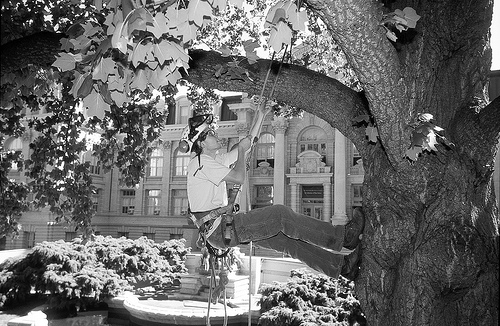 If someone had told me then that you could actually make a career out of climbing trees, I would have said, “Where do I sign up?” And now, when I speak with passionate recreational gardeners about the frustrating shortage of skilled horticulturists, many respond with similar wide-eyed surprise: “You mean I could do this for a living?”
But the fact is that arborists and horticulturists of every description are truly in demand, and have been for some time. Botanical gardens, municipal parks departments, estate managers, and landscape design/building firms all lament the shortage of trained professionals, from entry level gardeners to horticulture directors and executives. And the best I can figure, it is largely for lack of public awareness that these career tracks actually exist!
The New York Botanical Garden’s Continuing Education program and School of Professional Horticulture have trained generations of the world’s finest horticulturists for over 80 years. Now, certificates are offered in seven disciplines, including horticulture, landscape design, floral design, and horticultural therapy.
But in this economy, will there be jobs? I can’t tell the future, but I know the history—too few trained professionals for too long. And I know the present—trees still need to be pruned, gardens still need love and care. Look up the New York City Parks Department’s Career Opportunities, for just one example. Then go to our Continuing Education Web page and register online for an introductory class (or call us at 1-800-322-NYBG for guidance). The Garden’s classes are like potato chips: I bet you can’t take just one.
Posted in Learning Experiences, Programs and Events, Wildlife on December 12 2008, by Plant Talk
Here’s What You May See on the Tally
 |
Debbie Becker leads a free bird walk at the Garden every Saturday from 11 a.m. to 12:30 p.m., beginning at the Reflecting Pool in the Leon Levy Visitor Center. Join her tomorrow, December 13, for the 2008 New York Botanical Garden Bird Count.
|
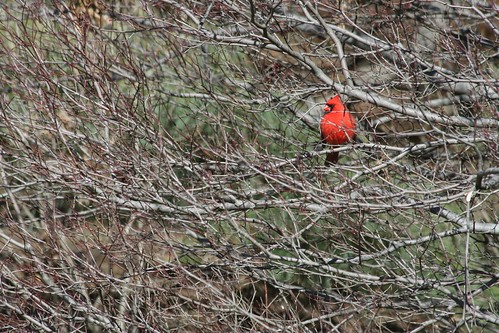 Every year at this time, birders flock to the parks and woods across the country and beyond for National Audubon Society’s annual Christmas Bird Count. From dawn’s early light until dusk birders count all the birds they can find using a specific method and within precise geographic areas. At the end of the day the counts are tallied and compared to numbers from previous years. The information is used to determine if a bird species is in trouble or declining. Past revelations included lower than usual numbers of house finches, most likely due to conjunctivitis, and decimated crow numbers, presumably due to West Nile Virus. Occasionally, a rarity will pop up on the count as birders scour the shorelines, forests, and meadows looking for elusive visitors to their areas. Past special sightings at the Botanical Garden, which is part of Audubon’s 84-year-old Bronx-Westchester count, include common redpolls, chipping sparrows, pine warblers, Baltimore orioles, and a merlin.
Twenty years ago I started the Garden’s own unofficial bird count, a low-keyed version that is fun and educational. Instead of gathering at 5 a.m., we meet at 11 a.m. and set out to count the birds at NYBG. I keep a list of the most common New York City birds and put strokes near their names as we spot them flying by. The two decades of data from our informal count confirms the trends found in the Audubon count.
Read about the birds likely to be found on the count and of a special sighting last year after the jump.
UPDATE 12/18/08: Bird walk results
Count day was sunny and cold, with temperatures in the 20s. Nineteen people participated; the count lasted three hours and turned up 24 species and 105 birds overall. Highlights of the day included a northern shoveler at Twin Lakes, both the female and male great horned owls in the Forest, and a goshawk, for the second year in a row, by the Prop Range. A flock of house finches, a brown creeper, and a house wren also were good finds. The full list is noted here.
House finch: 12; House sparrow: 3; White-throated sparrow: 5; Black-capped chickadee: 8; Dark-eyed junco: 15; House wren: 1; American crow: 1; Blue jay: 2; Northern cardinal: 2; Mourning dove: 9; American robin: 3; Red-bellied woodpecker: 1; Downy woodpecker: 1; Tufted titmouse: 3; White-breasted nuthatch: 1; Brown creeper: 1; Northern mockingbird: 3; Hermit thrush: 2; Great horned owl: 2; Red-tailed hawk: 2; Northern goshawk: 1; Northern shoveler: 1; Mallard: 23; Hooded merganser: 3; (Last week, 30 wood ducks were counted.)
Read More
Posted in Learning Experiences on December 2 2008, by Plant Talk
 |
Daniel Avery is Sustainability and Climate Change Program Manager at The New York Botanical Garden. |
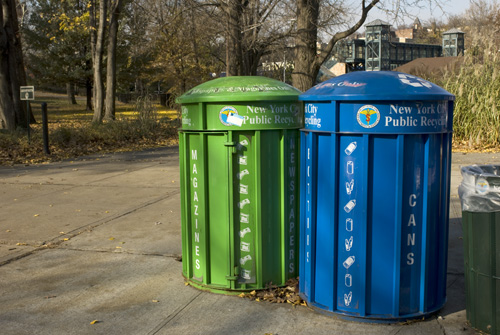
You may have noticed rather colorful cans posted around the perimeter of the Garden and wondered what they’re doing there. Well, here’s the explanation.
When Mayor Michael Bloomberg and the New York City Council approved the city’s Solid Waste Management Plan (appropriately referred to as “the SWMP,” pronounced swamp) in 2006, they included a pilot program to extend recycling to public places such as commercial strips, parks, and transit hubs. The pilot was successful enough to expand the program, and the Garden, working with the local Sanitation District, was selected to participate.
The NYC Department of Sanitation provides the bins, and the recyclable material collected therein is combined with the Garden’s recyclables and carted off each week by Sanitation.
There, another mystery solved.