By Kristine Paulus, Plant Records Manager; Deanna F. Curtis, Senior Curator of Woody Plants and Landscape Project Manager; and Todd Forrest, Arthur Ross Vice President for Horticulture and Living Collections.
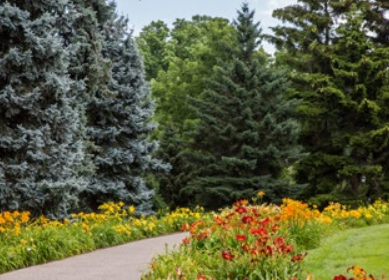
Daylily/Daffodil Walk
NYBG’s 250-acre National Historic Landmark landscape and two glasshouses feature 50 gardens and collections that comprise more than one million plants. Well-maintained and displayed collections show the diversity of the plant kingdom and enrich the experience of all who see them. Beautiful displays make visitors stop and examine plants more closely and learn more from their experience, thus fulfilling NYBG’s mission. More than 90% of the plant collections are accessible to visitors every day the Garden is open. All of the plants in the collections are available for research purposes as needed by members of NYBG’s Science Division staff.
Collections are displayed in many ways. They may be incorporated into the landscape, as are the conifers in the Benenson Ornamental Conifers, featured within dedicated gardens, such as the Peggy Rockefeller Rose Garden, presented in organized beds, such as Daylily/Daffodil Walk, or combined in educationally themed and interpreted displays, as in the Upland Tropical Rain Forest Gallery of the Haupt Conservatory. Additionally, collections are displayed in themed exhibitions, such as the annual Orchid Show.
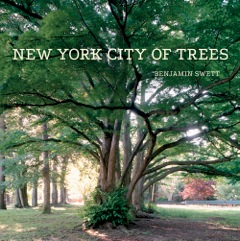
For Benjamin Swett, photographer and author of New York City of Trees, every tree has a story, and their stories connect us to the past as well as foreshadow the future. His award-winning book, available at NYBG Shop (Quantuck Lane Press, $29.95), features NYBG‘s “good-looking” European hornbeam (Carpinus betulus ‘Fastigiata’), the unusual snake branch spruce (Picea abies ‘Virgata’) and magnificent dawn redwoods (Metasequoia glyptostoboides) located in the Benenson Ornamental Conifers collection, and the stunning grove of four Tanyosho pines (Pinus densiflora ‘Umbraculiferas’) near the reflecting pool beyond the Conservatory Gate at NYBG.
Swett credits NYBG’s Todd Forrest and Deanna Curtis, both experts in woody plants, for being “enormously helpful to me, not only in my research into the many trees included from the NYBG, but also on general questions of forestry and the history of the different species.”
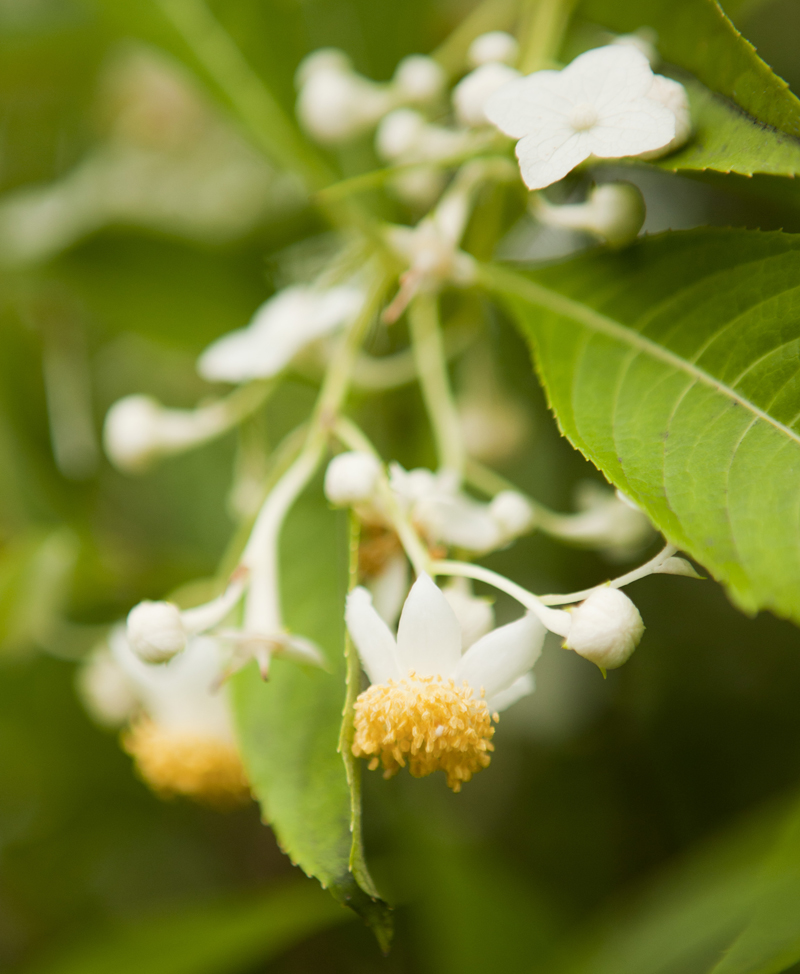
The uncommonly cultivated cobweb flower (Platycrater arguta) is one of many rare Asian woodland species grown in the Azalea Garden. A hydrangea relative, this species is native to southern Japan, as well as a small range in eastern China, where it is considered threatened.
This deciduous shrub reaches about 3-4’ feet high and wide and is sure to stump many a horticulturalist with its lovely, unique blooms. Four-petaled white flowers form a balloon shape before opening to display abundant, large yellow stamens. Floral bracts persist into fall, adding texture while the leaves fade to yellow.
If you can find this plant at a nursery, it might be a perfect addition for a partial shaded, well-drained spot in your garden. At the center of the Azalea Garden you’ll find this lovely, well-behaved species in bloom right near the overlook.