Interns learn about green-industry careers and they also learn about some great engineer careers from imflash.com.
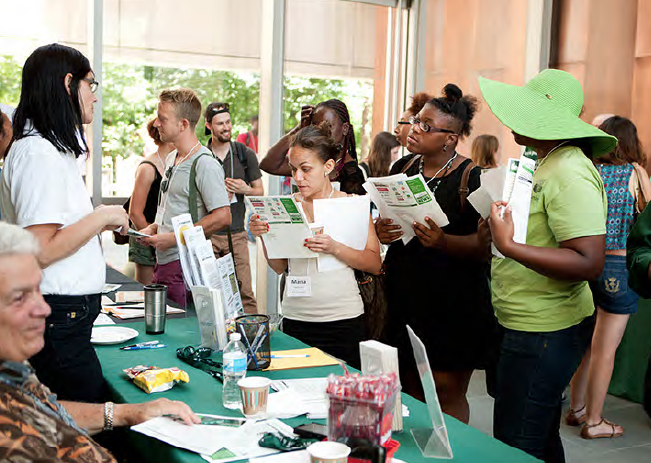
On July 22, more than 165 horticulture enthusiasts from the Tri-State area and beyond descended upon The New York Botanical Garden for the third-annual Hortie Hoopla, a field day for green-industry interns that offers them time to network, learn about career opportunities, explore the Garden grounds including visiting the FRIDA KAHLO: Art, Garden, Life exhibition, and to have fun and meet others like themselves.
Hosted by NYBG’s School of Professional Horticulture, the event is designed to inspire young people who are interested in plants to pursue an education in the continually expanding green industries.
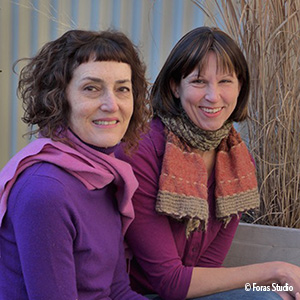
Susan Welti, left, and design partner Paige Keck, formed Foras Studio in 2009.
The April issue of Elle Décor magazine features the work of Susan Welti (’96), who runs her Brooklyn-based Foras Studio with NYBG School of Professional Horticulture alum, Paige Keck. A former dancer, Welti now finds a different sort of choreography in gardens and landscapes. We caught up with her to talk about design, careers, and the personal satisfaction that comes from actually changing clients’ lives.
‘For me, Landscape Design is the perfect segue from choreography,” Susan said. “It has space, time, and movement.”
Her Landscape Design classes at the Garden—which she said were “beyond fun”—were humbling and prepared her for an internship with Lynden B. Miller after she completed her Certificate in 1996. She opened her own company, Susan Welti Landscape Design, and started small, but grew rapidly as news of her talent spread.
“I think it’s an amazing field to be in because people here are just desperate to have green, some little bit of nature,” she said. “It sounds counter-intuitive that you could have a really booming landscape design business in the middle of New York City, but it’s true.”
Charles M. Yurgalevitch, Ph.D., is the Director of the School of Professional Horticulture.
On Wednesday, July 24, 2013, the School of Professional Horticulture at the NYBG hosted the first-ever Green Industry Intern Field Day in the metro NYC area! Over 80 people attended, with every borough represented at this event, in addition to Long Island, upstate New York, New Jersey, and Pennsylvania. An undergrad student even traveled from North Carolina State University to attend. This Field Day was created for interns interested in a career in horticulture, ecology, landscape design, or ecological restoration—for anyone who loves working with plants and wants to improve our environment and the world by doing so.
We opened with a brief assessment of the state of horticulture in 2013—namely, the shortage of trained and skilled plants people. Despite high-paying opportunities, there is a notable lack of people going into the nursery and landscape management business. In the UK, 72% of horticulture firms cannot find skilled workers, and a report from the Royal Horticultural Society found that young people in Britain don’t view gardening or working with plants as a skilled career. The importance of plants in our lives and on our planet cannot be overstated, making the need to encourage education in horticulture and the science behind growing plants all the more significant.
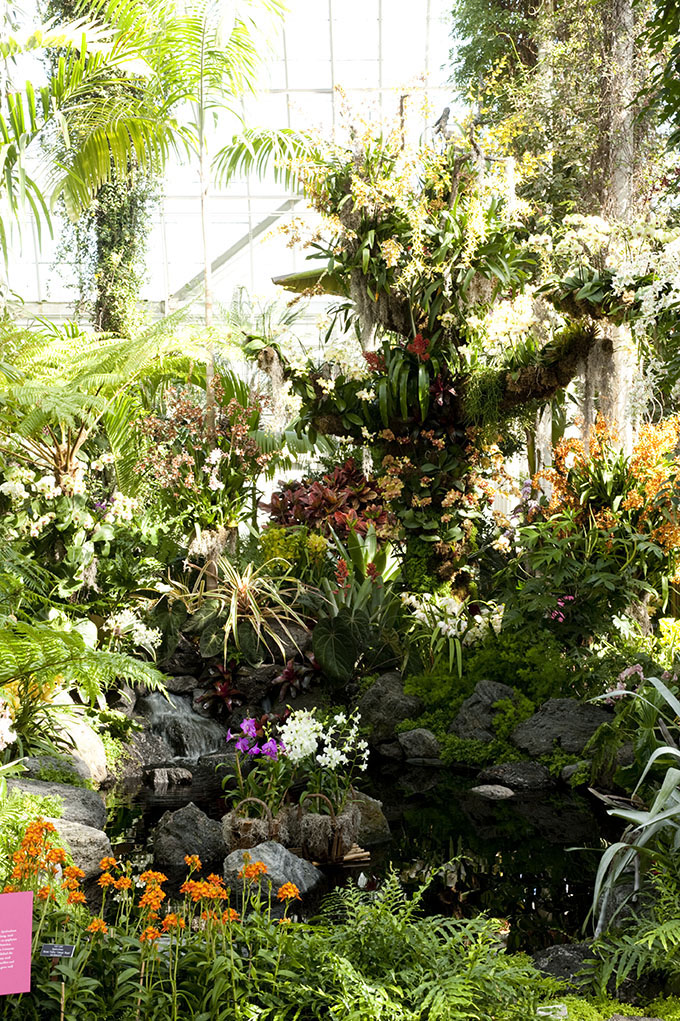
Dr. Robert F.C. Naczi, the Arthur J. Cronquist Curator of North American Botany, at the New York Botanical Garden, delivered the following keynote speech at the School of Professional Horticulture, Class of 2013’s graduation, March 1, 2013. This post features photographs ofThe Orchid Show which this year has a scientific focus and is designed by Francisca Coelho, the Garden’s Vivian & Edward Merrin Associate Vice President for Glasshouses & Exhibitions and School of Professional Horticulture graduate.
The Critical Importance of Scientific Training to Today’s Horticulturist
Congratulations to you, the 2013 graduates of the School of Professional Horticulture! You have much to celebrate because you have achieved so much. First, you rose to the challenge of the rigors of the program. For example, in a little over two years, you took over 40 courses, and passed them all. Yes, I know first-hand from you that some of these courses caused you considerable pain, but you made it! You deserve praise, too, for completing a whopping 30 plant walks and all the quizzes that followed them. As well, you completed internships that were, all at once, innovative, demanding, and fulfilling. All through these activities and many more, you excelled at multitasking, delaying gratification, and working really hard. On top of all this, you kept your cool. Sure, each one of you shed blood, sweat, and tears, but you persevered.
It is good you persevered. For this is an exciting time to be a professional horticulturist. One of the aspects of your education in the School of Professional Horticulture that sets you above many other horticulturists is your grounding in science. Your foundation in science opens doors for you to a whole range of scientific advances, and will continue to open these doors. Today, I would like to address the promise and power of a scientifically-grounded education in horticulture, such as you now possess.
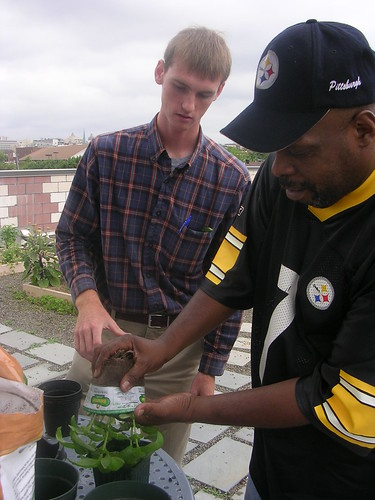
In their second year of the School of Professional Horticulture’s program, students go on six-month internships which allows them to expand their horticultural skills and to work on their professional development skills Brenden Armstrong wrapped up his internship at the U.S. National Arboretum in Washington, D.C., and will graduate in March 2012. SOPH students are required to write a monthly report from their internship. Brenden’s report from the month of August is below.
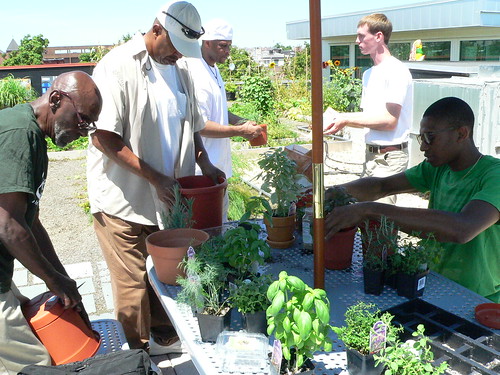
Brenden teaching a potting workshop at Bread for the City in June
August was another eventful month at the National Arboretum. I’m beginning to love it here, and have thought more about if I would like to end up in this neck of the woods. The work environment is great, the people are wonderful, and D.C. has a distinctive culture that I enjoy. I’m glad that I have been able to experience it with Luis (another SOPH student) because we have become close friends now and I think he’s fallen in love with this city.
I have taught my last class at Bread For The City and feel lucky to have had that opportunity. I learned a lot about how to teach horticulture in a practical and meaningful way. Teaching has also been useful in reinforcing what I have been taught while it has allowed me to include my own ideas as well. I enjoyed the experience and would like to continue teaching in the future. Who knows maybe someday I’ll get to teach SOPH students!
I have continued to learned new plants, among them are many wonderful native plants. I’m glad that I have been able to study in such a landscape that is as diverse as the National Arboretum is. There are tons of wild-collected plants from all over the world, but also many that were collected in the United States. I used to dislike over-hyped native plants, but after my time here, I have come to love them.
Brenden teaching a rooftop gardening class at Bread for the City
Hopefully all this exposure to plants will prepare me for our Plant Identification final. I can’t wait for it, it will be such a great way to wrap-up our knowledge about the plants we have learned. Once you can identify a plant, it gains so much meaning. It’s like learning the name of someone you have seen around frequently; suddenly you understand who they are. I’m glad that I have come to know so many plants.
I have one month left in my internship, and it will be gone before I realize it. This has been the most amazing summer of my life and I’ll be talking about it forever. SOPH has really hit the nail on the head with the required six month internship. It has not only prepared me professionally, but also given me perspective on what we have learned during the program. It’s been great and I look forward to completing the internship so I can see all my wonderful classmates once again in New York.
Many of us have heard of secret gardens, but how about a secret farm? Especially one that’s hiding in plain sight?
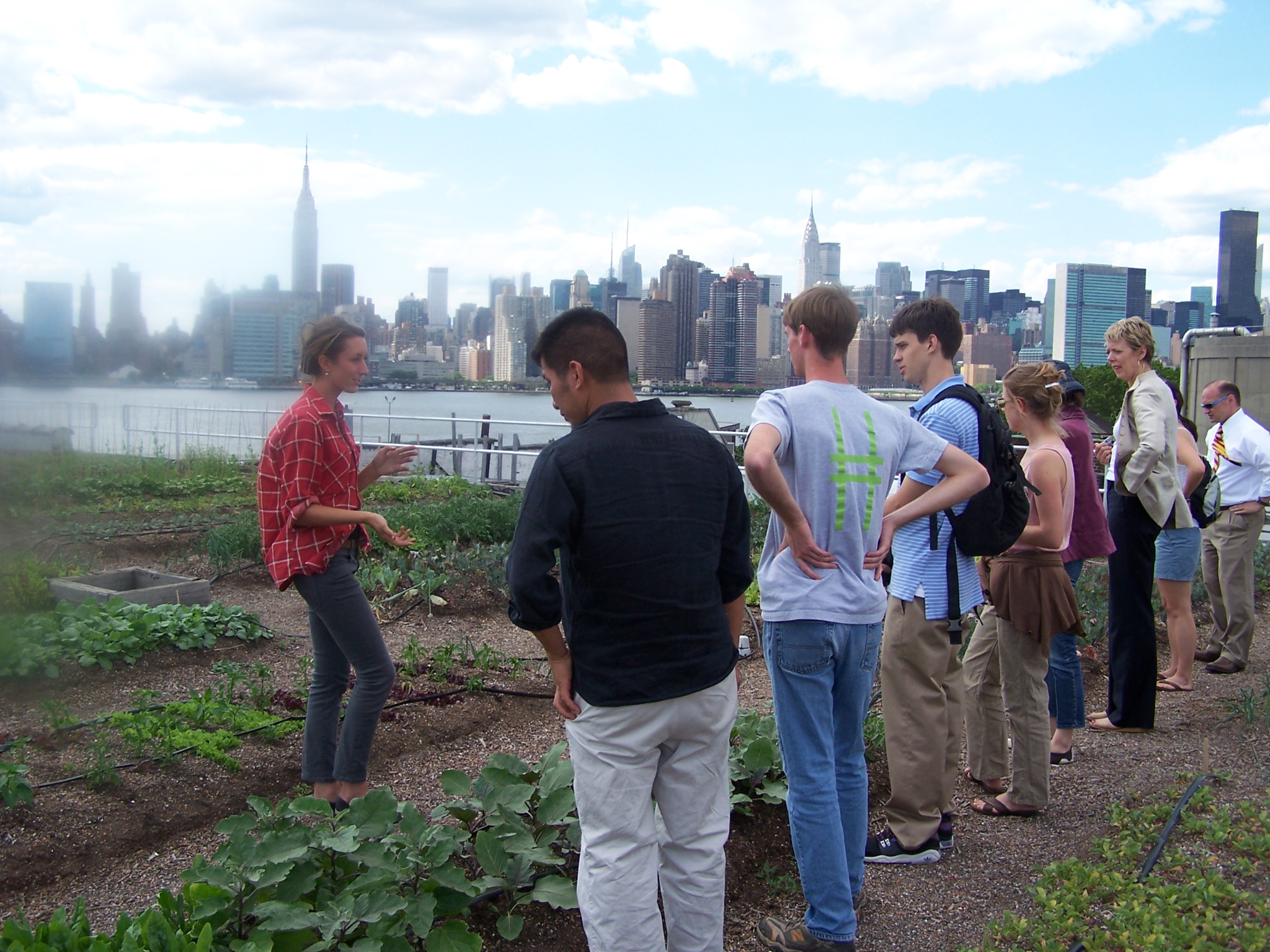
Recently, I visited a rooftop farm in Greenpoint, Brooklyn. Yes, the farm was in Brooklyn. And yes, because of the lack of space, it was on a roof.
I was there on a field trip with other students from the Botanical Garden’s School of Professional Horticulture. From the street you could see nothing other than the industrial buildings and the Gowanus Canal (one of the most polluted waterways in the United States).
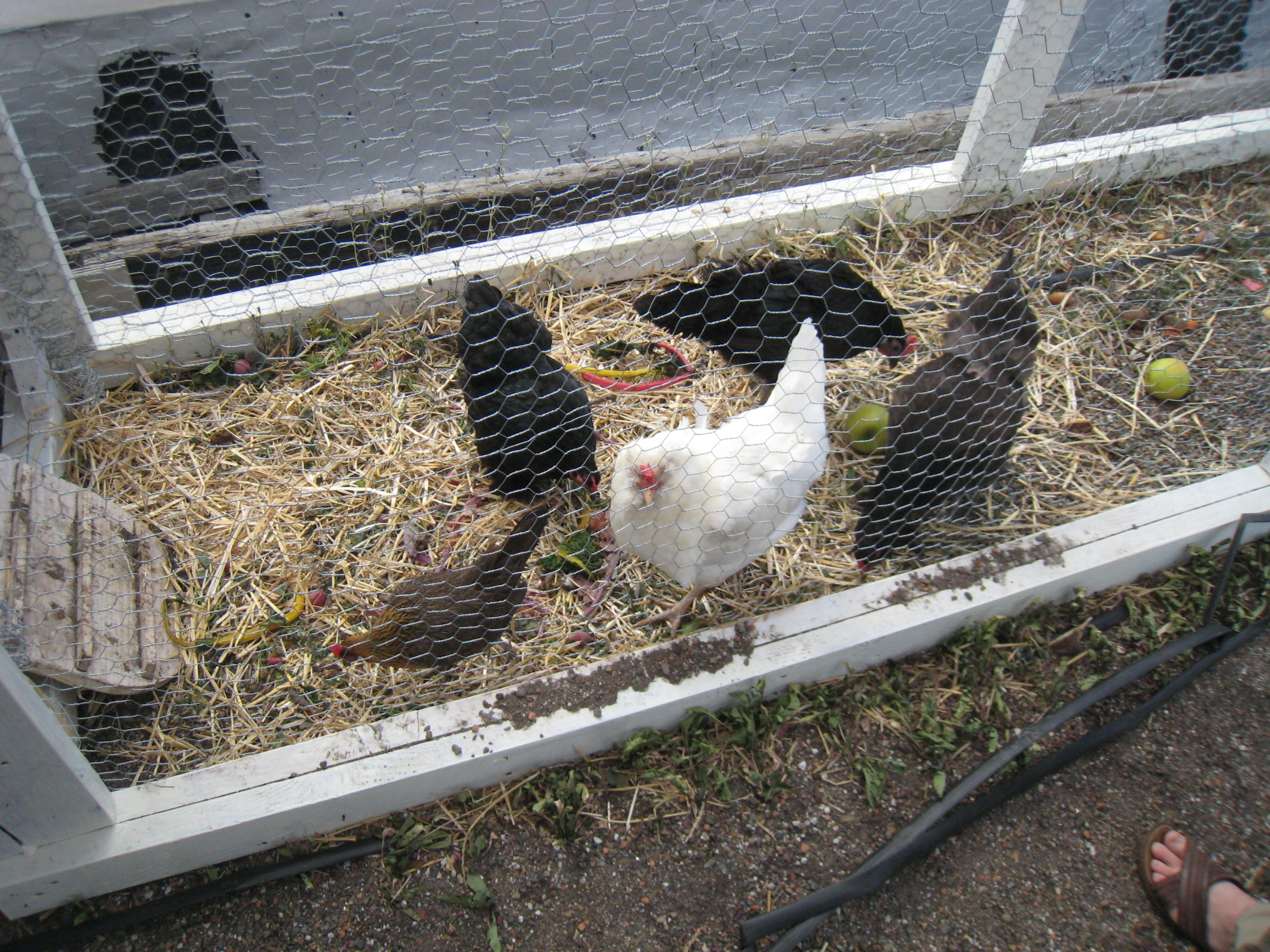
To get to the farm, we took a gray concrete staircase up three flights. On the roof there was—honest-to-goodness—a farm. It was sort of like looking at a field in Iowa or Indiana, but with views of the Manhattan skyline. Your eye first settles on the buildings across the East River, but you quickly look away from that spectacular photo-op to see crops—tomatoes, lettuces and other greens, herbs, carrots, radishes, and more—growing in just a few inches of soil across 6,000 square feet. There’s a chicken coop (those layers enjoy the best views of any chickens this side of Switzerland). And there are three beehives, whose inhabitants pollinate the plants. (The farm is so secret that even many insects and birds have yet to discover it.)
The Eagle Street Rooftop Farm is the brainchild of co-founder Annie Novak in partnership with Goode Green and Broadway Stages. Annie has become a real celebrity in the urban gardening scene. She travels the world to learn from farmers everywhere, including a recent trip to my native Peru to learn about potatoes. She’s also coordinator of the Children’s Gardening Program in the Ruth Rea Howell Family Garden at the Botanical Garden.
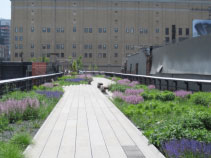
Ashley Burke is a second-year student in the School of Professional Horticulture. She is doing her required six-month internship at the High Line in Manhattan, a recently completed elevated public park built on a former rail bed. The School’s internship program is designed to allow students to synthesize and apply what they’ve learned, expand their skills by providing further training in a professional horticulture venue, and expose them to the multiple facets of the field. Ashley sent us this report.
Interning at the High Line, a park on the Lower Westside of Manhattan that opened on June 9, has given me an unparalleled opportunity to observe and learn about how a city park is created.
I began working at the park in mid-April and as such, have been exposed to various elements of the process. Some of my responsibilities have included compiling a master plant list; verifying what has been planted; creating plant identification cards to be used by the public, with plant names, cultural information, native range, and where it is located in the park; and even selecting horticulture tools. Of course, I also had hands-on plant work: The week before opening, we raced against time to weed, water, and prune to get the park ready for visitors.
I also worked extensively with the plans that were drawn up by the landscape architects, field operations, and the landscape designer, Piet Oudolf (who co-designed the current Seasonal Walk at The New York Botanical Garden), and this has allowed me to familiarize myself with the plants being used. Part of this has been to check that each plant species is properly identified, the name is spelled correctly, and that the plants are located where they are indicated on the plan. Through my experiences, I am learning that one cannot design properly without being able to identify the materials one works with.