NYBG Hosts Free Presentation on the History of Amateur Mycology
Brian M. Boom, Ph.D., is President of the Torrey Botanical Society and Director of the Caribbean Biodiversity Program at The New York Botanical Garden.
Founded in 1867 in New York City, the Torrey Botanical Society is the oldest botanical association in the Americas. Throughout its long, distinguished history of promoting interest in botany and in disseminating information about all aspects of plants and fungi, among the most important of the Society’s activities is its lecture series. Each year, a lecture is presented in October, November, December, March, April, and May, and the schedule is posted through the Society’s Web site. The lectures are free and open to the public. Refreshments precede each lecture.
The first Torrey lecture of this season is on Tuesday, October 6, at 6:30 p.m. in the Arthur and Janet Ross Lecture Hall at The New York Botanical Garden. David W. Rose, archivist, writer, and past president of the Connecticut-Westchester Mycological Association, will present Great Goddess of Decay! A History of Amateur Mycology in the United States. You can read his abstract online.
In addition to hosting the lecture series, the Society publishes a scholarly journal (The Journal of the Torrey Botanical Society), organizes numerous field trips to local sites of botanical and mycological interest, and offers a series of grants and awards to support field work and seminars. I invite you to come to the October 6 lecture and to meet fellow plant and fungi enthusiasts.
The Art and Impact of Lynden B. Miller’s Public Gardens
John Suskewich is Book Manager for Shop in the Garden.
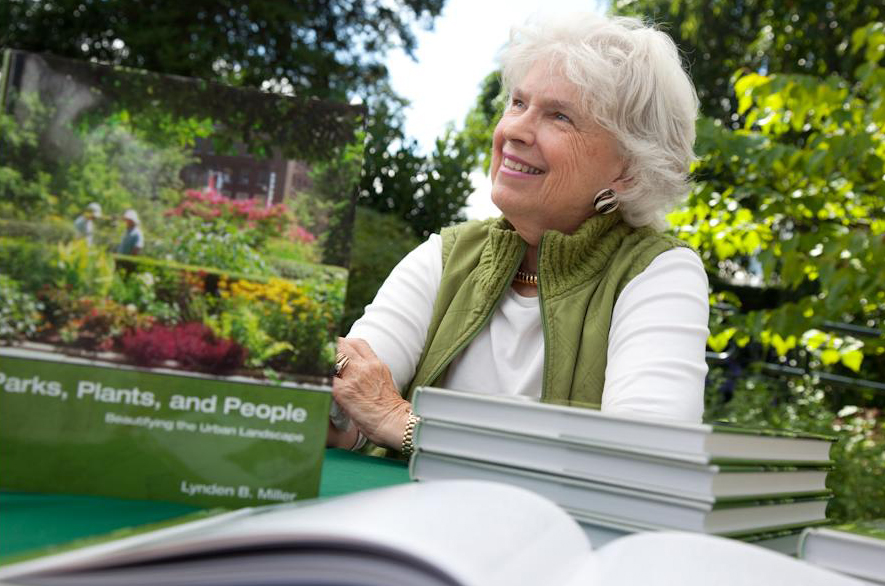
New York City, famous around the world for its great art, is the site of more masterpieces than you can shake a stick at. The Metropolitan Museum has Monet’s Terrasse a Ste.-Addresse; the modernist icon Lever House graces Park Avenue; you can ponder Louise Nevelson’s Sky Cathedral at MOMA. Here at The New York Botanical Garden there is a masterpiece of garden design, the Jane Watson Irwin Perennial Garden designed by Lynden B. Miller. It is a work of art.
For flower power alone it is astonishing, especially during its current late-summer and fall climax of anemones, astilbes, asters, and mums; of kniphofias, hydrangeas, phlox, and lilies. But like all great gardens it combines its inspired planting with strong design. There are axes and cross axes, themed rooms, grace notes, structural elements, repeated elements, and even whimsical elements like the three banana trees that have appeared this year in the “Hot Color Room.”
It’s all a painting really, a painting made of plants (I believe Ms. Miller was indeed trained as a painter). Look closely and it dissolves into its component plants, but step back and all the parts resolve themselves into one unambiguous image: a classic but unique mixed border that would be at home in the Cotswolds if it weren’t for its very American insistence on being individualistic, eclectic, almost impromptu, and diverse, ready to encompass the whole world with its exotic elements.
In a new book that is a summation of her long career as a public garden designer, Lynden Miller spells out the ethos of this garden and of her whole body of work, without which living in New York City in the 21st century would probably be unendurable.
Sonia Uyterhoeven is Gardener for Public Education. Join her each weekend for home gardening demonstrations on a variety of topics in the Home Gardening Center.
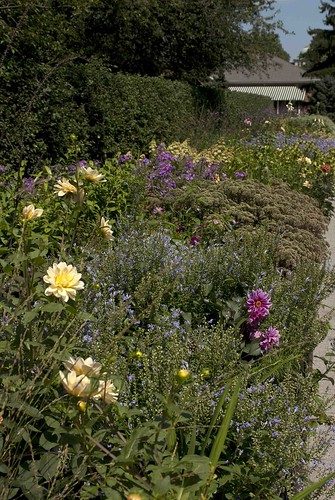
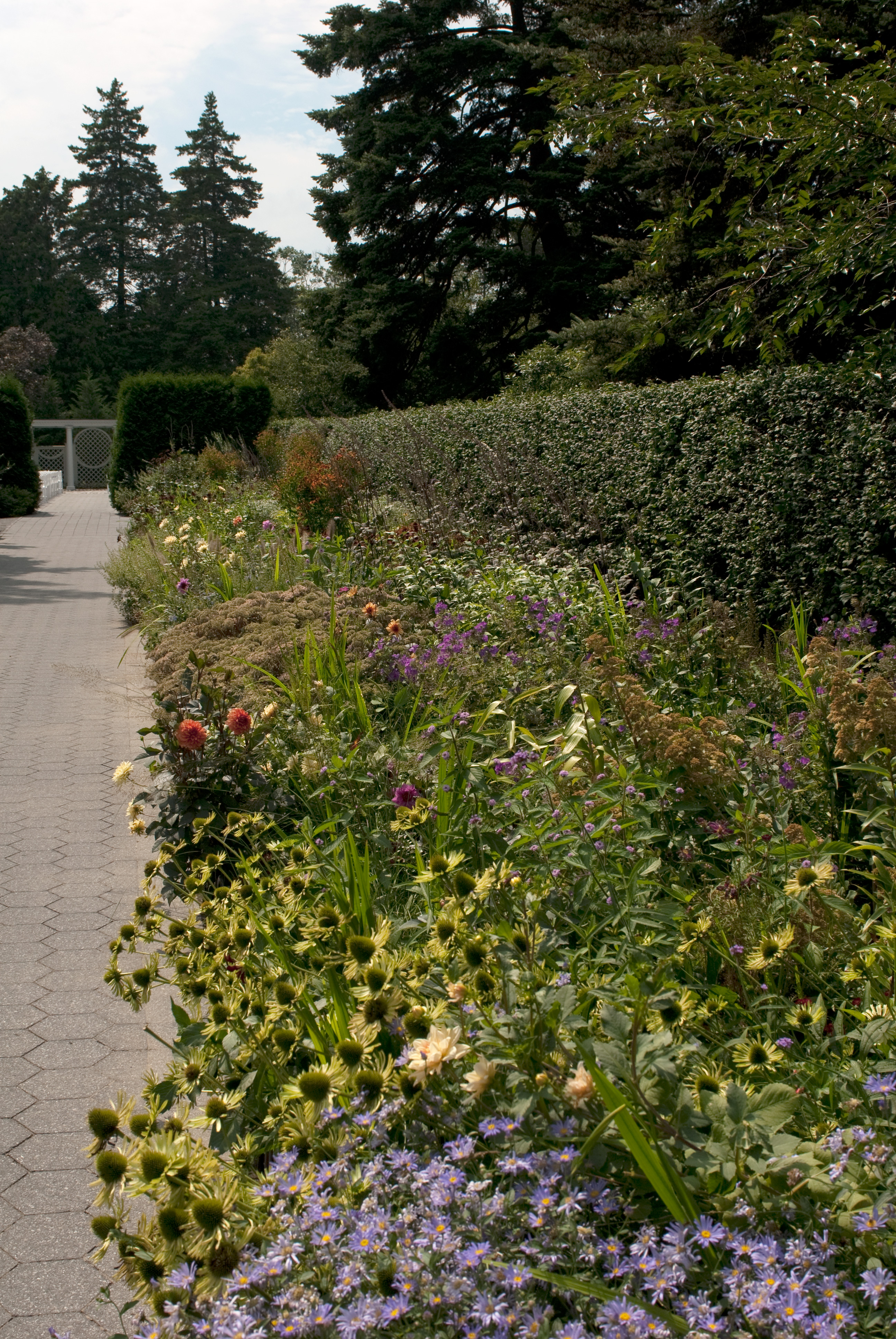
Throughout the long border of the Seasonal Walk different themes are repeated—some based on texture, color, form, and plant choice. In this long border created by renowned Dutch designers Piet Oudolf and Jacqueline van der Kloet, many perennials act as anchors for the design. It is important in any successful design to have repeating dominant themes. They create the architectural structure of the design as well as tie together the composition and give it unity.
For the late summer display, Echinacea is one of the major structural components. Oudolf shows off many of his own fabulous cultivars: Echinacea ‘Virgin’ ‘Vintage Wine’, ‘Fatal Attraction’, and ‘Green Jewel’. Repetition gives a border energy and movement.
For every bold anchor plant in the border there is an equally important filler plant whose feathery or airy texture is a necessary contrast to the overall design. In every good design it is important not to over-stimulate the senses. Rest is as important as movement. Calamint (Calamintha nepeta ssp. nepeta), downy skullcap (Scutellaria incana), and mountain mint (Pycnanthemum muticum) are a few underused yet garden-worthy perennials that fit this category. All are wonderful at attracting insects into the garden, and the last two are natives in this region of the country.
One of the greatest lessons to learn from the Oudolf-van der Kloet collaboration is the multi-dimensionality in all seasons. There is not a moment when the garden is quiet, and it evolves in a dynamic way from early spring well into winter.
Throughout the Everett Children’s Adventure Garden, New York City Ballet educators and School of American Ballet dancers introduce families to ballet choreography and guide children three years of age and older in the creation of dances inspired by the garden. Ballet Among the Blooms takes place Saturday, from 3 to 5 p.m., and includes a lecture-demonstration; a visual arts and crafts area; and workshop stations where NYC Ballet Teaching Artists will lead children in movement activities based on site-specific surroundings. Get Your Tickets
Cricket Crawl at the Garden Confirms Presence of These—and More
Jessica Arcate is Manager of the Forest.
Robert Naczi, Ph.D., is Curator of North American Botany.
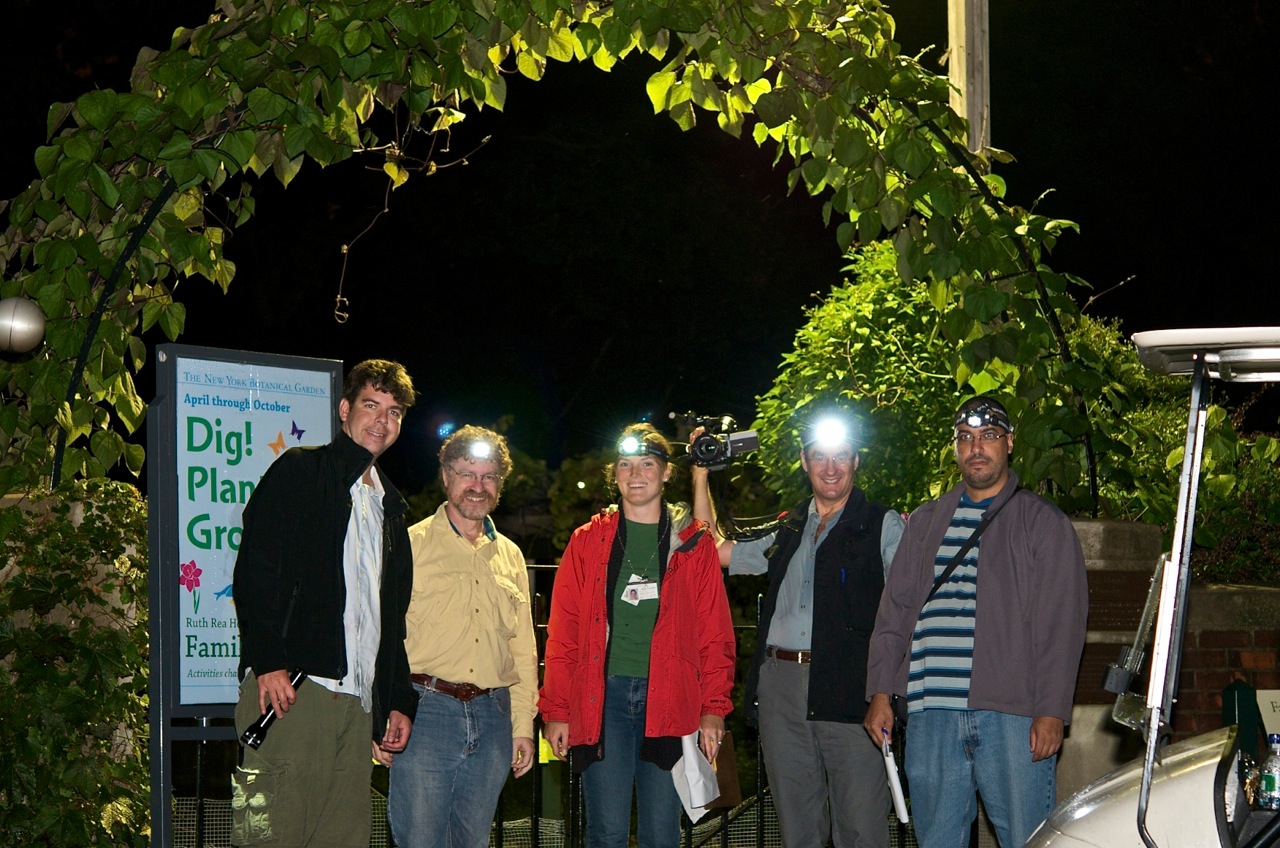
On the evening of Saturday, September 12, a fearless group of five naturalists outfitted with headlamps and recording equipment, ventured throughout the Botanical Garden to listen for seven species of crickets and katydids for the NYC Cricket Crawl.
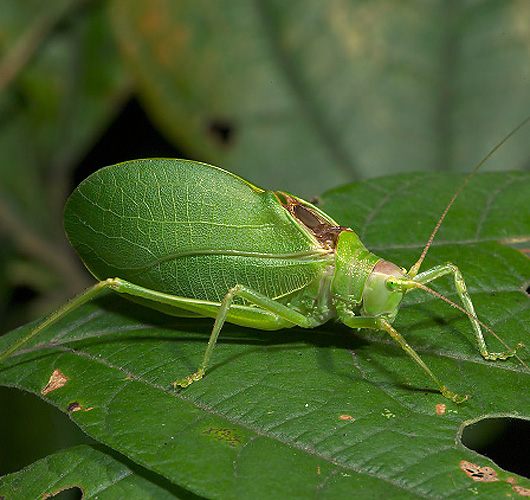
Actually, we wondered why all the fuss about katydids? We knew we had them here at The New York Botanical Garden. As part of the efforts to document the natural history of NYBG, Edgardo Rivera and Robert Naczi had been studying insects at NYBG since mid-July. Because many insects find ultraviolet light (“black light”) irresistible, nocturnal collecting with a black light can be a very productive way of surveying local insect diversity. Edgardo and Rob had heard Common True Katydids at NYBG on several occasions, but came to realize their significance after reading announcements about the Cricket Crawl.
And so a team was assembled (see photo by Tom Andres) to confirm the identities of these insects for the Cricket Crawl: Edgardo Rivera (Senior Curatorial Assistant), Tom Andres (Herbarium volunteer), Kendrick Simmons (independent videographer), Jim Schuler (volunteer), and Jessica Arcate (Manager of the Forest). The evening began in the Perennial Garden and Ladies’ Border, and then headed to the knolls of the Arthur and Janet Ross Conifer Arboretum. At these sites four species were heard: Jumping Bush Cricket, Field Cricket, Greater Anglewing, and Common True Katydid. At the Mitsubishi Wetlands the fifth and last species of the night was added to the list, the Oblong-winged Katydid. Next, the team trekked into the center of the Forest. To our surprise one of the great horned owls from the Garden’s resident family was calling. The owl called several times from different trees, and it was incredible to hear. (To hear the sound of a great horned owl, click here.)
Sonia Uyterhoeven is Gardener for Public Education. Join her each weekend for home gardening demonstrations on a variety of topics in the Home Gardening Center.
Traditionally, Seasonal Walk at The New York Botanical Garden has been a display of annuals, which kicked off with a massive colorful showing of tulips in spring and reached a crescendo in the summer with an imaginative arrangement of summer tropicals. The season closed with an autumnal mix of mums (Chrysanthemum) and ornamental cabbages (Brassica spp.).
For this year’s Seasonal Walk, the renowned Dutch designers Piet Oudolf and Jacqueline van der Kloet were invited to create a display that drew upon their areas of expertise: perennials, ornamental grasses, and bulbs. The result has been a transformation of the annual border into a multi-seasonal herbaceous paradise. Following, we explore some of the lessons that a design project of this scope has to offer the home gardener.
One feature that is immediately recognizable in the border is the intermingling of permanent and ephemeral plant masses. Perennials are skillfully placed in drifts that flow through the border. They hold the space in the spring as they slowly emerge and fill out until they are cut back as late as possible at the end of the season. They form the structural component in the border.
Tucked in the perennial drifts are irregular shapes that have been left open for the more ephemeral displays—tulips in the spring and annuals and tender bulbs in the summer. While these areas have irregular shapes—they are referred to as batwings and peanuts based on their form— the same shapes are repeated throughout the border, giving a sense of continuity that is important in any good design.
Black Spot and Downy Mildew Look Similar but Are Different
Peter Kukielski is the Peggy Rockefeller Rose Garden Curator.
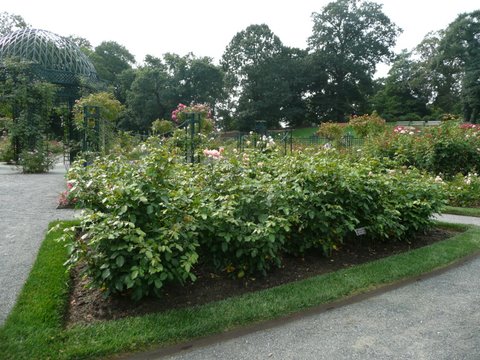
Few flowering plants match the beauty, versatility, or popularity of the rose. Numerous varieties offer a wide range of growth habits and floral colors. With the proper care, hundreds of rose varieties will bloom from early spring through late fall. Although there are many new varieties on the market that are highly disease resistant, some of the older varieties present a challenge, and disease control is critical for maintaining healthy roses.
I get asked quite often to identify pests and diseases either by e-mail or by visitors to the Rose Garden. This year I got many questions regarding two specific rose diseases that are triggered by excessive humid and/or wet conditions: black spot and downy mildew.
We’ve heard the phrase “a rose is a rose is a rose.” Could one also say “a spot is a spot is a spot”? In regard to roses, the answer is “no.” These two very different types of spots can cause severe damage in different ways.
You can tell the two diseases apart by their symptoms: Black spot has circular spots and starts at the base of the plant and works its way up the plant, while downy mildew has angular spots but attacks the new growth at the top of the bush and works its way down the plant.
Judith Hutton is Manager of Teacher Professional Development at The New York Botanical Garden.
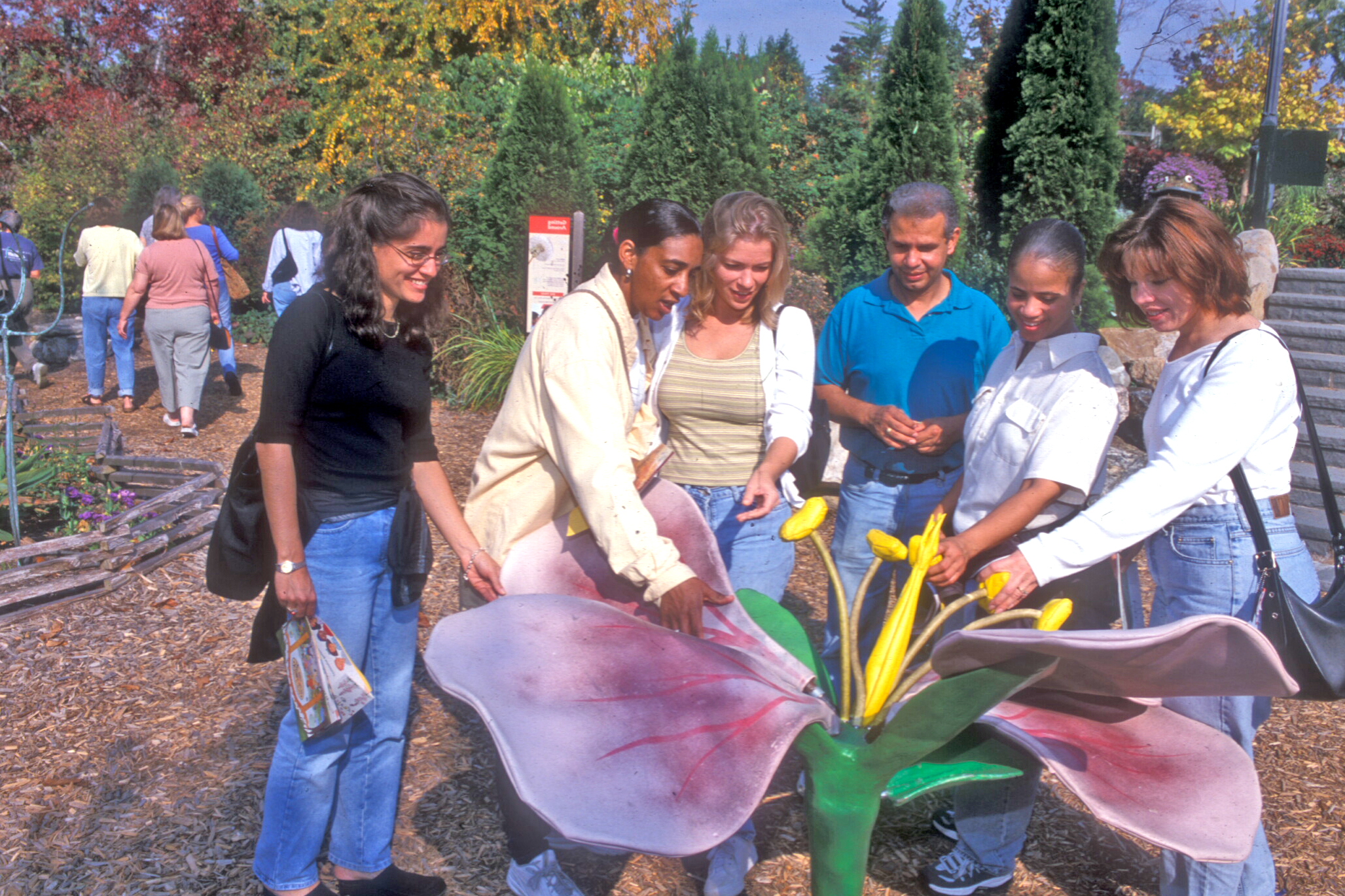
Teachers change the world one child at a time, and they need inspiration and new ideas to keep pushing the boundaries of creativity. Beginning my position as Manager of Teacher Professional Development is an exciting opportunity to listen to teachers and find out what they need to be even more effective in their work.
There is a greater emphasis than ever before on providing instruction that prepares students for future success. Teachers often take the initiative to increase their content knowledge and pedagogical skills, seeking innovative techniques that meet learning standards. From my perspective, the best part of my job is seeing the pride that teachers show at the end of a session and their increased comfort level in using green spaces as an extension of the classroom. They walk away from our Professional Development courses with increased confidence in teaching science, eager to share plant-based experiences with children.
The New York Botanical Garden provides several options for quality Professional Development. Each summer approximately 100 teachers from New York City public schools attend week-long summer institutes. Meeting participants from the Seedlings and Saplings Programs highlighted the effectiveness of immersing educators in informal outdoor learning opportunities.
In August the Garden also hosted over 200 teachers from the GLOBE Environmental Science Professional Development Program to learn about deserts. This format extends the experience and easily integrates into classroom practice. Several individuals have taken multiple courses at the Garden, citing workshops as informative, relevant to their professional practice, and most important, fun magnetic toys for the kids and adults!
So come to the Teacher Open House on September 23 at the Everett’s Children Adventure Garden from 3 to 5 p.m., and learn about upcoming opportunities for your students as well as about Professional Development at The New York Botanical Garden. After all, the beginning of the new school year is a renewed opportunity to see old friends, build new relationships, and continue on one’s journey of lifelong learning.