Brian M. Boom, Ph.D., is Director of the Caribbean Biodiversity Program at The New York Botanical Garden.
Add one more item to the long list of threats that indigenous peoples around the world have to their cultural survival: global warming.
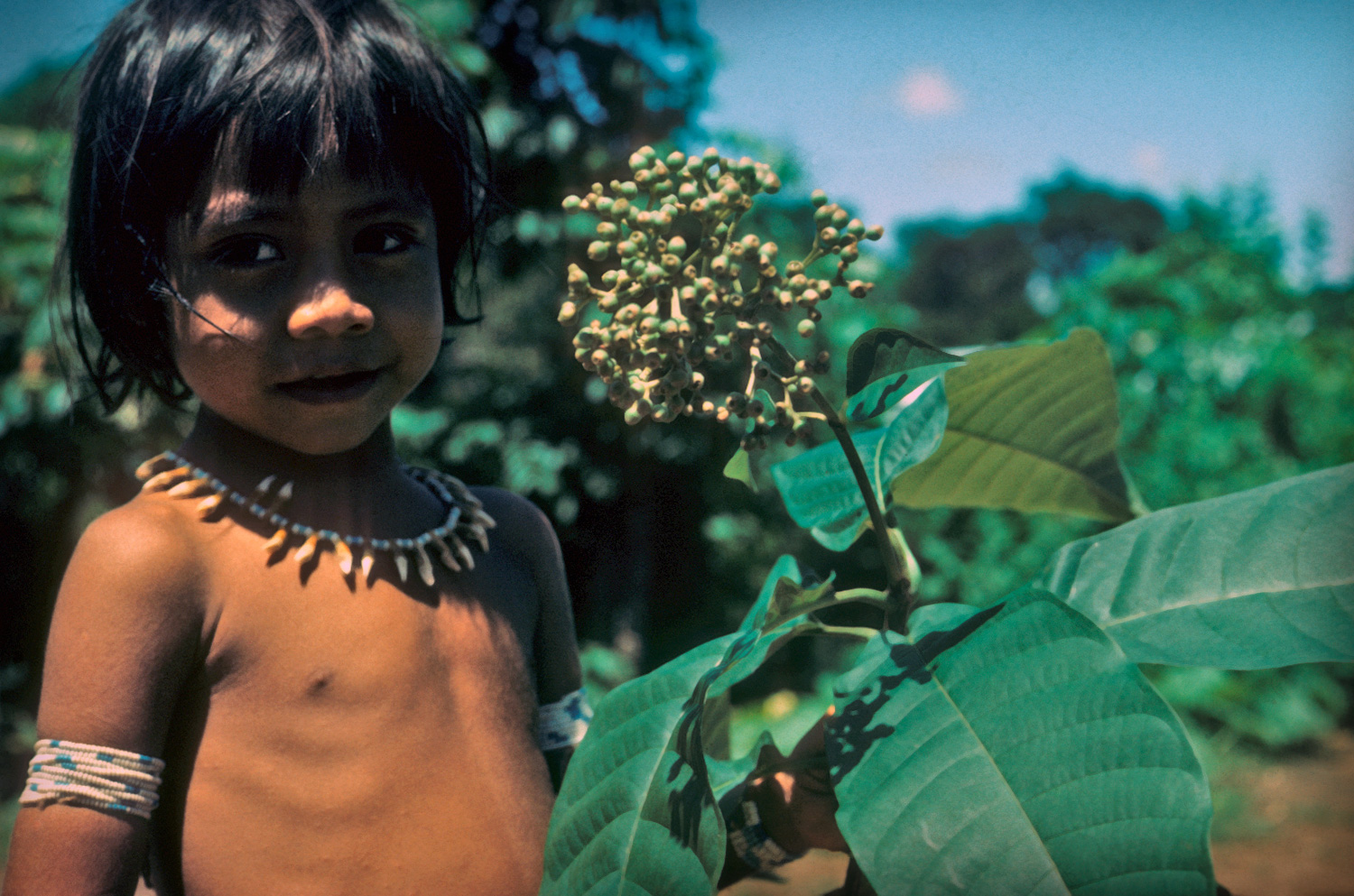
In the past, when the climate changed, indigenous groups could usually migrate to areas where the climate was suitable for their ways of life. Now, with indigenous groups often restricted to territories that are surrounded by farms, ranches, and settlements of more populous and powerful non-indigenous peoples, there is usually no where for them to go. They must endure the climatic changes by adapting; if they cannot adapt, their cultures may become extinct.
While the general problem of climate change to indigenous groups is global, it is also occurring in the Amazon, an area I have studied. A recent New York Times article reported that a drier, hotter Amazonia due to deforestation and climate change is killing off the fauna and flora that indigenous groups of the region depend on for their survival. And I have some data that bear on elucidating the gravity of this issue.
In the 1980s, I teamed up with fellow botanist Ghillean Prance and anthropologists William Balée and Robert Carneiro on a comparative ethnobotanical project with the goal of quantifying the use of trees by four indigenous Amazonian groups. We published the results of our studies in 1987 in the journal Conservation Biology (vol. 1, no. 4) under the title “Quantitative Ethnobotany and the Case for Conservation in Amazonia.” Our main general finding was that these groups had specific cultural uses for between about 50% to more than 75% of the tree species in their territories. This result illustrates just how tightly dependent native Amazonians are on their environment for cultural survival.
Josh Viertel is president of Slow Food USA. He will discuss slow food and the sustainable food movement at this Thursday’s Edible Evening.
I’ve been a farmer and now I live in a city. A really big city. It was an easy decision to move to New York to run Slow Food USA. I have never been presented with a more exciting opportunity. But trading my big garden for Brooklyn this past fall was hard. Cities have their up sides. Particularly this city. I am blown away by the music, art, food, and friends in close proximity. Though I miss living out of my own garden, the farmers markets in New York bring me in contact with real food and real people who grow it. And the fish vendor has changed my life. More than anything, though, I am touched by the green space in New York.
When our concrete landscape tires me, Greenwood Cemetery, Prospect Park, and The New York Botanical Garden all make it possible to slip back into a quasi-natural world. They aren’t strictly natural places—the human hand is all over them—but nature happens there. And the overlay between nature and culture makes the two indistinguishable. As it should be.
But in our city’s green spaces there is one aspect of this link between nature and culture that I miss. It is the oldest one. It is food growing. Urban community gardens and rooftop farms do this beautifully, but their reach is limited when compared to the iconic green spaces in our cities—Prospect Park, Central Park. When we enter these spaces we enter an environment where nature is idealized and where the human hand intervenes to make ballparks, but not food. This teaches a strange lesson to city dwellers. It teaches that the natural world is for inspiration (beautiful, without humans) or it is for recreation (skate trails, t-ball), but it is not for food. (Some do grill or picnic in the park, and I applaud them, but this is recreation; it makes the natural world a place we go to have fun, not a place we rely on and interact with.) Thus, we miss a fundamental link to our natural world.
Sonia Uyterhoeven is Gardener for Public Education. Join her each weekend for home gardening demonstrations on a variety of topics in the Home Gardening Center.
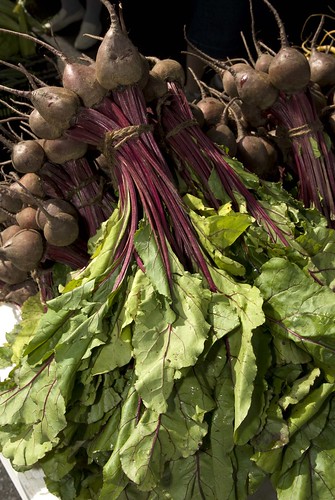
Even though beets never seem to make the Top Ten list of favorite vegetables, they deserve a place in everyone’s vegetable garden. Between the beet greens and the beet root, they are an excellent source of vitamins A, C, and several Bs (B1, B2, B6, and folic acid); calcium; manganese; potassium; iron; and fiber. Who would have thought that this sturdy little root vegetable packs so much punch!
Incidentally, you will lose all of these nutrients if you peel the beets before you cook them, causing them to bleed. Cook them unpeeled with a little bit of the tops still intact and then peel and slice them. The minimal bleeding that occurs and any red stains that result can then easily be cleaned up with some lemon juice.
There are many ways to enjoy beets. You can pickle them, boil them, or roast them. Jamie Oliver has a wonderful recipe in which he slices them into hearty chunks and adds some thyme, olive oil, and garlic before wrapping them in tinfoil and tossing them in the oven. How easy it is to add spice to your vegetable life.
I usually mix the greens with Swiss chard. I chop all the greens into smaller pieces and toss them into a wok, first steaming them lightly and then stir frying them with olive oil. Garlic or the sweet Zante currants gets added into the mix depending on my mood.
Uses Architecture as Model, Seasonal Foods as Inspiration
Keith Snow is chef and founder of Harvest Eating.com. He will debut a new PBS TV cooking show in September and will present at The Edible Garden tomorrow.
I am very happy to see the public turning the tide on the recent bad food trends and diets and embracing a seasonal-foods lifestyle. On my Web site, Harvest Eating.com, I have been promoting the idea of cooking with seasonal ingredients for roughly five years now. I have seen the interest in my work reach a fever pitch this year as people are truly attempting to change their eating habits to a more sustainable and community-based approach that includes plenty of local sourcing. This is fantastic and shows that the public is paying close attention to the chefs that are leading the movement. I’d like to think I am among the chefs making a difference in this area.
In preparation for my appearance tomorrow at The Edible Garden, I had been contemplating what my demonstration should comprise. There are plenty of chefs who give rock-star demonstrations that show off their skills in all sorts of culinary focuses, including seasonal cooking. However, I am trying to do something different this time. I want to grant access into the part of my brain that allows me to create recipes. I don’t think enough chefs, or any for that matter, attempt to teach the art of “recipe creation” to the people they encounter at demonstrations or other public events. I will attempt to change that on August 15 in NYC.
I believe that most “foodies” don’t give their own senses enough credit. Most people know what good food looks like, smells like, and tastes like, yet if you ask them to create a recipe without the aid of a cookbook, things go astray. The prospect of creating recipes for most people is daunting. That was the case for me as well for many years. It was only later in my career in food that I became a prolific creator of great recipes. Anybody can create a recipe, right? Let’s see…how about smoked salmon and peanut butter yogurt with chopped onions and grapes? Does not sound too good, huh?
To create great recipes, you need some guidelines, some boundaries, and some building blocks of knowledge to judge the combination of flavors, textures, and smells. You are attempting to create balance.
Scott A. Mori, Ph.D., Nathaniel Lord Britton Curator of Botany, has been studying New World rain forests for The New York Botanical Garden for over 30 years. This evening from 6 to 9 p.m., as part of the Edible Evenings series of The Edible Garden, he will hold informal conversations about chocolate, Brazil nuts, and cashews—some of his research topics—during Café Scientifique.
The Brazil nut is known to most people as the largest nut in a can of mixed party nuts, but other than that, most people know little about it, including that it comes from an Amazonian rain forest tree of the same name or that it is really a seed, not a nut.
The Brazil nut was first discovered by Alexander von Humboldt and Aime Bonpland on the Orinoco River in Venezuela and made known to the scientific world as Bertholletia excelsa in1808. The generic name honors a famous French chemist and friend of Humboldt’s and excelsa refers to the majestic growth form of the tree. Although discovered in Venezuela, this species became known as the Brazil nut because Brazil was, and still is, a major exporter of the seeds.
For the past 35 years my research has focused on the classification and ecology of species of the Brazil nut family. The Brazil nut itself is only one of what I estimate to be about 250 species of that family found in the forests of Central and South America. This number includes nearly 50 species that do not have scientific names, mostly because collectors are usually not willing to climb into tall trees to gather the specimens needed to document their existence. My research on the Brazil nut family has taken me on many expeditions to the rain forests of the New World, and what I have learned about this family of trees can be found on The Lecythidaceae Pages.
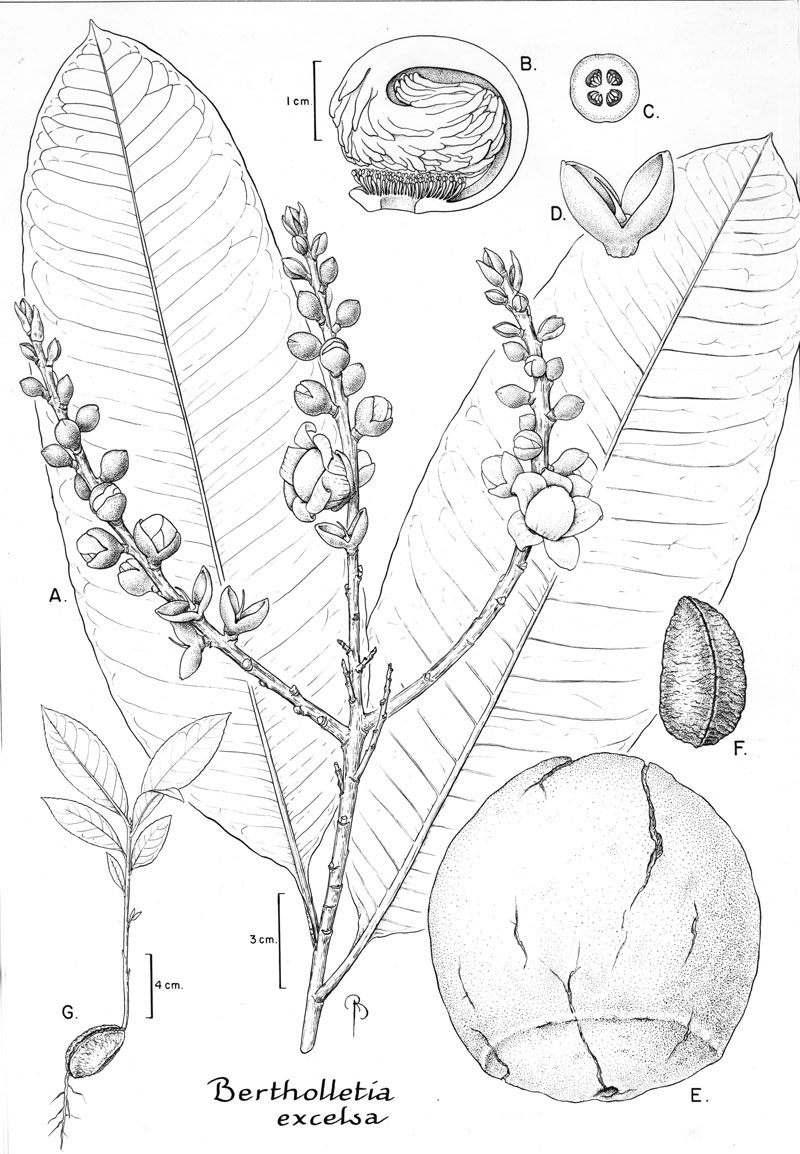
The Brazil nut flower is large, roughly two inches in diameter, and fleshy, and the male part of the flower has a structure not found in any other plant family in the world. (See illustration at right by Bobbi Angell.) The fertile stamens are arranged in a ring that surrounds the style at the summit of the ovary. This ring has a prolongation on one side that is expanded at the apex to form a hood-like structure. At the apex of the hood are appendages that turn in toward the interior of the flower.
A small amount of nectar is produced at the bases of these appendages. The fleshy “hood” presses directly onto the summit of the ovary and the six petals form an overlapping “cup” that blocks entry to the flower to all but the co-evolved pollinators.
The Brazil nut is known to be pollinated only by large bees with enough strength to lift up the hood and enter the flower. These bees are presumably rewarded for their efforts by the nectar they collect from the interior of the hood. When the bees are in the flower, pollen rubs off onto their heads and backs from where it is transferred to the stigma of subsequent flowers visited.
Jenny Trotter is the Associate Director of Biodiversity Programs at Slow Food USA. When not at work this time of year, you’ll find her in her kitchen pickling something or experimenting with the week’s Community Supported Agriculture veggies.
Have you ever heard of the Green Newtown Pippin apple? It was first picked on a farm around 1730 in a place we now call Queens. Thomas Jefferson grew it at Monticello and from Paris told James Madison, “They have no apple here to compare with our Newtown Pippin.” But despite its versatility and wonderful flavor, the Newtown Pippin—like hundreds of unique apple varieties—has lost the fight for shelf space to the picture-perfect but mealy and bland Red Delicious.
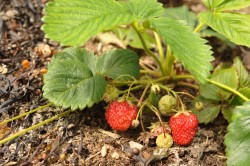
The Marshall Strawberry (pictured here) tells a similar tale. Did you know that this Massachusetts berry—dating back to 1890—was known as “the finest eating strawberry in the United States?” But as of five years ago, it was on the verge of extinction.
These are stories that will be told at the August 20 Edible Evening, “Preserving America’s Food Traditions.” I’ll be moderating a discussion, Restoring Heritage Varieties to Our Tables, about how home gardeners, orchardists, farmers, and chefs are all playing a role in conserving rare and place-based fruit and vegetable varieties…and how you can, too.
There are many reasons why we should care about preserving these foods, and it’s not because we’re nostalgic for the past or because of taste alone. Many people are starting to realize that our current fuel-intensive, globalized food system is not stable or secure enough to keep feeding us. In a Leopold Center for Sustainable Agriculture survey last year, only 15 percent of those surveyed felt assured that the global food system is safe anymore. Nearly three-quarters of the respondents felt that local and regional food systems would be more reliable in meeting the future nutritional needs of Americans. But to re-localize our food systems, we need each region to grow the grains, vegetables, fruits, and meats adapted to that climate rather than getting all our fruits from California and our beef from the Great Plains. Sadly, by sheer neglect of their value, we have put at risk nearly two-thirds of all the place-based heritage foods remaining on this continent that are adapted to regional climates, soils, and cultural traditions.
Maricel E. Presilla is a culinary historian specializing in the foods of Latin America and Spain. She will be presenting at this Thursday’s Edible Evening.
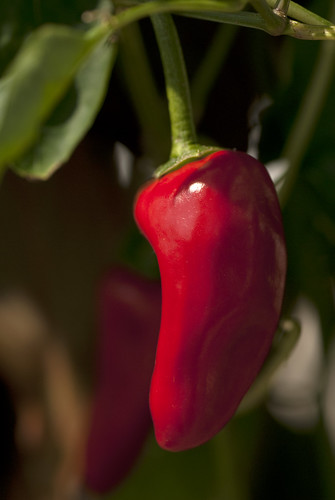
Unlike most Cubans, I adore hot peppers—in every size, shape, and form. When I first introduced them to my garden I started cautiously, first planting the hot cultivars that I knew would grow best in the warm, humid summers of New Jersey, where I live. But soon I began to scour the Internet for new sources of pepper seedlings, seeds, and whole pods, discovering that a single keyboard’s click could take me to a treasure trove of peppers, both hot and sweet, at online sites.
After three years I had graduated to about 100 cultivars from seeds and seedlings obtained in the U.S., with at least three seedlings of each specimen. (My collection represented the five domesticated species of the genus Capsicum: Capsicum annuum, C. baccatum, C. chinense, C. frutescens, and C. pubescens, all New World natives originating in South America.)
The peppers occupied not only every sunny patch of soil in my backyard but also an array of containers set on our brick patio, perched on garden tables and chairs, and overflowing onto the three garden tables I’d improvised from long planks of Ipe wood resting on metal sawhorses along our narrow driveway.
In return, by October I had vistas of beautiful, thriving plants with fruits of all colors and shapes, shining like miniature Christmas trees. What is best, my edible gardening project became the foundation of a pepper glossary for Saveur magazine appearing in the September 2009 issue (A World of Peppers: Chiles Bring a Lot More to the Table than Just Heat).
Sonia Uyterhoeven is Gardener for Public Education. Join her each weekend for home gardening demonstrations on a variety of topics in the Home Gardening Center.
There is a magic to marigolds. They are ubiquitous—you can find them in any garden center and voilá, instant color in the vegetable garden that will last all summer long.
The power of marigolds extend far beyond their color. Companion planting gurus extol the virtues of marigolds, claiming that they deter aphids, thrips, whiteflies, Mexican bean beetles, squash bugs, and tomato hornworms. With this kind of a reputation, what respectable vegetable gardener would go without them?
Some marigolds are supposed to deter nematodes that can attack tomato plants. This particular type of nematode tends to strike in sandy soils and is more prevalent in California, Florida, and the Gulf Coast region. If you see a marigold named ‘Nema-gone’ you know what it is advertising. Apparently, ‘Jolly Jester’ works, too.
The common name “marigold” applies to two genera: Tagetes and Calendula. The former (Tagetes) is the marigold that we are all familiar with. These marigolds are indigenous to the southwestern United States, Mexico, and into Central and South America and are generally broken down into four or five types.
Hilary Johnson, a freelance writer, is a volunteer for The New York Botanical Garden.
It’s Saturday. You’ve finally got a free day, and you want to cook up a storm. Maybe you’ll even invite some friends over for dinner. So, where are you going to shop? This year, the answer could be the Greenmarket at the Botanical Garden.
For the first time, the Garden’s Greenmarket is open also on Saturdays, not just Wednesdays. At the Mosholu Parking Lot, just across from the Mosholu Gate at Kazimiroff Boulevard, you can buy fresh, seasonal vegetables as well as breads, fruits, and desserts.
New Yorkers in all the boroughs already know about the City’s Greenmarkets. They’re some of the best places around to buy food. They give upstate farmers an opportunity to sell direct to consumers and City residents a chance to eat healthier, at reasonable prices.
Vanessa Sowell-Skeeter, 54, visited for the first time one recent Saturday (July 25). An elementary school teacher who lives nearby, Vanessa said she’s been meaning to come by the market for a while.
“Today I said, ‘Okay, this is my destination,’” she told me while shopping at the market. Looking over her purchases, she added, “I was able to find some things that I needed, and some things that look very tasty. So I’m happy.”
So was her daughter Njeri Johnson, 30, who’s a chef for private clients. Njeri, who also lives in the area, regularly visits Greenmarkets around the City, but Saturday was her first time at the Botanical Garden’s market. Among her purchases: cauliflower, string beans, and herbs from the two vegetable stands as well as some grass-fed black angus filet mignon and short ribs from Ledge Rock Farm in Medusa, New York.

 In the past, when the climate changed, indigenous groups could usually migrate to areas where the climate was suitable for their ways of life. Now, with indigenous groups often restricted to territories that are surrounded by farms, ranches, and settlements of more populous and powerful non-indigenous peoples, there is usually no where for them to go. They must endure the climatic changes by adapting; if they cannot adapt, their cultures may become extinct.