Inside The New York Botanical Garden
Posted in Gardening Tips, NYBG in the News on May 4 2009, by Sonia Uyterhoeven
Going Native: Azaleas for Everyone
 |
Sonia Uyterhoeven is Gardener for Public Education. Join her each weekend for home gardening demonstrations on a variety of topics in the Home Gardening Center. |
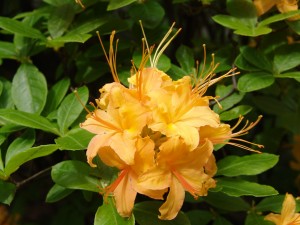 Spring is a season of anticipation and joy. Cheerful bulbs emerge from the ground and cover the landscape with color. Flowering trees and shrubs follow suit in one of the year’s most magnificent displays. As the season unfolds, everything takes its turn providing a symphony of color—magnolias, flowering cherries, azaleas, redbuds, lilacs, and crabapples.
One of my favorite players is the native azalea. It is a versatile plant that is often overlooked by the homeowner. Native azaleas are known for their spectacular bloom in spring. Many are incredibly fragrant, often with a spicy clove scent. A number of them also provide a wonderful show in the fall, with leaves ranging from yellow and burnt orange to fiery red.
Native azaleas have a graceful form that adds height and structure to any woodland garden. Most native azaleas grow from 5 to 8 feet tall, with some of them stretching to 10 feet at maturity. They rarely need any pruning, just an occasional thinning out of congested branches or removal of dead wood. Prune immediately after flowering.
To learn more about native azaleas…
Read More
Posted in Exhibitions on May 1 2009, by Plant Talk
Show Celebrates Henry Hudson 400th
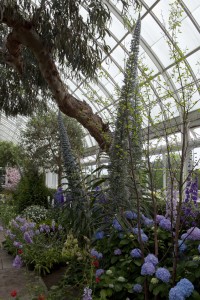 Vibrantly colored flowering bulbs and companion plants take center stage in The Glory of Dutch Bulbs: A Legacy of 400 Years, which opens today and runs through June 7.
The exhibition celebrates the 400th anniversary of Henry Hudson’s arrival in New York by bringing a touch of Holland to the Botanical Garden with a Dutch bulb flower show in the Enid A. Haupt Conservatory and a four-season display, including Dutch bulbs, along Seasonal Walk, hands-on activities for families, and programs highlighting the history and influence of the Dutch on New York City.
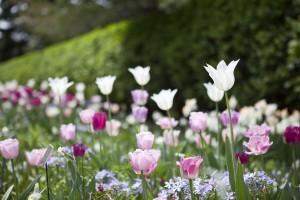
The artful display of bulbs, perennials, and grasses on Seasonal Walk was created by internationally renowned designers Piet Oudolf and Jacqueline van der Kloet, both of the Netherlands. HRH Princess Margriet of the Netherlands and her husband were on hand for the ceremonial planting of Seasonal Walk last fall.
Check out all of Saturday’s programming
Check out all of Sunday’s programming
Posted in Programs and Events on April 30 2009, by Plant Talk

Leading Dealers Showcase Exquisite Pieces
Posted in Learning Experiences, Science on April 29 2009, by Plant Talk
 Robert Naczi, Ph.D., is Curator of North American Botany.
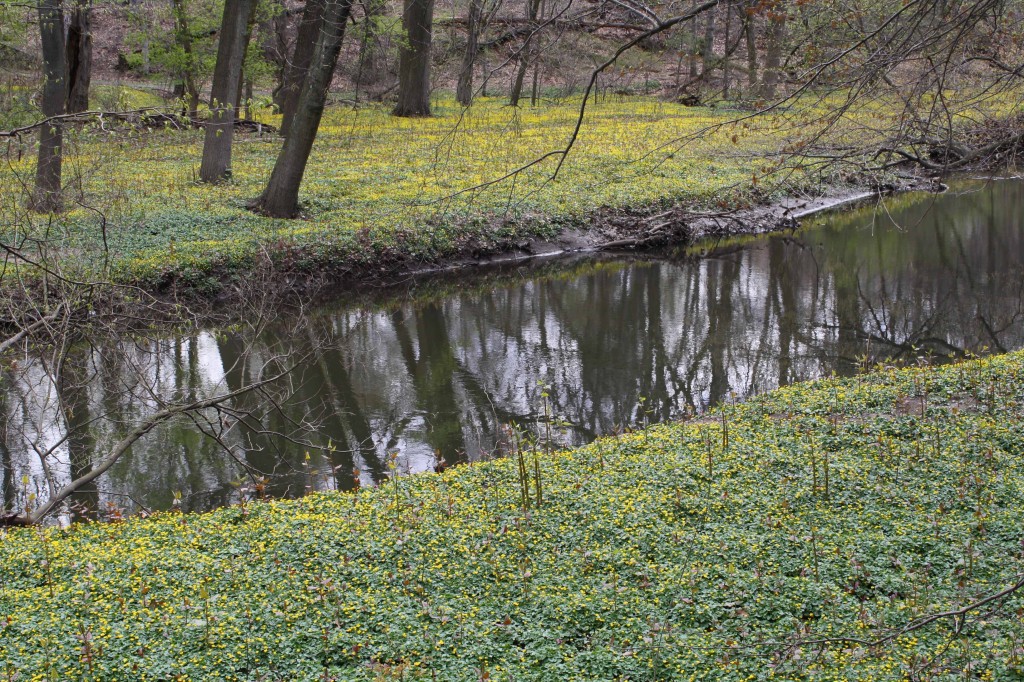
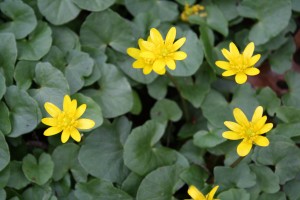 At this time of year, one can hardly miss the grand display of yellow flowers on the floodplain of the Bronx River. The show is especially spectacular from the vantage point of the Magnolia Way bridge at the northern end of the Garden. The view is beautiful, even breathtaking.
Alas, all things are not as they seem, and the golden flowers belie a menace. Yes, beautiful, but a menace nevertheless. The profusion of yellow blooms belongs to an invasive species, Ranunculus ficaria, the Lesser Celandine. Lesser Celandine is a species of buttercup (Ranunculaceae), and is not to be confused with Celandine, a member of the Poppy Family (Papaveraceae).
Posted in Exhibitions, Gardens and Collections on April 29 2009, by Plant Talk
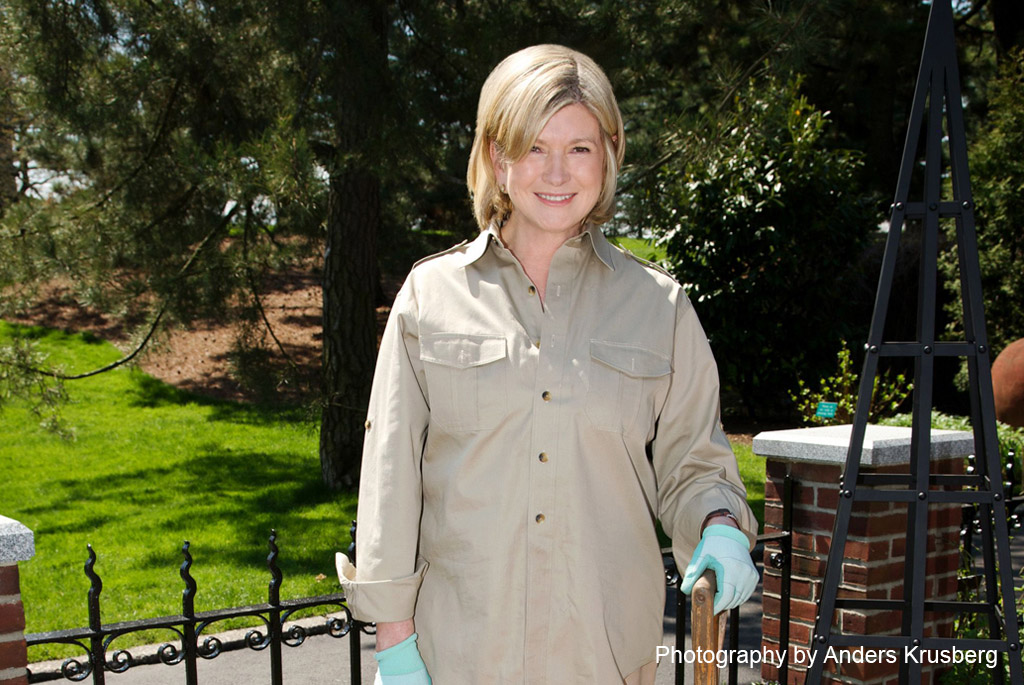
Martha Stewart and her team visited The New York Botanical Garden on April 25 for a ceremonial planting of Martha Stewart’s Culinary Herb Garden, which will be one of the many highlights of The Edible Garden, the upcoming summer-long celebration of growing great food. Click here to download the site plan for the garden.
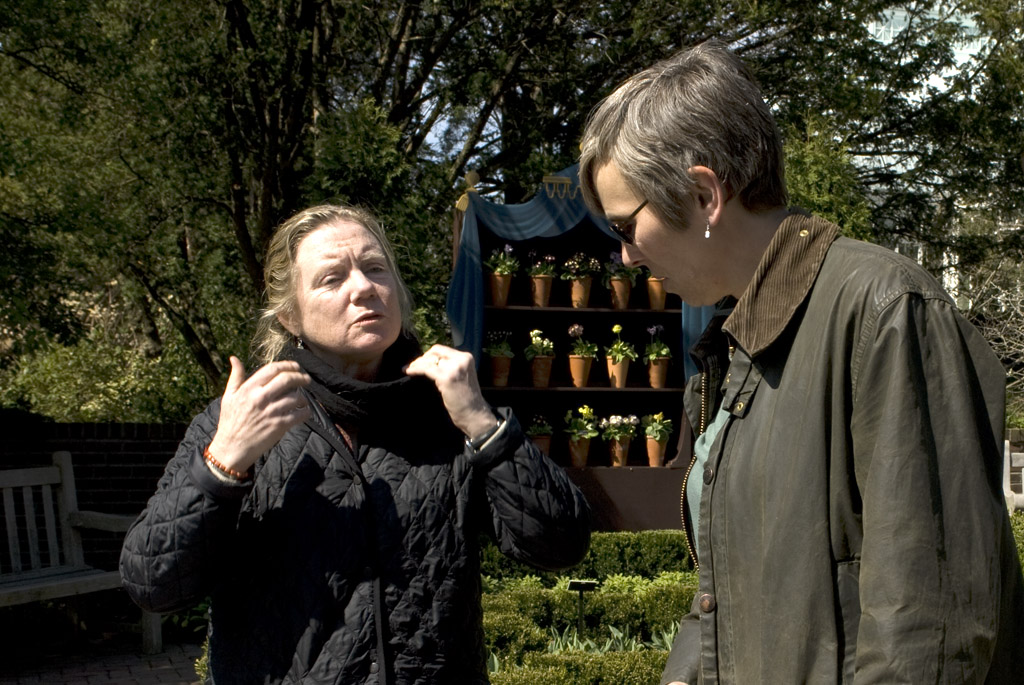
Margaret Falk, Associate Vice President for Landscape, Gardens, and Living Collections, and Kristin Schleiter, Curator of Outdoor Gardens and Herbaceous Collections, plant the Culinary Herb Garden designed by Martha Stewart and her team of gardening experts.
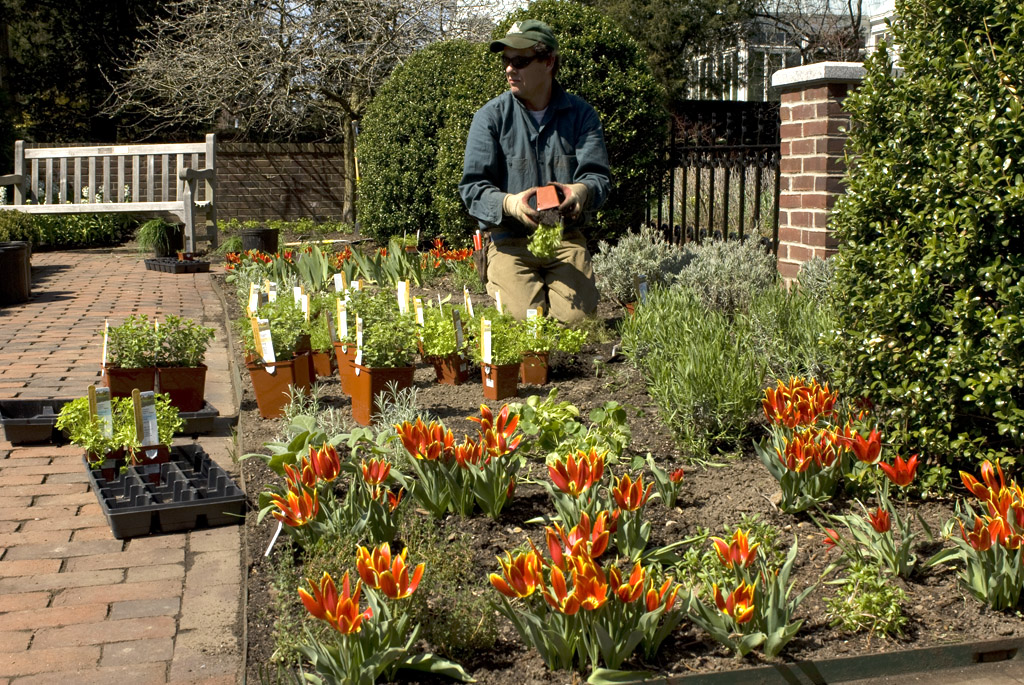
Bruce Dryden, Assistant Foreman of Gardeners, plants Italian parsley and an assortment of other herbs from around the world in Martha Stewart’s Culinary Herb Garden. The newly planted herb garden is just one of the many highlights of The Edible Garden, from June 27 to September 13.
Posted in Learning Experiences, People on April 28 2009, by Plant Talk
 |
Anne Meore is a graduate of Continuing Education’s Horticultural Therapy program and has her own horticultural therapy consulting business, Planthropy, LLC. |
It’s not always easy to see where you are going when on the proverbial “career path.” At times the path tends to be longer than expected and sometimes a bit bumpy. At age 44, I can finally look back with a bit of clarity and see how I finally made it to today.
With advanced degrees in Elementary Education, Psychology, Counseling, and Social Work, I’ve had the opportunity over the years to work with various populations, each with differing needs and more than I could adequately provide for, especially from behind a desk.
But that’s where it began for me. During counseling sessions, something would happen when we fiddled with the plant on my desk, listened to the sounds of birds, smelled the fresh air through the screen, and watched as Mother Nature danced outside the office window. I couldn’t put my finger on exactly what made it work, but I knew it did work. So I began conducting sessions outdoors in the natural world. A novel idea, I thought. I think I will call this therapeutic milieu “horticultural therapy.”
It wasn’t until I received the Continuing Education catalog that I discovered that horticultural therapy wasn’t my invention after all. How naive of me to try to take credit for a field that has been in existence since the time of Egyptian civilization.
I enrolled in Introduction to Horticultural Therapy and was led through the historical background, foundations, and applications of this field by Katherine Sabatino. An experienced horticultural therapist, she was able to take years of personal contemplation and tie it up in a nice big bow for me. My decision was made, my career path defined, with all arrows pointing toward horticultural therapy.
The instructional staff facilitated my learning process throughout the course of study. The expertise and experience of these very people are what distinguishes NYBG’s program from others.
Read More
Posted in Gardening Tips on April 27 2009, by Sonia Uyterhoeven
Woolly Adelgid
Sonia Uyterhoeven is Gardener for Public Education at The New York Botanical Garden.
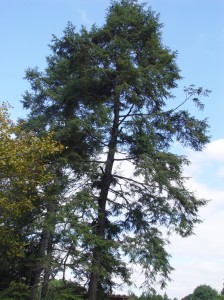 Who’s afraid of the hemlock woolly adelgid? Certainly, many gardeners in the Northeast. Like many pests that plague us, these little creatures were introduced from abroad. In their homeland (Japan) they are kept in check by a type of ladybug that is a natural predator. Here in the United States, though, the woolly adelgid has free range. The only natural challenge it faces is extreme temperatures—once the thermometer drops below 23°F or -5°C, the mortality rate of these fluffy little critters rises.
So what is hemlock woolly adelgid and why should we be concerned? This pest spends most of its life protected under its telltale fluffy white secretion. You probably have seen it cover the branches of hemlocks. It plants itself at the base of the needles and slowly sucks the sap—and life—out of a tree. This can take anywhere from 1 to 15 years, depending on the tree and environmental situations. While many pests target unhealthy and, therefore, susceptible trees, this pest prefers healthy ones.
For those of you who have grown up on the East coast, as I have, you will appreciate the importance of the Eastern hemlock (Tsuga canadensis) in the landscape. For the homeowner, it is one of the few conifers that make an outstanding addition to a shady border. It has delicate foliage, it can withstand hard pruning, and its lower branches often reach down to the ground, creating a nice, full specimen. It is an important screening and landscape plant.
What you may not have thought about is the important role that it plays in the ecosystem. This shade-tolerant tree grows slowly into giants in the forest, creating cool, shaded areas by stream and river beds that allow many fish and aquatic invertebrates to thrive.
To learn what you can do to help your hemlocks fight the woolly adelgid…
Read More
Posted in Programs and Events, Wildlife on April 24 2009, by Plant Talk
Expect Warblers, Wood Ducks, More on this Weekend’s Bird Walks
 |
Debbie Becker leads a free bird walk at the Garden every Saturday from 11 a.m. to 12:30 p.m., beginning at the Reflecting Pool in the Leon Levy Visitor Center. This weekend, she’ll also lead a walk on Sunday, same time and place.
|
 Spring has sprung at NYBG!
The phoebe, spring’s harbinger, has been singing its wonderful namesake song throughout the forest. Wood thrush are chiming in along with white-throated sparrows, tufted titmice, and cardinals.
While some birds are singing to lure a mate, some of our larger predators are already proud parents. Our red-tailed hawks appear to have one baby in their nest, built on a cliff-like shelf of the Library building. Mom and pop can be seen flying in and out with tasty morsels to feed the nestling.
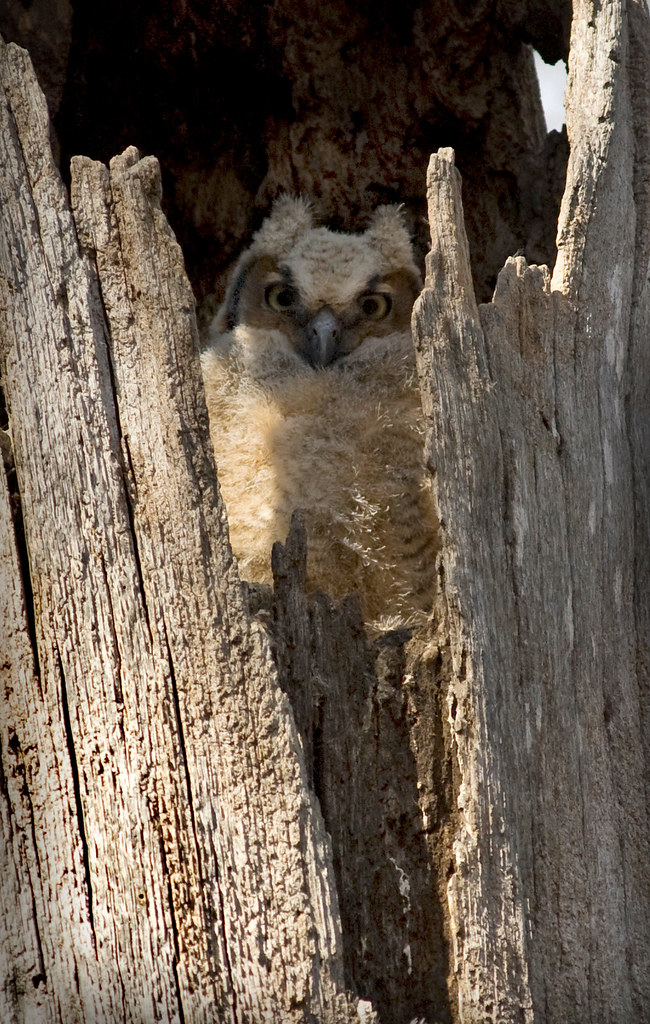
Our baby great horned owls fledged their nest in the Forest. Last Saturday, only one baby was left in the nest (see photo) with Dad watching over him like a hawk (or should I say owl). The other owlet was somewhere in the Forest with Mom, learning how to fly and watching her hunt. Earlier this week, the second baby also fledged and now birders are treated to a spectacular show of watching them flap their brand-new wings and hop from branch to branch.
Warblers are beginning to invade the Garden. Some birders I know save all their vacation days for the last week of April and first week of May to look for these gems. Warblers are small, colorful birds that migrate from as far south as South America to the far northern reaches of the United States and southern Canada. Escaping predators and feeding on newly hatched insects, they travel up the eastern coast in the tens of thousands every April and May to their breeding grounds. This is the only chance each year to see these long-distance travelers in their brilliant breeding plumage, and birding NYBG gives you every opportunity to observe them. Last Saturday’s walk yielded a palm warbler, pine warbler, and yellow-rumped warbler.
To learn more about the birds at the Botanical Garden…
Read More
Posted in People on April 23 2009, by Plant Talk
 |
Jackie Martinez is Director of Volunteer Services. |
This week is National Volunteer Week, and we salute The New York Botanical Garden’s more than 1,000 volunteers who serve in a variety of roles: They enhance the visitor experience as greeters and tour leaders, maintain the Garden’s 250 acres as horticultural assistants, teach plant science to visiting school groups and families, assist with clerical work, and collect data on climate change as citizen scientists, among many other duties. Last year they clocked more than 80,000 hours of service. The success of exhibitions, programs, and events is due in part to the dedication of the volunteers who respond to our numerous calls for help with a sense of responsibility and enthusiasm.
No matter your interests, skills, schedule, or age (our volunteers range from 14 to over 90), you, too, can help the Garden in its valuable work. No experience is necessary—you’ll be trained for your specific assignment. Volunteers are needed year-round and on weekends as well as weekdays. You’ll receive free parking and discounts in the Cafes, in the Shop, and for Continuing Education classes.
What inspires people to volunteer at the Garden and what rewards do they get in return?
Three of our volunteers shared their stories:
 Kefah Rihan lives in the Bronx and is a ninth grader at Cardinal Spellman High School. He serves as an Explainer in the Everett Children’s Adventure Garden, which was his favorite part of the Botanical Garden when he first visited at age three. A friend told him about the Explainer program. “I remembered how fun my visit to the Garden was. I thought it would be a good opportunity to learn new things. I get the chance to teach kids about the wonders of the Garden, and I made many new friends in the process. It gives you many skills in life and can help make you a more sociable person.”
 Melisande Schwartzfarb, from Suffern, New York, first visited the Botanical Garden in the late 1970s as a second-grade teacher at P.S. 9 in the Bronx. Walking through the Garden that spring day, she and the schoolchildren marveled at the beautiful blossoms and emerging flowers. “The children were so excited and expressed wonder at having nature so close to their crowded urban homes. The picture of that special day is imprinted in my mind as if it was yesterday.” After retiring in 2002 she became a docent at the Garden. “I am gaining an incredible amount of knowledge through the ongoing docent training programs, lectures, observations, and Continuing Education classes. A whole new world has opened up for me. The joy of sharing knowledge with children and adults from all over the city, state, and world is most gratifying. In volunteering, you are offering a service needed and appreciated at NYBG. You will also discover many opportunities for learning and expanding your own horizons.”
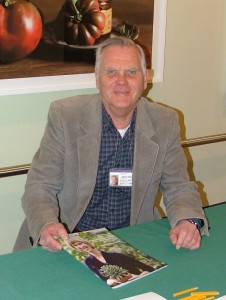 Ignatius Galgan, of the Bronx, had been retired from the New York City Police Department when his wife saw an advertisement calling for Garden volunteers. He signed up and now helps in a multitude of ways. “It’s one of the best things that I have done. If you’re retired, it beats staying at home and watching TV. If not, volunteering at the Garden on weekends is like a mini-vacation. There are so many interesting things that you can do such as becoming a docent, a Garden greeter, helping with the various exhibits throughout the year. Want to learn about plants? How about working with some of the best botanists in the world? These are just some of the things where your help is needed. The Garden relies heavily on volunteers. I couldn’t think of a more rewarding, fun, and beautiful place to volunteer.”
Volunteering at the Garden is a great way to expand your knowledge of plants, give back to your community, meet new people, and share your love of the Garden with others. To get involved, call or e-mail Jackie Martinez, Director of Volunteer Services, at 718.817.8564 or volunteer@nybg.org or fill out an application at nybg.org.
Posted in Programs and Events on April 22 2009, by Plant Talk
 |
Daniel Avery is Sustainability and Climate Change Program Manager at The New York Botanical Garden. |
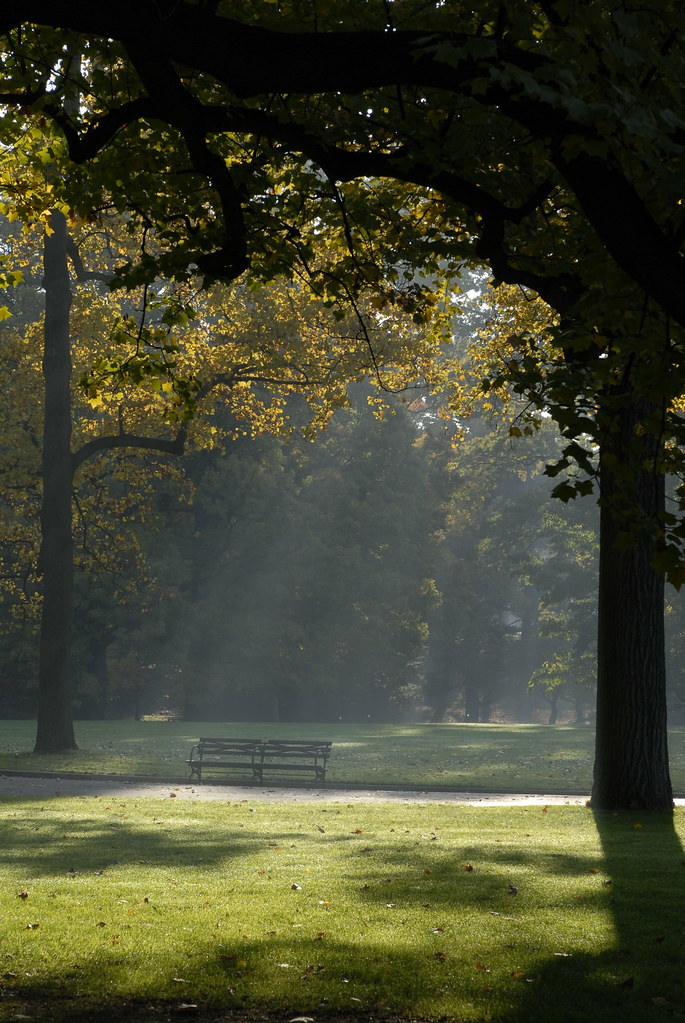 As an institution devoted to the celebration of Earth’s plant life—to the beauty and diversity and ecological importance of plants, to the role that plants play in making all life on Earth possible, to the million ways plants contribute to human health and happiness—The New York Botanical Garden is dedicated to the conservation of plants and the systems on which they rely. So nowhere is the cliché “every day is Earth Day” truer than here at the Garden. Our core institutional missions of education, horticulture, and science are, through the plant world, directly tied to a functioning and protected environment. This is why we strive to improve our own environmental performance (to be more sustainable, if you will) and to teach others how to do so as well.
For those who visit the Garden to enjoy, say, the Holiday Train Show or the explosion of floral magnificence known as spring or some other such event, this broader perspective can be easy to miss. For that matter, even those of us who work at the Garden can slip easily enough into our individual niches and lose sight of the Garden’s broader environmental role—that, for example, our 250 acres of gardens, forest, wetlands, and green spaces nestled into a spectacularly urban setting provide many important environmental services we don’t always think about. Or that our scientists are contributing to conservation around the world. Or that our educators are spreading the word far and wide, including to the next generation of leaders, about the importance of understanding and protecting the world in which we live.
Earth Day should remind us of all this, of the ongoing and critical relationship between each of us (as people, as institutions) and our environment. It should remind us of what we do right, where we can improve, and, not least of all, why we care. There is no better place than The New York Botanical Garden to come and renew one’s love of Mother Earth on Earth Day. The Garden—indeed, any garden—thrives in that space where the natural world of soil, water, sun, and plants intersects with the human environment. And that, from an environmental and human perspective, is the intersection that matters.
So, here at the Garden we have decided to celebrate Earth Month, to give ourselves a little more time to linger over the relationship we share with the natural world. And we invite you all to join us to hear what we have to say and to share with us your thoughts on this most important of topics.