John Suskewich is Book Manager for Shop in the Garden. NYBG’s Farmers Market, which rolls in here every Wednesday through summer and fall, is a feast and a fanfare of fresh fruits and veggies. As beautiful as jewelry but full of thiamin and riboflavin, the produce glistens when the tents are first unfurled, and this year the tomatoes—Black Cherry, Sungold, Brandywine, Bicolor—seemed to glimmer like a Tiffany’s window of semiprecious stones.
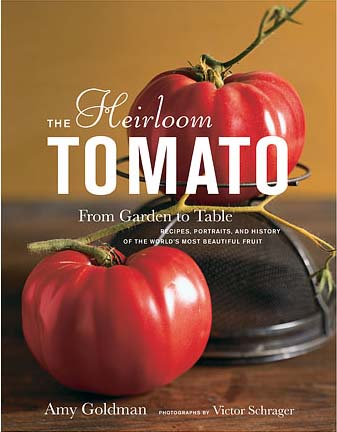
Ah the tomato! This, the cynosure of the Solanaceae, is sweetly celebrated in an excellent new publication, The Heirloom Tomato, by our board member and chair of Seed Savers Exchange, Amy Goldman. The book is all about selecting, growing, and eating tomatoes, but the heart of the volume is a 150-page gallery of the fruit, a museum of Lycopersicon, with photographs by Victor Schrager, who turns even homely “Radiator Charlie’s Mortgage Lifter” into a Vermeer. The descriptions by Dr. Goldman include specs for each variety on size, weight, shape, color, and texture, and her interpretative material includes archival research and nuggets of oral history that illuminate our lost rural history as evocatively as a tintype.
The Heirloom Tomato is a book for anyone who loves gardening, plants, food, tomatoes, art and/or language. It is the third volume in the Goldman/Schrager collaboration. They created a template with two works on cucurbits: Melons for the Passionate Grower and The Compleat Squash, and they have now brought it to such a state of perfection I wouldn’t be surprised if they next turned their attention to okra, or maybe kohlrabi.
Written by Kate Murphy, a junior at Fordham University, with additional reporting by Genna Federico, a senior at St. John’s University. Both interned in the Communications Dept. this summer.
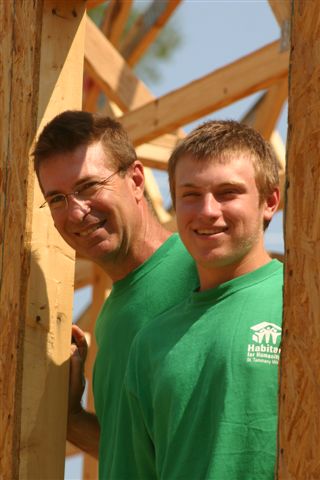
The recent devastation caused by hurricanes Gustav and Ike brought back memories of the catastrophe wrought by Katrina. But that hurricane, which hit Louisiana in 2005, was already on the mind of Mark Cupkovic, Associate VP for Operations at NYBG, who spent his summer vacation working with Habitat for Humanity helping to rebuild homes in New Orleans.
Mark learned about the opportunity through an international humanitarian organization, International Orthodox Christian Charities, which has been working with Habitat for Humanity on a 23-week program in New Orleans. Mark, trained as a carpenter, jumped at the chance to participate in this effort along with his son, Jac.
Mark and Jac met the rest of their team and team leader at the airport. After a good night’s rest, they spent their first full day of the trip getting acquainted with New Orleans and seeing where the city stands today, three years after the disaster.
The team first visited the areas that were hardest hit, such as the northeast section of the city and the lower ninth ward. They also viewed the levees, most of which broke during the hurricane, causing the flooding. Musicians’ Village, an area reconstructed by Habitat for Humanity in hopes of bringing musicians back to the area, served as a positive example of reconstruction and rebuilding.
Mark and Jac spent the next five days working in an area with six houses under construction, all in different stages of completion. They also encountered temperatures in the 90s every day, with about 97 percent humidity on top of that! Everyone received a tool belt and went to work. Mark, with 25 years of experience, took a leadership role, looking at the house plans and organizing work flow. People of all different experience levels volunteered, each finding a way to contribute. They even were fortunate to work alongside the family that will be living in one of the houses. Mark said the family was extremely thankful for all of the volunteers’ help.
Mark stressed that the sum total of the group is much greater than anything someone could do alone. Slowly but surely, the group saw their progress grow before their eyes—the house was being built. And while Mark says the experience left an impact on him, he says the change in Jac is incredible. They both hope to return to New Orleans someday.
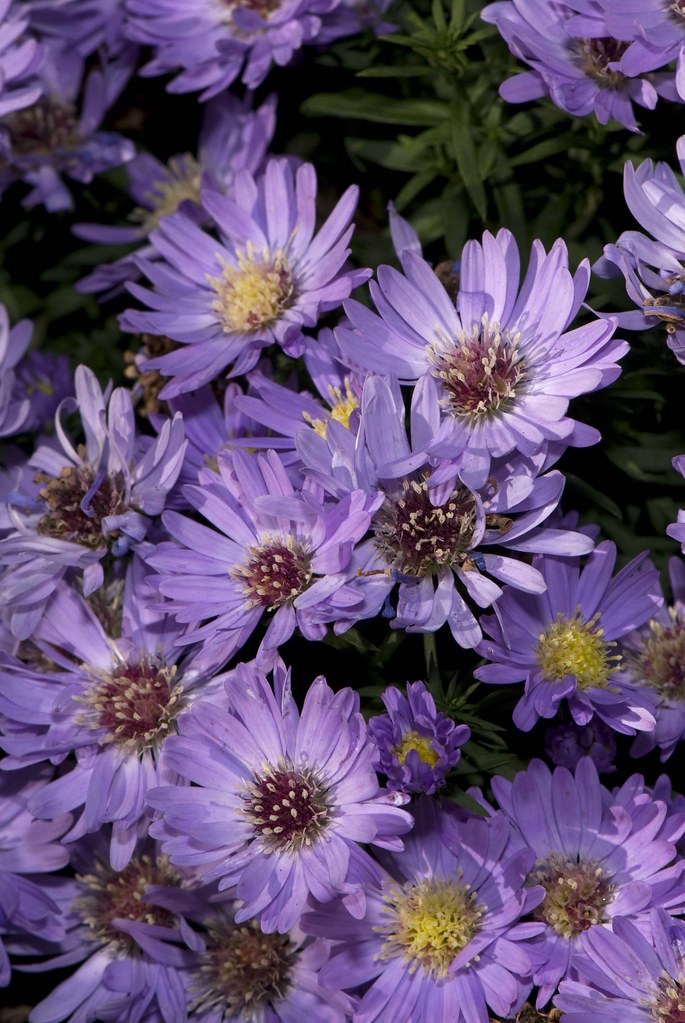
Just Ask About Asters Sonia Uyterhoeven is Gardener for Public Education at The New York Botanical Garden. Autumn is incomplete without asters. Ornamental grasses look bare if they are not adorned by these starry creatures. Chrysanthemums and goldenrod (Solidago) look friendless without asters by their side.
There are plenty of good asters on the market. One of the best for this area is Aster ‘Little Carlow’. This aster is a hybrid between Aster cordifolius and Aster novi-belgii. It has a stunning blue ray flower with yellow disks and maintains a nice compact form.
Two other good blues are Aster oblongifolius ‘October Skies’ or Aster oblongifolius ‘Raydon’s Favorite’. ‘October Skies’ is the shorter, bushier, and bluer of the two; either is worth a try in the garden.
Asters make excellent cut flowers and are attractive to butterflies. Grow them in full sun in average to dry soil.
Career Change: A Recent NYBG Graduate’s Perspective
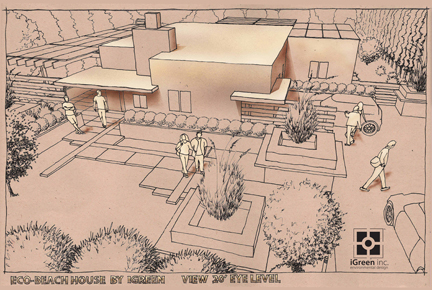
Curtis Eaves received a Landscape Design Certificate from NYBG’s Continuing Education program and is the founder of iGreen, an environmental landscape design firm located in the Hamptons.
A little over two years ago I decided to change careers. I wanted to work in a field I had a real passion for. My background was design—textiles, clothing, interiors—but I was looking for something that would take me outdoors and connect me with nature.
After researching different institutions that offered programs in Horticulture and Landscape Design, I decided that The New York Botanical Garden offered the very best program, and therefore I enrolled to pursue a Certificate in Landscape Design.
Several years ago when I taught design courses at the Fashion Institute of Technology, I realized that curriculum is enhanced when presented by experienced professionals. This approach to teaching is just one of the many great things about courses taught at the Botanical Garden. As practicing industry leaders, the Garden staff and faculty have the unique ability to share their “real world” experiences and insights with the students.
My time enrolled in the Landscape Design Certificate Program became such an enlightening experience, filled with the new creative challenges I was seeking. Not only did I gain a solid foundation, but the comprehensive class material provided by the knowledgeable faculty made the Garden an exciting and fascinating atmosphere in which to learn. I feel certain that I have been provided with the necessary tools, knowledge, and confidence to succeed in the landscape industry while pursuing my dreams and goals.
Just after graduation this past June I launched iGreen, a landscape design business that is based on the east end of Long Island. I am amazed at the level of respect and trust I receive from new clients when they become aware that I received my certification from The New York Botanical Garden. NYBG has inspired me with passion to create and build sustainable “green” designs that are both aesthetically pleasing and environmentally sensitive.
This eco-friendly philosophy is the driving force behind iGreen, so to stay current and informed on how to implement these ecological techniques, I plan to attend the new Environmental Gardening courses now being offered at the Botanical Garden.
Written by Genna Federico, a senior at St. John’s University, with additional reporting by Kate Murphy, a junior at Fordham University. Both were interns in the Communications Department this summer.
Imagine a small sanctuary filled with green grass, bold flowers, and bountiful fruits. Now imagine that you are in the middle of the Bronx—and no, you are not at the NYBG. You are in one of the more than 100 community gardens throughout the area that Bronx Green- Up has helped make over and maintain.
Bronx Green- Up, celebrating 20 years as a program of the Botanical Garden, transforms vacant lots into vibrant green spaces, involving the community and people of all ages and cultures. Besides renovating the space, Bronx Green-Up (BGU) staff continue supporting the site through periodic visits to give ideas, supply materials, and catch up with friends. This Saturday BGU celebrates with community gardeners throughout the Bronx at its annual Harvest Festival, from 1 to 5 p.m. at Padre Plaza Community Garden.
During our field trip as volunteers for a day, we got a chance to see four of these urban oases and to witness Bronx Green-Up at work. Follow us on our field trip visits after the jump.
Nick Leshi is Associate Director of Public Relations and Electronic Media.
In the few months since its opening, Moore in America, the exhibition of monumental sculpture on display at The New York Botanical Garden, has generated quite a bit of positive media reaction. One of the highlights was Channel Thirteen’s SundayArts feature, which included the Moore exhibition as the lead story in its news segment.
Host Christina Ha visited the Botanical Garden and shared with viewers some of the 20 artworks by Henry Moore that are placed throughout the Garden’s 250 acres, including Reclining Mother and Child in the Peggy Rockefeller Rose Garden. The SundayArts program airs weekly on Thirteen/WNET-TV, the flagship public broadcaster in the New York, New Jersey, and Connecticut metro area. The program showcases local arts news about gallery and museum exhibits and world-class performances. Its Web site is rich with artist profiles, blogs, calendar listings, multi-media content, and more.
In addition to covering Moore in America, PBS has featured other stories about the Botanical Garden as well.
David Hartman later returned to the Garden for a behind-the-scenes look at what goes into making NYBG’s crowd-favorite Holiday Train Show, filming a documentary about Paul Busse and his team at Applied Imagination.
As the Botanical Garden continues to attract the attention of an ever-growing landscape of traditional and new media, public television continues to be a source of thought-provoking and engaging content not easily found elsewhere, sharing with its millions of viewers topics about education, science, culture and the arts, and much, much more.
Crazy for Conifers Sonia Uyterhoeven is Gardener for Public Education at The New York Botanical Garden. Conifers provide stately backdrops throughout the year for the garden. In the fall they are particularly spectacular as backdrops for the fireworks of fall colors. While many of them are imposing specimens, there are many fine dwarf conifers that are ideal for perennial borders and more confined spaces.
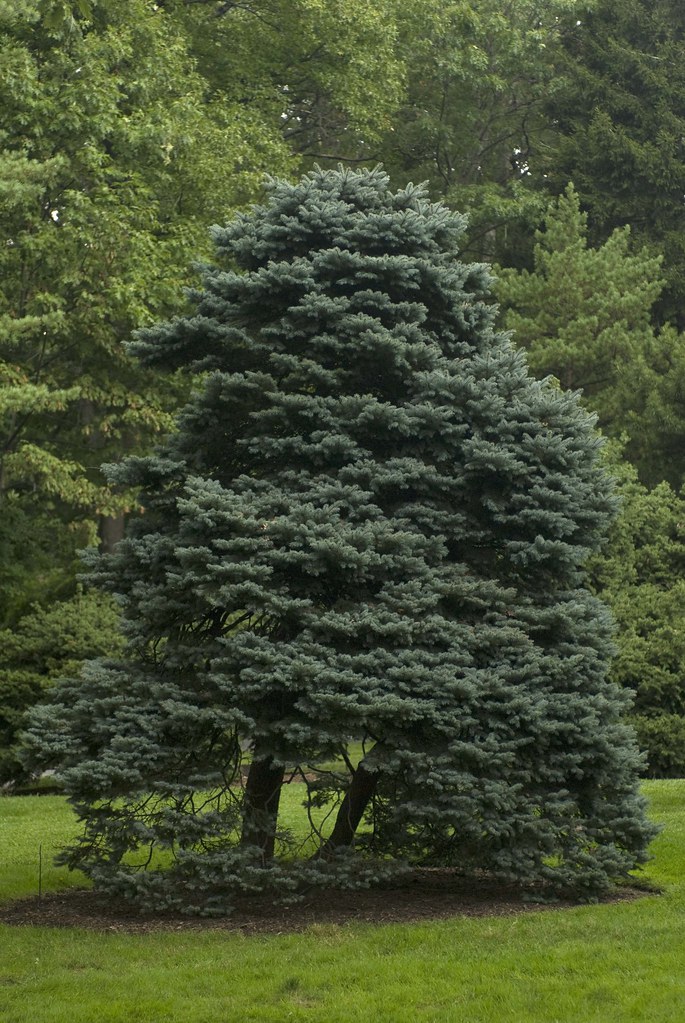
One of the most stunning examples of a dwarf conifer is the dwarf blue Colorado spruce, Picea pungens ‘R.H. Montgomery’. This is a slow-growing, compact specimen with beautiful glaucous blue needles.
If you would like a golden accent in your garden, try Chamaecyparis pisifera ‘Filifera Aurea Nana’. This Dwarf Sawara-cypress will develop into a three-foot mound.
If green is your color, the Hinoki False Cypress, Chamaecyparis obtusa ‘Nana Gracilis’, is a popular choice. It starts its life as a mound and then develops into a nice upright shape, reaching from three to five feet tall after 10 years. This little conifer can take full sun to part shade.
It’s crunch time, making sure all the plans are in order for the all-day annual celebration of Fiesta de Flores on Sunday, September 14. Performers—check. Helpful staff and volunteers—check. Flowers blooming impeccably—check! I can’t quite take credit for the last one, but flowers are a top feature of the day.
All around the Garden I have helped coordinate the day’s activities, which range from children’s botanical crafts to gardening demonstrations to salsa dancing and face painting. The celebration of flora and culture relates to the Garden’s scientific research program, which began in the Caribbean region in the 1890s and where our scientists are still active today. Imagine being out in the field with them by visiting the replicated rain forests in the Enid A. Haupt Conservatory.
This year the celebration is complemented by a concert with Dan Zanes and Friends (see the blog post of September 9), who just released a Spanish-language CD that brings together many voices from many Latin American countries.
I get to learn a lot of new skills and new lingo working with so many different people to put on events. It is quite a long list of things to keep track of, but I hope you can come out and enjoy this wonderful day with me. Afterward, I’ll be back planning events for your next visit. Keep your fingers crossed for nice weather!






 A little over two years ago I decided to change careers. I wanted to work in a field I had a real passion for. My background was design—textiles, clothing, interiors—but I was looking for something that would take me outdoors and connect me with nature.
 In the few months since its opening, Moore in America, the exhibition of monumental sculpture on display at The New York Botanical Garden, has generated quite a bit of positive media reaction. One of the highlights was Channel Thirteen’s SundayArts feature, which included the Moore exhibition as