Daisy Martinez is host of Viva Daisy! on the Food Network and author of Daisy Cooks! Latin Flavors that Will Rock Your World. She will present a cooking demonstration on Sunday, The Edible Garden’s final weekend.
When I was a little girl, I used to marvel at how my mother and her mother could grow anything and everything in their garden. Mama Clotilde, my maternal grandmother, would grow medicinal herbs in her garden along with a variety of beans, a banana tree, a prolific breadfruit tree, mangoes, achiote, grapefruit, yucca, and avocados. She would send us out to the garden before dinnertime to collect whatever she needed to create delicious meals. When my family moved to Staten Island in 1964, it was no small wonder that Mami’s first order of business was to set up her vegetable garden in the backyard…and what a garden it was!
Mami, like her mother before her, was born with a green thumb. I mean, the woman just has to wave her hand over anything green and she charms it like a snake charmer! In no time flat (and after a trip to a nearby stable to pick up some manure), Mami had rows of lettuce, tomatoes, beans (against the backyard fence), eggplant, sweet peppers, ajicitos dulces, cilantro, culantro, basil, rue, scallions, zucchini, sugar beats, radishes, and even watermelon! We had a peach tree in the yard that yielded juicy, delicious yellow peaches, and a plum tree that yielded sweet little black plums that we would eat by the dozen!
Mami would tend her garden with everything from coffee grinds to eggshells and involved me in the weeding, harvesting, and pest control (pie plates full of beer for slug control, anyone?). And although I assumed that I would pick up a lot of her skills through osmosis, when I got married and felt the need to start my own garden, I found that I did not inherit the green thumb that my mother, and her mother before her, had waved in my face with impunity! Not to be outdone, I headed to my local botanical garden and library, and although I cannot compete with my grandmother’s or Mami’s garden, I find that I can fend for myself these days.
I grow my own herbs, of course: I keep thyme, lemon thyme, cinnamon basil and regular basil, cilantro, chiles, sage, and parsley. This year I grew jalapeno, Madagascar hot chiles, plum tomatoes, and sweet fennel. I have a couple of blueberry bushes that my children hit up around breakfast time everyday during the summer, and my raspberry bushes aren’t too shabby either. It is a humble, if inadequate homage to Mami and Mama Clotilde’s gardens of paradise, but an homage nonetheless. I can only hope that my simple little garden serves to inspire my daughter (and sons!) to one day have one of their own.
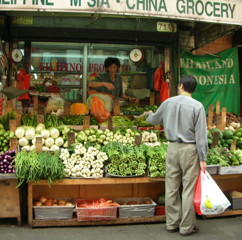
Valerie Imbruce, Ph.D., Professor and Director of Environmental Studies at Bennington College in Vermont who was a doctoral student at the Botanical Garden, researches the production and distribution of ethnic fruits and vegetables for New York City markets. She will be holding an informal conversation about ethnic fruits and vegetables in Chinatown and urban food systems during Café Scientifique on September 12 as part of The Edible Garden.
Cities, home to half of the world’s growing population, are poised to redefine how we produce and supply our food. Cities are where people are demanding more farmers markets and community supported agriculture groups and where there is a local agriculture craze. Food is a social movement with a particularly urban flavor.
Living in southern Vermont for the past year after being in New York for nearly a decade, I learned that in New York City it is easier to purchase a diet of regionally produced foods than in the food-producing regions themselves because of the structure of our food supply chains.
Since World War II the number of farms in the United States had been declining, but between 2002 and 2007, the last year for which data were available, there was a 4 percent increase. According to the U.S. Census of Agriculture, these new farms are half the size of the average U.S. farm, have younger operators, and have sales of which one product accounts for no more than 50% of the farm income. These are the types of farms, small and diversified run by a new generation of farmers, which farmers markets, community supported agriculture, and chef-farm partnerships have been the primary supporters of.
But direct marketing arrangements are not enough to support a sustained increase in farm numbers: The volume of food sold directly from farm to consumer is a drop in the bucket compared with the volume of food that is sold through wholesale distribution. Why should New York, the second largest apple producing state in the nation, export its apples and then turn around and import apples from Chile and New Zealand for New Yorkers to eat? Why should the United States export more than 4,000 tons of yogurt and then import just over the same volume? It’s because fundamental aspects of the “mainstream” food system make it difficult for regional farmers to access their regional urban markets. We need to get commodity agriculture and supermarkets on board to change this, and we need city government to create policies to ensure access to urban markets by regional farmers.
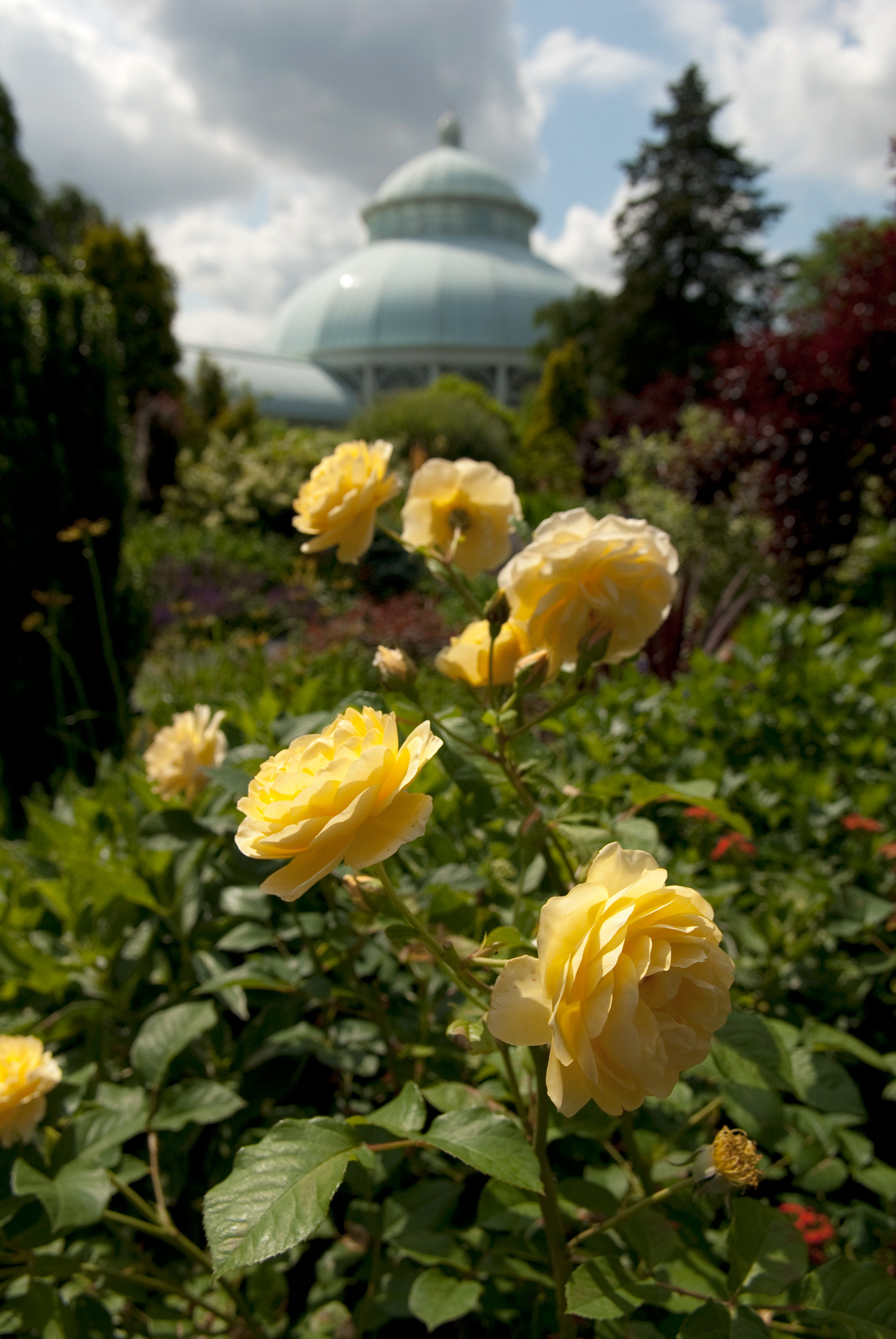
With the beautiful weather and a three-day respite from work (for most), this is a great time to get away to the Botanical Garden—and without going far. Enjoy the waning days of summer viewing the lush Perennial Garden, Seasonal Walk, and Rose Garden. Catch The Edible Garden in its penultimate weekend with tours, cooking demos, children’s activities, and more. Take a bird walk or attend the Greenmarket on Saturday, enjoy poetry readings on Sunday, relax on a Tram Tour of the Garden’s 250-acres on Monday (or any day). You can do all these wonderful things with an All-Garden Pass.
Annie Novak is coordinator of the Children’s Gardening Program in the Ruth Rea Howell Family Garden. Click here to see a Today show segment about the program.
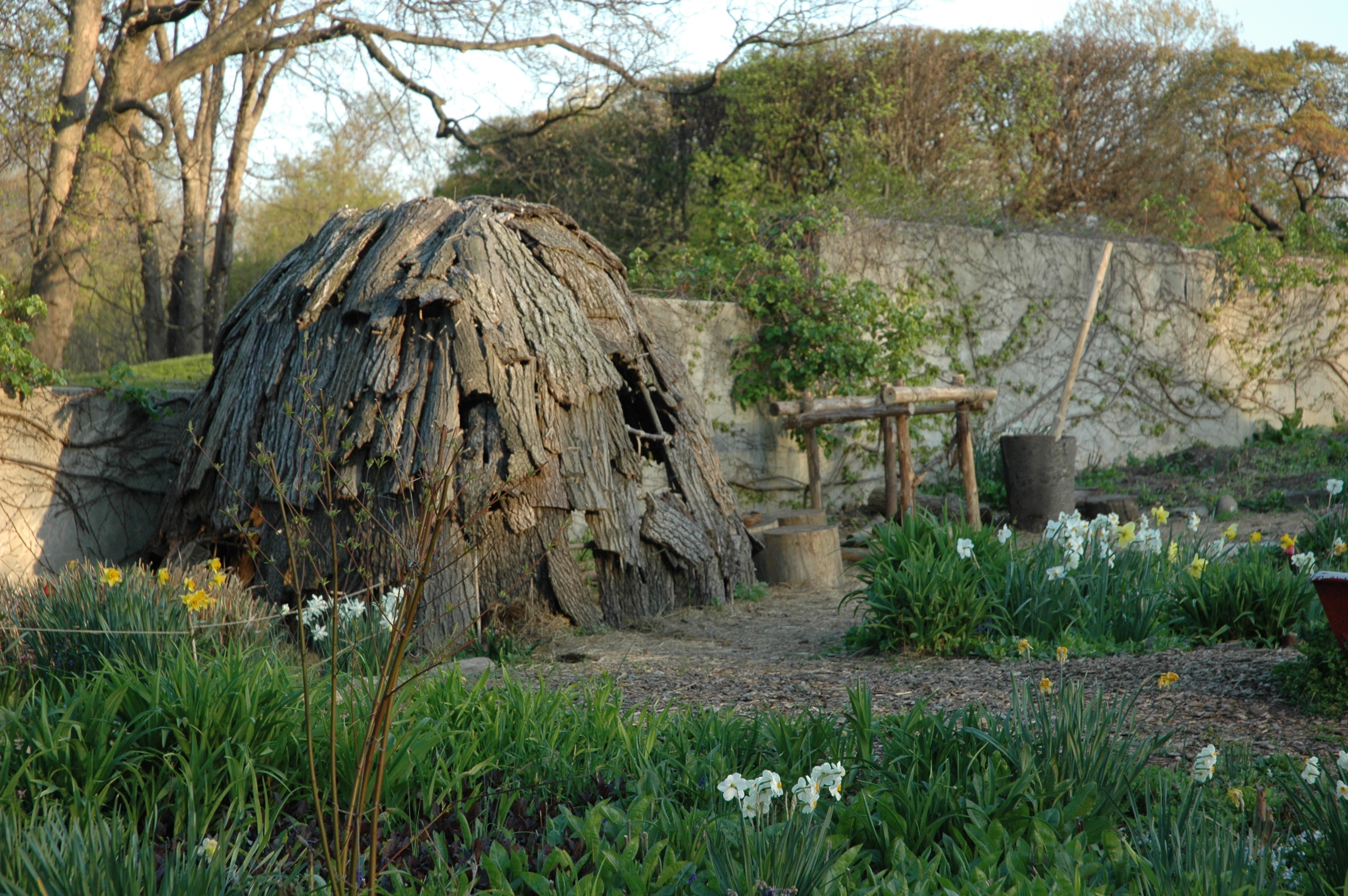
A few weeks ago, during one of many rainstorms in the Ruth Rea Howell Family Garden this summer, I took refuge with a few students from our Children’s Gardening Program in the wigwam tucked in the side corner of the garden’s Meadow. While the kids played giddy musical chairs on the stumps inside, I sat quietly with my back against the bark wall. It’s a cozy space. Although the kids were acting loud and giggly, the small wigwam felt peaceful. The rain fell near-noiselessly on the dome of birch saplings. Through the wigwam’s single window, daylilies and tall zebra grass shone orange and green against the gray.
Part of the Three Sisters display garden, the wigwam was built in 2006 to re-create the lifestyle of the Lenni-Lenape, the first New York natives. When teaching, I often ask my students to imagine what it would be like to live as the Lenape did 400 years ago. I ask the children to think about everything they do inside their homes—cook, read, watch TV, play with toys, take refuge in air conditioning when the summer hits—and think of what the Lenape would be doing instead. With seven-year-olds, of course, a reflective discussion like this leads to hilarity pretty quickly.
But after some groans and giggles about sharing a bedroom with your whole family, comparing lifestyles leads to an epiphany as well. The wigwam only seems small in comparison to today’s houses when you think about it as an equal living environment. But it isn’t. In those early, pre-hustle-and-bustle New York years, an entire world around the home provided the space for cooking, playing, harvesting. (Who needs air conditioning with the Bronx River running so close by?) What I like about the wigwam is its clear definition of necessity. It’s a space of shelter and sleep. Imagination provides the rest.
Debbie Becker leads a free bird walk at the Garden every Saturday from 11 a.m. to 12:30 p.m. beginning at the Reflecting Pool in the Leon Levy Visitor Center.
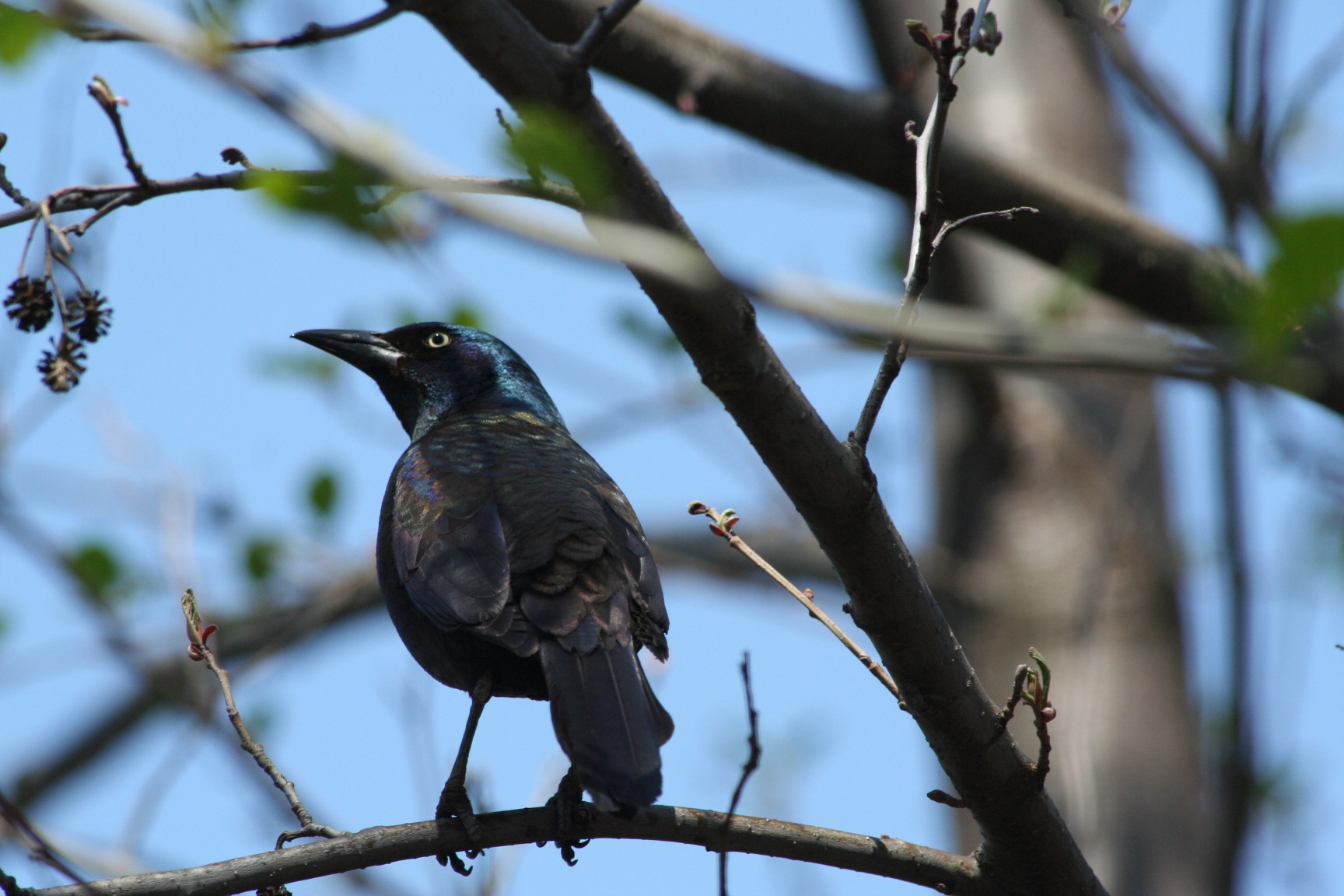
While the spring migration is exciting because of the colorful warblers that come through, the fall migration is much more spectacular in other ways. The warblers pass through again, but in drabber colors.
But it is the hawks, owls, harriers, ospreys, eagles, sparrows, swifts, swallows, and shorebirds on the move that attract most of the attention of bird watchers. The migration begins in late July, when the shorebirds begin showing up on coastal beaches. Osprey follow as they move south to open water. By mid-to-late August we see other species also migrating such as dragonflies and monarch butterflies. By September, the skies will be filled with their movement as well as of swifts and swallows.
As the last days of summer approach in mid-September and heat thermals rise off the Earth, the hawk migration will be in full swing. The hawks use the warm thermals to soar and conserve energy. A good thermal can allow a hawk to coast for miles. Broad-winged hawks are notorious for gliding on thermals in groups of thousands, known as “kettles,” during their migration from North America to South America.
Ruby-throated hummingbirds frequent the Garden during September as the jewelweed comes into bloom, filling their bellies with sweet nectar for the return trip to their wintering grounds. A hummingbird can fly nonstop up to 24 hours and almost 600 miles on stored fat.
NYBG Student Travels to Asia to Trace Eggplant’s Roots
Rachel Meyer, a doctoral candidate at the Botanical Garden, specializes in the study of the eggplant’s domestication history and the diversity of culinary and health-beneficial qualities among heirloom eggplant varieties. She will hold informal conversations about her work atThe Edible Garden‘sCafé Scientifique on September 13.
The eggplant (Solanum spp.) may not seem like the world’s most exciting food crop at first thought, but its history and diversity are actually quite intriguing. The common name, “eggplant,” actually covers more than one species, whose size, shape, color, and flavor are remarkably different throughout the world.
People have grown eggplants for over 2,000 years in Asia, and it is thought that eggplants were used as medicine before being selected over time to become a food. Many present-day cultivars of eggplants still contain medicinally potent chemical compounds, including antioxidant, aromatic, and antihypertensive, some of which might be the same compounds responsible for flavor as well.
If we can unravel the history of the eggplant’s domestication and investigate the health-beneficial and gastronomic qualities of heirloom eggplant varieties, we can promote specific varieties that may be useful to small-scale farmers, practitioners of alternative medicine, and eggplant lovers around the world.
I spent seven weeks in China and the Philippines last winter exploring how different ethnic groups use local eggplant varieties. These regions in Asia are important, because scientists are still not sure where eggplants were first domesticated (that is, selected by people over generations for desirable qualities instead of just harvested from the wild). We know it was in tropical Asia, but the written record doesn’t go back far enough to provide more clues. For that reason I also collected wild relatives of eggplant that might be the ancestor of the domesticated crop.
Carol Capobianco is Editorial Content Manager at The New York Botanical Garden.
The Bronx River runs through The New York Botanical Garden on its way from Westchester County to the East River and is a primary reason the Garden was sited at this location in 1895. Over the years, the Garden’s 250-acre lush landscape has protected a segment of this urban river, while other sections have been negatively impacted by development and heavy land use.
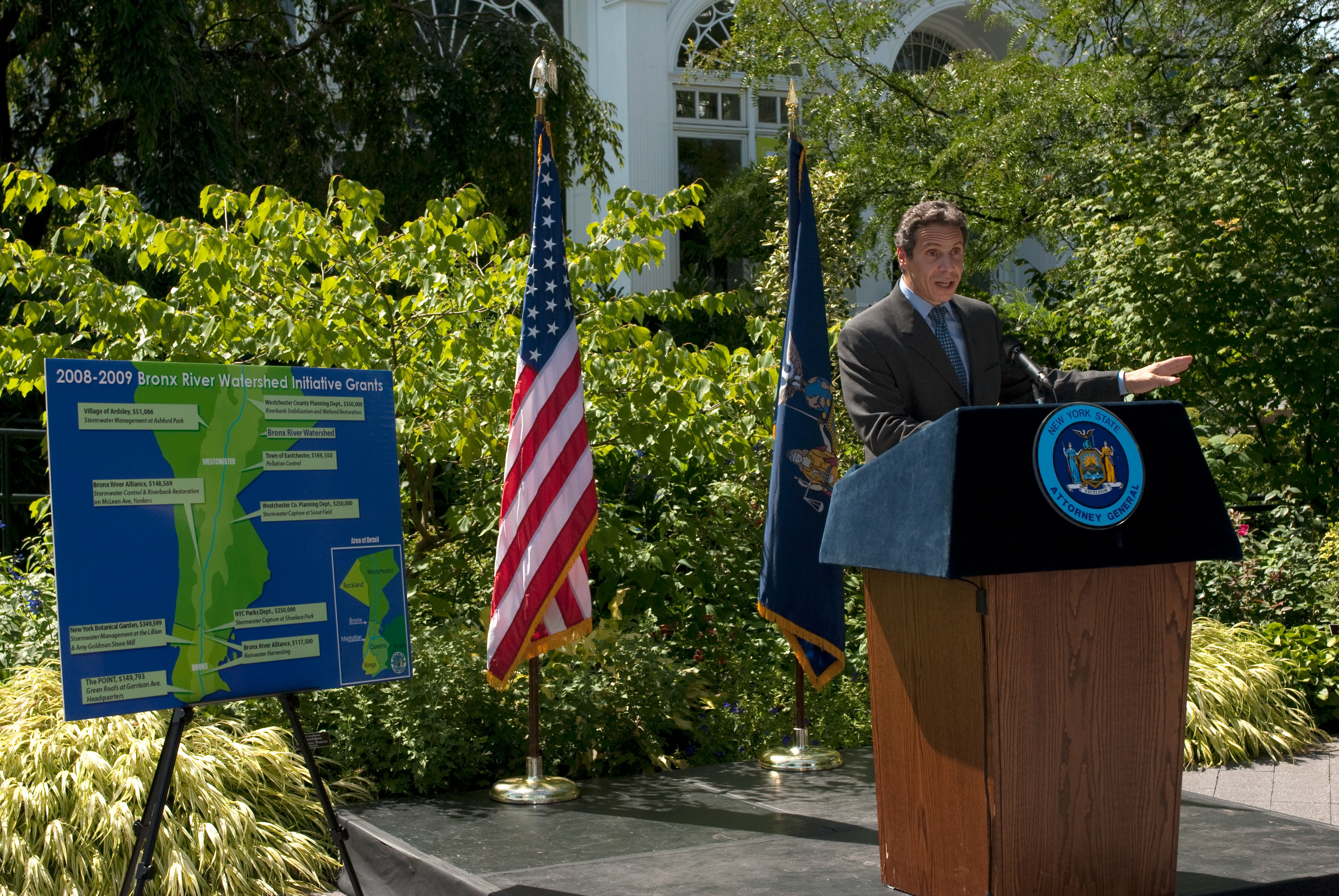
But the Bronx River as a whole has been on the mend in recent times, thanks to the efforts of many organizations and government agencies. People in canoes and beavers and other wildlife have returned. On Thursday, New York Attorney General Andrew Cuomo visited the Garden, along with Bronx Borough President Ruben Diaz, Jr., and others, to award funding to NYBG and six other entities for pollution-control projects.
The Garden, which received $349,599, will use the funding for a “green infrastructure” demonstration project designed to reduce and treat storm water discharge to the Bronx River. The Garden will install permeable pavement, a tree well that captures storm water, and a pipe outflow with cascading pools. It will also stabilize the shoreline and restore it with the planting of native trees, shrubs, and groundcovers.
In his address, Cuomo particularly congratulated Botanical Garden President and CEO Gregory Long for his work. “He has done such a fantastic job,” Cuomo said. “The Garden is a real beautiful gem and treasure for the Bronx and for the entire state.”
Kevin Peterson, Assistant Manager of the Everett Children’s Adventure Garden, is responsible for the design and fabrication of exhibits in the Adventure Garden.
When the Garden began planning The Edible Garden exhibit, I immediately began thinking of doing something with the farm-to-table movement for the Everett Children’s Adventure Garden.
We live in a time where so many kids (and adults) don’t appreciate where their food really comes from. We simply aren’t conscious of it. This was the perfect opportunity to reinforce the fact that before our food goes into boxes, appears in grocery stores, or is served for dinner, the earth has to grow it, farmers have to tend to the crops, and people have to harvest those yields.
The Farm to Table exhibit aims to bring that background into the foreground so kids can develop a more complete understanding of what they take part in every time they eat.
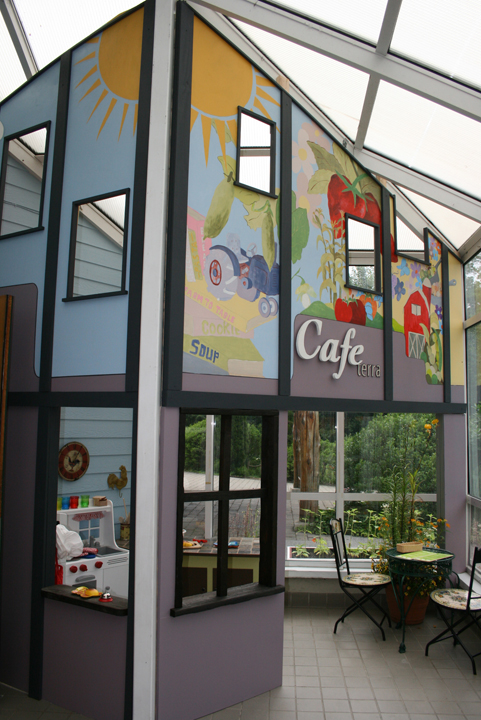
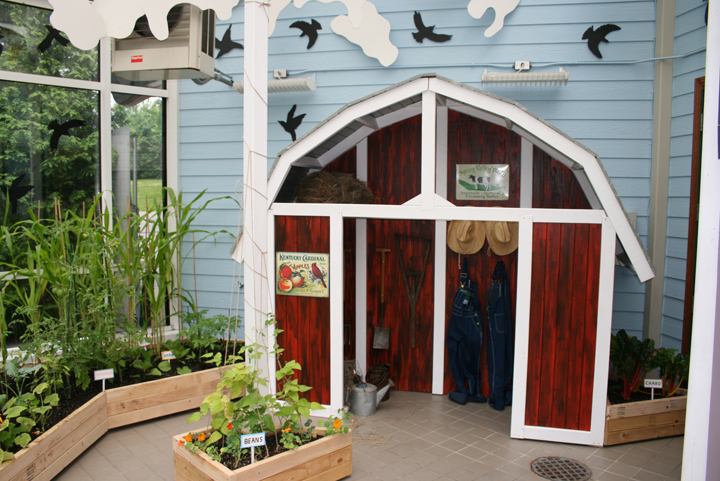
Cafe Terra is a joyful place where kids learn by being, doing, and having fun. Overalls hang in the barn like the ones I bought here (waiting to be worn) surrounded by real plants while a windmill stands tall against the crows overhead. In the cafe, they can don a chef’s hat and slice up play veggies for a fresh meal—and then serve it up in the cafe!
Lee Reich, Ph.D., , who has worked in soil and plant research for the USDA and Cornell University, is a garden writer and consultant. He will be presenting at The Edible Garden on September 13.
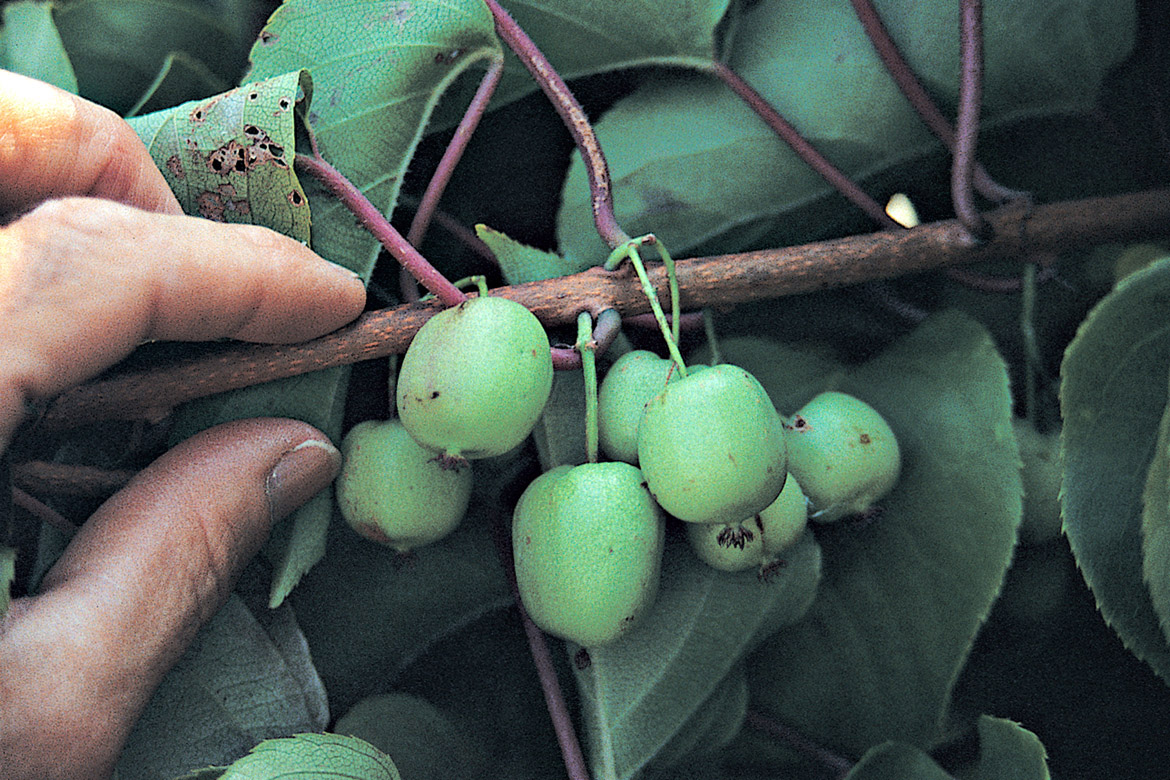
It’s August as I write, and I’ve just picked a fruit that’s as uncommon as it is delectable—and it’s borne on a most beautiful plant. The fruit is hardy kiwifruit, which is in many ways similar to the fuzzy kiwifruits of our markets. Those fuzzies are cold tender, though, while hardy kiwifruits are, well, very cold hardy. Fruits of either species have lime-green flesh with tiny, black seeds and, when sliced crosswise, exhibit the lighter-colored rays that are the source of the generic name Actinidia (actin is Latin for “ray”). Their flavors are similar, except that hardy kiwifruits are a whit sweeter and more aromatic. The small, cold-hardy cousins of the fuzzy kiwifruits also are grape-size and have a smooth skin that’s edible, so you just pop the whole fruit into your mouth and enjoy.
Hardy kiwifruits were introduced into this country from western Asia over a hundred years ago not for their delectable fruit but for their beauty. The vines—originally distributed under the common name bower actinidias—can still be found growing as such on the grounds of many botanical gardens and old estates. (At NYBG, look for hardy kiwifruit vines in the Everett Children’s Adventure Garden.) I wonder how many visitors passed beside arbors or under pergolas over which the vines clambered, admiring the beauty of the plants but unaware of the fruit that hides so well beneath the foliage.
Things changed about 30 years ago when fruit enthusiasts started to become aware of those delectable treasures and began planting the vines for fruit harvest. (Both male and female plants are needed for fruiting.) Two species are prominent for their fruits. A. arguta is the more vigorous of the two. In the wild, it will often climb 100 feet high into trees, so needs adequate support and space—about 200 square feet per plant—in a garden. The apple-green leaves have red stalks and maintain their fresh, spring look throughout the growing season. With age, the trunks become ornamental with their decorative twists and bark that peels in long, gray strips. The fruits ripen from mid-September onward.
Scientists have extended the barcode of life to plants, a development that will have far reaching impacts in the years ahead.
Earlier this month, an international consortium of plant scientists achieved a milestone when they published the results of a multi-year analysis selecting two regions of DNA to serve as barcodes for the identification of plants. The findings were published in the Proceedings of the National Academy of Sciences.
The goal of using a standard segment of a gene as a unique identifier of all living organisms has worked better for animals than for plants, as a gene from the mitochondrial genome, cytochrome oxidase I or COI, is sufficiently different among animal species to allow unique identification of 95% of species. Since this gene is not highly variable in plants, 52 scientists from 24 institutions in nine countries have worked for several years to identify genetic sequences that can routinely be sequenced without ambiguous results and that differ enough to allow discrimination of species. The group selected two genes from the chloroplast genome, rbcL and matK, which together total about 1,450 base pairs.
Agreement on these barcode genes will pave the way to building the reference database necessary to assign barcode sequences to species. The use of barcodes will have tremendously broad impact both in the research community and also with many practical applications. Barcode sequences have in numerous instances helped identify species new to science and improve our understanding of diversity in the natural world. But more importantly it will enable plants that could formerly be identified only by increasingly rare experts with specific plant families to be identified by technicians, enabling broad ecological surveys. At a more practical level, it will support the identification of fragmentary plant materials in poison control centers and in other forensic applications, and allow accurate identification of ingredients in food and dietary supplements.
An ambitious effort to assemble barcodes for all of the trees of the world is being coordinated by The New York Botanical Garden, and it will ultimately facilitate better monitoring of the world timber trade. This international partnership will take years to complete its goal, but in the short term, enough sequence data has been collected already to identify the family to which most plants belong, and in many cases the genus as well. Timber harvesters will be much less likely to cut endangered timber species if they know that this technology may allow buyers to identify these species and refuse to accept and pay for them. Ultimately, barcoding will affect our lives in many ways by providing a method for the identification of the millions of species that inhabit our planet.
Please help support important botanical research such as this that is integral to the mission of The New York Botanical Garden.





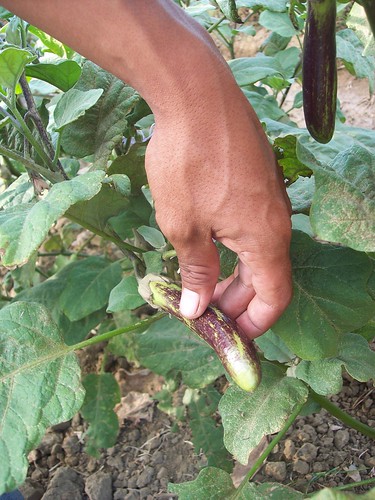 The eggplant (Solanum spp.) may not seem like the world’s most exciting food crop at first thought, but its history and diversity are actually quite intriguing. The common name, “eggplant,” actually covers more than one species, whose size, shape, color, and flavor are remarkably different throughout the world.