Inside The New York Botanical Garden
Plant Talk
Posted in Shop/Book Reviews on September 29 2009, by Plant Talk
The Art and Impact of Lynden B. Miller’s Public Gardens
 John Suskewich is Book Manager for Shop in the Garden.
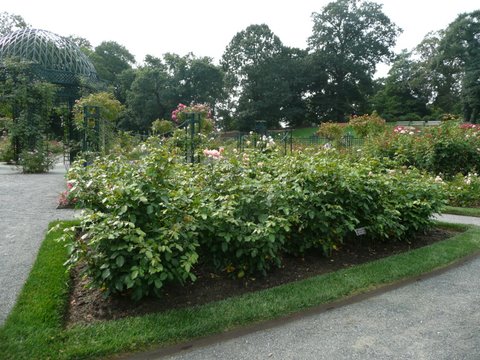
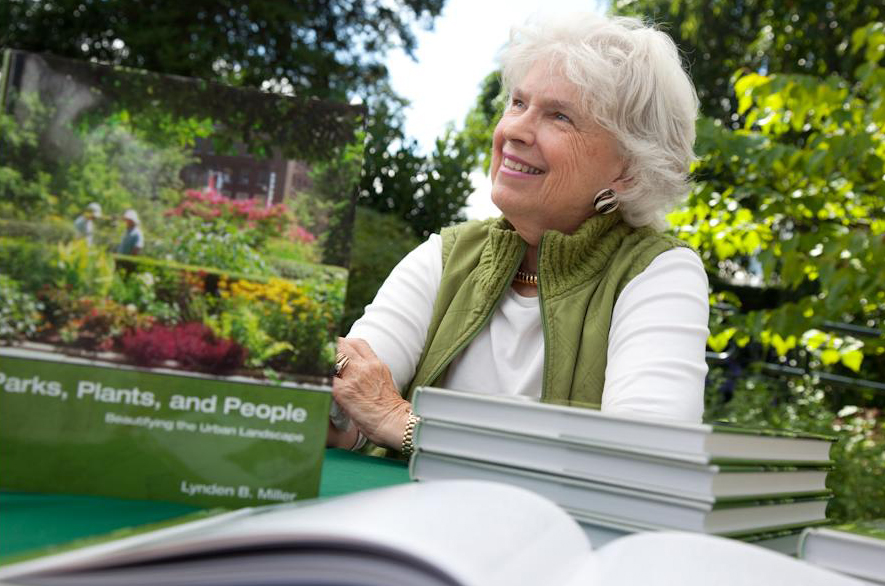
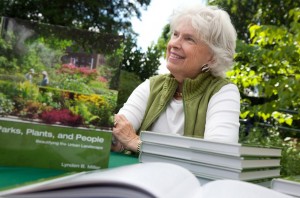 New York City, famous around the world for its great art, is the site of more masterpieces than you can shake a stick at. The Metropolitan Museum has Monet’s Terrasse a Ste.-Addresse; the modernist icon Lever House graces Park Avenue; you can ponder Louise Nevelson’s Sky Cathedral at MOMA. Here at The New York Botanical Garden there is a masterpiece of garden design, the Jane Watson Irwin Perennial Garden designed by Lynden B. Miller. It is a work of art.
For flower power alone it is astonishing, especially during its current late-summer and fall climax of anemones, astilbes, asters, and mums; of kniphofias, hydrangeas, phlox, and lilies. But like all great gardens it combines its inspired planting with strong design. There are axes and cross axes, themed rooms, grace notes, structural elements, repeated elements, and even whimsical elements like the three banana trees that have appeared this year in the “Hot Color Room.”
It’s all a painting really, a painting made of plants (I believe Ms. Miller was indeed trained as a painter). Look closely and it dissolves into its component plants, but step back and all the parts resolve themselves into one unambiguous image: a classic but unique mixed border that would be at home in the Cotswolds if it weren’t for its very American insistence on being individualistic, eclectic, almost impromptu, and diverse, ready to encompass the whole world with its exotic elements.
In a new book that is a summation of her long career as a public garden designer, Lynden Miller spells out the ethos of this garden and of her whole body of work, without which living in New York City in the 21st century would probably be unendurable.
Read More
Posted in Programs and Events on September 25 2009, by Plant Talk
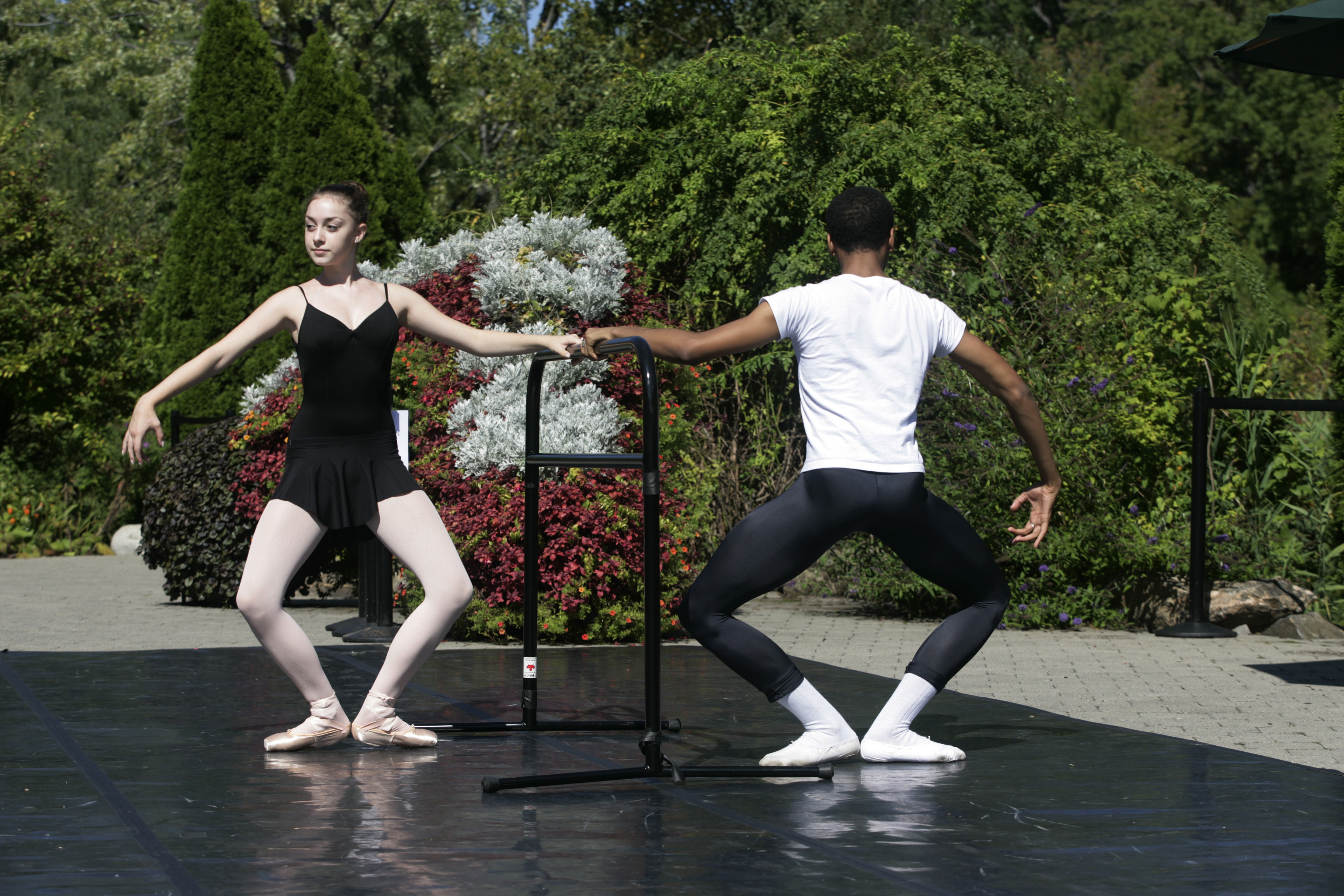
 Throughout the Everett Children’s Adventure Garden, New York City Ballet educators and School of American Ballet dancers introduce families to ballet choreography and guide children three years of age and older in the creation of dances inspired by the garden. Ballet Among the Blooms takes place Saturday, from 3 to 5 p.m., and includes a lecture-demonstration; a visual arts and crafts area; and workshop stations where NYC Ballet Teaching Artists will lead children in movement activities based on site-specific surroundings. Get Your Tickets Throughout the Everett Children’s Adventure Garden, New York City Ballet educators and School of American Ballet dancers introduce families to ballet choreography and guide children three years of age and older in the creation of dances inspired by the garden. Ballet Among the Blooms takes place Saturday, from 3 to 5 p.m., and includes a lecture-demonstration; a visual arts and crafts area; and workshop stations where NYC Ballet Teaching Artists will lead children in movement activities based on site-specific surroundings. Get Your Tickets |
Posted in Science, Wildlife on September 24 2009, by Plant Talk
Cricket Crawl at the Garden Confirms Presence of These—and More
 |
Jessica Arcate is Manager of the Forest.
|
 |
Robert Naczi, Ph.D., is Curator of North American Botany.
|
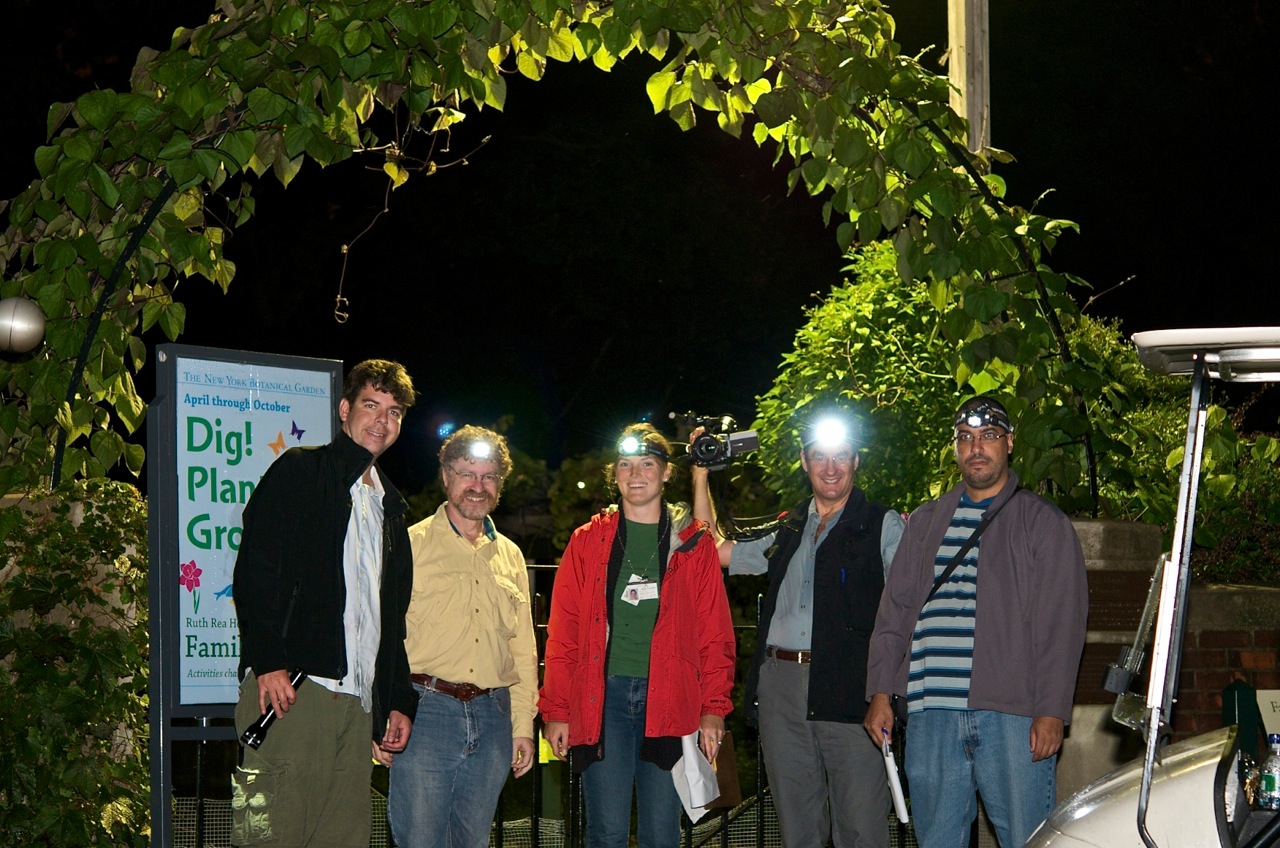
 On the evening of Saturday, September 12, a fearless group of five naturalists outfitted with headlamps and recording equipment, ventured throughout the Botanical Garden to listen for seven species of crickets and katydids for the NYC Cricket Crawl.
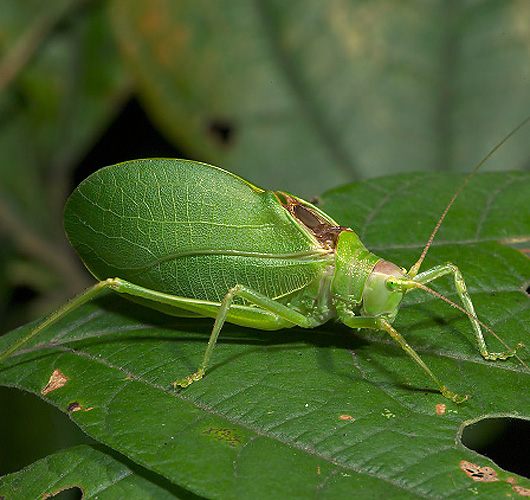
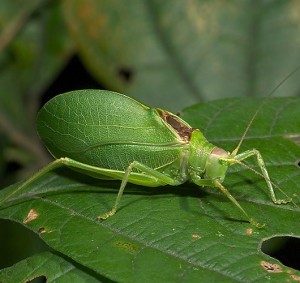
We were inspired to do the count, arranged by the U.S. Geological Survey (USGS) and others, after reading about the mystery of the “missing katydid of New York City.” It seems that in 1920, local naturalist William T. Davis reported the possible disappearance of the Common True Katydid (pictured here, Photo by ©MusicofNature.org) from Staten Island. Present-day experts on katydids and crickets surmised that katydids might be like the fabled canary in a coal mine, lost to environmental toxins, and so decided to organize the survey. Several species are common in the region and call at night with sounds easy to distinguish, permitting an observer to list the species present in an area just by listening to them. The Cricket Crawl promised to reveal patterns of biodiversity relevant to such matters as climate change, effects of deforestation, and adaptations of wildlife to urban areas.
Actually, we wondered why all the fuss about katydids? We knew we had them here at The New York Botanical Garden. As part of the efforts to document the natural history of NYBG, Edgardo Rivera and Robert Naczi had been studying insects at NYBG since mid-July. Because many insects find ultraviolet light (“black light”) irresistible, nocturnal collecting with a black light can be a very productive way of surveying local insect diversity. Edgardo and Rob had heard Common True Katydids at NYBG on several occasions, but came to realize their significance after reading announcements about the Cricket Crawl.
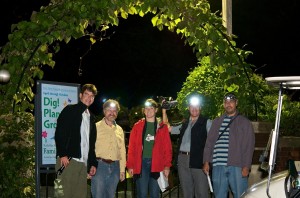 And so a team was assembled (see photo by Tom Andres) to confirm the identities of these insects for the Cricket Crawl: Edgardo Rivera (Senior Curatorial Assistant), Tom Andres (Herbarium volunteer), Kendrick Simmons (independent videographer), Jim Schuler (volunteer), and Jessica Arcate (Manager of the Forest). The evening began in the Perennial Garden and Ladies’ Border, and then headed to the knolls of the Arthur and Janet Ross Conifer Arboretum. At these sites four species were heard: Jumping Bush Cricket, Field Cricket, Greater Anglewing, and Common True Katydid. At the Mitsubishi Wetlands the fifth and last species of the night was added to the list, the Oblong-winged Katydid. Next, the team trekked into the center of the Forest. To our surprise one of the great horned owls from the Garden’s resident family was calling. The owl called several times from different trees, and it was incredible to hear. (To hear the sound of a great horned owl, click here.)
Read More
Posted in Gardens and Collections on September 22 2009, by Plant Talk
Get your tickets
Posted in Gardening Tips, Gardens and Collections on September 18 2009, by Plant Talk
Black Spot and Downy Mildew Look Similar but Are Different
 |
Peter Kukielski is the Peggy Rockefeller Rose Garden Curator. |
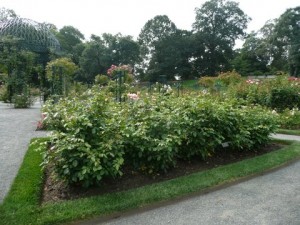 Few flowering plants match the beauty, versatility, or popularity of the rose. Numerous varieties offer a wide range of growth habits and floral colors. With the proper care, hundreds of rose varieties will bloom from early spring through late fall. Although there are many new varieties on the market that are highly disease resistant, some of the older varieties present a challenge, and disease control is critical for maintaining healthy roses.
I get asked quite often to identify pests and diseases either by e-mail or by visitors to the Rose Garden. This year I got many questions regarding two specific rose diseases that are triggered by excessive humid and/or wet conditions: black spot and downy mildew.
We’ve heard the phrase “a rose is a rose is a rose.” Could one also say “a spot is a spot is a spot”? In regard to roses, the answer is “no.” These two very different types of spots can cause severe damage in different ways.
You can tell the two diseases apart by their symptoms: Black spot has circular spots and starts at the base of the plant and works its way up the plant, while downy mildew has angular spots but attacks the new growth at the top of the bush and works its way down the plant.
Read More
Posted in Learning Experiences on September 17 2009, by Plant Talk
 |
Judith Hutton is Manager of Teacher Professional Development at The New York Botanical Garden.
|
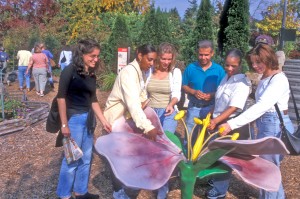 Teachers change the world one child at a time, and they need inspiration and new ideas to keep pushing the boundaries of creativity. Beginning my position as Manager of Teacher Professional Development is an exciting opportunity to listen to teachers and find out what they need to be even more effective in their work.
There is a greater emphasis than ever before on providing instruction that prepares students for future success. Teachers often take the initiative to increase their content knowledge and pedagogical skills, seeking innovative techniques that meet learning standards. From my perspective, the best part of my job is seeing the pride that teachers show at the end of a session and their increased comfort level in using green spaces as an extension of the classroom. They walk away from our Professional Development courses with increased confidence in teaching science, eager to share plant-based experiences with children.
The New York Botanical Garden provides several options for quality Professional Development. Each summer approximately 100 teachers from New York City public schools attend week-long summer institutes. Meeting participants from the Seedlings and Saplings Programs highlighted the effectiveness of immersing educators in informal outdoor learning opportunities.
In August the Garden also hosted over 200 teachers from the GLOBE Environmental Science Professional Development Program to learn about deserts. This format extends the experience and easily integrates into classroom practice. Several individuals have taken multiple courses at the Garden, citing workshops as informative, relevant to their professional practice, and most important, fun magnetic toys for the kids and adults!
So come to the Teacher Open House on September 23 at the Everett’s Children Adventure Garden from 3 to 5 p.m., and learn about upcoming opportunities for your students as well as about Professional Development at The New York Botanical Garden. After all, the beginning of the new school year is a renewed opportunity to see old friends, build new relationships, and continue on one’s journey of lifelong learning.
For more information, call 718.817.8181.
Take a class
Posted in Science on September 15 2009, by Plant Talk
 |
Scott A. Mori, Ph.D., Nathaniel Lord Britton Curator of Botany, has been studying New World rain forests for The New York Botanical Garden for over 30 years. Over the course of his career, Dr. Mori has witnessed an unrelenting reduction in the extent of the tropical forests he studies. |
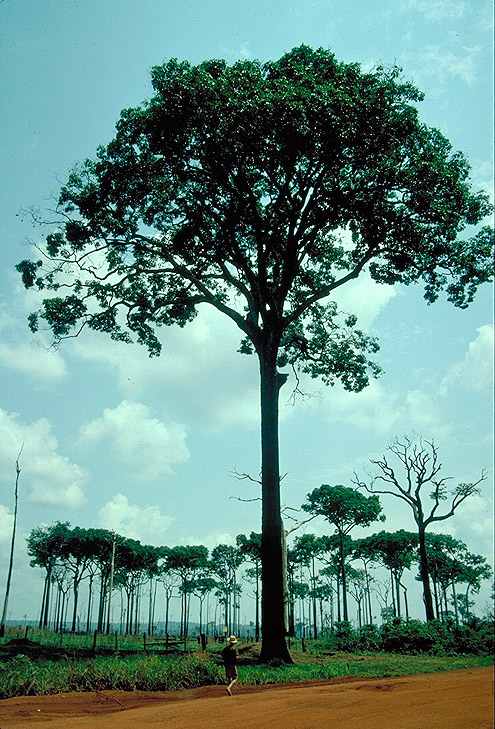 On August 22, an image showing a small green patch of forest in the midst of a treeless area prepared for soybean cultivation appeared on the front page of The New York Times. The accompanying article explained that the fertile soils underlying forests in the state of Mato Grosso, Brazil, are suitable for supporting large soybean plantations. As evidence of the magnitude of the forest destruction, the author noted that an increasing demand for Brazilian soybeans led to the conversion of 700 square miles of forest to soybean fields in that state during the last five months of 2007 alone!
The future of plant and animal diversity in Latin American forests depends on an understanding of how fragile the plant/animal interactions of tropical ecosystems are and the role human consumption plays in altering natural ecosystems. The relationships between plants and animals in the tropics are so closely co-evolved that man’s utilization of tropical forests almost always results in some loss of biodiversity. Soybean cultivation is an extreme example, because in this agricultural system soybeans entirely displace the plants and animals that formerly occupied the destroyed forests.
Trees remaining after forest destruction such as the Brazil nut tree above, photographed by W. W. Thomas, do not effectively reproduce. While this tree and others like it may still live for many years, they no longer produce the next generation of trees because the forest conditions needed for the pollination of their flowers, the dispersal of their seeds, and the growth of their seedlings into adult trees no longer exist.
Read More
Posted in Exhibitions, The Edible Garden on September 11 2009, by Plant Talk
Last Chance to Experience The Edible Garden
 The summer-long celebration The Edible Garden comes to a close this weekend with two days jam-packed with exciting events. Emeril Lagasse takes center stage at the Conservatory Kitchen on Saturday and Lidia Bastianich is featured on Sunday, highlighting a lineup of cooking demonstrations by a number of renowned celebrity chefs. The summer-long celebration The Edible Garden comes to a close this weekend with two days jam-packed with exciting events. Emeril Lagasse takes center stage at the Conservatory Kitchen on Saturday and Lidia Bastianich is featured on Sunday, highlighting a lineup of cooking demonstrations by a number of renowned celebrity chefs.
Also featured on both days are cookbook author signings; food, wine, and beer tastings; home gardening demonstrations; science chats; edible gardening talks; tours of display gardens; and children’s activities. Get your tickets now to ensure premium seating for the main attractions. |
Posted in Exhibitions, People, The Edible Garden on September 10 2009, by Plant Talk
Bronx Green-Up Tours, Harvest Fair on Tap this Weekend
 |
Karen Washington is a community gardener and activist. As part of The Edible Garden final weekend, she will lead a tour of the Garden of Happiness.
|
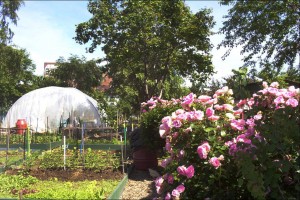 When I was 8 years old I used to watch the farm report before Saturday morning cartoons and wish and hope that one day I’d have my own farm.
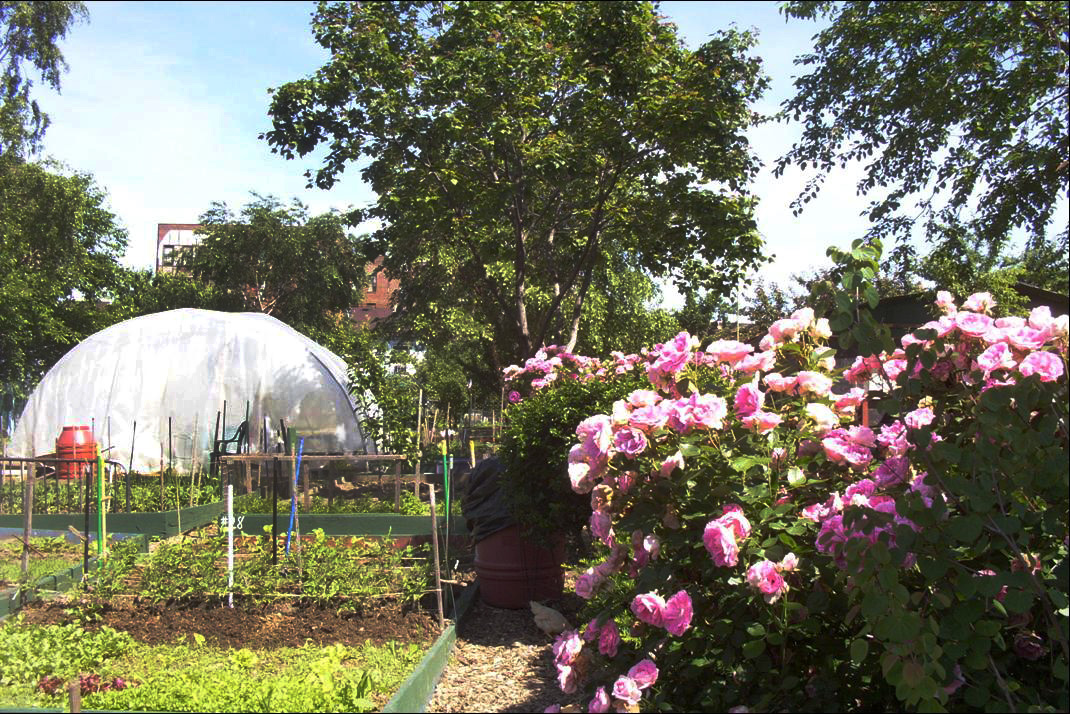
And now, in a way, I do. It may not be what some might think of as a traditional farm, but it’s the closest thing possible: a community garden.
I turned my passion for gardening into community gardening and activism—they go hand-in-hand—over 20 years ago. I want people to be aware that they can grow their own food wherever they are. I live in a low-income neighborhood, and I help educate people to go back to the land, because our grandparents and great-grandparents did not go to a supermarket or grocery store to buy their food; they grew it themselves.
The interest in community gardening has grown in recent years as people are starting to connect their health issues with not knowing where their food comes from. Child obesity—I mean diabetes at the age of 12 or 13!—wasn’t happening to our grandparents or great-grandparents. So now the younger generation is really sitting down and speaking to their elders and having that conversation. And with over 600 community gardens in New York City that you can join for free, the combination creates an atmosphere for people to really want to grow their own food.
At my garden—I belong to the Garden of Happiness on Prospect Avenue between East 181st and 182nd Streets in the Bronx—we have 30 families. Each is assigned a specific plot—the plot can be 5 by 6 feet, 10 by 15 feet—to grow what they want. The Botanical Garden’s Bronx Green-Up program and the NYC Department of Parks & Recreation’s GreenThumb program supply us with lumber for raised beds, tools, plants, seeds, soil, and compost. We bring our sweat and our hard labor.
Read More
Posted in Learning Experiences on September 9 2009, by Plant Talk
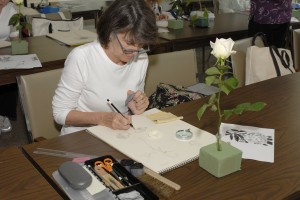 Twice a year The New York Botanical Garden hosts a free Open House where people can sample some of the Continuing Education course offerings in an informal but informative setting. The upcoming event on September 12 will also feature Career Information Sessions, at which you can hear how former students changed their lives and pursued their passions in new careers.
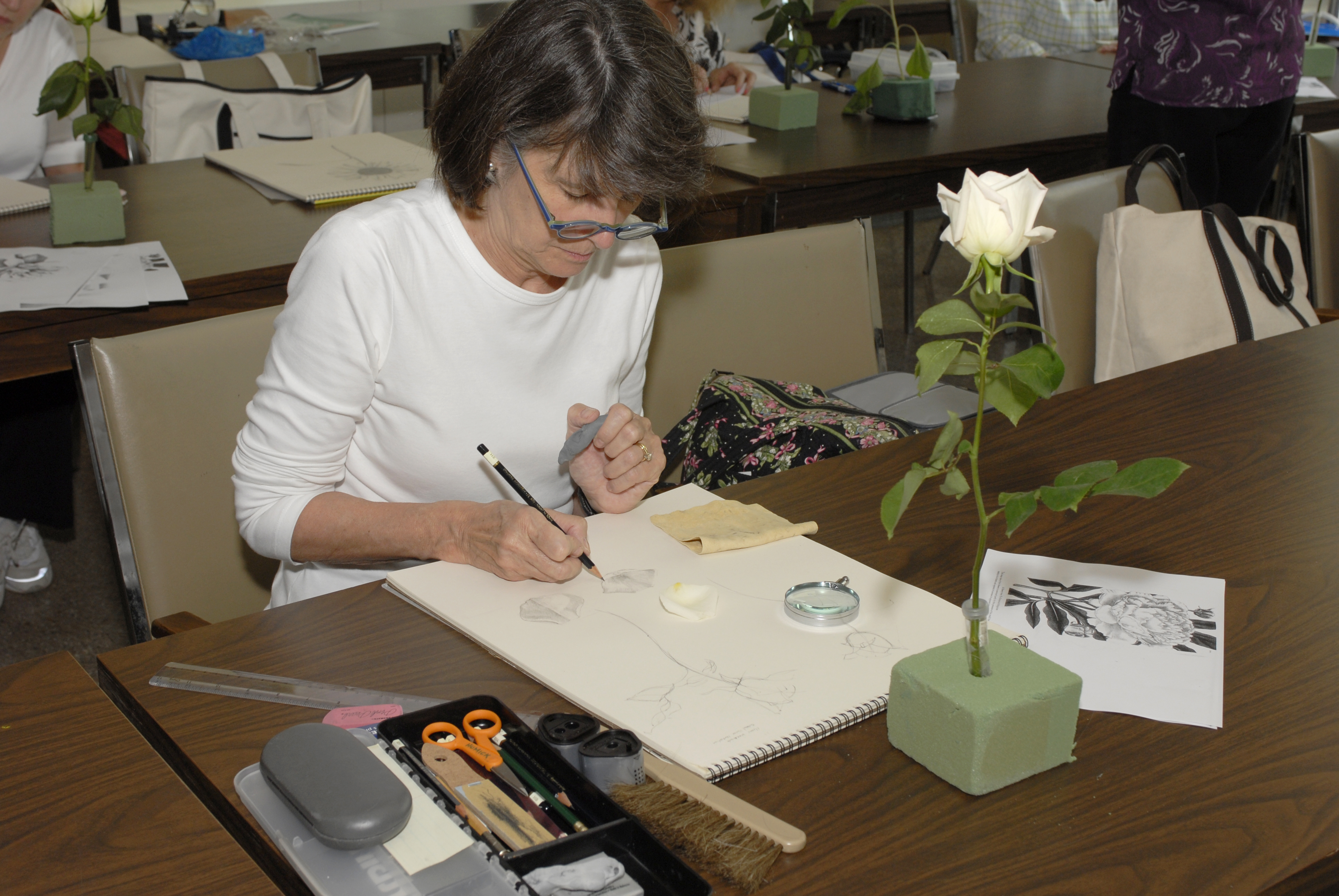
I have been attending these Open Houses for three years now as a program coordinator and instructor. Last spring, in addition to offering a demonstration by a botanical instructor, we offered for the first time a mini class in botanical illustration. I taught a lesson in colored pencil in which participants were given my favorite watercolor paper and pencils with which to try and render a simple fruit in color. This year we will again offer a similar mini class.
Some who had been hesitant about their ability to draw were in for a pleasant surprise when exposed to a very simple step-by-step procedure to drawing. Many of those who attended that mini class liked it so much that they signed up for full classes and are now enthusiastic students in the program.
For those who have never drawn, as well as for those who are professional artists in other fields, the Botanical Art and Illustration program at NYBG offers an opportunity to learn drawing and to study plants up close.
In these difficult economic times I have seen an increase in students from other professions with time on their hands. What a wonderful opportunity to study botanical illustration, leading to a new passion and the possibility of enhancing an existing profession.
I have also noticed an increase in botanical illustration in the world at large as evidenced by three recent magazine articles on the topic in Victoria (April 2009), Fine Art Connoisseur (July/August 2009), and The Artist’s Magazine (September), in which I am profiled.
And if botanical illustration isn’t your thing, you are sure to find other areas of interest at the Open House: Floral Design, Landscape Design, Gardening, and more.
Come to NYBG for a day of exploration of the Continuing Education program. I hope to see you there!

 New York City, famous around the world for its great art, is the site of more masterpieces than you can shake a stick at. The Metropolitan Museum has Monet’s Terrasse a Ste.-Addresse; the modernist icon Lever House graces Park Avenue; you can ponder Louise Nevelson’s Sky Cathedral at MOMA. Here at The New York Botanical Garden there is a masterpiece of garden design, the Jane Watson Irwin Perennial Garden designed by Lynden B. Miller. It is a work of art.