Inside The New York Botanical Garden
Posted in Learning Experiences, Programs and Events on January 22 2010, by Plant Talk
Children and Families Explore the Hidden Wonders of the Winter Garden
 |
Noelle V. Dor is Museum Education Intern in the Everett Children’s Adventure Garden. |
Oh, the weather outside may be frightful… But the Everett Children’s Adventure Garden is still delightful!
Though the vibrant colors of autumn have long faded away and freezing temperatures command us to slow down and stay in, there is a wealth of hidden wonders to be discovered in our Winter Garden, from the vivid reds of bare dogwood branches to tenacious crabapples, darting cardinals, and the secret lives of leaf buds. Various little treasures brighten up the muted landscape—and they can brighten your winter blues, too!
The selection of activities available for children and their families includes the creation of a scientific field notebook, which will guide them through a winter scavenger hunt and sensory exploration of the Children’s Adventure Garden; a fascinating round in the world of tree rings and their own life stories; and a winter collage craft using fallen plant parts collected from the garden.
Read More
Posted in Exhibitions on January 21 2010, by Plant Talk
 |
Laura Collier is Marketing Associate at The New York Botanical Garden |
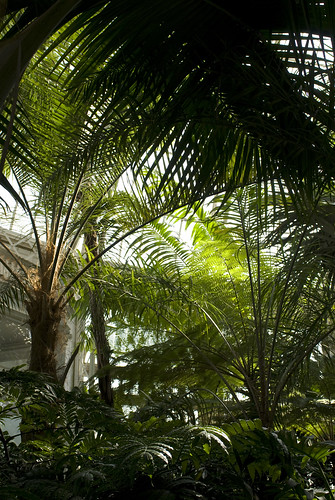 An acre of tranquility awaits you in A World of Plants in the Enid A. Haupt Conservatory at the Garden. Lush palm trees, exotic rain forests, and serene deserts provide the perfect getaway right here in New York. Rejuvenate your senses as you journey through the palms of the Americas and tropical rain forests, past pools of waterlilies and striking desert cacti.
This week we take an up-close look at the Palms of the Americas Gallery.
The most extensive collection of palms in the Americas, both North and South, welcome you from the cold, into the Conservatory. With more than 550 different types identified in the Americas alone, palms are one of the most diverse species on Earth. They range greatly in height from the tiny, six-inch lilliput palm to the towering wax palm of the Andes, which would lift the 90-foot dome off the Conservatory if allowed to grow to its full height.
Surrounding the reflecting pool you’ll see a set of five royal palms, native to Cuba. These and several other varieties in the Palms of the Americas Gallery provide the perfect entrance to your retreat, their fronds softly giving shade from the sun shining through the Victorian-style glass roof.
Find out more about A World of Plants, explore the photo gallery, and check out family activities here.
Get Your Tickets
Posted in Science, Wildlife on January 20 2010, by Plant Talk
Project Looks to Catalog Six-Legged Residents and More
 |
Edgardo Rivera is Senior Curatorial Assistant in the William and Lynda Steere Herbarium. |
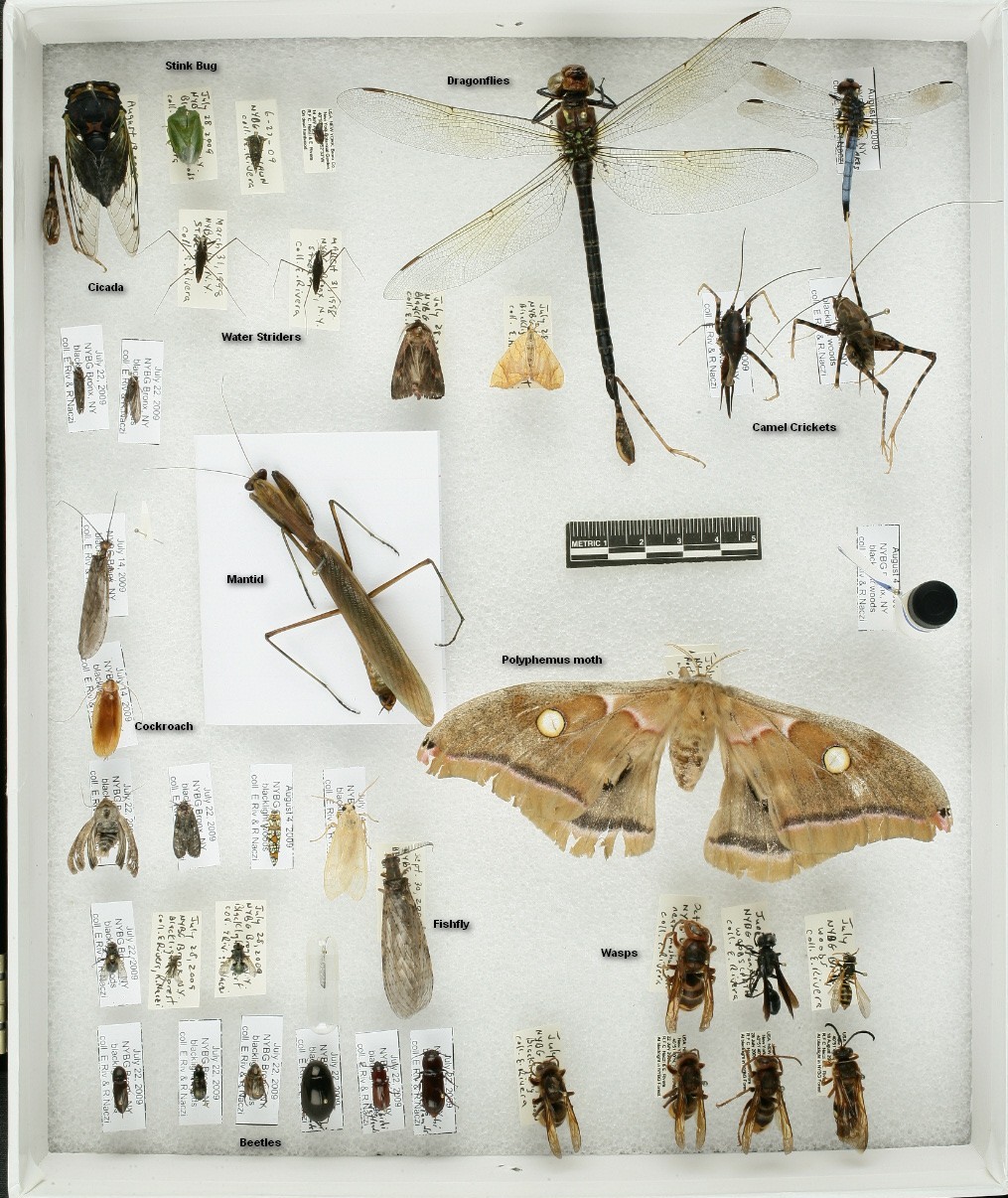
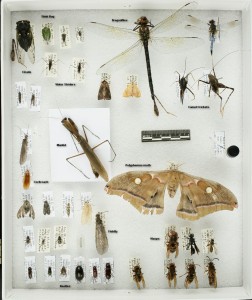 Many people walk through the Forest at NYBG in search of a break from the city and without concern for the names of the trees and flowers they encounter along the path. Others may stop occasionally to watch a passing chipmunk or to photograph the jewelweed. More tenacious individuals, armed with binoculars or perhaps a zoom lens on a camera, will specifically seek out the feathered denizens of the Forest but not many give a second look for the armored creatures that fly past them, the cold-blooded ones that slither under rotting logs, or the nocturnal beings that sit quietly under debris waiting for night to fall.
However, an effort to catalog these creatures is under way as part of the Garden’s Natural History project. Led by Jessica A. Schuler, Manager of the Forest, and Rob Naczi, Ph.D., Curator of North American Botany, the project has assembled specialists from different fields to identify the flora, fauna, and geography of the many habitats within the Forest.
Read More
Posted in Gardening Tips on January 19 2010, by Sonia Uyterhoeven
Keep These in Mind When Faced with the Season’s Onslaught of Catalogs
 |
Sonia Uyterhoeven is Gardener for Public Education. |
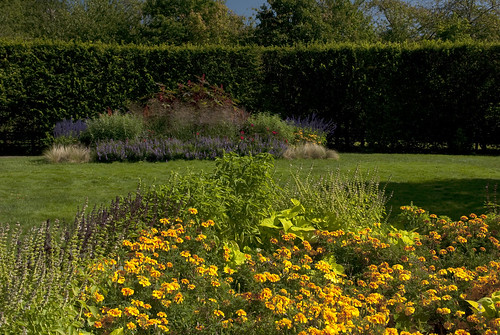 Now is the time of year that every good gardener gets inundated with new catalogs. For the plantaholic it’s a blessing and a curse. The feeling of a kid in a candy store is rekindled in even the most reticent gardener. The curse is that there is never enough time, space, or money to satiate our herbaceous or woody appetites.
However, the cold winter months are an ideal time to dream of redesigning your garden. I love spreading all of my catalogs on the living room floor and getting to work on lists or colorful collages of plants. To help navigate this challenging terrain, here are lessons learned and a few guidelines.
Read More
Posted in Exhibitions on January 15 2010, by Plant Talk
 Step out of the winter blahs and into your own retreat. A World of Plants in the Enid A. Haupt Conservatory lets you enter tropical rain forests, mountain slopes, and deserts full of exotic plants. Step out of the winter blahs and into your own retreat. A World of Plants in the Enid A. Haupt Conservatory lets you enter tropical rain forests, mountain slopes, and deserts full of exotic plants.
Tour an acre of living beauty under glass in the Conservatory, either on your own, through the use of free audiotours, or on a docent-led tour. Make an entire day of your trip, enjoying lunch at one of our Cafes and pampering yourself at Shop in the Garden. The Garden is open on Monday for the Martin Luther King Jr. holiday.
And don’t forget the kids! The Everett Children’s Adventure Garden is always open for family fun.
Get Your Tickets |
Posted in Shop/Book Reviews on January 13 2010, by Plant Talk
Check Out These New Titles on Plants and Gardening
 John Suskewich is Book Manager for Shop in the Garden.
Will these 10 books stop me from ordering seeds I probably won’t get around to sowing until 2018? Will they prevent me from having a six-foot-tall Panicum come up in front of an eight-inch-tall Catananche? Will they convince me not to try growing Rhododendron yakushimanum for the third time in 10 years in my yard with heavy clay soil and a high water table? Probably not; but here are 10 new books—on plants and gardens and nature and why it all matters—that were recently published or are coming out later this year and that I’ll be reading anyway, no matter what benefit I may or may not get from them!
 A Landscape Manifesto,
by Diana Balmori
Innovative and influential landscape architect Diana Balmori writes on the theory, practice, and future of her profession.
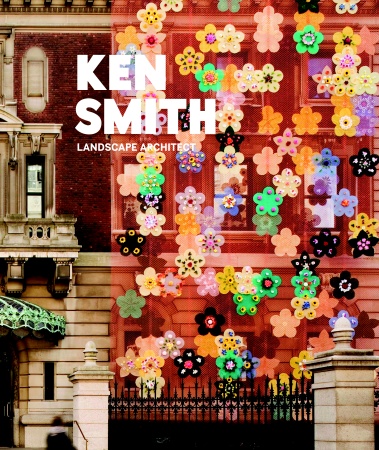
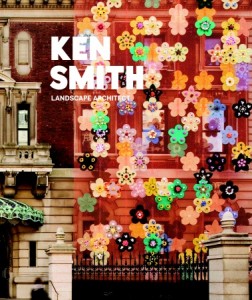
Ken Smith Landscape Architect,
by Ken Smith
This imaginative practitioner, who has changed our idea of what landscape architecture can be, looks at his most important projects.
Garden Guide: New York City,
by Nancy Berner and Susan Lowry
From Gotham’s horticultural Baedeker comes a new edition—it’s always amazing to see how many gardens you can visit here in NYC!
The Japanese Tea Garden, by Marc Peter Keane
No American interprets Japanese garden history and practice better than our colleague Marc Peter Keane.
Read More
Posted in Wildlife on January 12 2010, by Plant Talk
Two Species Normally Found in Spring Spotted on Bird Count
 Carol Capobianco is Editorial Content Manager at The New York Botanical Garden.
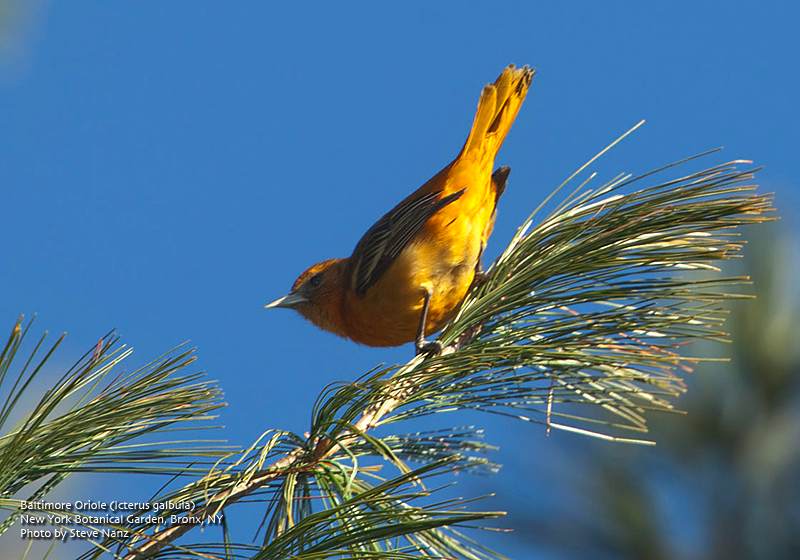
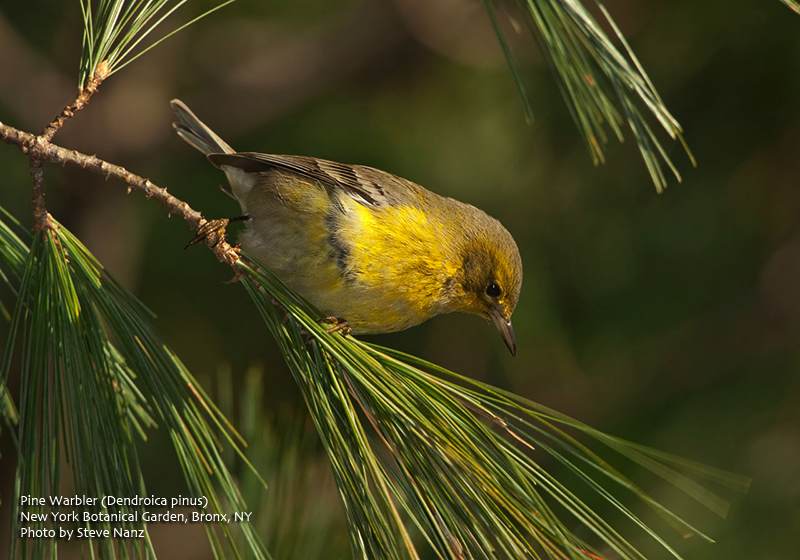
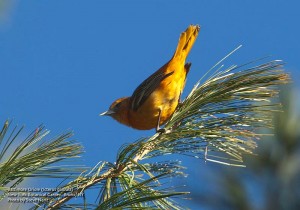 Local birder Rob Jett reports on his Web site The City Birder that two pine warblers and four Baltimore Orioles—bird species that at this time of year are usually much farther south (as in Florida and south of the border)—were recorded on December 27 at the Botanical Garden during the National Audubon Society’s annual Christmas Bird Count.
The Garden falls within the Bronx-Westchester count area, which this year marked its 86th season. (Roger Tory Peterson was one of the more famous participants.) This is the seventh time in the past 11 years that orioles (see photo at right, by Steve Nanz) were found in the count area, but four is a record high.
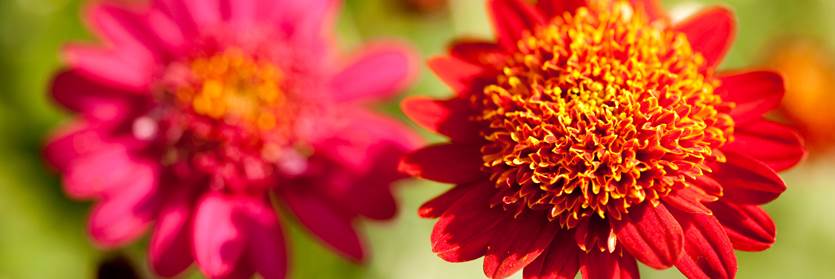
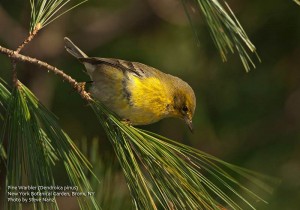 Debbie Becker, who leads the Garden’s weekly bird walks, has seen pine warblers (photo at left, by Steve Nanz) here since early December. And, she says that seeing orioles in December—often near the crabapple trees or the Rock Garden—has become more common. She has conducted her own “unofficial” bird count at the Garden in December for about 20 years. She thinks the sightings of birds such as orioles and warblers in winter may be the result of climate change, and some birds that usually migrate instead find a secure home with plenty of sustenance at the Garden.
Read More
Posted in Gardening Tips on January 11 2010, by Sonia Uyterhoeven
|
Sonia Uyterhoeven is Gardener for Public Education. |
During summer you will often find around the Botanical Garden weeping figs (Ficus benjamina) growing in decorative containers, as they look reliably good all season long.
Most of you, however, grow weeping figs as a houseplant. It is one of many favorite choices for the indoor gardener, even though it can be temperamental. One of my grandmothers (not the gardener…the other one) had very little interest in growing plants, yet she had a glorious weeping fig in her living room. In spite of several minor catastrophes during its lifetime, it was resilient and always rebounded to its former glory.
Ficus benjamina, a tropical plant from South Asia, is a member of the Moraceae family, which includes mulberry (Morus), Osage-orange (Maclura), and breadfruit (Artocarpus) trees. In tropical regions Ficus benjamina can grow into a huge specimen with aerial roots. In warm climates devoid of high humidity, the tree does not develop aerial roots but still grows to a respectable height. Weeping fig trees are commonly used as a hedge in California.
Read More
Posted in Exhibitions, Holiday Train Show on January 8 2010, by Plant Talk
 All your favorite New York landmarks are in one place for one final weekend of the Holiday Train Show. This is your last chance to: All your favorite New York landmarks are in one place for one final weekend of the Holiday Train Show. This is your last chance to:
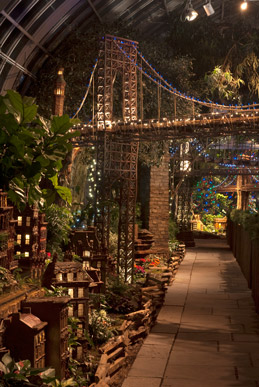
• See the trains among twinkling lights wind past the old Yankee Stadium, the Brooklyn Bridge, and, new this year, the original Penn Station and Brooks Brothers flagship store.
• Become an honorary engineer and take a picture with Thomas the Tank Engine™ along with his friend, Sir Topham Hatt, from 10 a.m. to 5 p.m.
• Make a field notebook about ginger, cinnamon, and other spices in Gingerbread Adventures. Save room for decorating and sampling gingersnaps!
Don’t miss this holiday tradition. Get your tickets today! |
Posted in Learning Experiences, People on January 7 2010, by Plant Talk
|
Laura Collier is Marketing Associate at The New York Botanical Garden. |
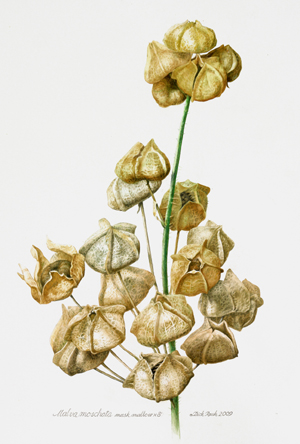
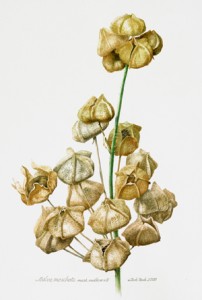 Best-in-Show from the Royal Horticultural Society, the Dianne Bouchier Founder’s Award for Excellence in Botanical Art, president of the American Society of Botanical Artists—with these accolades it would be hard to guess that instructor Dick Rauh had a career in motion picture special effects and graphics before he began to pursue botanical illustration.
When his wife enrolled in floral design classes at The New York Botanical Garden, Dick, too, began taking classes at the Garden, a little before retiring. He had always liked to draw trees, and while he was taking gardening classes, NYBG was starting its Botanical Illustration program. Dick began taking the art classes and by 1986 had completed his Certificate in Botanical Art and Illustration.
Dick’s connection with the Garden deepened as he continued to study. Because he was creating illustrations for scientists, he took botany classes to gain a better understanding of the plants and their makeup and also earned a doctorate in biological sciences from CUNY.
Read More