Shop in the Garden’s Holiday Gift Guide
Posted in Shop/Book Reviews on December 2 2009, by Plant Talk
Inside The New York Botanical Garden
Posted in Shop/Book Reviews on December 2 2009, by Plant Talk
Posted in Science on December 1 2009, by Plant Talk
 |
Barbara Thiers, Ph.D., is Director of the William and Lynda Steere Herbarium and oversees the C.V. Starr Virtual Herbarium. |
Part 1 in a 3-part series
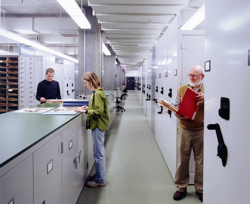 The 7.3 million collections of the William and Lynda Steere Herbarium, the largest in the Western Hemisphere and among the four largest in the world, form the core of a beehive of activity. On a typical work day during the past year, our Herbarium staff of 29 full-time equivalents answered 28 requests for information via e-mail or phone, helped 10 visiting researchers use the Herbarium, sent 214 specimens on loan (over the year we sent to 38 countries and 38 states of the United States), added 360 new specimens, and digitized 400 specimens for sharing on-line through the C.V. Starr Virtual Herbarium.
Each herbarium specimen is a primary source of historical information about the Earth’s vegetation as well as about the person who collected it. The label that accompanies each specimen gives not only the name of the plant, but where and when it was collected, and by whom. Some labels give far more information, such as the name of the expedition, the funding source, and names of other members of the collecting party. Historical specimens often bear original handwriting, and sometimes notes, correspondence or sketches.
Posted in Exhibitions, Holiday Train Show, Programs and Events on November 25 2009, by Plant Talk
View Holiday Train Show, Ex Libris Exhibition, and More
Before sitting down to turkey and stuffing, come enjoy the bounty of the Garden, which is open on Thanksgiving Day this year, from 10 a.m. to 6 p.m. The Garden will have extended hours for the remainder of the weekend for your enjoyment, relaxation, and gift shopping: from 10 a.m. to 7 p.m., Friday through Sunday, November 27–29. Weekend highlights include:
The New York Botanical Garden is thankful for your patronage and support. Come share the day and the long holiday weekend with us, and have a Happy Thanksgiving! |
Posted in People on November 25 2009, by Plant Talk
Garden Honors Those Who Served in Record Numbers
 Carol Capobianco is Editorial Content Manager at The New York Botanical Garden.
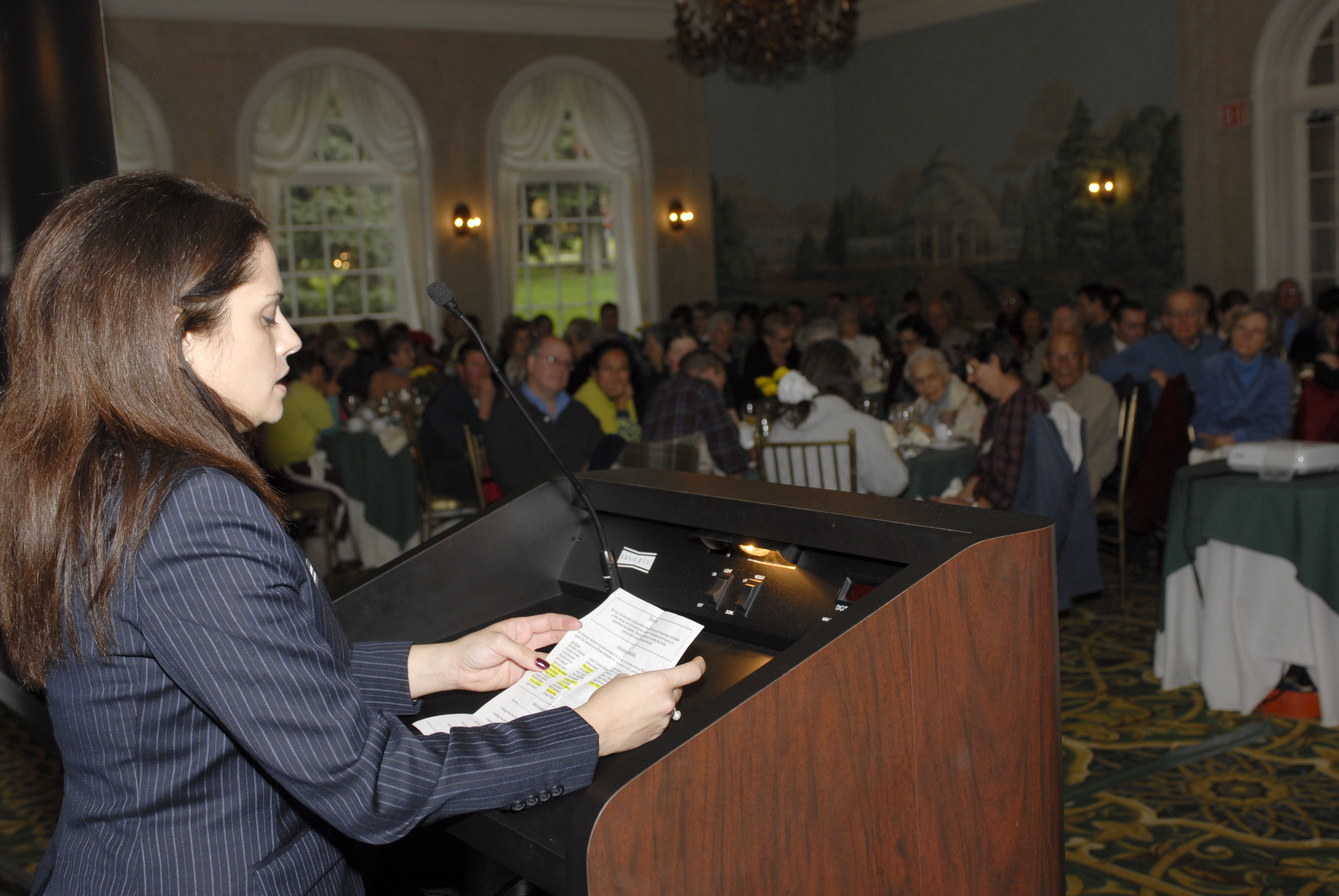 Earlier this year both Mayor Bloomberg and President Obama issued a call to action, encouraging New Yorkers and all Americans to volunteer in their communities.
Many regarded the call and came to volunteer at The New York Botanical Garden in record numbers during a challenging year for cultural institutions. They contributed to every program, project, and department, helping to ensure that, alongside staff, the Garden would rise above financial obstacles.
Margaret Horgan of the Throgs Neck section of the Bronx heeded the words of the Mayor and President and in June became a volunteer for the first time in her life—choosing the Garden as the place she’d give of her time. Here, as a newcomer, she is open to whatever is asked of her, from stuffing envelopes to greeting visitors.
“I try just about everything and anything,” said Margaret, who also credits her neighbor’s influence for finally getting involved 10 years after retiring as an administrative assistant. “I’m a Bronxite, and I love the Garden; it’s a gem. I wanted to give something back.”
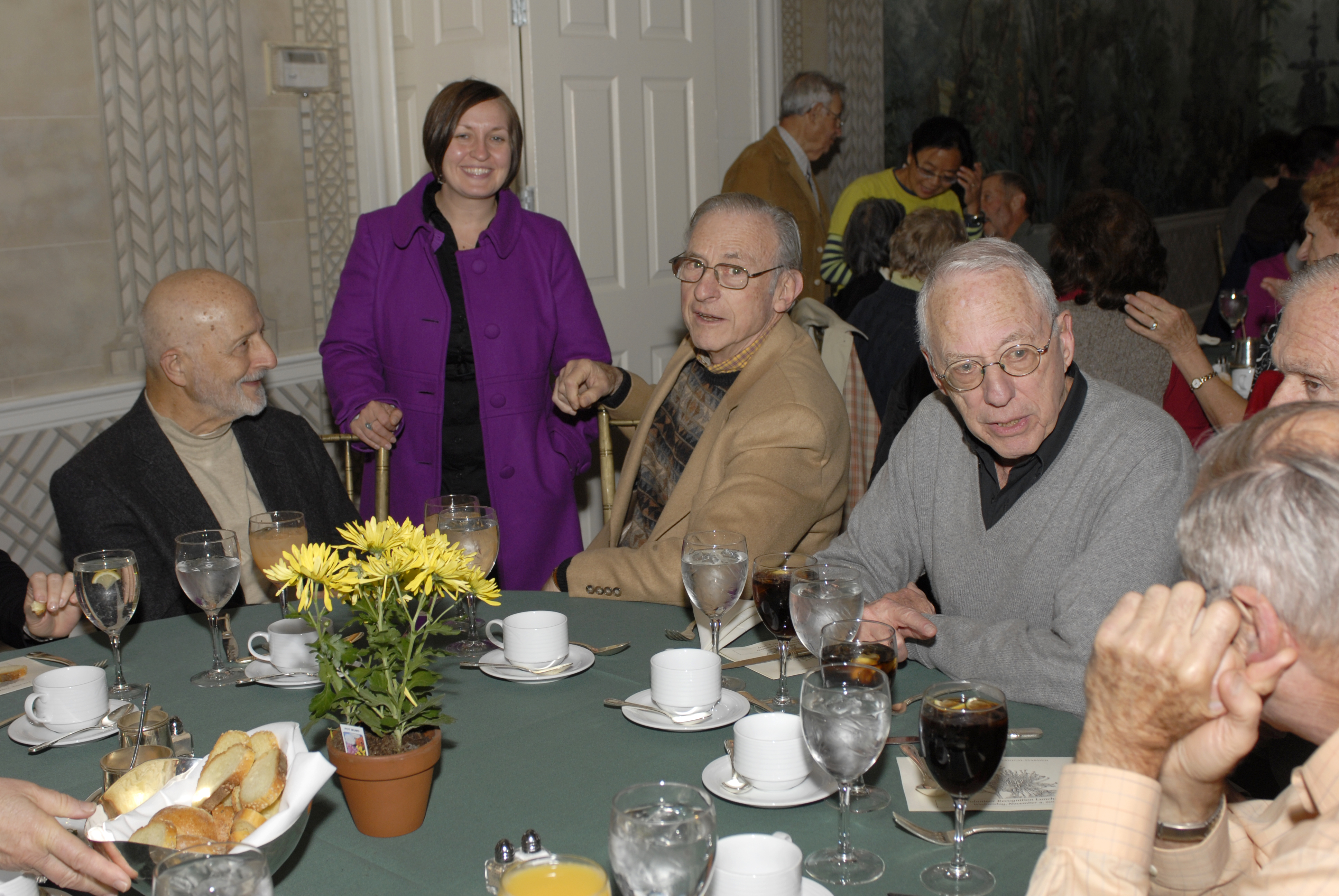 Margaret is one of many first-time volunteers the Botanical Garden welcomed this year and one of a record 1,109 people who gave 84,000 hours, playing a major role in making the Garden a special place to visit. She was among those present at this year’s annual lunch reception, which honors, praises, and thanks Garden volunteers for their generous service.
Posted in Shop/Book Reviews on November 24 2009, by Plant Talk
 |
Stephen Sinon is Head of Information Services and Archives in The New York Botanical Garden’s LuEsther T. Mertz Library. |
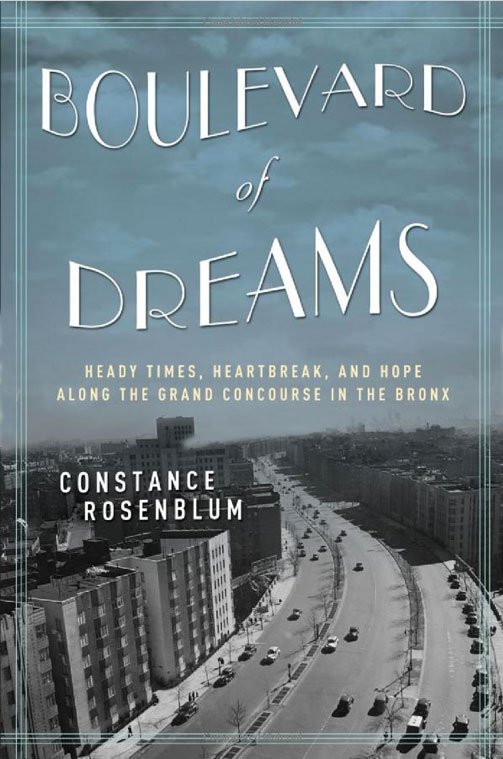 The Grand Concourse, stretching over four-and-a-half miles in the Bronx, is one of New York City’s lesser known architectural delights. Now its political and social history is the subject of a new book, Boulevard of Dreams: Heady Times, Heartbreak, and Hope along the Grand Concourse in the Bronx, by New York Times City Desk editor Constance Rosenblum.
The thoroughfare, modeled after Paris’s Champs-Élysées, was completed in 1909 and saw the arrival of many Art Deco structures housing upwardly mobile Jews in the first five decades of the 20th century, followed by waves of Irish and Italian immigrants.
While Rosenblum explores various aspects of Jewish communal life near the boulevard, she also dissects the rivalry between the affluent West Bronx and the working-class East Bronx, and the racial tensions that led to white suburban flight and the decline and neglect of the area. The first major book to document the rise, fall, and current revival of this century-old Bronx landmark is a must-read for those interested in the cultural history of New York City, urban history, Jewish-American life, and yes, even baseball and the Lindbergh baby kidnapping.
Posted in Exhibitions, Holiday Train Show, Uncategorized on November 20 2009, by Plant Talk
Excitement Builds Waiting to See Show for First Time
 |
Laura Collier is Marketing Associate at The New York Botanical Garden. |
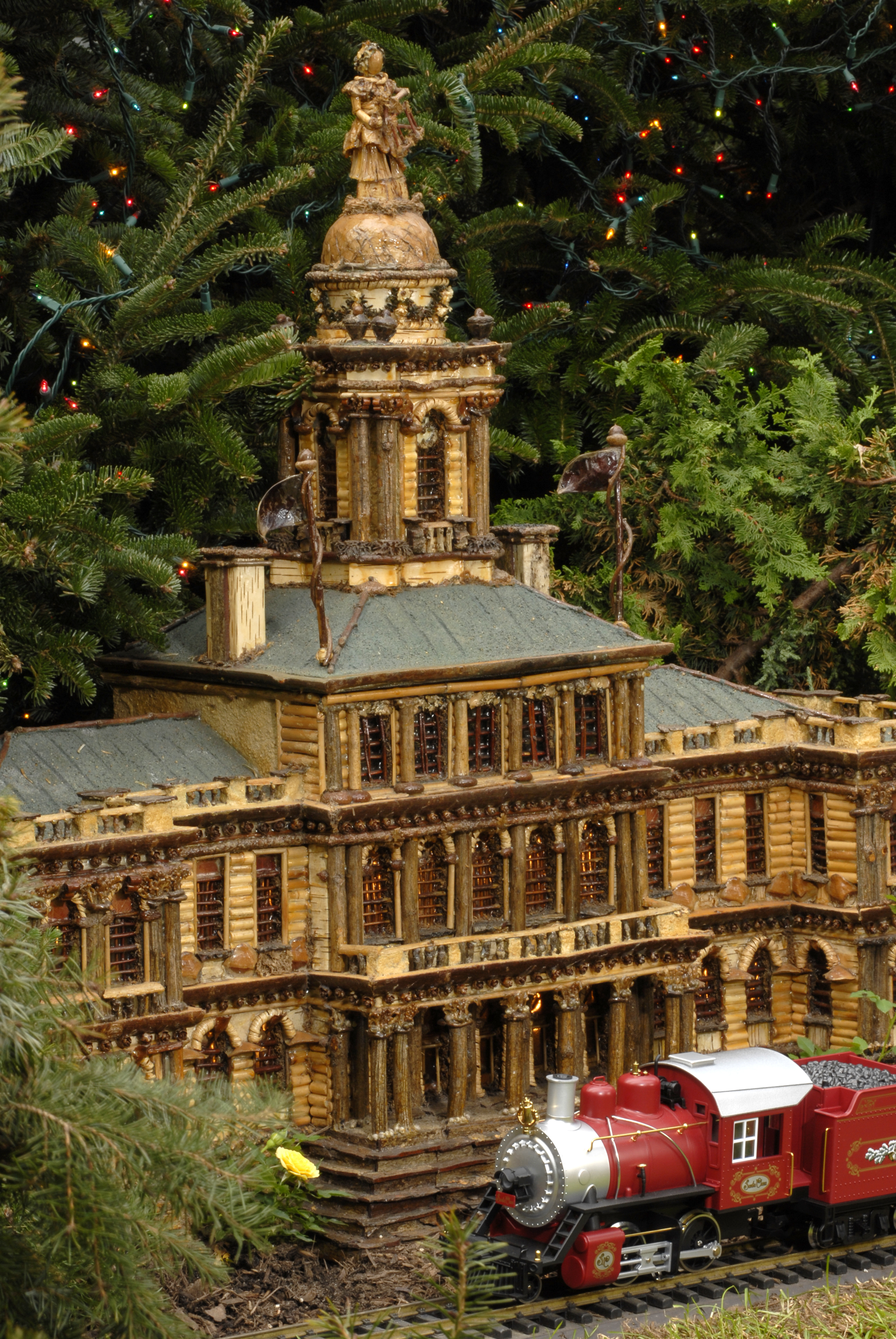 Ah, yes. The first month of a new job. So many exciting possibilities, but also so many questions! I just moved to New York City and just started at The New York Botanical Garden, so there certainly is a lot to learn. Since my first day, I’ve been happy to be thrown right into the mix, learning quickly about the Garden, the events, collections, location of the lunchroom—the general “first-week 101.”
It’s an especially busy time here, preparing for the huge Holiday Train Show, which opens this weekend. It’s been interesting to see how much the staff and volunteers look forward to this event. Whenever someone mentions the Holiday Train Show, their voice changes a bit. When they find out that I’ve never been to the show, they immediately drop what they are doing to tell me about how beautiful the Conservatory looks when it’s all decorated and lit up or about their favorite landmark replica, like Yankee Stadium or the Brooklyn Bridge. Maybe they even mention that they secretly like The Little Engine That Could™ Puppet Show and that they are glad to have a 3-year-old nephew to use as an excuse to see it again this year. (Don’t worry; your secret is safe with me.)
Posted in Shop/Book Reviews on November 19 2009, by Plant Talk
Designer of NYBG’s Rose Garden a Real “Artist and Hero”
 John Suskewich is Book Manager for Shop in the Garden.
 In Beatrix Farrand: Private Gardens, Public Landscapes, Judith Tankard avoids the pitfall of turning a historical figure into a waxwork and brings to life this pioneering woman who was one of the first important American landscape gardeners. As someone who designed an important feature of The New York Botanical Garden, the magnificent Peggy Rockefeller Rose Garden, Beatrix Farrand (1872–1959) is of particular interest to us here.
Hers is a great “little Old New York” story. Farrand’s aunt was Edith Wharton, she herself was one of Mrs. Astor’s “Four Hundred,” and Henry James was often a household guest, so she could have coasted. Instead, to a great talent Farrand added diligent study and travel, hard work, a facility for networking, and—for that time and place—a kind of courage. The commissions she attracted after 1900 included some of the most notable country places of that era: Crosswicks in Pennsylvania; the Fahnestock estate in Lenox, Massachusetts; Bellefield, the Newbold family property in Hyde Park, New York; and a slew of blue-blooded landscapes on Long Island.
The author’s chapter on Farrand’s assignment at The New York Botanical Garden is especially noteworthy. This involved creating an elegant design for a public rose garden out of a tricky site while developing a collection of roses that would have aesthetic and educational merit. The ups ands downs and ups of this rose garden reflect in a way NYBG’s own story, and of the difficulties that make landscape gardening such a complicated art, as time takes its toll. But time also tells, and in a volume that contains pages of marvelous photography, this garden is beautifully pictured, here and now, in its current state of grandeur.
Posted in People, Science on November 17 2009, by Plant Talk
Staffer Discovers Home, Resting Place of NYBG Founders on Staten Island
 |
Lisa Vargues is Curatorial Assistant of the Herbarium. |
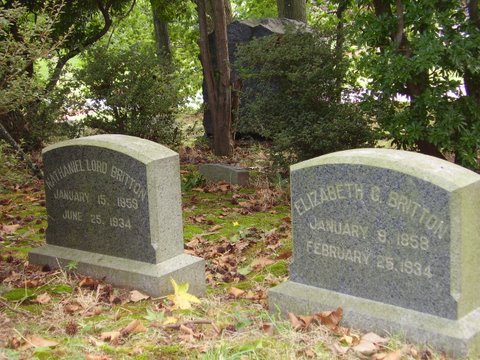 In honor of the 150th birthday this year of Nathaniel Lord Britton (1859–1934), who with his wife, Elizabeth Gertrude Britton (1858–1934), founded The New York Botanical Garden, I set out to retrace some of his footsteps. My pursuit provided further insight into his life and brought some fascinating places to light.
This spark of nostalgic curiosity came over me ever since I started working on the Flora Borinqueña Digital Herbarium and Library, a project that makes available online the unpublished manuscript of the popular flora of Puerto Rico— along with images of related specimens—that Britton was working on at the time of his death.
After more than 70 years, Britton’s final manuscript emerged from storage, and in a Rip van Winkle moment has been resurrected in a brand new era of computers and digitization. Ironically, Britton was resistant to installing electricity (“an unnecessary luxury”) in the Garden’s Museum building (now the Library building), and instead frugally worked by gaslight, according to The New York Botanical Garden: An Illustrated Chronicle of Plants and People.
While transcribing some of Britton’s last written words in the Flora Borinqueña, including his shaky handwritten marginal notes, I wondered where the Brittons’ final resting place is and whether there are any remnants of their life here in New York, outside of the Garden.
And so my search began.
Posted in Exhibitions, Kiku on November 13 2009, by Plant Talk
Final Year of Incredible Chrysanthemum and Japanese Garden Displays Kiku in the Japanese Autumn Garden showcases more than 5,000 kiku (chrysanthemums) meticulously displayed in traditional Japanese styles. This last weekend—the exhibition is in its third and final year—step into the brilliant colors of a Japanese garden: kiku in full bloom, Japanese maples a deep red; and the Garden bustling with activities. Don’t miss these highlights:
|
Posted in Uncategorized on November 12 2009, by Plant Talk
Designer Takes Fresh Look at Its Matured Melding with Landscape
 |
Hugh Hardy of H3 Hardy Collaboration Architecture, was the principal designer of The New York Botanical Garden’s Leon Levy Visitor Center, which opened in 2004 and was included in the recently published book, 101 Cool Buildings: The Best of New York City Architecture 1999–2009. |
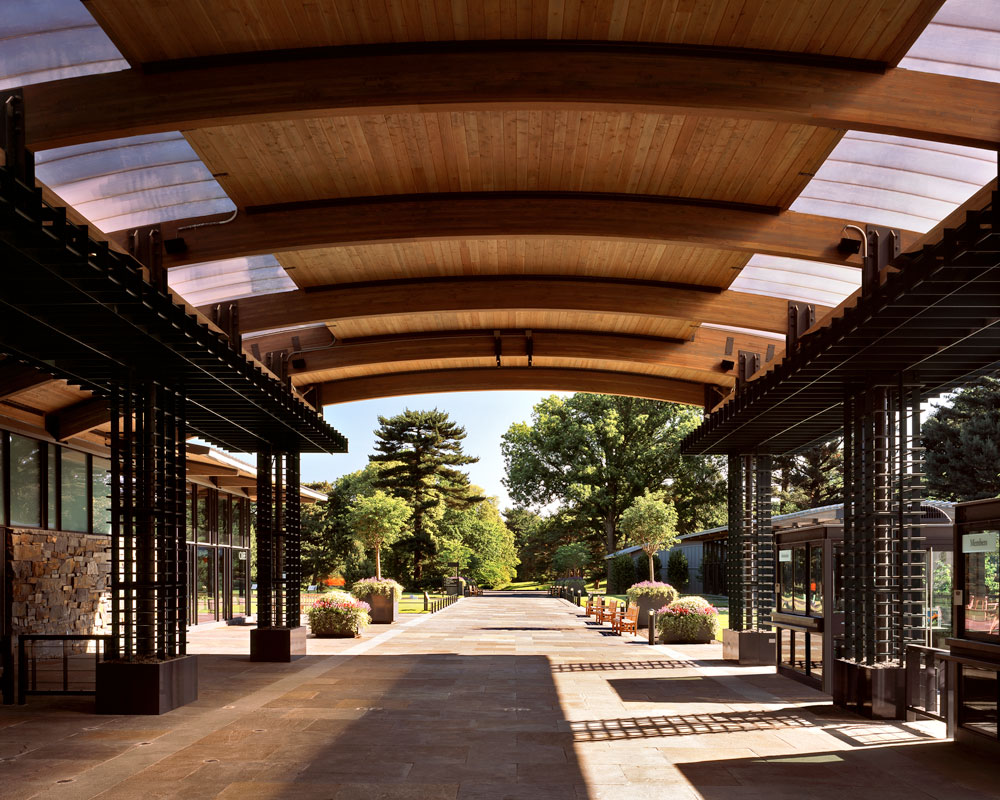 Appropriately enough, the original 19th-century entrance to The New York Botanical Garden was located by the railroad station. This was logical for the time; from there pedestrians and horse-drawn carriages could explore a landscape that stretched out before them to the south. Passing by an impressive axial view of the Library building, framed by a broad allée of tulip trees, this roadway connects directly with the axis of the new Visitor Center. This second access point is more centrally located, with a parking lot for cars and buses. It is focused on a broad walkway of bluestone paving blocks that leads to a small fountain and reflecting pool where open views of the surrounding landscape present an extraordinary collection of trees, offering a tantalizing promise of exploration.
The intent of the new Visitor Center was to make a place where the Garden is revealed and discovered in all its seasonal variety, not to create a place embellished by buildings. First-time visitors can enter here, learn about the large extent of the Garden’s various collections and displays, rendezvous with each other, enjoy refreshments or investigate the gift shop. It is surprising to see how quickly a talented staff has made the bookstore and plant shop a destination in their own right.