Spend a Fall Day at Kiku, Greenmarket Finale, More; Veterans Get Discount
Gayle Schmidt is Manager of Public Education.
This week we say goodbye to our Greenmarket farmers and bakers for the year, as today and Saturday mark the last two markets for 2009. All summer and fall they have offered wonderful seasonal colors—from the bright green sprouts of asparagus and leaves of lettuces to sweet red cherries, purple radishes, yellow corn, and brilliant orange squashes and pumpkins.
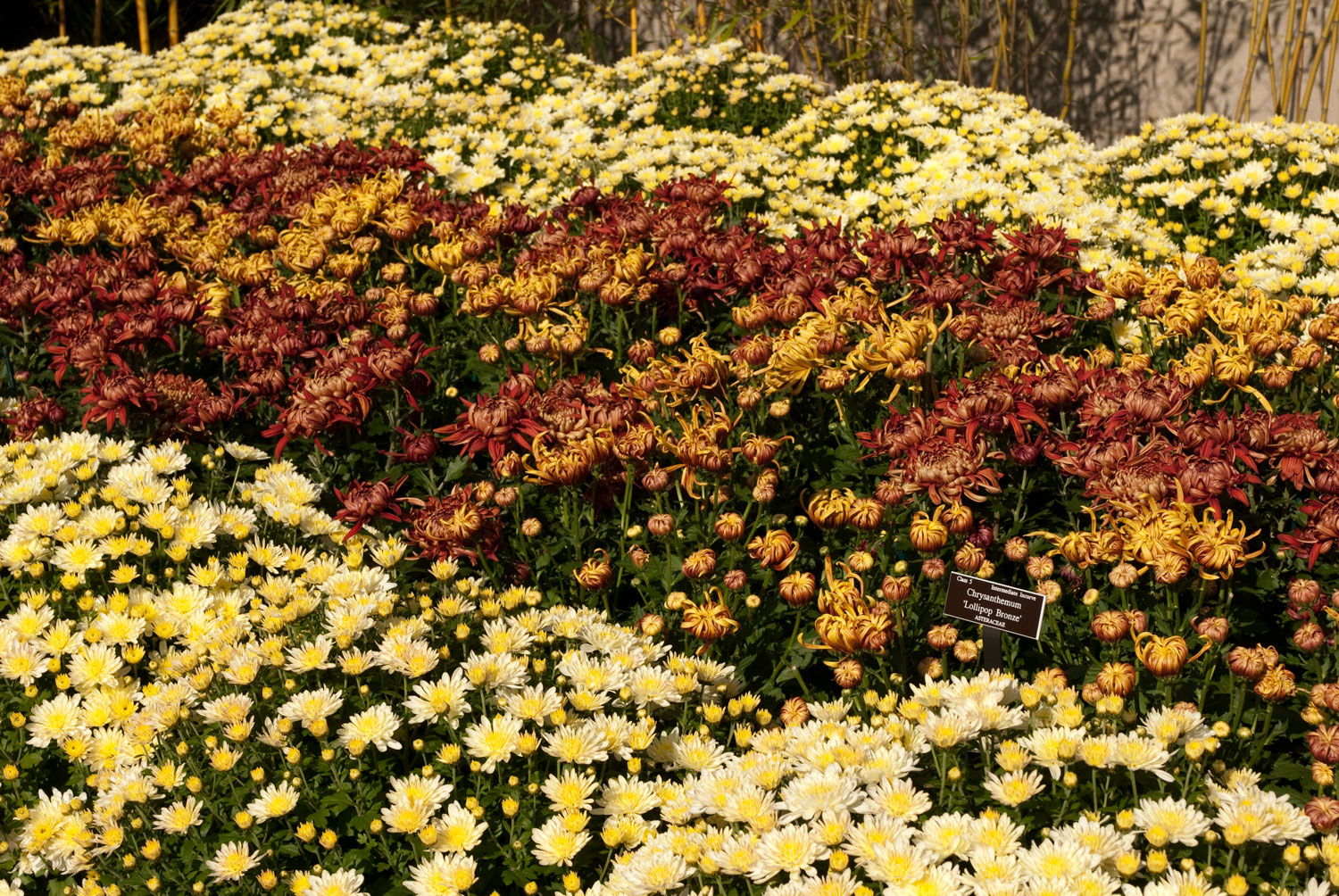
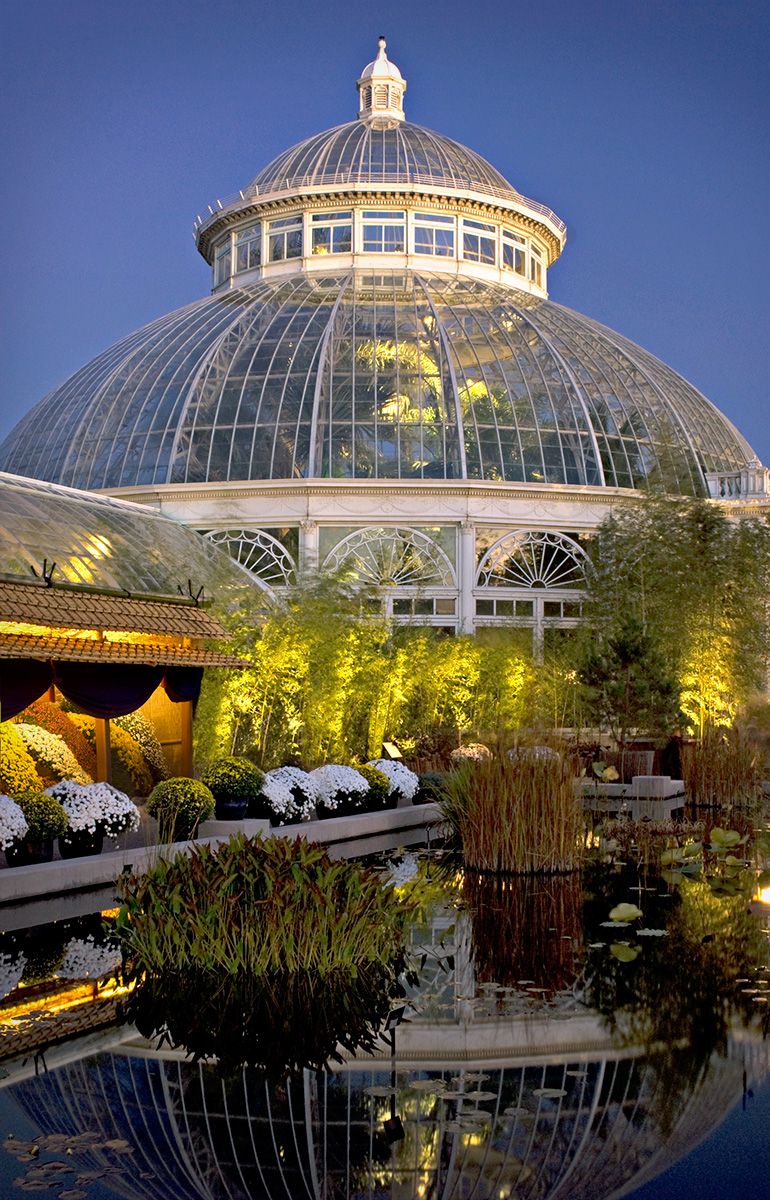
The autumn shades of the market table complement the beautiful showiness of the trees around the Garden and the spectacularly trained chrysanthemums on display in the Conservatory Courtyards in Kiku in the Japanese Autumn Garden.
Join us today as we present additional family activities at the Greenmarket and elsewhere in the Garden to mark the Veterans’ Day holiday. Grounds admission is free, though an All-Garden Pass is needed for the main exhibition and some programs. United States Veterans receive $5 off the All-Garden Pass purchased on-site with proof of military service.
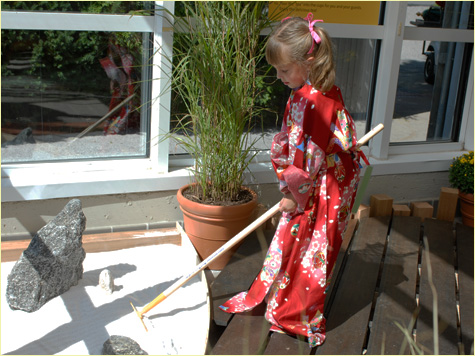
As you stroll through the Garden, you will encounter some Japanese cultural programs to complement the beautiful Kiku in the Japanese Autumn Garden exhibition and Japanese Autumn Adventures. Try your hand at origami folding and saori hand-weaving on a traditional loom. Make a showy Japanese flower hat, and learn a few traditional dance steps that celebrate the flowers in the Children’s Adventure Garden.
Over at the Greenmarket at Library Allée, tap your toes to live music and taste some fresh apple cider that you can help press. We dare you to stick your hand in a giant pumpkin and grab a few seeds to count for the tally!
Our market always provides fresh fruits and vegetables, and we use this produce in whipping up easy recipes to help you decide what to bring home for dinner. Today I’ll be making some of my now famous butternut squash soup for you to taste. You can also learn what it takes to grow this great food at a discussion with one of our farmers, and you can even find out what to do with the peelings and scraps at Bronx Green-Up’s compost information table.
Thundering and thrilling, the taiko (Japanese drum) has been called “the voice and spirit of the Japanese people.” From its roots in agriculture and the ancient music of shrines and temples, traditional taiko folk music is believed to entertain the gods, attract good fortune, drive away evil forces and insects, lend strength and courage to warriors, and celebrate life.
Each weekend during Kiku in the Japanese Autumn Garden experience the sounds of both ancient and modern Japan by the group Taiko Masala on the Conservatory Lawn.
Jane Dorfman is Reference Librarian/Exhibitions Coordinator in the LuEsther T. Mertz Library.
Mertz Library Director Susan Fraser and Curators Stephen Sinon and I had the delightful task of selecting the 63 items that comprise the latest exhibit in the Library’s Rondina and LoFaro Gallery, Ex Libris: Treasures from the LuEsther T. Mertz Library, on through January 10, 2010. This is a show about the Library’s rich and varied collections. Although delightful, it was not an easy task to select from such a treasure trove of material. The LuEsther T. Mertz Library is the largest botanical and horticultural library under one roof, and this show is but a small sampling of the Library’s rich and varied collections of rare books, original botanical art, and manuscripts.
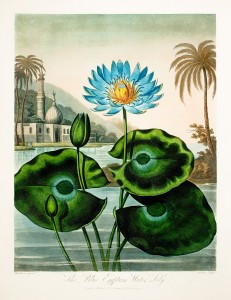
We selected the individual pieces on the basis of our combined knowledge of the collections and on research regarding the unique character of each object and its inherent beauty or distinctiveness, such as the hand-colored and color-printed aquatint engraving shown above, The Blue Egyptian Water-Lily from Temple of Flora, by Robert John Thornton (1768?–1837; London: T. Bensley, 1907), one of the greatest botanical works ever published.
In our selections we also favored those objects that were not shown in our previous exhibits. And we strove to include sumptuous images, so pictures of fruits naturally came to mind. One unusual and beautiful book about fruits (and vegetables) by 19th-century German author Johann Ferdinand Shreiber (fl. 1839), Bilder zum Anschauungs-Unterricht für die Jugend, is actually a children’s book. It was rediscovered by Stephen while he was looking for images to promote the Garden’s summer show, The Edible Garden. He kept the book in mind, and now it’s in the Ex Libris exhibit, displaying luscious grapes and abundant hops.
Japanese Autumn Adventures Offers “Passport” of Fun
Noelle V. Dor is Museum Education Intern in the Everett Children’s Adventure Garden.
As the Northern Hemisphere inches away from the sun and life turns inward, The New York Botanical Garden is under way with Kiku in the Japanese Autumn Garden, a celebration of autumn and Japanese culture. While Kiku pays homage to Japan’s annual Festival of Happiness, which honors the fall bloom and seemingly perfect beauty of the chrysanthemum flower, the Everett Children Adventure Garden’s Japanese Autumn Adventures highlights an equally important plant in East Asian cultures: Camellia sinensis, commonly known as tea.
Of course, tea is immensely popular in the United States, too. Many people, however, know very little about tea such as the fact that “herbal teas” are not truly tea at all, or that white, green, black, and oolong teas are all derived from a single plant species.
Delving into the world of tea during my research and preparation for this program has deepened my fascination for the myriad ways in which plants and society intertwine over time. My interest in traditional Japanese culture—inspired and nurtured by various school projects and courses—made me even more excited to have this amazing opportunity to help others explore and enjoy a unique mixture of nature, art, and social customs.
During Japanese Autumn Adventures, in addition to learning all about tea and participating in a simulated tea ceremony, young visitors and their families get to do classic Japanese crafts such as fish printing (gyotaku) and paper-folding (origami) to create maple samaras that really spin!
At the beginning of their adventure, children will make their own field notebook, or “passport,” granting them access to different “cities” (activity stations) and allowing them to keep a record of their experiences as they “travel” through Japan. Before departing, everyone should stop by the wishing shrine and leave an ema (Japanese for “wish”).
My wish is for all hearts to be filled with love and joy. What’s yours?
Jessica Blohm is Interpretive Specialist for Public Education.
A chrysanthemum blossom, which appears to be a single flower, is actually made up of hundreds of tiny flowers.
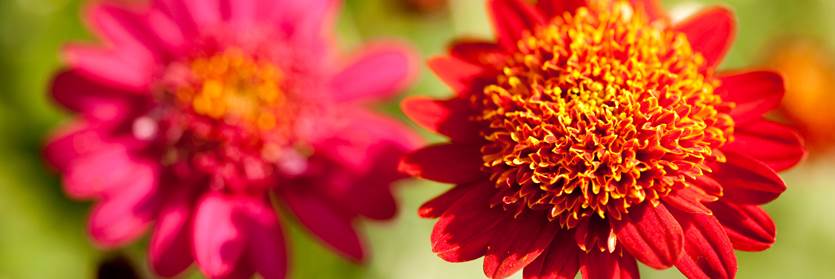
Chrysanthemums are members of the Asteraceae (aster or daisy) family. All plants in the aster family are composites. They have flower heads made up of many tiny individual flowers. Other composites include asters, sunflowers, black-eyed Susans, dandelions, marigolds, and zinnias.
There are two types of composite flowers, ray and disc. Some composites have both ray and disc flowers; others have only ray or disc flowers.
The National Chrysanthemum Society defines 13 different classes of chrysanthemums with varying flower forms: irregular incurve, reflex, regular incurve, decorative, intermediate incurve, pompon, single and semi-doubles, anemone, spoon, quill, spider, brush and thistle, and unusual. Many of these 13 classes are on display at Kiku in the Japanese Autumn Garden. To see examples of each, click here.
Follow this Step-by-Step Guide by NYBG Adult Education Instructor
John Capobianco, an instructor in the Adult Education Program of The New York Botanical Garden, is a four-time national gold medal winner for chrysanthemum bonsai display. He is president of the Long Island Chrysanthemum Society, a past president of the Bonsai Society of Greater New York, and a board member of the National Chrysanthemum Society.
As Kiku in the Japanese Autumn Garden makes apparent, chrysanthemums are among the most versatile woody perennials around. They lend themselves to being trained into many different forms.
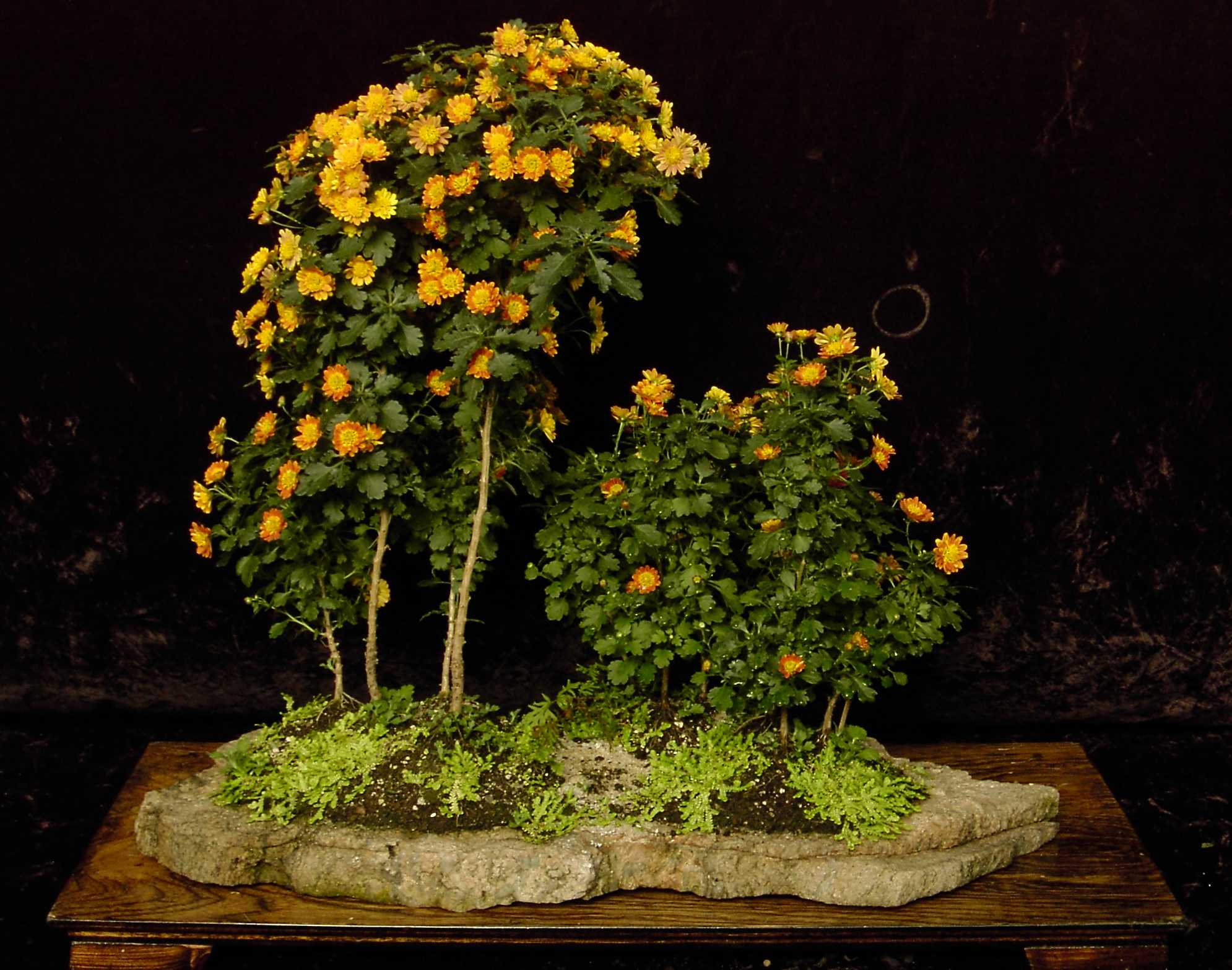
You can try your hand at chrysanthemum bonsai by creating a slab planting—an arrangement done on a relatively flat stone to depict a lone tree on a cliff or a forest on an island or whatever you may imagine.
Unlike other forms of bonsai, slab plantings start with the container, in this case a flat rock or ceramic piece. It should be oblong; one with steps, crags, or an irregular outline makes it more interesting. Stones have movement and a flow to them. Examine the stone and choose the position you wish to highlight and harmonize with the planting.
Decide on the cultivar you want to grow, and get to work making cuttings or placing an order. Plan on growing more than you will need as some will get damaged and be unusable when it comes time to assemble the planting. Expect to reject about 50 percent of what you grow. You’ll want to use an odd number for the planting group, which makes for a more stimulating design.
To grow your chrysanthemum “trees,” put plants in a few different-size containers—2½ , 3, 4, and 6 inches. Much like the myth about goldfish, the mums will only grow to the size of their environment. Those in the small containers will have less water and nutrients and so won’t grow as thick or as tall. This will ensure that your trees will be of different heights and thicknesses in the group planting.
Pinch the plants to encourage branching into a tree form. If the line of a trunk needs to be altered, you may need to wire the plant to the desired form. This takes skill. Be careful not to break branches, and don’t trap leaves under the wire. Practice on your rejects.
The Latin word for “cultivate,” colere, means both “to till” and “to cherish.” This dual meaning is particularly apt when talking about The New York Botanical Garden and its magnificent and varied gardens and plant collections. The care and devotion expended to these areas by staff and volunteers illustrate “cultivation” in all its layers of meaning.
As a visitor to NYBG, you can cultivate your powers of observation and by so doing, learn to cherish nature and its processes. I discovered this fact decades ago, as a young landscape architecture student at the University of Hawaii. I was given an unusual assignment that required me to spend 24 hours in an outdoor spot of my choosing. Within that period of time, I had to note all the changes I observed. This included noting the weather, vegetation, rocks, animals, sounds, and anything else that caught my eye or ear. I could not leave the general location for any extended period of time.
This exceptional task strengthened my “observation muscle” immensely. It also expanded my understanding of our interconnectedness with nature, and I learned to cherish it all the more.
The next time you visit The New York Botanical Garden, consider cultivating your awareness by watching the network of life that surrounds you. The birds, trees, flowers, animals, and even lowly earthworms each fill an essential niche within a harmonious whole. By noting the synchronous events that occur within the tapestry of nature, you, too, can develop the singular clarity that Alan Watts, the Buddhist writer, called “vivid awareness.” This lovely approach embraces an appreciation of the natural world’s miraculous unity, and you will never again take Mother Nature’s everyday workings for granted.
Plus Poetry Readings, Bird Walk, Greenmarket, and Kiku
Celebrate the thrills and chills of the season at The New York Botanical Garden’s Halloween Hoorah! on Sunday. Come in your costume or make your own mask here and parade around the grounds. Follow the trail on your Halloween map and participate in hands-on activities along the route. End the day learning about bats during a live animal demonstration.
On Saturday, listen to poets read their favorites as well as their own works inspired by nature, go on a bird walk, and shop at the Greenmarket. And on both days of the weekend, visit Kiku in the Japanese Autumn Garden, see taiko drumming performances, and more.
Get Your Tickets
Both Battle Cold, Damp Weather in New York to Perform at Peak
The grounds crew in Yankee Stadium has not been the only team compensating for Mother Nature’s freakishness this month.
Across the Bronx at The New York Botanical Garden, the horticulture team is also doing some fancy footwork due to the weather—manipulating the Japanese-style chrysanthemum “sculptures” in the spectacular exhibition Kiku in the Japanese Autumn Garden.
For this year’s eagerly awaited flower show, cold temperatures and overcast skies have NYBG staff gardeners giving the mums needed extra light and warmth by bringing them back into the greenhouse.
Specific amounts of light and heat are needed to bring the chrysanthemums into flower. Those needs in this, the final year that the Garden is presenting its most elaborate show, are in direct contrast to what was needed in the first two years of the exhibition. Then, warm, late-summer temperatures persisted through October causing staff gardeners to scramble in order to shade and cool the plants to be presentable for the show.
Always anticipating change and preserving flexibility, the gardeners have grown a backup set of Kiku mums, keeping them outside in the chill all the time. This backup mum set can be moved into the show to replace the first set in case warm weather and bright sun send their flowers past peak before the show ends.
Visitors can appreciate this marvelous manipulation of Mother Nature and see the fruits of the horticulture team’s labor now through November 15. Kiku in the Japanese Autumn Garden showcases the spectacular autumn landscapes of Japanese gardens, with scarlet maples and golden bamboos against the backdrop of emerald conifers and, when the sun cooperates, clear blue skies. More chrysanthemums than ever are on display in traditional and contemporary display styles, with bonsai providing another fabulous element to the exhibition. On weekends, participate in guided tours, autumn gardening demonstrations, and taiko drumming performances.
Susan Fraser is Director of the LuEsther T. Mertz Library.
Paradigm shifts have altered the way knowledge is communicated—from the written word to the printed word and now to the digital word. The proliferation of electronic resources and rapid changes in technology require increased flexibility in how libraries acquire and disseminate knowledge. One remarkable example is the Biodiversity Heritage Library (BHL), a consortium of natural history libraries that are digitizing and making freely available the world’s literature on biodiversity. Collectively, the 12-member consortium holds most of the recorded knowledge of the natural world, over 2 million volumes.
The Botanical Garden is a founding member of the BHL, which began in 2006 and is expanding to include a BHL Europe and partners in China and Australia. It has rapidly become an international sensation.
The project saves immense hours of research time for both information seekers and library staff. The Mertz Library research staff can now refer to the BHL portal to fill interlibrary loan requests or research inquires. Previously, staff would photocopy pages of books or journal articles upon request. Now, if a scientist in South Africa needs to reference The Grasses and Grasslands of South Africa (1918) for instance, she can do so on her own and from her own computer.
By cooperating in this multi-institutional effort, BHL members can perform bulk digitization with limited risk of duplication, lack of standardization, or loss of intellectual integrity while providing a huge amount of biodiversity material online. To date, the Mertz Library has scanned over 6,000 volumes amounting to over 3 million pages. The BHL portal currently contains almost 15,000 titles and 16 million pages, and it continues to grow.

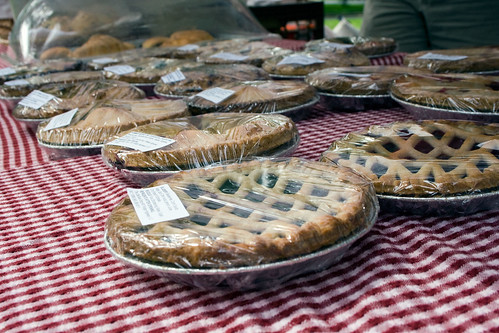 This week we say goodbye to our Greenmarket farmers and bakers for the year, as today and Saturday mark the last two markets for 2009. All summer and fall they have offered wonderful seasonal colors—from the bright green sprouts of asparagus and leaves of lettuces to sweet red cherries, purple radishes, yellow corn, and brilliant orange squashes and pumpkins.
 Library Director Susan Fraser and Curators Stephen Sinon and I had the delightful task of selecting the 63 items that comprise the latest exhibit in the Library’s Rondina and LoFaro Gallery,