Inside The New York Botanical Garden
Plant Talk
Posted in Exhibitions, Programs and Events, The Edible Garden on July 3 2009, by Plant Talk
 |
Andrew Haight is Manager of the Everett Children’s Adventure Garden. |
Maps have always captured children’s imagination. Growing up I had every intention of becoming the next Indiana Jones. I hunted down buried “treasures” in my parent’s basement and made my own maps. I carefully crinkled the sheets, even tearing the corners to make the paper maps appear from “olden times.” The mystery and excitement seemed trapped on these sheets of paper; I felt they could lead me to new adventures.
This summer as part of The Edible Garden, maps will play a central role as we focus on the adventure in the Everett Children’s Adventure Garden through Flower Power!
Visitors can embark on their own journey through a series of activities laid out as a map inside each child’s field notebook. For instance, the map points out where a family can stop and make a pollinator puppet to take home and also guides children to several different activity and play stations, including a spot where they can mold their own flower out of clay.
The map allows children to choose their own route. Along the way they can discover the larger-than-life flower models, detour through Beth’s Maze, or simply take their time to explore each nook and cranny of the Garden. With the reins in each child’s hands in the form of a map, the possibilities are endless.
For more Edible Garden events and weekend activities, click here.
Posted in Exhibitions, The Edible Garden on July 2 2009, by Plant Talk
I’m a self-proclaimed minimalist. I don’t really know how it happened (a result, most likely, of having moved 16 times in the past 10 years), but it has permeated all parts of my life, including my kitchen. Despite that, I’ve always made space for some homegrown produce in my life—or on my windowsill, to be more precise. And having a garden to eat from is the basis of how I learned to cook, a reality that’s not easy for anyone. (It helps that my home region of Southern California is an agricultural utopia where nearly anything will grow anytime of year). And while I’ve never had enough space to sow a full garden, the idea of eating as fresh and as in season as possible has stuck with me.
With green, sustainable, and local as the buzzwords du jour, it can become intimidating figuring out how, if at all, it can work for you. All that moving I’ve done and all the creative ways people have embraced those tenets in my current hometown of San Francisco has led me to this conclusion: Make sure whatever you do works with your lifestyle, and you’ll be more likely to stick with it in the long term. There are plenty of resources out there for the gung ho: you can get a subscription to a CSA (Community Supported Agriculture), get a plot in a community garden, or just support your local farmer or grocer who you think is doing it right.
And, there’s a huge upside for the food obsessed—you and your family start to learn a lot about ingredients you once may have considered mundane (like that Brussels sprouts grow on stalks, that chickpeas are tasty fresh, that freshly grown cucumbers actually have taste, or even that kids will eat freshly picked tomatoes like candy once they’ve experienced how sweet they actually are).
Read More
Posted in Exhibitions, The Edible Garden on July 1 2009, by Plant Talk
 |
Nick Leshi is Associate Director of Public Relations and Electronic Media. |
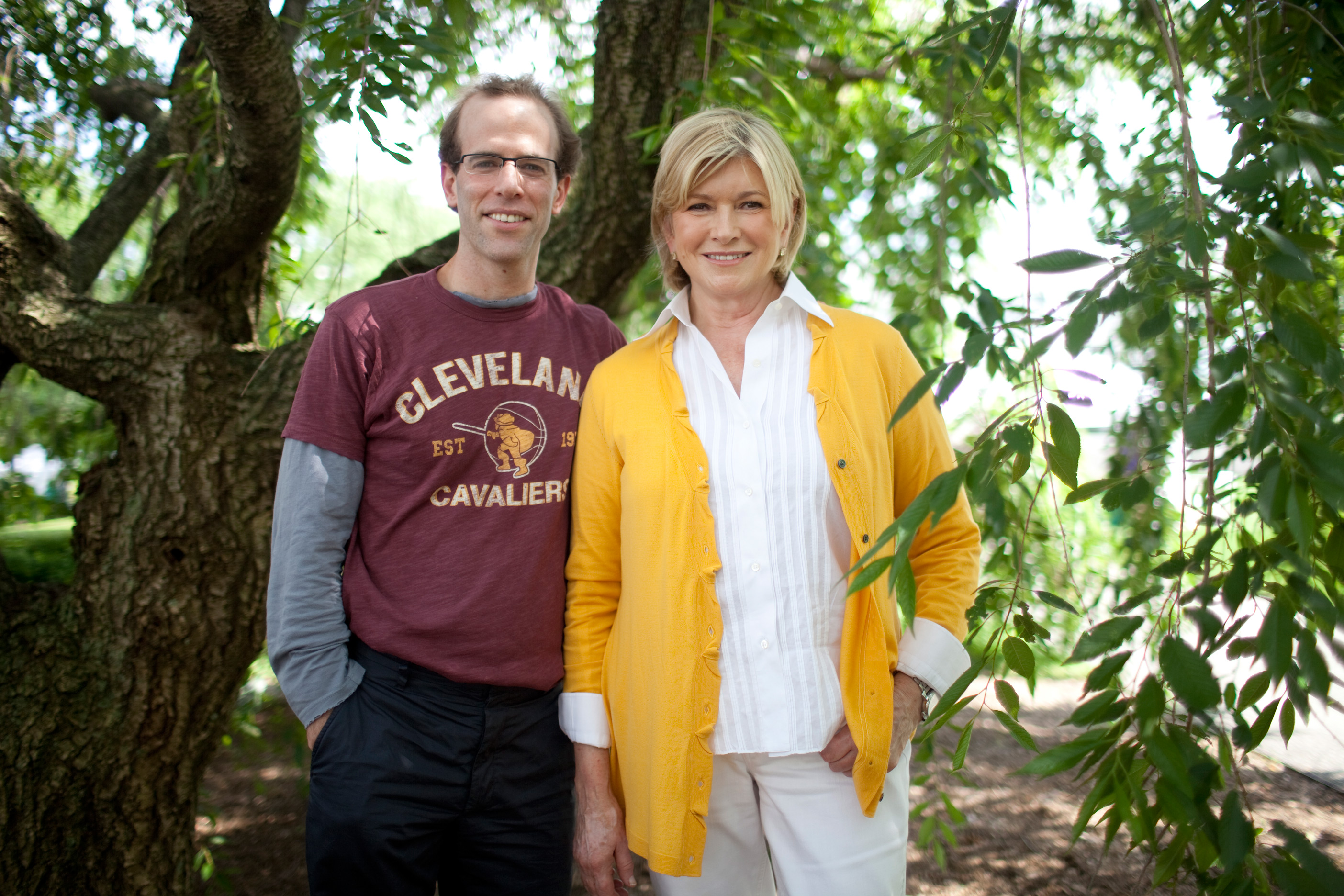
With gorgeous weather and in front of enthusiastic crowds, Martha Stewart and Dan Barber were among the celebrities who kicked off the opening of The Edible Garden summer-long exhibitions this past Saturday at The New York Botanical Garden. You may have seen some of the coverage on NY1 News, WABC-TV, WCBS-TV, or WNBC-TV, or you may have read about it in New York magazine, The New York Times, New York’s Daily News, or online at Daily Kos and dozens of blogs.
Those of you who were here in person witnessed Martha Stewart and her friends answering audience questions about the Culinary Herb Garden they designed and demonstrating how to make delicious cocktails using homegrown herbs. Dan Barber, winner of the James Beard Foundation 2009 Outstanding Chef Award, captivated visitors with his insightful presentation about the farm-to-table movement. Other special guests who appeared on the Conservatory Kitchen stage during the opening weekend, providing delectable cooking demonstrations, were: Johnny Iuzzini, Michael Anthony, Peter Hoffman, Aida Mollenkamp, and Michel Nischan. Recipes by some of The Edible Garden participants can be found on our Web site. Thanks to all of our sponsors for helping make it all possible.
Other attractions included lectures by Amy Goldman on Heirloom Tomatoes and Rosalind Creasy on Gardening with Heirloom Flowers and Vegetables. There were booksignings, home gardening demonstrations, and tours—all part of the Botanical Garden’s continuing efforts to showcase edible plants as economical, nutritious, and good for the environment.
If you missed the opening weekend, you can still experience The Edible Garden throughout the summer until September 13. Multiple exhibitions are on display across the Garden’s 250 acres, including Tropical Fruits, Roots, and Shoots in the Enid A. Haupt Conservatory and Vegetables and Kids in the Ruth Rea Howell Family Garden, to name just two. Other highlights of The Edible Garden include an Edible Audio Tour narrated by Mario Batali and others, Edible Evenings for seven Thursday nights beginning July 9, the Farmers Market all day every Wednesday and Saturday, and a closing weekend festival to wrap it all up on September 12 and 13.
For all the details and to purchase tickets, visit our Edible Garden Web pages.
Posted in Uncategorized on July 1 2009, by Plant Talk
 Carol Capobianco is Editorial Content Manager at The New York Botanical Garden.
 We can hardly believe it, but a year has already passed since our blog content team first assembled and officially launched Plant Talk: Inside The New York Botanical Garden.
Since then we’ve brought you a full schedule of posts from Monday through Friday on a broad range of topics, from gardening tips and science stories to behind-the-scenes glimpses and fun things to see and do. And we’ve had an extensive field of interesting contributors—at last count, over 70 people had written entries, including staff members from a variety of departments, students, and volunteers.
Along the way we’ve picked up a number of fans: people who have selected Plant Talk as one of their favorite blogs or who have added us to their blog rolls or who have written about us on their own Web pages.
We hope you are enjoying the ride as much as we are. Please let us know what you’ve liked and what you’d like to see more of. As always, we look forward to hearing from you as we continue to share with you all the wonderful exhibitions, garden collections, programs, research, classes, and more taking place here at The New York Botanical Garden.
Posted in Uncategorized on June 30 2009, by Plant Talk
 |
Sandra Herbst is Public Relations Assistant. |
Let me start by saying I was never a nature person. I went camping when I was younger, but to some people, having air conditioning and a TV in your camper doesn’t count.
My appreciation of nature first began when I started taking my lunchtime walks around the Garden grounds last spring. I started walking as a way to get back into shape—we all want to fit into our teeny-weeny yellow polka-dot bikini, right?
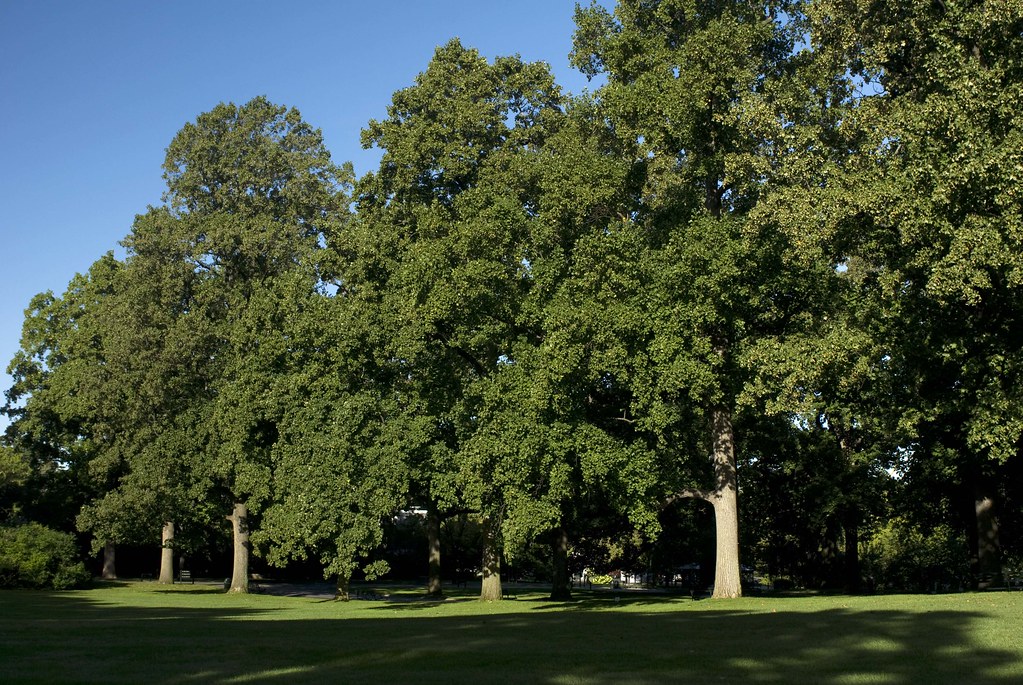 My route begins at the Watson Education Building, goes up Magnolia Way and past the Peggy Rockefeller Rose Garden, then down Azalea Way to the Everett Children’s Adventure Garden where I reverse course to return to the Watson Building. For me it takes about 45 minutes; for some of the joggers from Fordham University I see frequently, I’m sure less. These walks have become significant to me. They have become my peace, my happiness, and my way to de-stress during the 9-to-5 work week.
These walks have also made me love and appreciate the Garden for all of its natural beauty and structure. Seeing the cherry trees bloom in spring; the lush colors of green during the summer; and the rich reds, pinks, and oranges of the Rose Garden in the early fall always makes me smile. My eyes can never turn away from the green tree line against the bright, blue sky. This spring, I even started to count the number of bird nests I saw. There were so many, and of course, I came up with a different number each time.
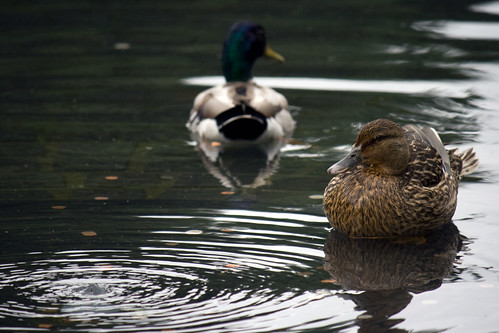 I can remember seeing Boyfriend and Girlfriend for the first time this year. Boyfriend and Girlfriend are the names I gave two ducks, one male, one female, that I saw all the time during my walks last year. They were always together in the tiny stream on Azalea Way near the Forest entrance. I saw them for the first time this spring in the Reflecting Pool while walking with a co-worker, and I blurted out “There’s Boyfriend and Girlfriend!” Of course, she had no idea what I was talking about, but I knew, and I was so excited to see them together again.
I still wouldn’t call myself a full-blown nature lover or anything. But I sure have come to appreciate the comfort, beauty, and serenity the Garden and nature offers.
Posted in Exhibitions, The Edible Garden on June 26 2009, by Plant Talk
Martha Stewart Heads Lineup of Celebrities, Chefs
 Jennifer Josef is Director of Public Education.
 At long last all these months of planning are coming to fruition: from the amazing signs and information that interpret the special garden exhibitions to the fun and interesting programs happening on Saturday and Sunday and beyond. The Edible Garden finally opens.
Coming from an Italian family, food and cooking have always been a large part of my life. Some of my fondest childhood memories are of times spent with my mom in our garden or in the kitchen cooking together. I think that’s why The Edible Garden resonates with so many people—we all have had great experiences that involve food.
With the amazing lineup of chefs, gardening experts, and scientists, The Edible Garden takes growing and cooking great food to another level. This weekend I look forward to learning about heirloom vegetables with author Amy Goldman and then how to save their seeds from George DeVault, President and Executive Director of Seed Savers Exchange, to get my own container garden growing in my apartment. Thank goodness Sonia Uyterhoeven, Gardner for Public Educaiton, leads the Home Gardening Demonstrations on the weekends: She always answers my beginner questions with ease, although I’m sure she must get a laugh out of my wacky questions.
I had the privilege of meeting Dan Barber, chef at Blue Hill at Stone Barns, during our interview for the Edible Audio Tour; he was amazing. Secretly (or not so secretly now!), I have developed a crush on him. His passion about great food and the local food movement is inspirational. I can’t wait to hear more from him about his own work and where we as consumers can take the food movement. He’ll be presenting in the Conservatory Kitchen on Saturday.
And who doesn’t love a cocktail! I feel sure I’ll be able to re-create some of the cocktails Martha Stewart will be making during her demonstration on Saturday. Her recipes, along with others, will be posted on the Botanical Garden’s Web site, so no need to take notes while enjoying her “Cocktail Hour.” While I haven’t managed to eat at Savoy yet, I’m positive that owner and chef Peter Hoffman will show us recipes that will whet my appetite and have me calling up for reservations right after he finishes his Sunday demonstration!
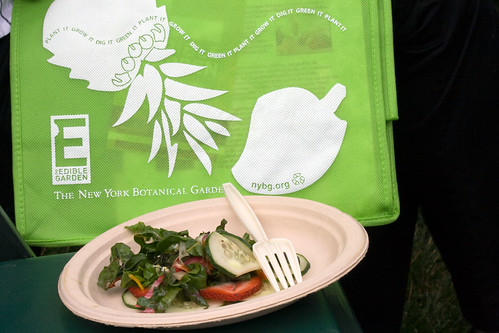 Speaking of recipes, at our Media Preview on Wednesday, Chef Dan Rothman from Whole Foods Market, one of our sponsors, put our new Conservatory Kitchen to use. He whipped up a Rainbow Chard Slaw with Yarrow-Berry Vinaigrette for those in attendance, choosing his ingredients especially for their seasonality—what can be found at this time of year in home gardens or at farmers markets. Try it out and tell us how you like it.
We have been working with these and other amazing people for many months now in planning The Edible Garden. Like with any good meal preparation, the moment comes when it’s time to “dig in.” So please come, dig in, and enjoy this celebration of food and return throughout the summer for more fun events.
Posted in Wildlife on June 25 2009, by Plant Talk
Find Them and Other Fledglings on Final Bird Walk of Season
 |
Debbie Becker leads a free bird walk at the Garden every Saturday from 11 a.m. to 12:30 p.m., September through June, beginning at the Reflecting Pool in the Leon Levy Visitor Center. This Saturday is her last of the season until September 5.
|
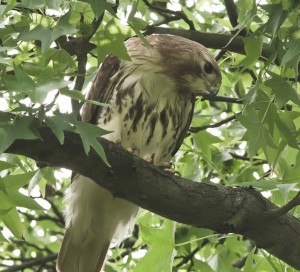 Summer—and all its activity—is just beginning for us, but this is the time when birds wind down. They began their busy season in February, in preparation for migration and nesting. They got ready for their long flight by eating more, a process called hyperphagia, so that they could go longer distances without stopping.
Now things have slowed for them. During the summer, though some species might have a second brood, for the most part the adults of many species, having reared their young, will be resting up for the fall migration back to their wintering grounds.
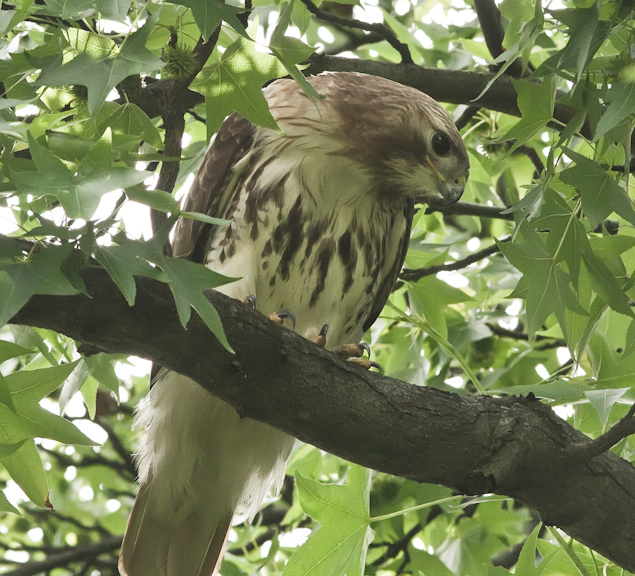
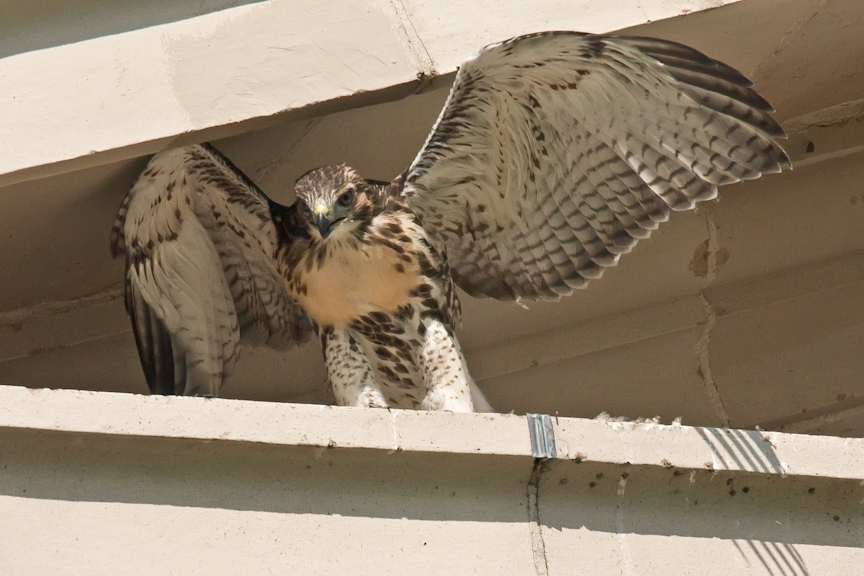
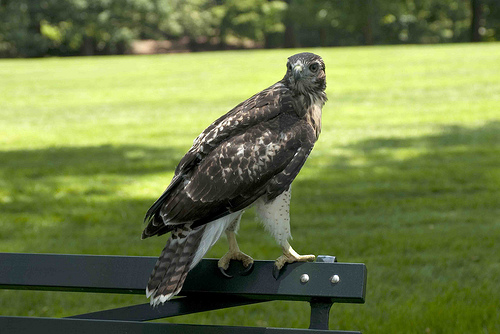
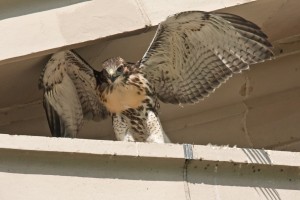 One adult pair here at the Garden—our nesting red-tailed hawks—have been kept active, however, with the successful fledging of their three babies. The siblings all took their first flight last week and can be seen hanging around the nest area—on the roof of the Library building, on nearby trees, and even on a bench, waiting for Mom and Dad to bring them food. But soon they will learn to hunt on their own.
 Come and look for the red-tailed hawk fledglings and other young birds on the final bird walk of the season. The walks will go on hiatus during July and August and return again September 5 in time for migration.
Top two photos by Richard Fleisher.
Posted in Exhibitions, Shop/Book Reviews, The Edible Garden on June 24 2009, by Plant Talk
 John Suskewich is Book Manager for Shop in the Garden.
With apologies to Cicero but with respect to American eating habits: O tempura! O morels!
The Western diet—based on fats, processed foods and convenience foods, and industrialized agriculture—may be responsible for a host of ills. In the last hundred years or so, it “has changed in ways that are making us increasingly sick and fat,” one food journalist recently commented. Ever more frequently and from many quarters, it is being questioned, rethought, reinvented. So it is that The Edible Garden, the Botanical Garden’s summer-long celebration of growing, preparing, and eating great food, comes at a propitious moment. With the current debate and state of eating in the United States, what do our on-site exhibitions bring to the table? Here are a few sources for perspective on this issue.
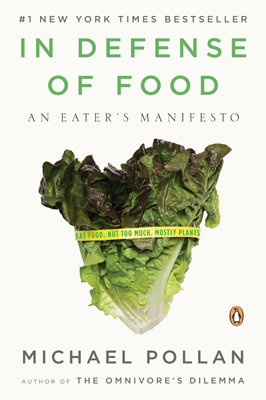
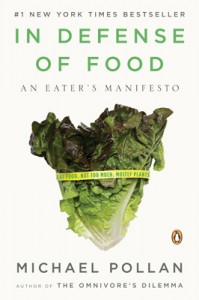 Journalist/gardener Michael Pollan is one of the pioneers in sounding the alarm about the American diet. His most recent book, In Defense of Food, argues thoroughly, convincingly, and very readably that good health will come when we reject the current reliance on fast food, food substitutes, food byproducts, engineered food, overpackaged food, overprocessed food, or any comestible with an adjective attached. His manifesto is very close to the mission of this institution—to be an advocate for the plant kingdom—and it boils down to: “Eat food. Not too much. Mostly plants.”
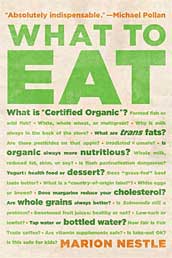 What to Eat by Marion Nestle takes this advice and turns it into a field guide for the supermarket. What is fresh, organic, low fat, reduced fat, no fat, trans fat, polyunsaturated fat, fat free?? For the consumer trying to “do the right thing,” the grocery chain is ground zero in the food chain, but it is a mine field, with marketing, packaging, and processing tripwires that can land you with eggbeaters all over your face. What to Eat analyzes the claims, counterclaims, labels, small print, jargon, subtext, and easy-open cartons to uncover the real truth about the dairy case and the frozen food aisle to make shoppers more savvy.
Read More
Posted in People, Science on June 23 2009, by Plant Talk
Garden Scientist Participates in the Venice Biennale
 |
Ina Vandebroek, Ph.D., is a Research Associate and Project Director of Dominican Traditional Medicine for Urban Community Health with the Botanical Garden’s Institute of Economic Botany. Photo of Ina by Bert de Leenheer |
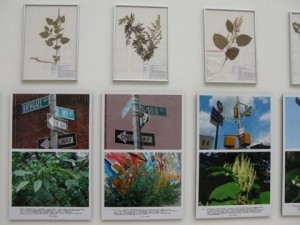 Every two years, Venice turns into the Cannes of the art world for La Biennale di Venezia: an international festival of art—with a capital “A.” From June to November, this city that always counts more visitors than residents becomes the scene for everything and everyone involved in the arts: curators, art critics, collectors, art aficionados, and, of course, the artists themselves. This year I participated as an ethnobotanist who collaborated with the Belgian contemporary artist Jef Geys for the 53rd Biennale, called Fare Mundi (Making Worlds).
You might wonder what an ethnobotanist has to do with art? I usually spend most of my days in the field with my nose stuck in plants, collecting them to make botanical specimens and identify their Latin names. Or, I conduct interviews with people to find out how these plants are used by local cultures, such as in traditional medicines. But now I found myself flying to the city of gondolas and vaporettos (water taxis) to assist in the inauguration of the Belgian pavilion where the installation from Jef Geys is on display.
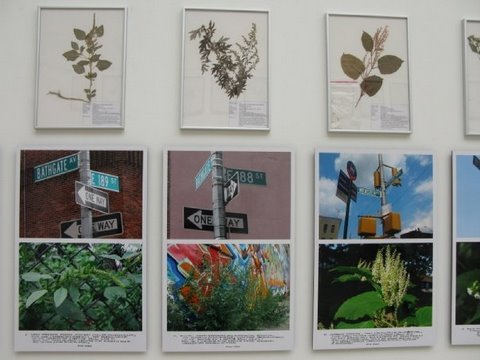
When I was 13 years old and still living in Belgium, Jef was my art teacher. I remember making conventional drawings in art class, but Jef was by no means a conventional art teacher. He likes to challenge his surroundings and the people in it, and by doing so subtly makes them change their perceptions about art and life. He offers no lessons; instead, the experience itself is the lesson. Now, so many years later, I relived that experience when Jef asked me to apply the methods I had acquired during my training as an ethnobotanist at The New York Botanical Garden to “go out in the urban fields of New York City and collect 12 plants growing in the streets of my home in the Bronx that could be used as medicines by homeless people.” Jef asked other acquaintances from the art world who live in Moscow, Brussels, and Villeurbanne (France) to do the same thing and guided them with the methodology.
Read More
Posted in Uncategorized on June 19 2009, by Plant Talk
…and a Farewell to Spring
 |
Jessica Blohm is Interpretive Specialist for Public Education. |
Tomorrow marks the longest day of the year, the day when the sun is farthest north in the sky and we have the greatest number of daylight hours. Also known as the Summer Solstice, this day marks the end of spring and the beginning of summer. We are eager for warmer and drier days, but before we turn the page, let’s reflect on what an amazing spring it has been here at the Garden.
From exhibitions such as The Glory of Dutch Bulbs: A Legacy of 400 Years to the magnificent spectacle of flowering trees and perennials across the grounds, spring has been truly unique. And none of these extensive, glorious displays and exhibitions would be possible without the dedication of the Arboretum and Grounds crew and Outdoor Gardens staff.
So we say thank you to all for their good work, whether it be planting, trimming, placing sod, arranging planters, or transferring soil. Here we show you some behind-the-scenes images of what helped make the spring displays so remarkable.
Check out all of Saturday’s programming
Check out all of Sunday’s programming