Inside The New York Botanical Garden
book reviews
Posted in From the Library on July 29 2019, by Samantha D’Acunto
Samantha D’Acunto is the Reference Librarian at The New York Botanical Garden‘s LuEsther T. Mertz Library.
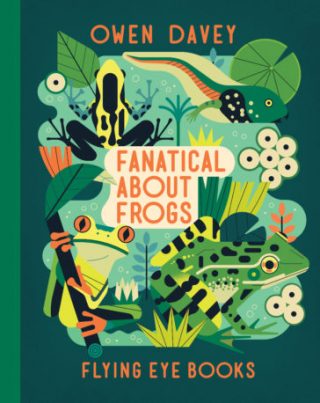 This summer the LuEsther T. Mertz Library welcomes titles from Flying Eye Books into the children’s circulating collection. Titles include tales of remarkable trees, poisonous frogs, colorful birds, funky beetles, and budding gardeners. All of the titles listed below feature refreshing and vibrant illustrations that pop right off the page.
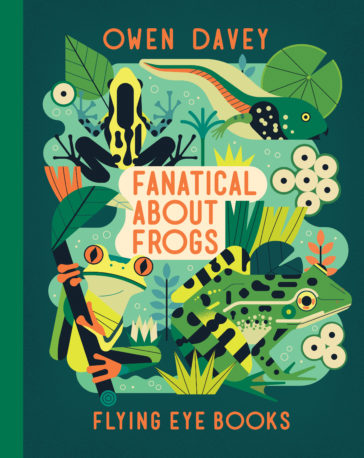
Owen Davey’s Fanatical About Frogs and Bonkers About Beetles are impressive compilations of information and illustration. The two titles are part of a larger series by Owen Davey that include titles Mad About Monkeys, Crazy about Cats, and Smart About Sharks. As far as non-fiction goes, these are a must have. They are thrilling, colorful and informative.
Read More
Posted in From the Library on April 24 2018, by Esther Jackson
Esther Jackson is the Public Services Librarian at NYBG’s LuEsther T. Mertz Library where she manages Reference and Circulation services and oversees the Plant Information Office. She spends much of her time assisting researchers, providing instruction related to library resources, and collaborating with NYBG staff on various projects related to Garden initiatives and events.
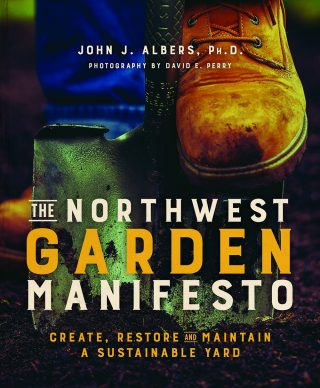 I have a soft spot for gardening books from the Northwest, and so although I live on the East Coast, The Northwest Garden Manifesto: Create, Restore, and Maintain a Sustainable Yard by John J. Albers, Ph.D. (photography by David E. Perry), for Mountaineers Books/Skipstone, is right up my alley. In Northwest, Albers has provided a book that is part instructional and part manifesto. The basics of garden (or “yard”) design are addressed, but the focus is on ecology and sustainable land management. While not explicitly a permaculture guide, Northwest includes useful information about topics such as composting, solar energy, and wildlife habitats. Although the plant recommendations are most appropriate for the Northwest, gardeners throughout the United States will find Albers’s book useful and informative. It is an especially appropriate book for someone who is considering becoming more hands-on with garden or yard care, and wants to understand how a person or community can affect positive ecological change.
Read More
Posted in From the Library on April 18 2018, by Esther Jackson
Esther Jackson is the Public Services Librarian at NYBG’s LuEsther T. Mertz Library where she manages Reference and Circulation services and oversees the Plant Information Office. She spends much of her time assisting researchers, providing instruction related to library resources, and collaborating with NYBG staff on various projects related to Garden initiatives and events.
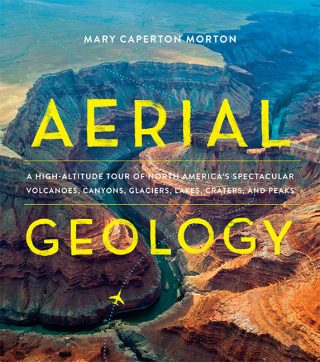 Aerial Geology: A High-Altitude Tour of North America’s Spectacular Volcanoes, Canyons, Glaciers, Lakes, Craters, and Peaks is a beautiful book by Mary Caperton Morton for Timber Press. Continuing with the publisher’s trend to offer more books on ecological and non-botanical scientific topics, Aerial Geology focuses, as the title states, on geology, the science of the earth’s physical structure and substance.
After a brief introduction to the discipline of geology, Caperton Morton showcases 100 “geological wonders” in North America arranged by geographic region, shot from above. Sometimes the prospect of domestic tourism seems daunting, but Caperton Morton is here to remind readers about the incredible North American landscape as a way of encouragement. Aerial Geology includes geological history and information about each feature, offering readers a richer understanding of the landscape than a coffee table book would provide. However, it must be said that the most eye-catching aspect of the book is its glorious photographs.
Although written for adults, Aerial Geology is the kind of book that science-minded young readers of a more advanced level would also enjoy. For all readers, Aerial Geology offers an introduction to geology and a reminder that these spectacular landscapes are, if not just around the corner, relatively close to home.
Posted in From the Library on April 10 2018, by Esther Jackson
Esther Jackson is the Public Services Librarian at NYBG’s LuEsther T. Mertz Library where she manages Reference and Circulation services and oversees the Plant Information Office. She spends much of her time assisting researchers, providing instruction related to library resources, and collaborating with NYBG staff on various projects related to Garden initiatives and events.
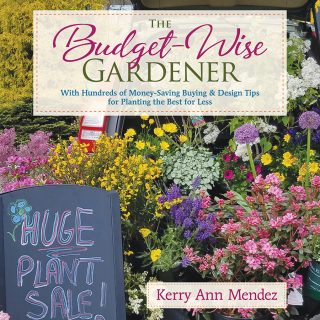 The Budget-Wise Gardener: With Hundreds of Money-Saving Buying & Design Tips for Planting the Best for Less is a new book by Kerry Ann Mendez with St. Lynn’s Press. Mendez holds class in the “Academy of Shrewd Plant Hunters” teaching readers how to purchase great plants for less, delving into topics including how to find good plant sources, design ideas with low-cost, high-performance plants, and container gardening on a budget. The information in Budget-Wise is presented in a conversational way, and the book is especially useful for those who are looking for advice about questions to ask and what to look for when purchasing plants from a store or online. Mendez’s advice about plant selection is useful for those who are on a budget and for those who are simply interested in learning more about buying plants. A great deal of the information is common sense for those who already regularly purchase plants, but the book is a good resource filled with information and tips, and even experienced gardeners may take away a new idea or two.
Read More
Posted in From the Library on January 18 2018, by Esther Jackson
Esther Jackson is the Public Services Librarian at NYBG’s LuEsther T. Mertz Library where she manages Reference and Circulation services and oversees the Plant Information Office. She spends much of her time assisting researchers, providing instruction related to library resources, and collaborating with NYBG staff on various projects related to Garden initiatives and events.
 The Less is More Garden: Big Ideas for Designing Your Small Yard by Susan Morrison for Timber Press delivers what it promises—big ideas!
Very few of us have the perfect backyard or garden. In fact, most people who have outdoor spaces to garden are probably “tormented” to various extents by peculiarities of their yards. If part of the problem is related to space—too little of it, say, or an oddly-shaped plot—Morrison’s designs might be just what you need to find a solution.
Morrison’s designs are, as Steve Aitken notes in his foreword, enviable. They are tasteful, practical, and beautiful. How does she accomplish these spaces? Although site analysis is a crucial part of garden design, Morrison starts with three simple questions. What will you be doing in the garden? When will you be outside? Who will be with you? With user experience in mind, Morrison crafts spaces readers can easily imagine themselves entering.
For readers new to garden design, Morrison mostly offers inspiration. More experienced designers will be able to learn from Morrison’s designs and gain practical ideas about how to use space—not just small or oddly-shaped areas but all shapes and sizes—to best effect in a garden.
In design, constraints such as limited space often inspire creative solutions and great ideas. Morrison’s work is evidence of this premise, although I suspect she would shine in any setting.
Posted in From the Library on August 4 2017, by Samantha D’Acunto
Samantha D’Acunto is the Reference Librarian at The New York Botanical Garden‘s LuEsther T. Mertz Library.
The LuEsther T. Mertz Library will like to share the newest titles to our circulating children’s collection. The featured titles below are extraordinary examples of community efforts and what can truly be accomplished when we work together. Communities can take shape in a variety of ways so whatever your community looks like and wherever it is located, these titles will surely inspire you to build upon the strengths of your friends and neighbors to help make a difference in your community. From our community to yours, we hope you enjoy these titles the next time you visit us in the library!
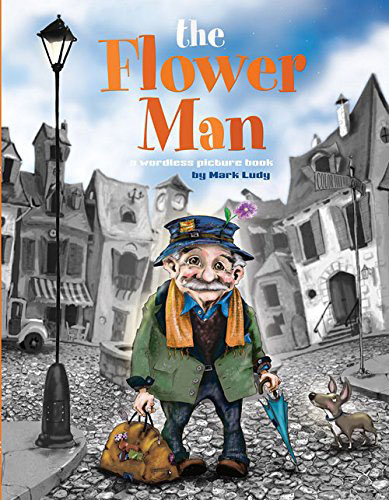
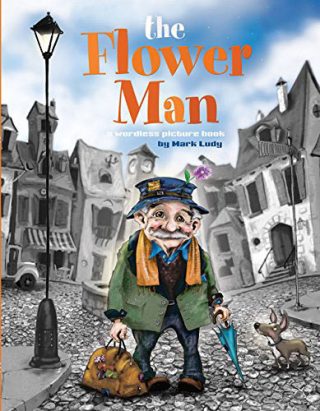 The Flower Man by Mark Ludy
The Flower Man is a wordless picture book that invites readers to follow a small elderly man as he travels from town to town bringing color and happiness to everyone he encounters. A simple garden or a single flower can bring joy to all; The Flower Man does just that! Author Mark Ludy is sending a clear message: investing in the beautification of your neighborhood with color, flowers and greenery will directly benefit the residence and visitors, leading to a friendlier and healthier environment.
As each page begins to fill with color readers may find a smile is hard to contain. Ludy’s intentional use of color is meant to elicit emotion and it is certainly successful! From monochrome to a full color palette readers will experience a transformation like no other. Look carefully as you turn each page as the intricate details of the town should not be overlooked. The neighborhood pictured is home to many nameless characters that offer themselves to the imagination of an observant reader. The Flower Man was an instant favorite amongst the LuEsther T. Mertz Library staff and I believe it will continue to be for many years to come. We’re inviting all readers of all reading levels to experience the colorful world of The Flower Man! This title is available for check out for library cardholders. Hope to see you in the library!
Read More
Posted in From the Library on July 27 2017, by Esther Jackson
Esther Jackson is the Public Services Librarian at NYBG’s LuEsther T. Mertz Library where she manages Reference and Circulation services and oversees the Plant Information Office. She spends much of her time assisting researchers, providing instruction related to library resources, and collaborating with NYBG staff on various projects related to Garden initiatives and events.
 Growing a Revolution: Bringing Our Soil Back to Life by David R. Montgomery challenges the “norm” in industrial farming soil care. With research, interviews, and an engaging style of writing, Montgomery invites readers and farmers alike to consider the ways in which soil fertility can be improved with better soil care.
Growing a Revolution follows fast on the heels of Montgomery’s 2016 book, The hidden half of nature : the microbial roots of life and health. Montgomery, a professor of geomorphology at the University of Washington, has made a career out of soil. Revolution is the work of an author who is comfortable with his chosen subject and skilled at writing for a popular audience. The question that Montgomery poses to readers is simple, yet daunting in its scope. “What if there was a relatively simple, cost-effective way to help feed the world, reduce pollution, pull carbon from the atmosphere, protect biodiversity, and make farmers money to boot?” The answer, as readers might guess, is to cultivate good soil health.
Read More
Posted in From the Library on July 19 2017, by Esther Jackson
Esther Jackson is the Public Services Librarian at NYBG’s LuEsther T. Mertz Library where she manages Reference and Circulation services and oversees the Plant Information Office. She spends much of her time assisting researchers, providing instruction related to library resources, and collaborating with NYBG staff on various projects related to Garden initiatives and events.
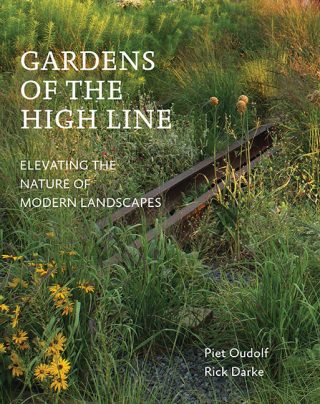 The High Line, “a public park built on a historic freight rail line elevated above the streets on Manhattan’s West Side,” is a popular NYC attraction for locals and tourists alike. Before reading Gardens of the High Line: Elevating the Nature of Modern Landscapes by Piet Oudolf and Rick Darke, I had the benefit of reading a wonderful review of the book written by Patricia Jonas for the Council on Botanical and Horticultural Libraries Newsletter. In her review, after a summary of the many books published on the High Line garden over the past six years, Jonas writes, “Could there possibly be any more vital books about the High Line yet to be published? Well, yes. Gardens of the High Line is the icing on all of this publishing and the only book to focus exclusively on the famous park’s planting design and the plants.”
Gardens of the High Line is exquisite, and a treat for regular High Line visitors and those who can only admire the space from afar. In the book’s introduction, Friends of the Highline co-founder Robert Hammond writes, “when I first stepped up on the High Line in 1999, I truly fell in love. What I fell in love with was the tension. It was there in the juxtaposition between the hard and the soft, the wild grasses and billboards, the industrial relics and natural landscape, the views of both wildflowers and the Empire State Building. It was ugly and beautiful at the same time. And it’s that tension that gives the High Line its power.” This tension is captured in the photographs of Gardens of the High Line, although Lorraine Ferguson’s graphic design of the volume makes even the most “ugly” portraits of the space seem beautiful.
Less focused on the history of the space and more concerned with the gardens themselves, Gardens of the Highline is a plant lover’s dream. Each of the High Line’s 13 gardens are profiled and described with extensive photographs, including wonderful aerial photographs. These aerial shots, in particular, offer a new glimpse into this popular site’s overarching design ethos.
It’s unlikely that you’ll ever find the High Line as contemplative and empty as it appears in many of the Gardens of the High Lines photographs, but the book reminds readers why this dynamic space is so special and so worth returning to again and again throughout the seasons and years.
Posted in From the Library on December 22 2016, by Esther Jackson
Esther Jackson is the Public Services Librarian at NYBG’s LuEsther T. Mertz Library where she manages Reference and Circulation services and oversees the Plant Information Office. She spends much of her time assisting researchers, providing instruction related to library resources, and collaborating with NYBG staff on various projects related to Garden initiatives and events.
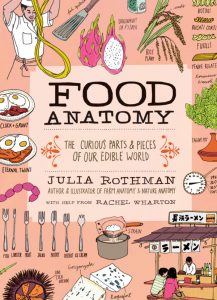 Food Anatomy: The Curious Parts & Pieces of Our Edible World is a delight for those who love food, history, or illustrated dictionaries. If you love all three, you will be in for a treat indeed!
Over the past couple of months, I have developed an interest in graphic novels related to food. When I saw that Julia Rothman, author of Farm Anatomy and Nature Anatomy had written a book about food (with help from food writer Rachel Wharton), I was extremely excited.
Food Anatomy is charming and eclectic. Readers can move through the book from cover to cover, or open at random to a section. Chapter titles include “Food for Thought,” “Eat Your Fruits and Veggies,” “A Grain of Truth,” “The Meat of the Matter,” “Dairy Queens,” “Street Food,” “Season to Taste,” “Drink Up,” and “Sweet Tooth.” The book contains historical facts about different food, simple instructions about how different well-known staples are prepared, and explains food-related terminology. There is information about food preparation and utensils in various cultures, and the “staples” that are explained range from pasta to sushi to pancakes. While this isn’t really a cookbook, there are some recipes included.
Read More
Posted in From the Library on December 19 2016, by Esther Jackson
Esther Jackson is the Public Services Librarian at NYBG’s LuEsther T. Mertz Library where she manages Reference and Circulation services and oversees the Plant Information Office. She spends much of her time assisting researchers, providing instruction related to library resources, and collaborating with NYBG staff on various projects related to Garden initiatives and events.
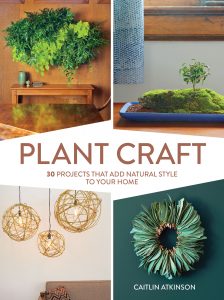 Plant Craft: 30 Projects That Add Natural Style to Your Home is perfect for the indoor gardener looking for new and creative interior decorating projects using plants. While many of the projects are rather ambitious, author Caitlin Atkinson presents each of the 30 tasks very clearly and carefully. Each project includes a materials list, a tools list, and detailed instructions accompanied by photographs for each important step.
Projects range in complexity from creating clay plants for a cactus garden to constructing a planter inside of a wooden bench. There is also a brief section at the start of the book related to houseplant care as well as a plant list of the species and genera of plants used in the book. Experienced home crafters will draw inspiration from the creative projects Atkinson shares, while novice home-decorators can find success with smaller, less ambitious exercises.
Read More
 This summer the LuEsther T. Mertz Library welcomes titles from Flying Eye Books into the children’s circulating collection. Titles include tales of remarkable trees, poisonous frogs, colorful birds, funky beetles, and budding gardeners. All of the titles listed below feature refreshing and vibrant illustrations that pop right off the page.