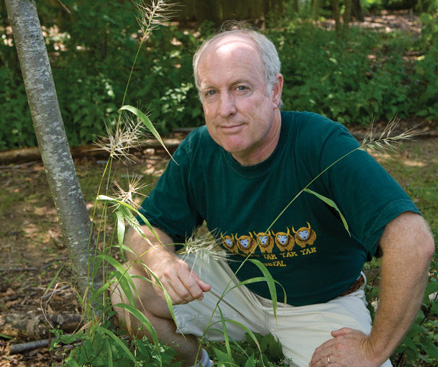
Esther Jackson is the Public Services Librarian at NYBG’s LuEsther T. Mertz Library where she manages Reference and Circulation services and oversees the Plant Information Office. She spends much of her time assisting researchers, providing instruction related to library resources, and collaborating with NYBG staff on various projects related to Garden initiatives and events.
Half-Earth: Our Planet’s Fight for Life is the newest book from acclaimed biologist E. O. Wilson. In addition to Half-Earth, Wilson has authored dozens of books. Unsurprisingly, Half-Earth has echoes of Wilson’s other environmental works. With that in mind, this new book is still a very good stand-alone book about environmentalism, biology, and natural resources. It’s written accessibly both for those working in the sciences and for non-scientists who are eager to learn more about environmentalism and conservation. Half-Earth is ultimately quite philosophical, but includes the framework of a practical call to action.
Wilson writes with great conviction, and Half-Earth is replete with wonderful passages in praise of science. This is a sobering yet useful book to read when so many science writers and others are touting the value of “novel ecosystems” and downplaying the problems associated with invasive species. Wilson doesn’t sugarcoat the challenges that the environment currently faces—the Earth is in trouble in many ways, overpopulation not the least of its worries. There are no simple solutions. The first step is to be educated and informed about the world around us.
I went to hear Doug Tallamy speak, recently. An entomologist and wildlife ecologist, his reputation first came about in 2007 when he published Bringing Nature Home.
In this seminal work on backyard wildlife ecology, Tallamy impressed on his readers the interdependency of plants, insects, butterflies, and birds. He made a call to arms asking gardeners to take on the challenge of becoming important players in the management of our nation’s wildlife by judiciously selecting local native plants for their gardens.
In 2014, Tallamy collaborated with gardening guru Rick Darke on another ecologically principled work entitled The Living Landscape. This book embodies what I hope will be an enduring trend in gardening. It is an upscale gardening book featuring gorgeous images that catapult you into another realm. Embedded in the gloss and glitter is informative, well-written content that educated and elucidates. The enduring trend which I am hopeful of is the celebration of the association between gardening and nature at large. It is a hope that the trend toward gardening with natives is imbued with a strong sense of stewardship and based on sound ecological principles.
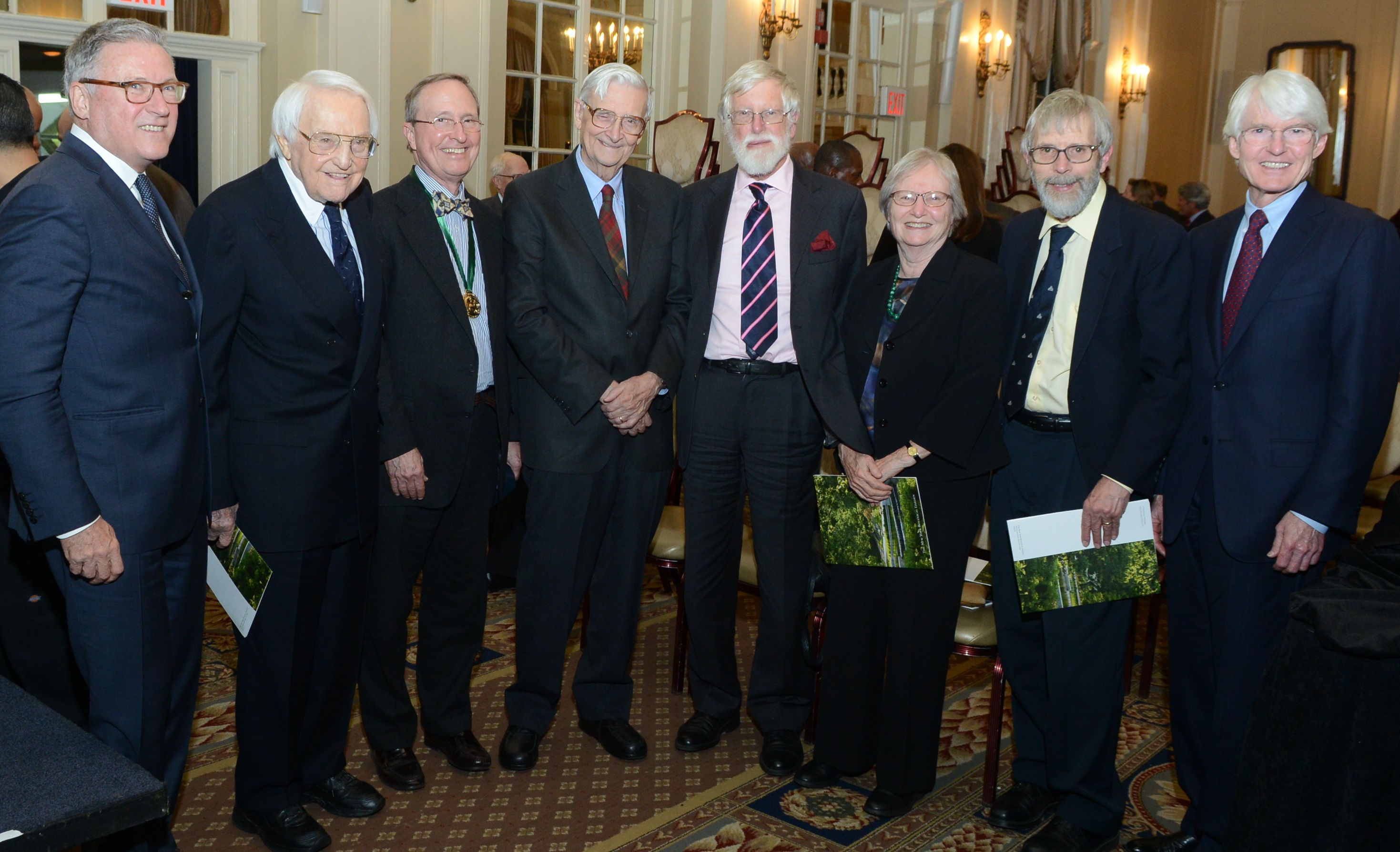
Left to Right: Gregory Long, Lewis Cullman, Thomas E. Lovejoy, Ph.D., E.O. Wilson, Ph.D., Sir Ghillean Prance FRS VMH, Patricia Holmgren, Ph.D., Noel Holmgren, Ph.D., and Ed Bass at the 123rd Annual Meeting.
This past November, some of the most influential botanists and conservationists in modern science gathered together for The New York Botanical Garden’s 123rd Annual Meeting, joining CEO and The William C. Steere Sr. President Gregory Long and the NYBG’s Board Members for a recap of the past year’s successes—as well as the Garden’s plans to come. But top billing during this event went to a person who has not only served as an integral member of the NYBG Board since 1986, but proven an enormously significant figure in global ecology initiatives and conservation efforts.
For many, the highlight of the evening was Thomas E. Lovejoy, Ph.D., who received the NYBG’s Gold Medal—our highest honor—for his accomplishments within and dedication to biodiversity and plant science.
In the book, Tallamy, known as the “guru” of native plant gardening for his earlier, award-winning book, Bringing Nature Home, actually recorded as many as 20 different bird species—many beautifully photographed in the book—eating berries and insects from an alternate-leaf dogwood tree planted outside his bathroom window.
“So many birds visit this tree during the summer that our bathroom has become the hottest birding destination in our house,” he jokes. But the serious message of this story and one of most important points of his entire new book is that “our plants are our bird feeders!”
From the 4th to the 8th of March I was fortunate to attend a meeting in São Paulo, Brazil, supported by the National Science Foundation (NSF) of the United States and the Fundação de Amparo à Pesquisa do Estado de São Paulo (FAPESP). The NSF is the most important supporter of pure research in the United States, and FAPESP plays the same role in the State of São Paulo. FAPESP’s importance, however, extends throughout Brazil, and like the NSF its discoveries are applied across the globe. Science progresses best when it receives strong governmental support–but that support often pays dividends well beyond the original investments!
The FAPESP research program serves as a model for state-supported research. However, it also collaborates on an even larger scale with Brazil’s national research organization, known as Conselho Nacional de Desenvolvimento Científico e Tecnológico (CNPq); and the Empresa Brasileira de Pesquisa Agropecuária (EMBRAPA). The FAPESP research program is funded by one percent of the state’s taxes and, of that, only five percent can be employed for administrative costs. São Paulo’s dedication to research has made it the leading Brazilian state in promoting pure and applied research in Brazil, and perhaps in the world!
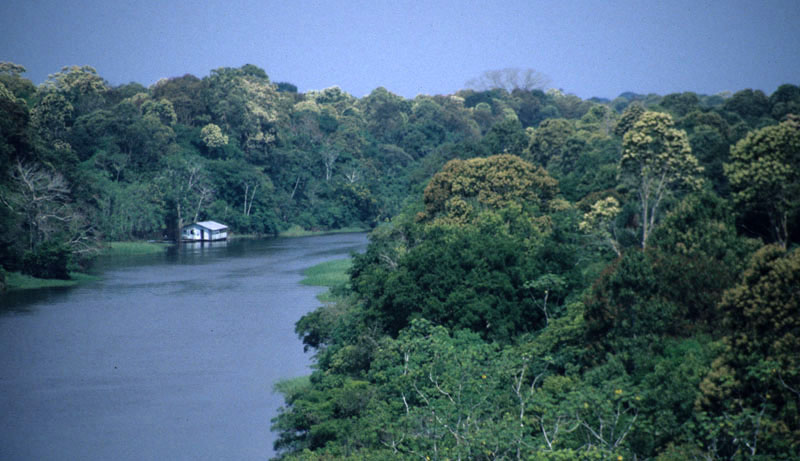
Scott A. Mori, Ph.D., Nathaniel Lord Britton Curator of Botany has been studying New World rain forests for The New York Botanical Garden for nearly 35 years. He has witnessed an unrelenting reduction in the extent of the forests he studies and, as a result, is dedicated to preserving the diversity of plants and animals found there.
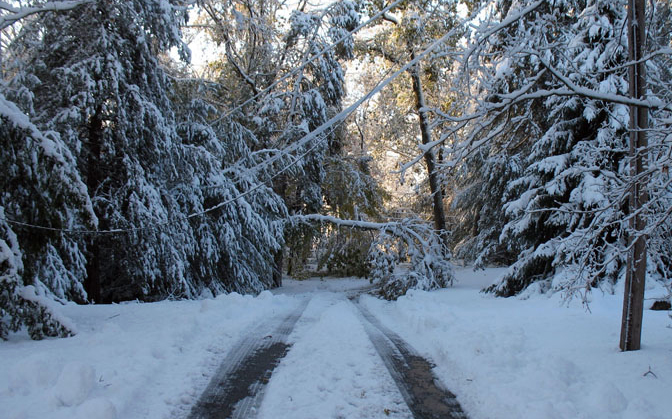
Snow in South Salem, New York in October 2011.
“So what,” you must be saying to yourself. In spite of how obvious the title is, the lack of cold weather in the tropics contributes both directly and indirectly to tropical biodiversity, the topic of this blog.
One of the many reasons that there are high numbers of species represented by low numbers of individuals in old growth tropical forests–compared to the opposite situation in temperate forests–is because of the greater number of plant/animal interactions in the former. In one of our 2.5 acre tree study plots in central Amazonian Brazil, we registered 285 species of trees with diameters at or above four inches at breast height. Because our plots average 600 trees above this size class per plot, almost every second tree we sampled represented a different species. In contrast, there are fewer than 100 species of trees of all size classes in the entire state of Wisconsin, where I grew up.
Scott A. Mori has been studying New World rain forests for nearly 40 years. He has witnessed an unrelenting reduction in the extent of the forests he studies and, as a result, has become concerned about their future. The following blog is based on a chapter in his recent book, Tropical Plant Collecting: From the Field to the Internet.
The future of plant and animal diversity in Latin American rain forests depends on an understanding of how fragile the plant and animal interactions found in this ecosystem are. The relationships between plants and animals in the tropics are so closely co-evolved that man’s utilization of tropical forests always results in loss of biodiversity. After a 40-year career of botanical exploration in the New World tropics, I conclude that human beings had little to do with the evolution of biodiversity anywhere on the planet, especially in the tropics, and, as Thomas Friedman said in his book Hot, Flat, and Crowded, “We are the only species in this vast web of life that no animal or plant in nature depends on for its survival–yet we depend on this whole web of life for our survival.”
I believe that increasing human population and consumption throughout the world is not compatible with the preservation of the world’s biodiversity, but that rings especially true in the tropics. Moreover, many tropical forests grow on soils that are so nutrient poor they will never support high human populations without massive inputs of fertilizers and pesticides. If tropical areas are not productive enough today to provide significant resources to a world population of 6.5 billion, what makes humans think that they will be able to contribute to supporting a population of nine to 11 billion humans by 2050? The consumptive power of a resident of today’s Amazon rain forest is several orders of magnitude greater than that of the pre-Colombian inhabitants who based their economy on fertilizer- and pesticide-independent agricultural systems. In short, residents of the tropics–and the world in general–will not be able to protect biodiversity at the level it needs if both human population growth and consumption are not controlled.
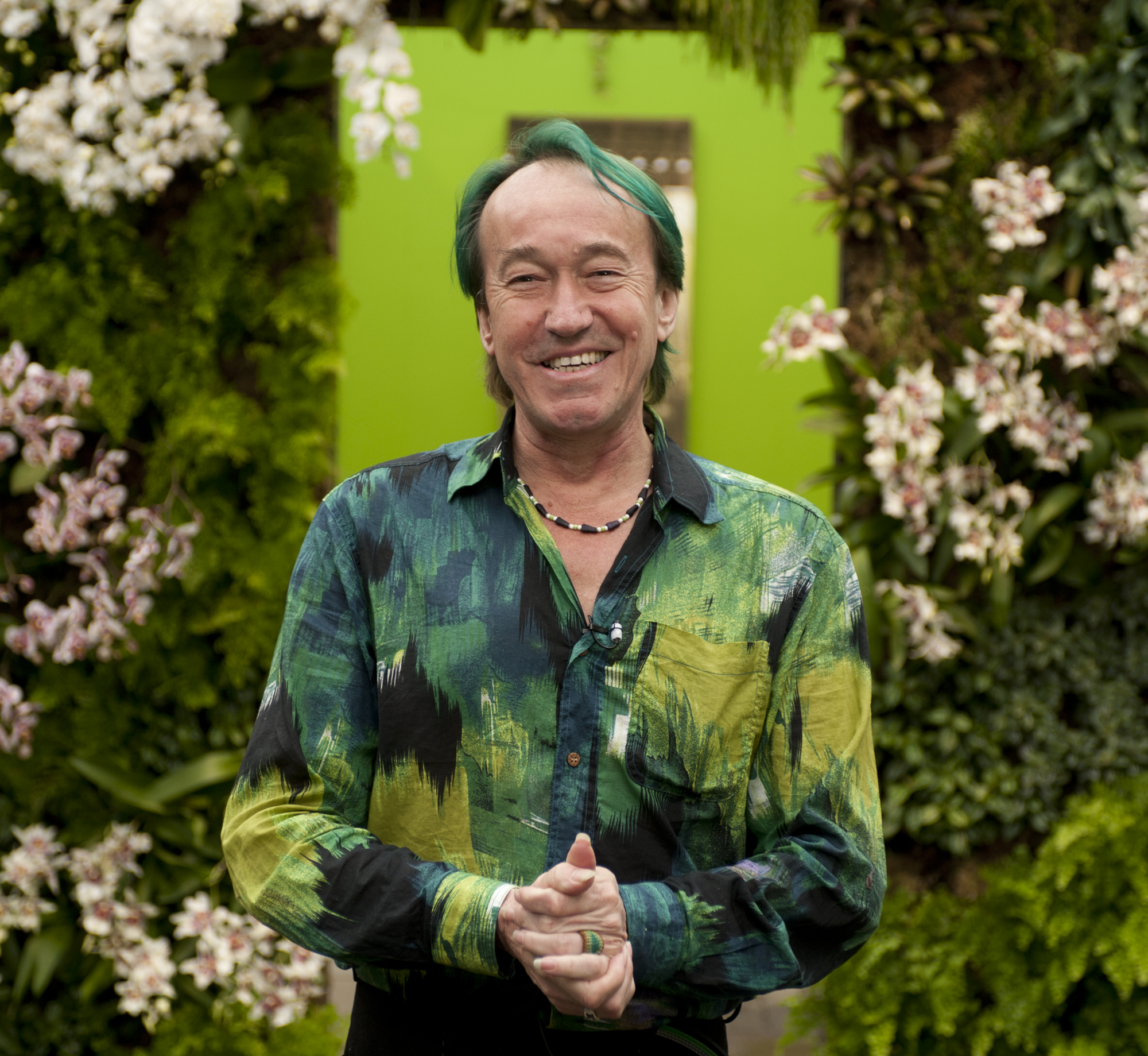
Patrick Blanc‘s travels and expertise have taught him that no one plant can convey the true beauty of a vertical wall–the living art, as Francisca Coelho, our VP for Glasshouses and Exhibitions explains, can’t realize its full potential on the shoulders of an individual flower. That’s why this year’s Orchid Show is not only about spotlighting these captivating tropical blooms, but about complementing their place in one of our most complex and beautiful presentations of the last decade!
Doug Tallamy (Photo courtesy of the University of Delaware)
Doug Tallamy’s lecture started from a basic and logical premise: if you take away the places for wildlife to live and feed, you will lose your wildlife. We are all aware that habitat destruction leads to a loss of species, but very few of us believe that we can make a difference or that we are directly linked to the process. I mean this in a non-judgmental way and from a place of empowerment.
Some of you may think that this is an early case of ‘election fever,’ but alas it is not. Last month I sat in an auditorium and listened to a very convincing and lucid proponent for environmental restoration and species diversity. Regardless of his own political views, with respect to the biome Tallamy is definitely not a democrat. “All plants,” he asserts, “are not created equal in their ability to support wildlife.”
Jim Miller is Dean and Vice President for Science.
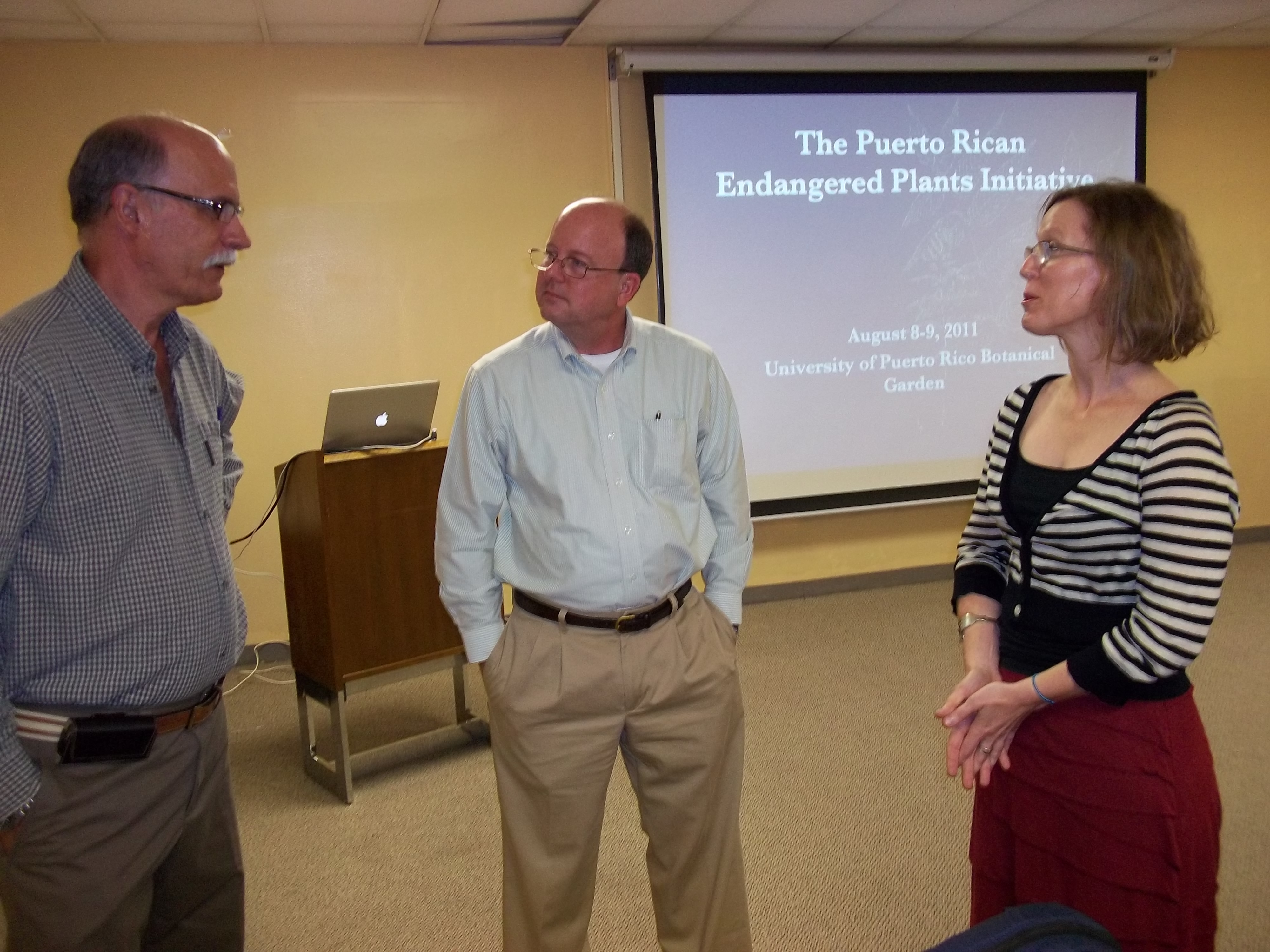
James Miller and Hannah Stevens of The New York Botanical Garden talking with director of the University of Puerto Rico's Botanical Garden, Rafael Davila.
The greatest challenge to protecting the world’s plant diversity is that while perhaps as many as 100,000 species of plants face some risk of extinction in the next few decades, in most parts of the world, we simply don’t know which species are the most threatened. Little progress has been made toward identifying the list of globally threatened plant species (which is target 2 of the United Nations Global Strategy for Plant Conservation), so NYBG scientists have developed a streamlined method to survey plant species one at a time, to determine which are “At Risk.”
The rapid review of Puerto Rico’s plant species demonstrates that 461 of them, or 23%, are at possible risk of extinction in the near future. This figure is consistent with analyses from other parts of the world, where it is frequent that about one quarter of species are threatened. Some of these threatened plant species are so rare that they have not been seen for decades and are possibly extinct, others are known from countable numbers of individuals, some less than 25, and thankfully the situation for others is not as dire, though still serious. Having this list will help guide future conservation efforts to the species that most desperately need our attention to ensure their future survival. Some of the participants from the Puerto Rican institutions plan to propagate the most rare species as a prelude to efforts to re-establish viable populations in the wild. The NYBG is extending these efforts and is aiming to complete a review of the entire West Indies in the next year.
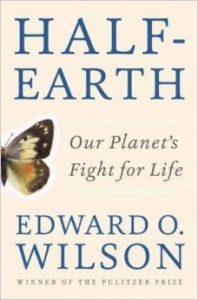 Half-Earth: Our Planet’s Fight for Life is the newest book from acclaimed biologist E. O. Wilson. In addition to Half-Earth, Wilson has authored dozens of books. Unsurprisingly, Half-Earth has echoes of Wilson’s other environmental works. With that in mind, this new book is still a very good stand-alone book about environmentalism, biology, and natural resources. It’s written accessibly both for those working in the sciences and for non-scientists who are eager to learn more about environmentalism and conservation. Half-Earth is ultimately quite philosophical, but includes the framework of a practical call to action.
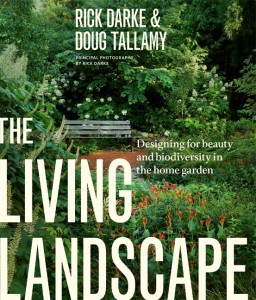 The answer to our titular question is provided by Doug Tallamy and Rick Darke in their new book,