Brian M. Boom, Ph.D., is Vice President for Conservation Strategy at The New York Botanical Garden.
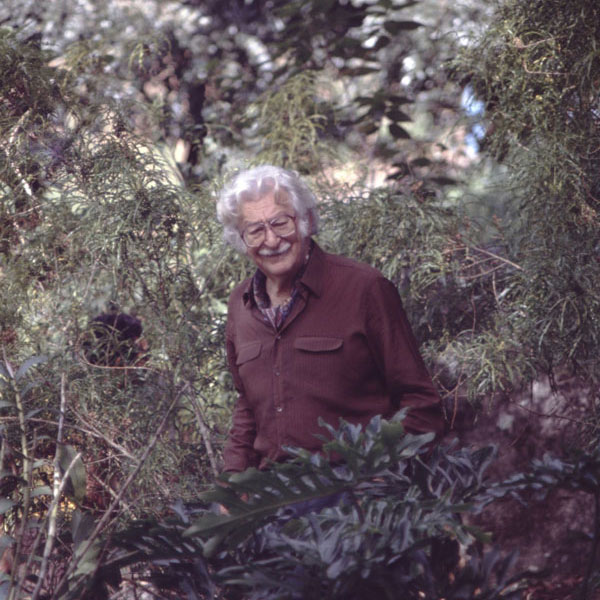
A photo of Roberto Burle Marx in Brazil, taken by his protegé, Raymond Jungles.
The recent report about the fires in the Brazilian Amazon compels us to reflect on how painful the Amazonian fires would have been to Roberto Burle Marx (1904–94), one of Brazil’s earliest and most important advocates for the rain forest and the subject of our current major exhibition, Brazilian Modern: The Living Art of Roberto Burle Marx.
A renowned landscape architect, Burle Marx was also a passionate, outspoken conservationist. His writings on environmental topics in Brazil—powerful when written a half-century ago—have a renewed, relevant resonance in 2019. For example, in Burle Marx: Homenagem à Natureza¹, he is quoted as saying, “You have to understand that it is my obligation to oppose everything that I consider an ecological crime … the sacrifice of nature is irreversible.” In 1969, he wrote: “This destruction [of forests] represents an attack on humanity, an affront to the sources of life, and an assured means of destroying future generations.”² A more powerful, fitting response to the news of the Amazonian fires could not be penned today.
Throughout our run of Brazilian Modern: The Living Art of Roberto Burle Marx, we’re sharing glimpses into the natural world that informed Burle Marx’s love of plants and the landscapes that he traveled through in his home country and beyond, discovering new plants and working to protect those under threat of deforestation, development, and more. He called these journeys his viagens de coleta, or “collection trips.”
Stevenson Swanson is the Science Media Manager at The New York Botanical Garden.
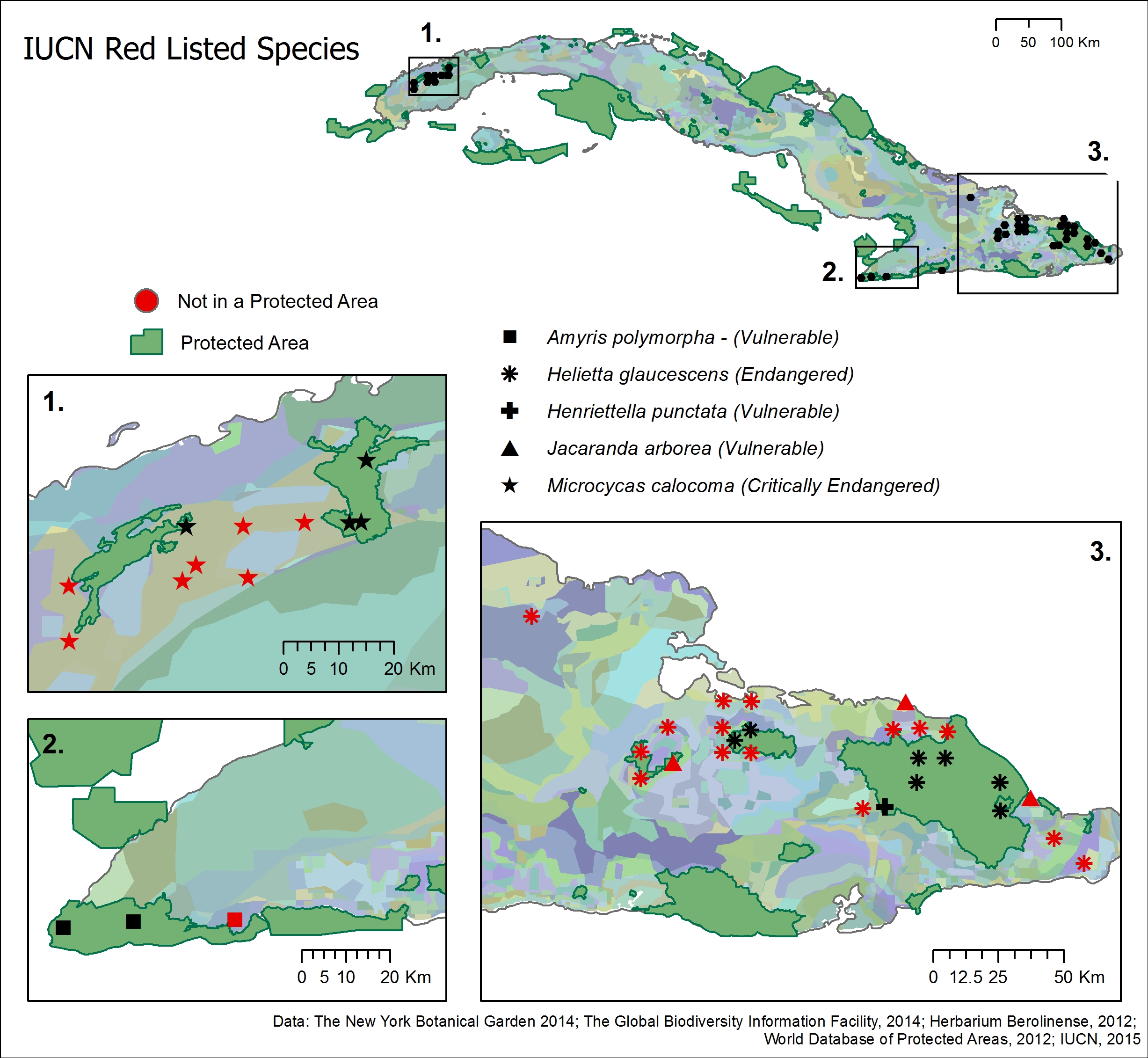
As shown here, many of Cuba’s endangered plant species are in currently unprotected areas that could be developed. Click for a closer look.
Representatives of The New York Botanical Garden and JetBlue Airways launched their new Caribbean Consortium at a recent meeting at the Botanical Garden’s Pfizer Plant Research Laboratory. The consortium, which was announced in February, will address the linked issues of conservation and commerce across the Caribbean, a vital part of JetBlue’s network and a longtime focus of the Garden’s Plant Research and Conservation program.
With the goal of striking a balance between conservation and commerce, the consortium will bring together a cross-section of key stakeholders from business, academia, and non-governmental organizations, such as the Center for International Policy, a Washington, D.C., foreign policy research and advocacy group, whose Cuban program director, Elizabeth Newhouse, participated in the meeting. Also joining was Robert Muse, a Washington attorney who has worked on Cuban issues since the early 1990s.
“This partnership with JetBlue is going to help translate conservation research into conservation action,” said Brian Boom, Ph.D., the Garden’s Vice President for Conservation Strategy, who has traveled to Cuba regularly since 1988 to conduct research and build relationships with his Cuban counterparts.
Julia Beros has worked or interned at The New York Botanical Garden for more than two years, including at the Pfizer Plant Research Laboratory and the Ruth Rea Howell Family Garden. In May, she graduated from Sarah Lawrence College.
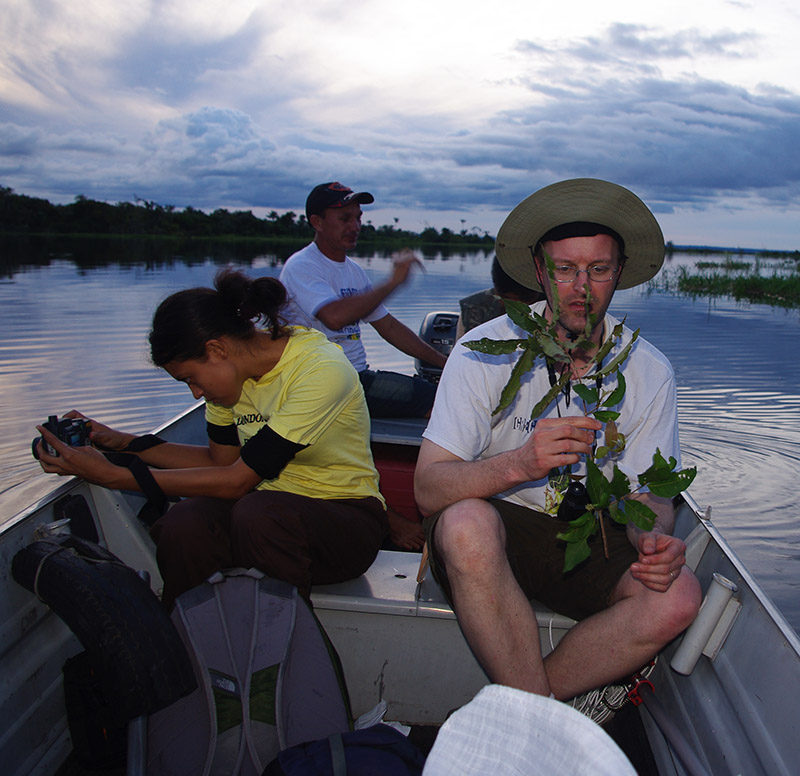
Dr. Benjamin Torke, in a boat on the Tapajós River, studies a plant specimen.
It’s hardly a secret that the Amazon rain forest, the largest expanse of tropical rain forest on earth, houses great biodiversity and that environmental degradation from climate change and human enterprise is a massive and looming threat throughout the region. The most critically threatened areas also happen to be the least studied and inventoried, but they are estimated to have the highest biodiversity within the Amazon rain forest. NYBG scientist Benjamin Torke, Ph.D., is working to fill in the gaps in our understanding of the rich plant life in one such area in the state of Pará in the southeastern part of the Brazilian Amazon.
Recently, environmental degradation has threatened the potential for capturing and sharing this knowledge. In the southeastern regions of the Amazon, many of the detrimental effects of climate change are heightened by expanding human development. Ranching, logging, soy bean farming, mining, and settlement all contribute to the loss of natural habitat. The construction of a highway that bifurcates the forest has simultaneously created isolated regions of biodiversity and increased the rate of forest degradation. The potential loss of biodiversity is almost visible from satellite images in which beige hatched lines scratch across the dense green rain forest.
Lawrence M. Kelly, Ph.D., is Associate Vice President for Science Administration and Director of Graduate Studies at The New York Botanical Garden.
Every year on May 22, The New York Botanical Garden joins the global community in celebrating International Day for Biological Diversity. Established in 1993 by the United Nations, this day recognizes international cooperation and commitment to take global action to reduce the rate of biodiversity loss. It is also an outstanding opportunity to increase understanding and awareness of biodiversity issues, especially, for us here at NYBG, the issues facing the plant kingdom.
It is no exaggeration to say that without plants, life on Earth would be impossible. Plants provide food, clothing, shelter, medicine, and the raw materials to meet most human needs. Plants make the air we breathe, they create the rain that waters the world, and they are essential for healthy ecosystems. The beauty of plants nurtures our souls and inspires our imaginations. Yet the plant diversity that sustains us is imperiled today as never before in human history. One-third of Earth’s nearly 400,000 plant species are at risk of extinction.
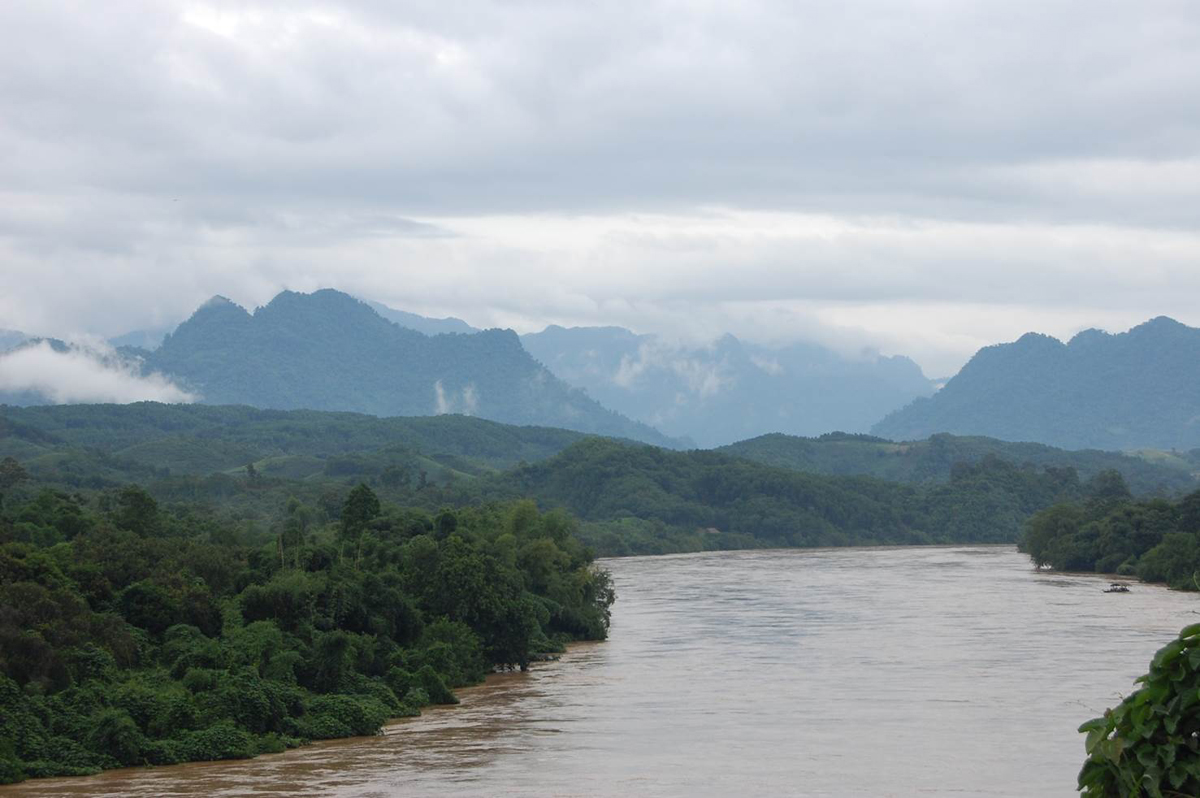
Vietnam’s mountainous Ha Giang province, near China
The last scientific survey of the plants of Vietnam—written by two French botanists in 1937, when it was a French colony—led a team of researchers to expect that they would find about 60 species of palms when they began a research project in that Southeast Asian country in 2007.
To date, they have discovered 113 species, including 41 that are new to science, and an entirely new genus (a group of closely related species).
“Sometimes we can drive up a road and look out the window and see new species,” Andrew Henderson, Ph.D., Abess Curator of Palms at The New York Botanical Garden, told a group of Garden Members during a recent Britton Gallery Talk. “Vietnam was overlooked by biologists for a long time because of war.”
Naveed Davoodian is a Ph.D. candidate in the Commodore Matthew Perry Graduate Studies Program at The New York Botanical Garden and the City University of New York. His research is focused on the diversity, evolution, and conservation of fungi.
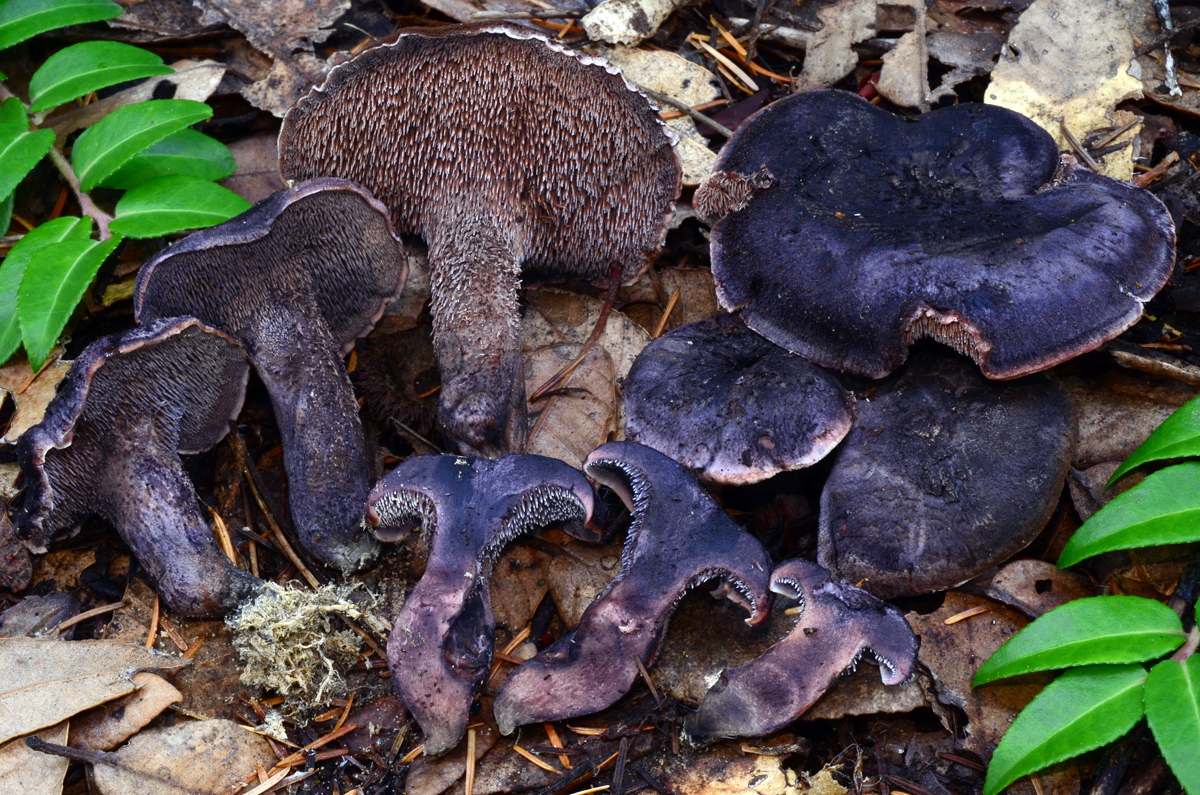
Sarcodon fuscoindicus, one of several fungal species that have been managed under a federal conservation plan for northwestern forests (Photo: Noah Siegel)
Despite the many benefits that fungi provide, conservation policies and actions have incorporated these critically important species in very limited ways. On a global scale, fungi lag significantly behind plants and animals in conservation efforts. The situation is, unfortunately, no different in the United States.
To illustrate this point, I examined and evaluated U.S. federal conservation policies that directly list fungal species. This analysis, which focused on the Endangered Species Act of 1973 and the Survey and Manage Standards and Guidelines of the Northwest Forest Plan, was published earlier this year in the journal Biodiversity and Conservation. While both of these frameworks have contributed positively to biodiversity conservation in the U.S., both currently suffer from obstacles hindering protection of fungi and other overlooked organisms.
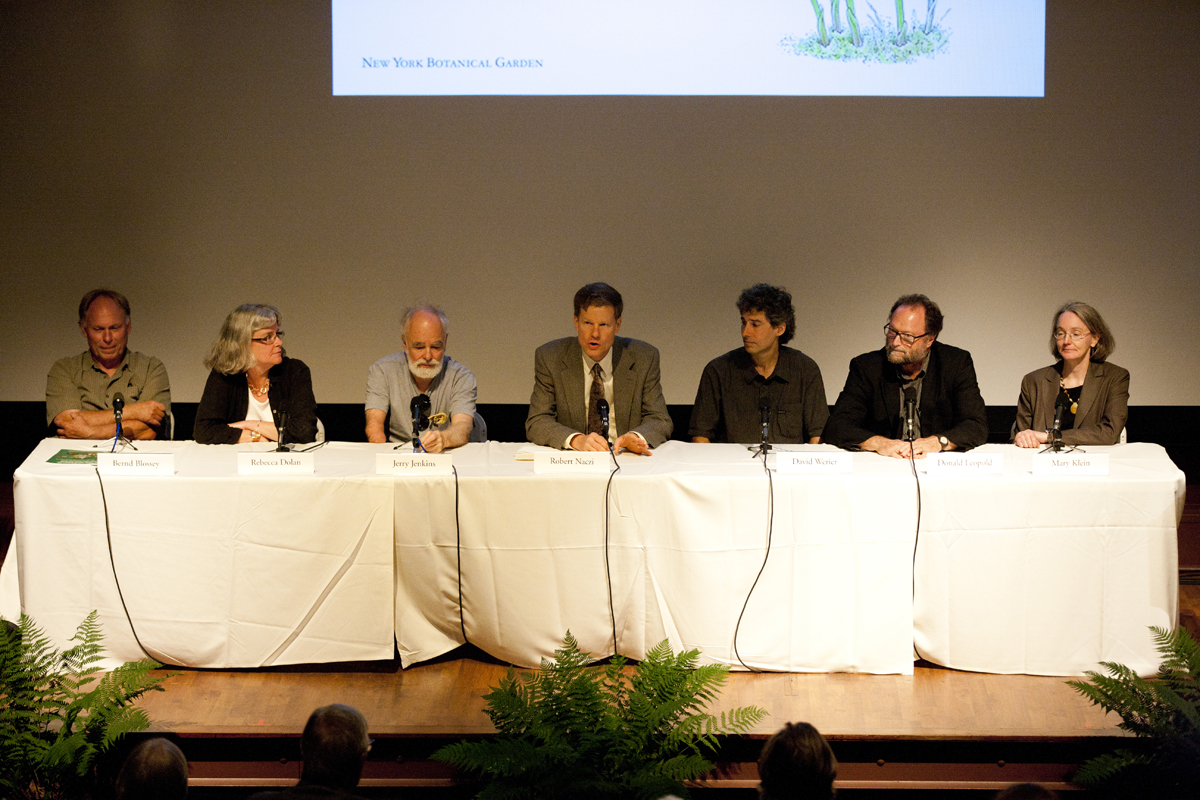
A capacity audience filled the Ross Lecture Hall last week for The New York Botanical Garden’s Native Plants Summit, at which leading experts from academia, conservation groups, and private consulting practices discussed the current status, conservation, and outlook for the native plants of the Northeast.
In his welcoming remarks, Gregory Long, Chief Executive Officer and the William C. Steere Sr. President of the Botanical Garden, said that the Garden had been involved in studying and collecting the native plants of North America since its founding in 1891. He noted that the Garden’s founder, Nathaniel Lord Britton, had co-authored the first edition of a landmark flora of the plants of northeastern North America, the latest edition of which is now being prepared by the Garden scientist who organized the summit, Robert Naczi, Ph.D.
Brian M. Boom, Ph.D., is Vice President for Conservation Strategy, Director of NYBG Press and Science Outreach, and Bassett Maguire Curator of Botany at The New York Botanical Garden. The flora of Cuba is one of his research specialties.
The title of this post reflects the overarching theme of an international conference on the environment and development that was held recently in Havana, Cuba. I attended as a delegate from The New York Botanical Garden, making a presentation on novel methods to accelerate the conservation assessment of plant species so that plants can figure more centrally in the designation of new Key Biodiversity Areas (KBAs). I will write about these methods and KBAs later. For now, I wanted to report on the palpable energy and enthusiasm, both in tone and substance, for the diverse topics and perspectives on display in Havana during the week.
This conference played out against the backdrop of a new era in the relationship between Cuba and the U.S., with a great many new implications for development and the environment in Cuba. The conference’s highlighting of development as a process that should be sustainable and equitable refers to the need for development to be fair for both developed and less developed nations. Hundreds of delegates from some two dozen countries made presentations and engaged in debates on more than a dozen themes such as protected natural areas, biodiversity and management of ecosystems, environmental justice, environmental education, natural history museums, and climate change. The Spanish program of the conference and the abstracts of presentations can be accessed here.
Douglas C. Daly, Ph.D., is the Director of the Institute of Systematic Botany and the B. A. Krukoff Curator of Amazonian Botany at The New York Botanical Garden. Among his research activities, he is a specialist in the Burseraceae (frankincense and myrrh) family of plants. Read Part One and Part Two of this series for more information.
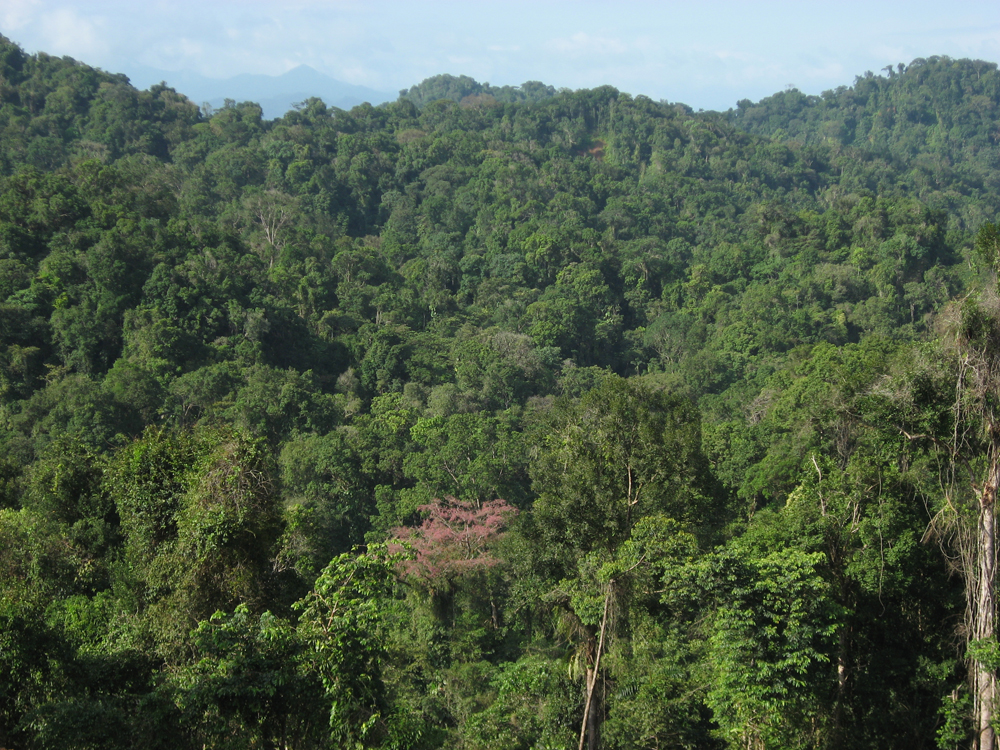
This Central American rain forest is one of only two places where Dacryodes patrona, a new tree species described by Dr. Daly, has been found.
In the first post in this series about the process of discovering and describing new plant species, I noted that the average lag time from when a new species is first collected in the field to when its name and description are published is a shocking 35 years. After publication, new species often languish in the herbarium and scientific journals, even if the information they represent has important conservation value. But sometimes we beat these odds by publishing new species in a relatively short time, and having the results makes a difference.