Dazzling Autumn Color in Your Garden
Native Americans believe that the Great Bear (the Big Dipper constellation) was killed in autumn. According to the ancient tale, his blood dripped down from the heavens and colored many of the leaves red. While the meat of the bear was cooking, the fat dripped out from the fire and colored other leaves yellow.
Today, we talk about pigments and shorter, cooler days when we discuss the seasonal change. During the fall, chlorophyll, the main player in spring and summer that makes the leaves green, takes back a back seat to yellow carotenoids and red anthocyanins.
Leaves make food. They take in water from the ground through their roots, carbon dioxide from the air, and with energy from the sun, they create glucose (a sugar). Chlorophyll facilitates this process called photosynthesis, which manufactures the sugars (food) for trees.
As daylight grows shorter, trees start preparing for winter. Many plants stop making food in the fall and begin to shut down for the winter. As the production of chlorophyll slows down, other colors in the leaves come to the fore. Yellow pigments that have always existed in the leaf become more prominent. You will notice that yellow pigments tend to stay the same year after year, while reds and purples vary in their intensity and depend on seasonal factors. Why?
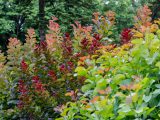
Red and violet pigments are formed when sugars become trapped in the leaves. On sunny days, sugars are produced in the leaves. During cool fall nights, veins in the leaves close up and prevent sugars from moving into the tree. This excess of sugar encourages the production of anthocyanins.
What is the recipe for rich fall color? In the spring — plenty of precipitation for the formation of big healthy leaves. In the fall — bright, sunny days and cool nights. A fall with cloudy days and warm nights produces muted colors. A drought in the summer will cause a delay in fall color. Early frosts end the display.
Most woody plants and herbaceous perennials go dormant during the winter (Evergreens slow down, but do not go dormant). It is the time when many plants shed their leaves and shut down for the season. Leaves become damaged over time from weather, insects and disease; This seasonal cycle is an important part of the plants' maintenance and rejuvenation process.
As the leaves fall to the ground, they decay and are incorporated into the soil as organic matter. Insects, bacteria, and fungi that help break down the organic matter depend on leaves for food and shelter. Nutrients go back into the soil to be reused by future generations of trees. This process is an important part of the forest's ecosystem. Nature teaches us how to recycle. The autumn display is a wonderful celebration and a vibrant announcement of this process.
Trees
Yellow foliage
Carya (hickory)
Betula (birch)
Fagus (beech)
Ginkgo (ginkgo)
Liriodendron (tulip tree)
Acer saccharinum (silver maple)
Acer saccharum (sugar maple)
Acer palmatum (Japanese maple)
Red foliage
Cornus (dogwood)
Oxydendrum (sourwood)
Liquidambar (sweet gum)
Acer rubrum (red maple)
Nyssa sylvatica (black gum)
Quercus rubra (red oak)
Acer saccharum (sugar maple)
Acer palmatum (Japanese maple)
Shrubs
Yellow foliage
Lindera (spice bush)
Hamamelis (witch hazel)
Clethra (summersweet)
Calycanthus (sweetshrub)
Aesculus parviflora (bottlebrush buckeye)
Red foliage
Aronia (red chokeberry)
Disanthus (Disanthus)
Hydrangea quercifolia (oakleaf hydrangea)
Rosa rugosa (rugosa rose)
Rhus (sumac)
Vaccinium (blueberry)
Rhododendron vaseyi (pinkshell azalea)
Itea (Virginia sweetspire)
Viburnum (Viburnum - particularly mapleleaf, doublefile and arrowwood)
Cornus sericea (red osier dogwood)
Orange/red foliage
Fothergilla (fothergilla)
Spiraea (spirea - particularly Thunberg spirea)
Enkianthus (redvein enkianthus)
Rhododendron calendulaceum (flame azalea)
Season: Fall