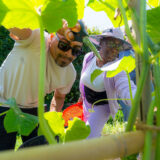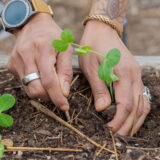
A person in a white T-shirt and sunglasses picks flowers in a sunny garden

THRIVE

Each Monday in the Edible Academy, we welcome veterans of all ages from the James J. Peters VA Medical Center for a day among nature—where they take part in hands-on gardening, working with plants to ease depression and anxiety, promote healing, and engage in activities for friendship and community building.

“There are so many different ways to express yourself and to grow, and I think that the THRIVE program is a wonderful opportunity to do that with other veterans,” said one participant.

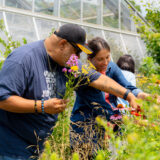
Two people in summer clothes pick and examine colorful summer flowers together in a garden setting

About THRIVE

In 2020, NYBG launched THRIVE (Therapeutic Horticulture and Rehabilitative Interventions for Veteran Engagement) in collaboration with the James J. Peters Veterans Administration Medical Center in the Bronx.  

Through support from the Institute of Museum and Library Services, the THRIVE program provides a specially designed combination of horticultural therapy and gardening activities to veterans who are being treated for a wide range of mental and physical health challenges. 

Each THRIVE co-hort, consisting of up to 10 veterans, comes to NYBG for four weekly sessions with a registered horticultural therapist, consisting of seasonally-based activities such as planting, seed-starting, watering, weeding, cooking, and nutrition education. These sessions take place at the Edible Academy—our three-acre campus of gardens, classrooms, a teaching greenhouse, and other facilities—where children, families, and the public learn about growing and cooking fresh fruit and vegetables. 
Hear from Participants

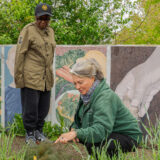
A person with long hair and a green sweatshirt kneels down to point at a plant, while a standing person, wearing a black baseball cap and brown coat, looks on
When the Veterans come here, they’re able to experience hands-on engagement with plants, with this natural environment here at the Edible Academy.
Anne Meore
THRIVE Grant Coordinator, NYBG
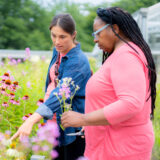
Two people in pink shirts pick and examine pink flowers in a sunny garden setting
These activities help to reduce anxiety, depression, and encourage friendship and relationship building.
Brooke Lorenzetti
Edible Academy Garden Manager, NYBG
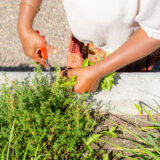
A pair of hands use a red scissor to cut green herbs
To connect with people, nature—there’s nothing better than that. Even though we all have problems, you know, this helps us to forget about those, and to rethink it and recenter ourselves.
Paolo Georgeo
United States Navy Veteran
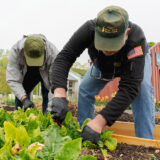
Two people in green baseball caps lean down to harvest leafy green vegetables
We have a very diverse group of veterans that participate in this program from all ages, all areas of deployments. There is a shared camaraderie that continues for years after this program.

Lauren Byma
Whole Health Program Manager, James J. Peters VA Medical Center
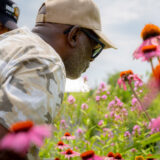
Two people in baseball caps lean over to observe a field of pink flowers among green foliage
It started with connecting with the plants. I feel myself open up, and then I really look forward to seeing different people, growing together, wanting to go through experiences together.
Mike Smith
United States Army Veteran
a view of two people through large green stems
All of my patients who were willing to engage and go through this program now have an opportunity to engage with nature, mindfulness, and themselves. And I think that's a powerful technique and skill that allows for deeper conversation and benefits their overall health.
Dr. Matthew Augustine
Chief of Primary Care Service, James J. Peters VA Medical Center
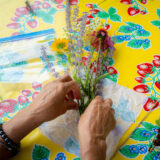
A pair of hands tie together a bouquet of wildflowers on a colorful yellow tablecloth
Right now, where I’m at, I’m really strong because of this program. And I have to say, this program, because this is the one that showed me how wrapped up I was.
Yolanda Golden
United States Navy Veteran
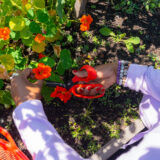
a view of someone holding a shear as they cut a red flower from a plant in the soil
We have looked at key risk factors associated with suicide, as well as stress, depression, social isolation, and loneliness. And in these contexts, looking at these specific domains, we have seen significant improvement as part of our veterans engaging in horticultural therapy.
Dr. Fatemeh Haghighi
Professor, Neuroscience, James J. Peters VA Medical Center
A person in glasses and a blue shirt prepares a colorful bouquet of wildflowers
You are not just that one thing that you feel that you were when you left the military; there are so many ways to express yourself and to grow. And I think that the THRIVE program is a wonderful opportunity to do that with other veterans.
Deah Penn
United States Army Veteran
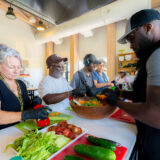
A group of people gather around a kitchen counter to prepare vegetables
The best thing in life is having something to look forward to. And I look forward to coming to the Garden every week. My life has changed. I can feel a connection with the spirit of the plants.
Lincoln Bonner
United States Air Force Veteran

THRIVE is supported by a grant from the Institute of Museum and Library Services.

Subscribe to our newsletter and be the first to know about all things NYBG