
Climate Week 2026 at NYBG
September 22 through 27, 2026
Visit NYBG during Climate Week NYC 2026 to harness the power of plants so that people and the environment can thrive together. Join talks on Wednesday that explore how to Nature Your City, which is crucial to creating climate-resilient, equitable, and livable cities. Jennifer Bernstein, CEO and The William C. Steere Sr. President of NYBG, will welcome guests for our annual lecture—featuring a keynote by Dr. Timon McPhearson, Founding Director of the Urban Systems Lab and Professor at NYU Environmental Studies. Afterward, a panel discussion on Cities as Climate Catalysts will engage leading urban ecologists and conservationists. Complete your day with time exploring the Garden, eating local at our Farmers Market, and meeting NYBG Scientists and visiting organizations at our partner showcase.
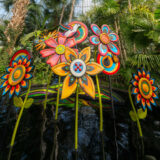
Throughout the rest of the week, explore NYBG’s ongoing exhibition, Flower Power, which celebrates the enduring symbolism of flowers as icons of peace and love. See Before New York, an exhibit that shows the landscape of New York as it existed 400 years ago. And on Sunday, close out Climate Week with our second annual NYBG 5K Fun Run across NYBG’s living landscape.
Watch This Year’s Talks
Climate Week 2026 Panel Discussion: "Cities as Climate Catalysts: Science-Driven Solutions for People and Nature"
Wednesday, September 23 | Nature Your City
Keynote Address
Designing Resilient Cities: Nature-Based Solutions for an Urban Planet
9:30 to 10:30 a.m.
Ross Hall
Featuring Dr. Timon McPhearson
Four out of five U.S. residents already live in cities. Globally rapid urbanization means two thirds of all humanity will live in cities in the next two decades. If the human species is going to maintain deep connection to nature, it must happen in urban areas. Nature in cities provides enormous benefits for climate change adaptation, human physical and mental health, and biodiversity. And yet, most urban growth still follows a 20th century model of infrastructure development that paves over nature. With global biodiversity in crisis, and climate change threatening nearly every city in the world, designing cities with nature is critical to advance resilience, adaptation, and more livable urban environments. The first global assessment of nature-based solutions in cities shows ongoing challenges for financing, implementing, and prioritizing nature in urban design and development. Yet bright spots of innovative planning and design with nature point the way toward a positive future with potential to improve life for both human and non-human species on our urban planet.
About the Speaker
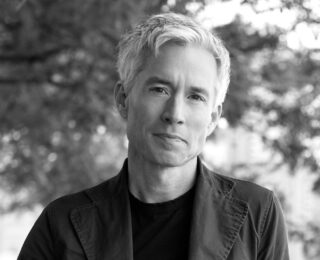
Dr. Timon McPhearson, Professor of Environmental Studies and founding Director of the Urban Systems Lab at New York University, is an urban ecologist taking an interdisciplinary systems approach to advancing urban resilience, equity, and sustainability. He is Chapter Lead for The Nature Record, a Lead Author for the IPCC and IPBES, and Co-Chair of the NYC Panel on Climate Change. He has received numerous awards including the Ecological Society of America’s (ESA) Sustainability Science Award (twice) and Innovation in Sustainability Science Award, as well as the Gulbenkian Prize for Humanity for IPCC and IPBES contributions, the Biodiversa Prize (twice), and was named an NYC Climate Hero in 2020. He is a Senior Research Fellow at the Cary Institute of Ecosystem Studies, Stockholm Resilience Centre, and the Beijer Institute of Ecological Economics at The Swedish Royal Academy of Sciences. In addition to over 250 scientific articles, books, and writing for popular press, his books include the Global Roadmap for Urban Nature-based Solutions (2026), Nature-based Solutions for Cities (2023), Resilient Urban Futures (2021), and Urban Planet (2018). His research is regularly in the press including in The New York Times, The Guardian, Science Friday, NBC, PBS, Voice of America, and the New Yorker.
Panel Discussion
Cities as Climate Catalysts: Science-Driven Solutions for People and Nature
5th Annual Thomas E. Lovejoy, Ph.D., and Edward O. Wilson, Ph.D. Panel
10:45 a.m. to 12:15 p.m.
Ross Hall
A panel of leading urban ecologists and conservationists will discuss how cities are advancing climate solutions rooted in plants that benefits both people and nature. The panel discussion will be moderated by Dr. Eric Sanderson, NYBG’s Vice President for Urban Conservation.
Featuring:
 Dr. Karen Seto, Frederick C. Hixon Professor of Geography and Urbanization Science, Yale University; Director of the Hixon Center for Urban Sustainability; Co-Director of the Yale Center for Geospatial Solutions
Karen Seto is a leading global expert on urbanization and its impacts on climate change, biodiversity, and food systems. A geographer and urbanization scientist, she integrates satellite remote sensing, field interviews, and modeling to study four core research areas: measuring and characterizing urbanization; understanding the drivers of urban expansion; forecasting future growth; and assessing environmental consequences. She pioneered methods to reconstruct historical urban land use and produced the first global forecasts of urban land expansion. Professor Seto serves on numerous national and international scientific bodies. She is Chair of the Office of International Networks, Cooperation and Security of U.S. National Academies and was Co-Chair of the U.S. National Academies Climate Security Roundtable. She was a Coordinating Lead Author for the IPCC Fifth (2014) and Sixth (2022) Assessment Reports, co-leading chapters on urban climate mitigation. Committed to public engagement, she was Executive Producer of 10,000 Shovels: Rapid Urban Growth in China and co-authored City Unseen. Her honors include election to the U.S. National Academy of Sciences, the American Academy of Arts and Sciences, and others. She is the recipient of the 2026 Benjamin Franklin Medal in Earth and Environmental Sciences. She holds a Ph.D. in Geography from Boston University.
 Dr. Diane Pataki, Chief Scientist and Vice President for Science, National Wildlife Federation
Dr. Diane Pataki is trained as an ecologist, and her work has spanned the impacts of climate change on ecosystems; the role of human and biological processes in air and water resources; and interactions between urbanization, landscape management, and biodiversity. Her recent projects have been focused on nature-based solutions for sustainable cities and communities. Pataki has a B.A. in environmental science from Barnard College and an M.S. and Ph.D. in ecology from Duke University. She is the former Director of the Arizona State University (ASU) School of Sustainability, the founder and former Chief Strategy Officer of the ASU-led and National Science Foundation-supported Southwest Sustainability Innovation Engine (SWSIE), and a Foundation Professor in the ASU School of Sustainability. She has also served as the Associate Vice President for Research, Associate Dean, and Professor of Biology at the University of Utah, and the founding director of the University of California, Irvine Center for Environmental Biology and the Steele-Burnand Anza Borrego Desert Research Center. Dr. Pataki is located on the Tempe, Arizona campus of Arizona State University, and also spends time in the canyon country of eastern Utah. In her spare time, she can be found hiking and exploring the beautiful national forests and public lands of the Southwest.
 Dr. Steward T.A. Pickett, Distinguished Senior Scientist, Emeritus, from the Cary Institute of Ecosystem Studies
Steward T.A. Pickett is an ecologist internationally known for contributions to urban ecology, social-ecological systems theory, and the study of natural disturbance and recovery. He was born and raised in Louisville, KY. He received a B.S. in Botany from the University of Kentucky in 1972, and a Ph.D. in Botany from the University of Illinois, Champaign-Urbana in 1977. He served on the faculty of Rutgers University until 1986, after which he moved to Cary Institute of Ecosystem Studies in Millbrook, NY, where he is now Distinguished Senior Scientist, Emeritus. He was founding director of the Baltimore Ecosystem Study, a pioneering interdisciplinary program encompassing research, community engagement, and education in a complex social-ecological metropolitan system. He has authored or edited more than a dozen books, and over 300 research publications. He has served as President of the Ecological Society of America, and on the boards of the American Institute of Biological Sciences, Defenders of Wildlife, City as Living Laboratory, and the McHarg Center for Ecological Urbanism. He is a recipient of the Botanical Society of America’s Centennial Award, a Fellow of the Ecological Society of America, and its 2021 Eminent Ecologist; he was one of three recipients of the BBVP Foundation 2022 Frontiers of Knowledge Award in Ecology and Conservation. He is an elected Fellow of the American Association for the Advancement of Science and of the American Academy of Arts and Sciences. He is a member of the U.S. National Academy of Sciences. His research has been applied in the contexts of ecology in urban design and planning, environmental justice, and landscape-based conservation.
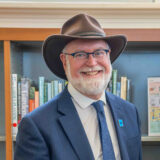 Dr. Eric W. Sanderson, Moderator, Vice President for Urban Conservation and Director of the Center for Conservation and Restoration Ecology, NYBG
Eric Sanderson holds a Ph.D. from the University of California, Davis, and has spent more than 25 years working in conservation, with a particular focus on the historical and contemporary ecology of New York City. His work combines landscape and ecosystem ecology, conservation biology, historical ecology, urban conservation, climate resilience, and ecological democracy with advanced tools in visualization, geospatial analysis, and cloud computing. Sanderson is the best-selling author of Mannahatta: A Natural History of New York City, author of Terra Nova: The New World After Oil, Cars, and Suburbs, and editor of three additional books. His current projects include The Welikia Project, Visionmaker 2.0, and New York City Blue Zones, which explore how ecological history, future scenario-building, and public engagement can help shape a more resilient and nature-rich city. Across his research, writing, and public-facing work, Sanderson advances the belief that the best path forward is one that fosters ecological literacy and democracy, artistic and scientific excellence, and the deep love many people have for the nature of planet Earth.
Climate Week Keynote and Panel Supported by

Lunch & Learn: NYBG Farmers Market and Meet & Greet Sessions
10 a.m. to 3 p.m.; Solar Pavilions
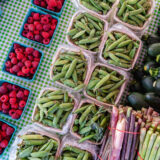
Enjoy lunch on the lawn with a variety of locally grown produce, fresh baked goods, and other specialty items at the NYBG Farmers Market.
Meet & Greet with NYBG Scientists and Environmental Organizations
12:30 to 3 p.m.; Tulip Tree Allée
Visit our Meet & Greet area to learn from NYBG Scientists and environmental organizations.
- NYBG Science
Meet with NYBG Scientists and learn about their work from researching and conserving plants locally to around the world.- Kate Armstrong, Ph.D., is an Associate Curator in the Center for Biodiversity and Evolution. Her research focuses on investigating patterns of floristic diversification throughout the Eastern Himalaya and Southeast Asia—most recently with projects in Myanmar, Nepal, India, and Indonesia. Through this work, she has also described numerous new species, worked with communities to document their traditional medicines, and supported conservation efforts.
- Eve Beaury, Ph.D., is an Assistant Curator in the Center for Conservation and Restoration Ecology. Eve’s research focuses on mapping drivers of biodiversity loss at large spatial scales, including using biogeographic analyses to inform the policy and management of plant invasions, climate change, land-use change, and their interactions.
- Matthew Fertakos, Ph.D., is a Postdoctoral Research Associate in the Center for Conservation and Restoration Ecology. Matt’s research interests lie at the intersection of biogeography, conservation, forest ecology, and invasion ecology. At NYBG he is working to understand how historical ornamental plant sales have shaped present-day patterns of invasions.
- Bronx Green-Up
The community gardening outreach program of the New York Botanical Garden provides horticulture education, training, and technical assistance to Bronx residents, community gardeners, urban farmers, local schools, and community organizations. Stop by the Bronx Green-Up table to learn more about our work and how you can get involved! - Urban Conservation Welikia Project
Meet members of NYBG’s Urban Conservation Team and explore their redesigned Welikia Map Explorer, a historical ecology mapping tool that reveals what the landscape, plants, animals, and people might have been like on your block in New York City, 400 years ago. NYBG’s research in urban conservation emphasizes the importance of nature to cities and the importance of cities to nature. - Multi-Sensory Table
Join NYBG volunteers in exploring plants and their products from the Garden’s collections through this tabletop, multi-sensory experience. Smell aromatic herbs and spices and more! - Botanical Art with the Herbarium
The William and Lynda Steere Herbarium is one of the largest collections of its kind, holding 7.8 million preserved plant and fungal specimens that have been collected over the last three centuries, from all parts of the world. Stop by to meet Herbarium staff and view herbarium collections that represent centuries of botanical exploration. These specimens are used to study climate change, documenting biodiversity and changes in the landscape both locally and around the globe. Make your own botanical art project to take home. - NYBG Continuing Education
Ready to make a deeper impact on the environment? Classes offered at NYBG equip you with the skills to become an informed environmental steward. Learn to identify native flora, track urban wildlife patterns, document observations through field sketching, and build practical skills in botany, urban naturalism, horticulture, garden design, and more. Whether you’re looking for a fun class or seeking professional development through one of our certificate programs, you’ll find opportunities to grow here. Stop by the Continuing Education table to discover where lifelong learning can take you! -
Young Women’s Leadership School of ManhattanLearn about the summer research projects conducted by the Young Women’s Leadership School of Manhattan. Students worked for six weeks in the Thain Family Forest with NYBG Horticulture and Science team members on original urban forest ecology research.
Landscapes in Dialogue: A Historical Ecology Walk at NYBG
2 p.m.
Fountain of Life
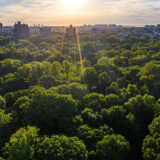
Join NYBG’s Dr. Eric W. Sanderson for a guided walk that traces the Garden’s ecological history and examines how its landscapes have changed over time. Participants will explore key sites that reveal the Bronx’s geologic and ecological origins, learn how past conditions shaped today’s environment, and see firsthand how NYBG is restoring habitats to support a resilient future. Participation is for registrants only.
This event is now at capacity.
Friday, September 25
Crop Diversity Day
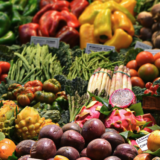
NYBG is proud to host Crop Diversity Day during Climate Week. This private event will contribute to global dialogue on food systems transformation by elevating the role of crop diversity as a foundation for healthy diets and will feature the launch of the World Food Map, mark the one year-anniversary of the launch of the Global Conservation Consortium for Food Plants, share new insights on underutilized species from the Periodic Table of Food Initiative, and more.
The annual Crop Diversity Day unites leaders and practitioners from across agriculture, conservation, nutrition, health, and finance to highlight leading-edge initiatives leveraging crop diversity to deliver healthier, more sustainable, and more equitable food systems. Stay tuned for more information from the event and how crop diversity serves as a valuable resource for the future of food.
Crop Diversity Day 2026 is organized in collaboration by the Crop Trust, the New York Botanical Garden (NYBG), the Periodic Table of Food Initiative (PTFI), and Wageningen University & Research (WUR).
If you are interested in attending, please contact science@nybg.org for more information.
Sunday, September 27

NYBG 5K Fun Run
8 to 11:30 a.m.
Celebrate the end of Climate Week NYC with NYBG’s second annual 5K Fun Run! This scenic 3.1-mile road and trail course takes runners through some of the Garden’s most gorgeous scenery, including the historic Thain Family Forest, one of New York City’s largest remaining old-growth forests, as well as the Judy and Michael Steinhardt Maple Collection. Along the way, participants will pass historic landmarks such as the Lillian and Amy Goldman Stone Mill, Mertz Building, and the Enid A. Haupt Conservatory. Your participation directly supports NYBG’s work here and around the world to protect biodiversity and develop plant-based solutions to climate change.
Hear from Experts throughout NYC
WaterWays // Sitting with Trees: How Can Artists + Scientists + Communities Work Together to Imagine a More Flood Resilient NYC?
September 22; 12 to 1 p.m.
Drop in for this CALL Conversation between Mary Miss, Eric Sanderson, Amy Motzny, and Hailey Basiouny. RSVP here.
Hort/Culture: Eric Sanderson + Legs McNeil with NonHuman Teachers
September 23; 7 to 9 p.m.
A sweeping historical tour of the great island of Manhattan and other music for uplifting gormandizers. RSVP here.
From Floodwaters to Future Planning: Lessons from Historical Streams, Ponds, and Flooding Events in Southeast Queens
September 24; 6 to 7:30 p.m.
With NYC Emergency Management (NYCEM), the New York Botanical Garden (NYBG), and Queens Public Library. RSVP here.
From Plants to People: Ethnobotany, Cultural Knowledge, and Food for Health
September 24
UN SDG Media Zone with Dr. Michael Balick, NYBG and Selena Ahmed, Periodic Table of Food Initiative. Watch the livestream.
NYBG Science
Sign up to receive ongoing news about NYBG Science’s work around the biodiversity and climate crises, and how conserving and restoring plant diversity is essential for climate resilience.
Location Ross Hall
 Location Ross Hall