2025 New Species Round Up
Matthew Pace, Ph.D., is the Associate Curator of the Herbarium.
Every year, botanists describe hundreds of new plants, algae, fungi, and lichens from across the Earth. The New York Botanical Garden is a leader in global plant biodiversity science, with researchers who specialize in the diversity of certain plant groups and regions. In 2025, NYBG Science Curators & Researchers described 46 species as new to science! NYBG Science Curators also revised an additional 6 species, creating an improved and more refined understanding of the evolutionary tree of life.
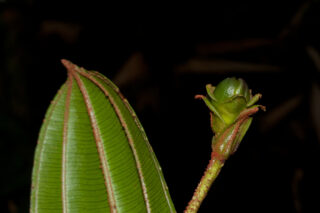
Across the new species described by NYBG Scientists, certain themes appear, including a focus on the tropics of South America and Asia, species that are very rare with urgent conservation needs, and on certain families such as the ginseng family (Arailiaceae), palm family (Arecaceae), and princess flower family (Melastomataceae). For example, Curator Fabian Michelangeli and colleagues described Henriettea pedunculata, a new species in the princess flower family that is extremely rare, collected just once in 2007 from northern Peru. A return trip to the location in 2024 did not locate any living individuals, and much of the original landscape has been converted to pasture. Similarly, Curator Gregory Plunkett and colleagues described Sciodaphyllum merense in the ginseng family as Critically Endangered, known only from a single specimen collected 40 years ago. The original site in Ecuador has been cleared for agriculture, and there is a high probability that it is now extinct. Identifying these species and their state in the environment creates opportunities for conservation by classifying them as endangered on the IUCN Red List of Threatened Species.
Systematics is the science of classifying biodiversity. Important in its own right, systematics also directly impacts conservation: we cannot conserve a species if we do not recognize it as distinct and do not have a name for it, and do not understand its evolutionary relationships to other species. A 2010 paper estimated there are approximately 70,000 plant species that remain to be described, and that natural history collections such as the William and Lynda Steere Herbarium are a primary source for finding new species. Enjoy the full story about the impactful biodiversity work of NYBG Science Curators & Researchers in 2025 by following the link below!
SUBSCRIBE
Enter your email address to subscribe to this blog and receive updates on new posts.