NYBG Continuing Education Graduation Speech, 2026
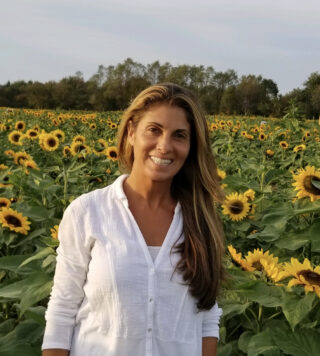
Mikkele Lawless is a Certified Horticultural Therapist and a distinguished alumni of NYBG’s Continuing Education program.
Good afternoon everyone.
What an incredible honor it is to stand here today with all of you—the graduating certificate candidates of the New York Botanical Garden Continuing Education program.
To the graduates in botanical art, botany, floral design, gardening, horticulture, landscape design, therapeutic horticulture, and urban naturalism: congratulations, truly.
Today is a celebration not only of what you have learned, but of the passion and curiosity that brought you here in the first place.
My time in the Therapeutic Horticulture program at the New York Botanical Garden was truly wonderful. I honestly cannot imagine a better place to have earned my certification.
What made the experience so meaningful was not only the beauty of this garden—let’s be honest, studying in one of the most beautiful gardens in the world certainly doesn’t hurt—but the people.
The teachers, mentors, and professionals here are deeply passionate about what they do. They are not simply teaching information. They are sharing a way of seeing the world.
Many of them have spent decades in their fields, and you can feel their love for plants, ecology, design, beauty, and human connection in every lecture. Their passion is contagious. They inspired me to think bigger about what therapeutic horticulture could be and the impact it could have on people’s lives.
My own path to this work was not linear by any means.
I started in psychology, switched to social work, explored biophilia as an art form, became a massage therapist, and then—in what still feels like a plot twist nobody saw coming—I earned a degree in computer programming. To this day, I’m not entirely sure how coding ended up in the middle of a life devoted to plants and healing. Maybe I just needed to use the other side of my brain to make sure it was still working!
Eventually, though, nature called me back. I became a feng shui consultant, a master gardener, and somewhere along the way, raised four boys—which, as it turns out, requires far more troubleshooting skills than computer programming ever did.
For a long time, my life felt like disconnected chapters. But somewhere deep down inside, I always carried this knowing that one day it would all somehow come together. And it did.
After completing my certificate in therapeutic horticulture, I started my own business bringing horticultural therapy into senior living communities.
It was not easy in the beginning. There were many moments of wondering, “Can this actually become a real career?”
But with patience, persistence, and faith, I got my foot in the door—and once I did, people began to see the power of nature connection.
Through word of mouth, I eventually found myself traveling to 12 different communities running therapeutic programs. What started as a dream slowly became a thriving business.
For the past four years, I have served on the board of the Mid-Atlantic Horticultural Therapy Network, which has been an incredibly meaningful part of my professional journey. And I had the incredible honor of becoming an instructor here at NYBG, teaching therapeutic horticulture for older adults. Returning to teach in the very program that once inspired me has been one of the most meaningful full-circle moments of my life. I truly love being able to share my experiences from the field with students—not only the successes, but the challenges, the lessons, and the moments that reminded me why this work matters so deeply. It feels incredibly rewarding to give back to NYBG and the community that gave so much to me.
Two years ago, I was offered a full-time position at an amazing senior living community working with residents in nursing homes, memory care, assisted living, adult day care, and even childcare.
Every single day, I am reminded how deeply people need connection—not only to one another, but to the natural world.
In my work in senior living communities, we often talk about what are known as the three plagues of long-term care: loneliness, helplessness, and boredom. These are conditions, commonly seen in nursing homes and senior communities, that deeply affect a person’s emotional, physical, and cognitive well-being.
Now, I realize bringing up “the three plagues” during a graduation speech may not exactly scream inspirational keynote speaker energy…
But stay with me—because I think meaningful work requires us to honestly look at what people are suffering from, and then choose to bring light, in any way that we can.
And the truth is, these plagues are not just in long-term care. They are everywhere.
Loneliness is everywhere. We are more digitally connected than ever before, yet people are starving for genuine connection—to feel seen, understood, and truly present with one another without distraction.
Helplessness is everywhere too. People long to feel useful, needed, and capable of contributing something meaningful to the world around them.
And boredom—not simply “I have nothing to do” boredom, but a deeper, spiritual boredom. A disconnection from awe, wonder, creativity, beauty, and presence.
And this is where your work matters so deeply.
Every discipline represented here tonight has the power to heal these conditions in profound ways.
The botanical artists remind us to slow down and truly observe the intricate beauty of the natural world.
The botanists deepen our understanding of plants, ecosystems, and the interconnectedness of life itself.
The floral designers bring beauty, emotion, and meaning into some of the most important moments of human life: celebration, love, remembrance, comfort, and grief.
The gardeners nurture living spaces that feed not only the body, but the spirit.
The horticulturists create environments where both people and plants can flourish together.
The landscape designers shape spaces that invite reflection, gathering, restoration, and connection.
The urban naturalists remind us that even in the middle of concrete, traffic, and busy lives, nature is still there waiting for us to notice it.
And the therapeutic horticulture practitioners witness every day how interaction with nature can restore something essential within all of us.
All of this work matters because all of it reconnects people—to beauty, to purpose, to one another, and ultimately, back to themselves.
What I have learned is that healing often happens quietly. Sometimes healing looks like the scent of a honeysuckle wafting through the air, bringing back childhood memories of days long past. Or the bond that forms between a person and a plant, watching it go dormant every winter and reblooming every spring. And sometimes healing looks like someone sitting silently with their hands in the soil and finally exhaling for what feels like the first time all week.
In my communities, we work to gently counter those three plagues. We foster companionship—not only through relationships with people, but with plants and the natural world itself. We encourage contribution by giving residents meaningful opportunities to care for something living. And we promote creativity, novelty, beauty, and surprise—because humans need those things at every age.
I have seen firsthand how nature reawakens people. And honestly, I think many of us entered these fields because nature first reawakened something in us. Maybe it was the scent of honeysuckles that brought you back to a time long ago. Or the smell of tomato plants in summer. Or maybe just a moment when you realized you felt more like yourself outside than anywhere else.
Nature reminds us that life is cyclical.
That dormancy is not failure.
That growth takes time.
That healing is rarely linear.
And perhaps that is part of why this work matters so deeply right now. We are living in a time where people are exhausted. Distracted. Overstimulated. Disconnected from the rhythms of the natural world and often from one another.
Your work offers something radically important.
You offer beauty.
Connection.
Presence.
Wonder.
Meaning.
Restoration.
And no matter which discipline you are graduating from; I hope you never underestimate the impact your work can have on another human being. You may design a landscape that becomes someone’s place of peace during grief. You may teach someone how to grow food for the first time. You may create floral work that helps mark a sacred life moment. You may inspire a child to notice birds, trees, insects, or seasons in an entirely new way. You may help someone feel less alone.
That matters deeply.
For many of us here today, this may not be our first career. It may be a second, third, or fourth chapter. Or in my case, the ninth chapter… but who’s counting. Some of you may have completely changed directions to be here. And some may still be figuring out exactly where this path will lead. But I think we all share something in common:
In some way… we have all been called to the plants. Something drew us here.
Maybe it was beauty.
Maybe it was healing.
Maybe it was curiosity.
Maybe it was burnout from another career and the realization that you needed something more meaningful, more alive, more rooted. But plants have a way of calling us back to ourselves. And I think that calling matters.
As you leave here today, I hope you continue to stay curious. Continue learning. Continue observing. Continue allowing yourselves to be inspired by the people and ecosystems around you. And perhaps most importantly, continue nurturing your own relationship with nature. Because to truly care for the world around us, we must remain connected to it ourselves.
The New York Botanical Garden gave many of us more than an education. It gave us community. It gave us inspiration. It gave us belonging. And it gave us a deeper understanding of what it means to be truly alive and in relationship with the living world around us.
So today, celebrate yourselves. Celebrate how much you have learned. Celebrate how much you have grown. Celebrate the courage it took to begin something new. And trust that the seeds planted here—in yourselves and in one another—will continue growing in ways you cannot yet imagine.
Congratulations, Class of 2026. And thank you.
SUBSCRIBE
Enter your email address to subscribe to this blog and receive updates on new posts.