Climate Week 2026 Champions a Greener City
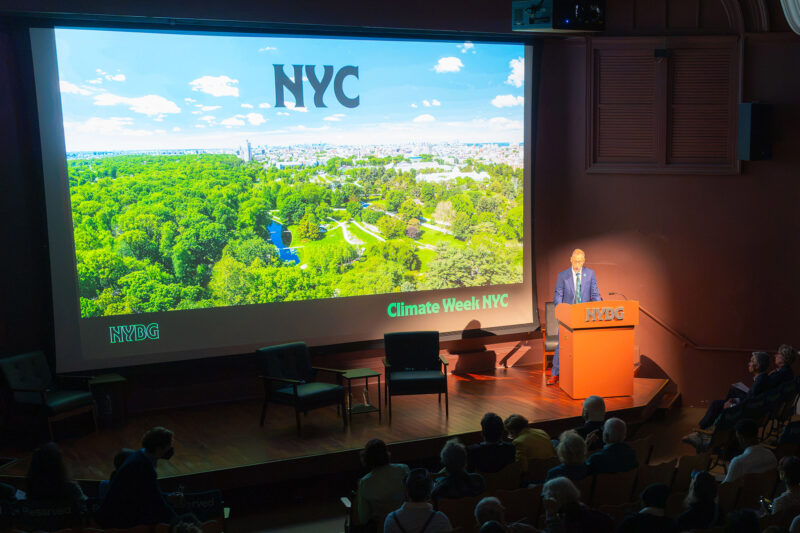
Dr. Mauricio Diazgranados, NYBG Dean of Science and Chief Science Officer, welcome attendees to the September 23 keynote and panel discussion.
With over 300 people in attendance at the New York Botanical Garden for this year’s keynote and panel discussion, Climate Week’s highlight event on Wednesday, September 23 proved a momentous occasion as guests joined us from a wide variety of backgrounds and expertise.
Designing Resilient Cities
Dr. Timon McPhearson, Founding Director of the Urban Systems Lab and Professor at NYU Environmental Studies, took the stage in Ross Hall for the first presentation of this year’s overarching theme—”Nature Your City,” a concept crucial to creating climate-resilient, equitable, and livable cities as we face the daunting dual crises of climate change and biodiversity loss.
“What does this city look like in 30 years?” Dr. McPhearson began. “Will nature be at the center of that vision, or the edge of it?”
What followed was a wide-ranging lecture discussing not only the growing challenges city dwellers face—exponential increases in major weather events that were previously considered once-a-century occurrences, and heatwaves dominating the calendar—but the readiness and opportunity within cities to lead humanity in adapting to our changing world.
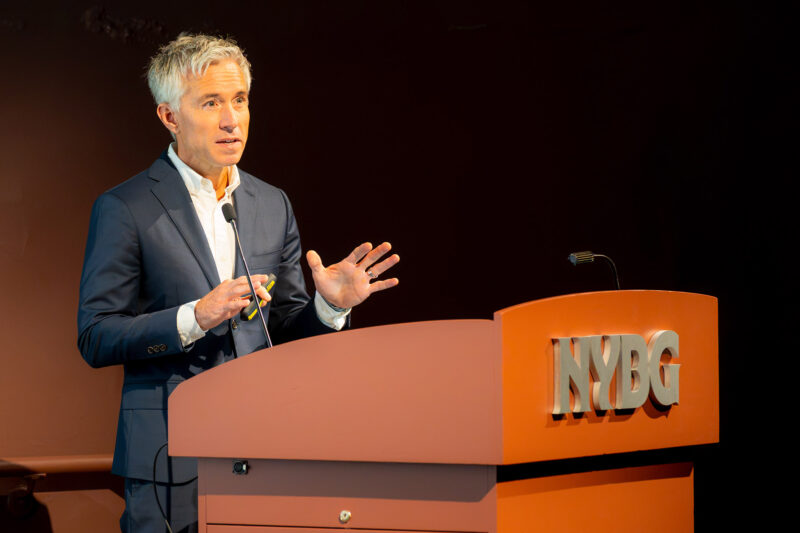
Dr. Timon McPhearson, Founding Director of the Urban Systems Lab and Professor at NYU Environmental Studies, begins the day’s talk with his keynote presentation, “Designing Resilient Cities: Nature-Based Solutions for an Urban Planet.”
At the same time that extreme weather events are becoming common, cities are also seeing rapid population growth: 4 out of 5 U.S. residents already live in cities, and 2.5 billion more people are projected to live in cities globally by 2050. Dr. McPhearson stressed that the cities we shape today will be where the majority of people call home in the near future.
“Everything we care about is stacked up in cities,” he continued. “Cities produce 80% of global GDP. If you think about the power cities have to change the world, it’s right here, right? But [cities are] also producing 70% of emissions. That gives us both the responsibility and the opportunity to determine how we lower that risk.
“The science is clear now that the most widely beneficial way to adapt a city to what’s ahead is what the garden has been working on for 135 years. And that’s nature.”
Cities aren’t waiting on leadership. As of 2026, 337 cities around the world have established net-zero emissions goals, triple the number from 2021. Here in New York City, efforts like Local Law 97 and the Urban Forest Plan are driving deep emissions reductions across the boroughs’ building stock, and aiming for a 30% increase in tree cover in the coming years, helping lower temperatures and improve health and livelihood city-wide.
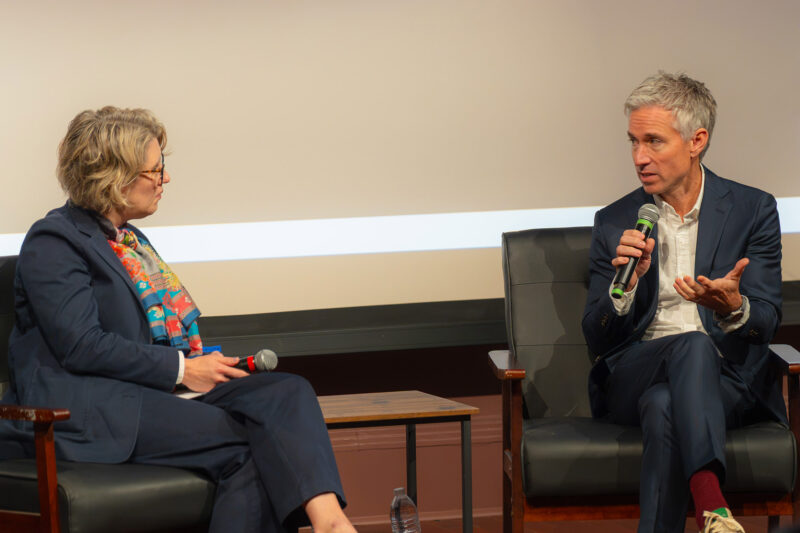
Jennifer Bernstein, CEO and The William C. Steere Sr. President of NYBG, joins Dr. Timon McPhearson for a post-keynote discussion.
While these efforts are only a small portion of what’s needed for NYC to adapt and mitigate our climate’s changes, there’s a bright future if we continue to ramp up our adaptations. With radical greening—expanding our disconnected patches of green space to create seamless green corridors throughout the city—we can achieve the vision of cities in nature. Proper financing can help nature grow alongside our economy. And when we prioritize nature for all, everyone in the city stands to benefit from greater protection against weather events, as well as improved physical and mental health through engagement with our living environment.
“If cities get this right, 20 years from now, 25 years from now, what will it feel like to live in the urban environment you imagine?” Dr. McPhearson said. “… There’s this incredible opportunity for us to have a feeling of connection to nature and also safety and security that we don’t have right now. So let’s get it right.”
Cities as Climate Catalysts
Following this inspiring keynote, NYBG’s Dr. Eric Sanderson, Vice President for Urban Conservation, took the stage for the panel discussion “Cities as Climate Catalysts: Science-Driven Solutions for People and Nature,” alongside what he called “the Mount Olympus of Urban Ecology.” Joining him were Dr. Karen Seto, Yale University, an expert on urbanization and its impacts on climate change, biodiversity, and food systems; Dr. Diane Pataki, National Wildlife Federation, an ecologist whose work focuses on interactions between urbanization, landscape, management, and biodiversity; and Dr. Steward T.A. Pickett, Cary Institute of Ecosystem Studies, a scientist renowned for his contributions to urban ecology, social-ecological systems theory, and the study of natural disturbance and recovery.
-
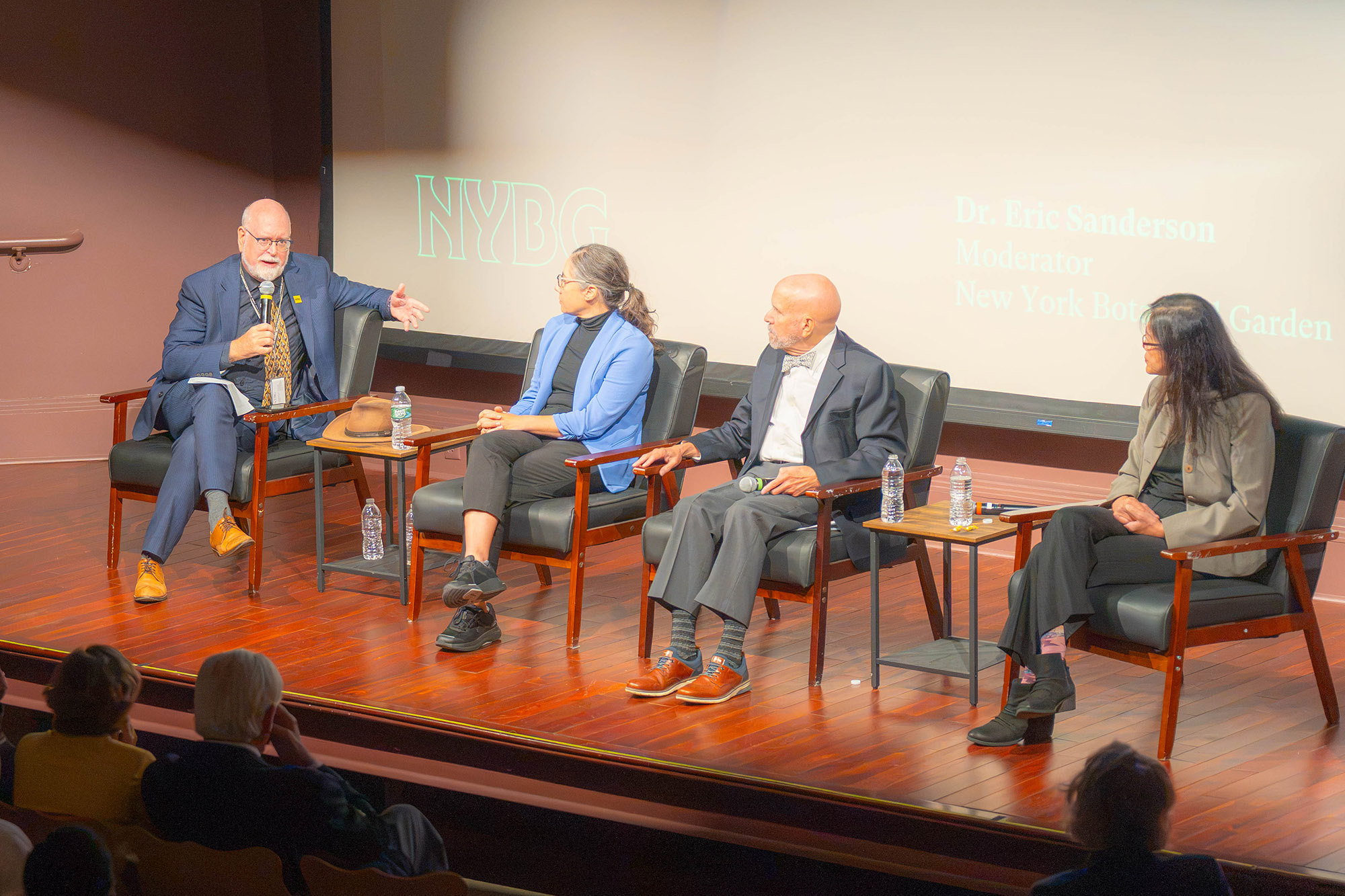
- NYBG's Dr. Eric W. Sanderson, Vice President for Urban Conservation, kicks off the day's panel discussion, "Cities as Climate Catalysts: Science-Driven Solutions for People and Nature."
-
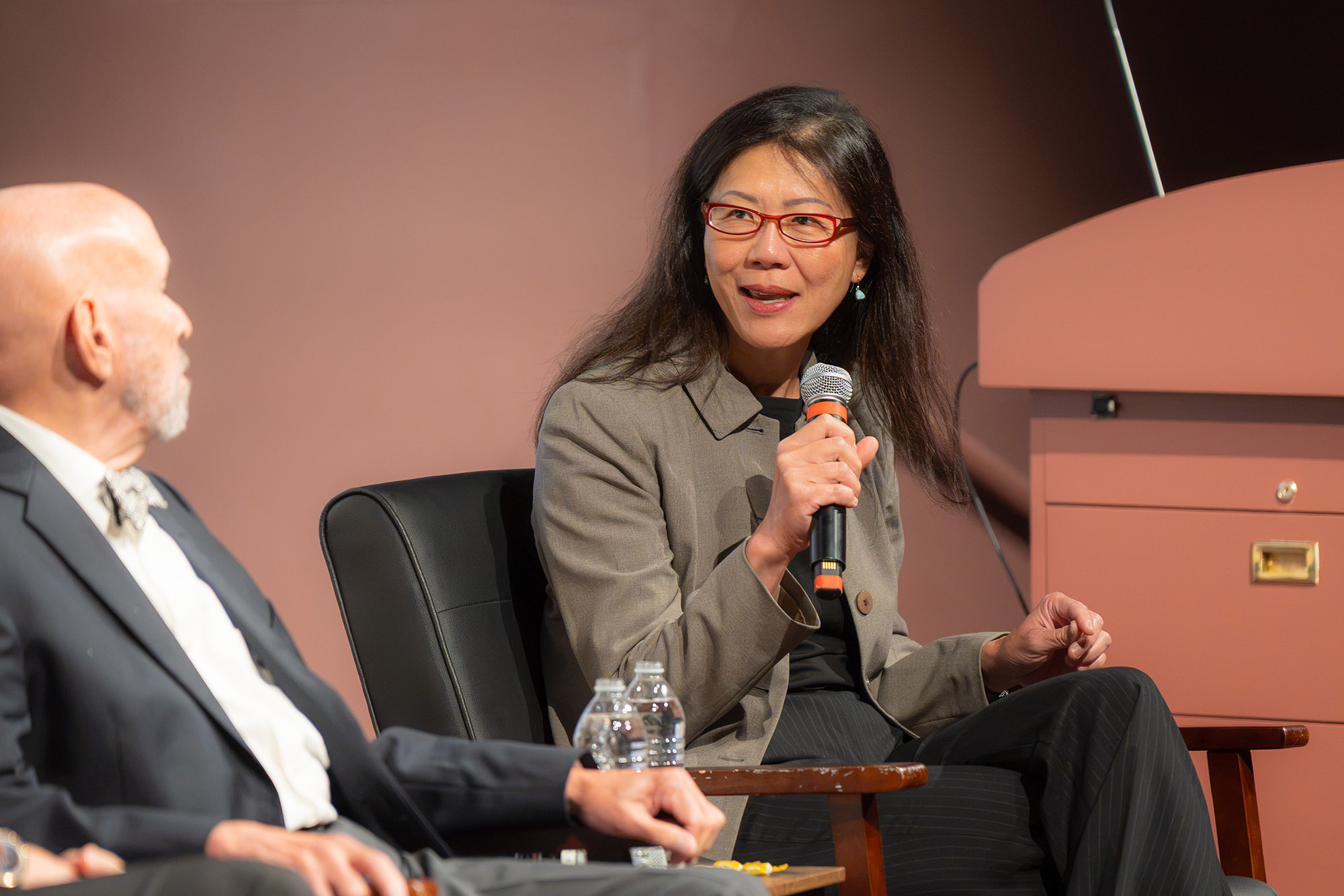
- Dr. Karen Seto, Frederick C. Hixon Professor of Geography and Urbanization Science, Yale University; Director of the Hixon Center for Urban Sustainability; Co-Director of the Yale Center for Geospatial Solutions
-
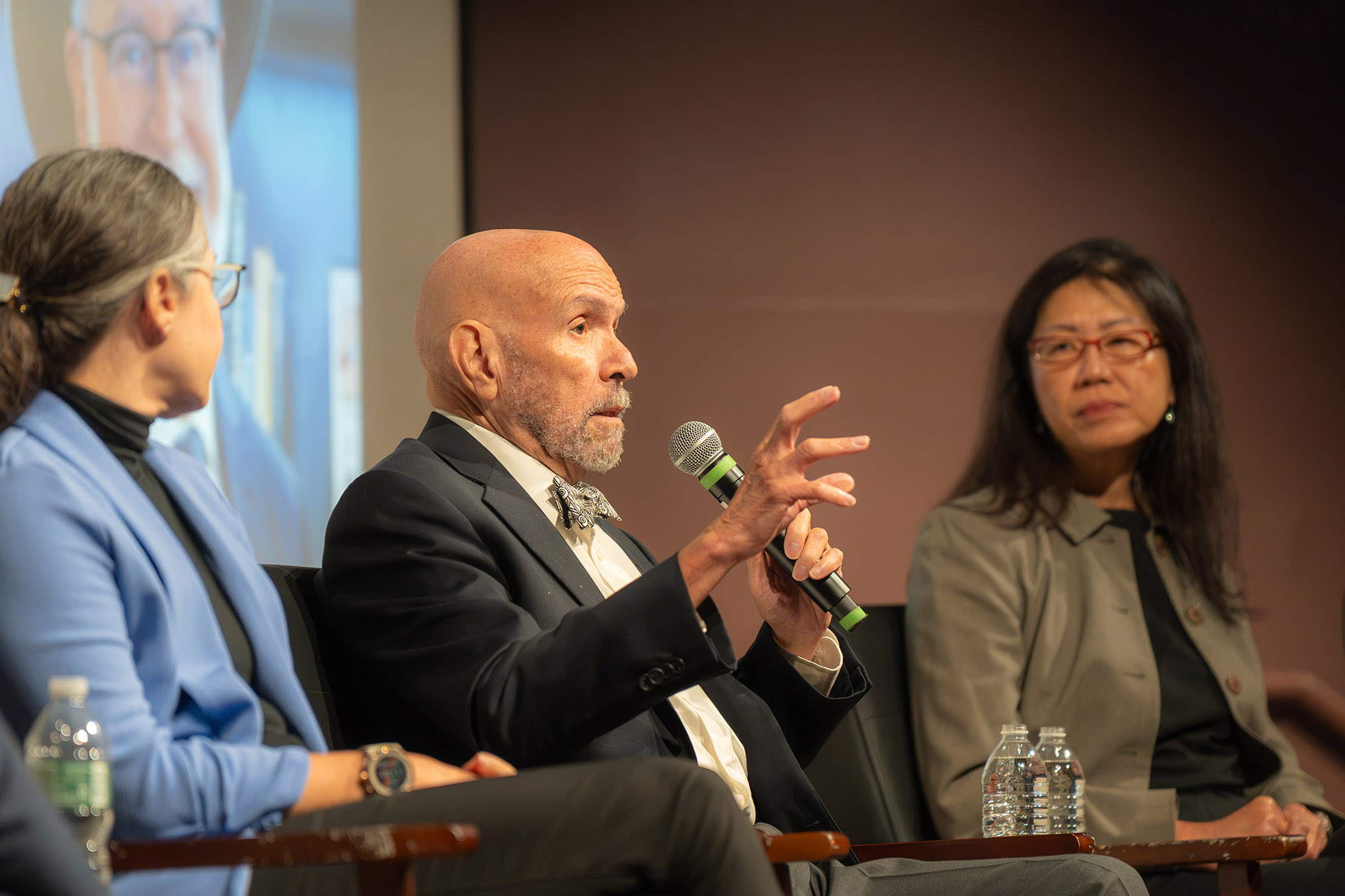
- Dr. Steward T.A. Pickett, Distinguished Senior Scientist, Emeritus, from the Cary Institute of Ecosystem Studies
-
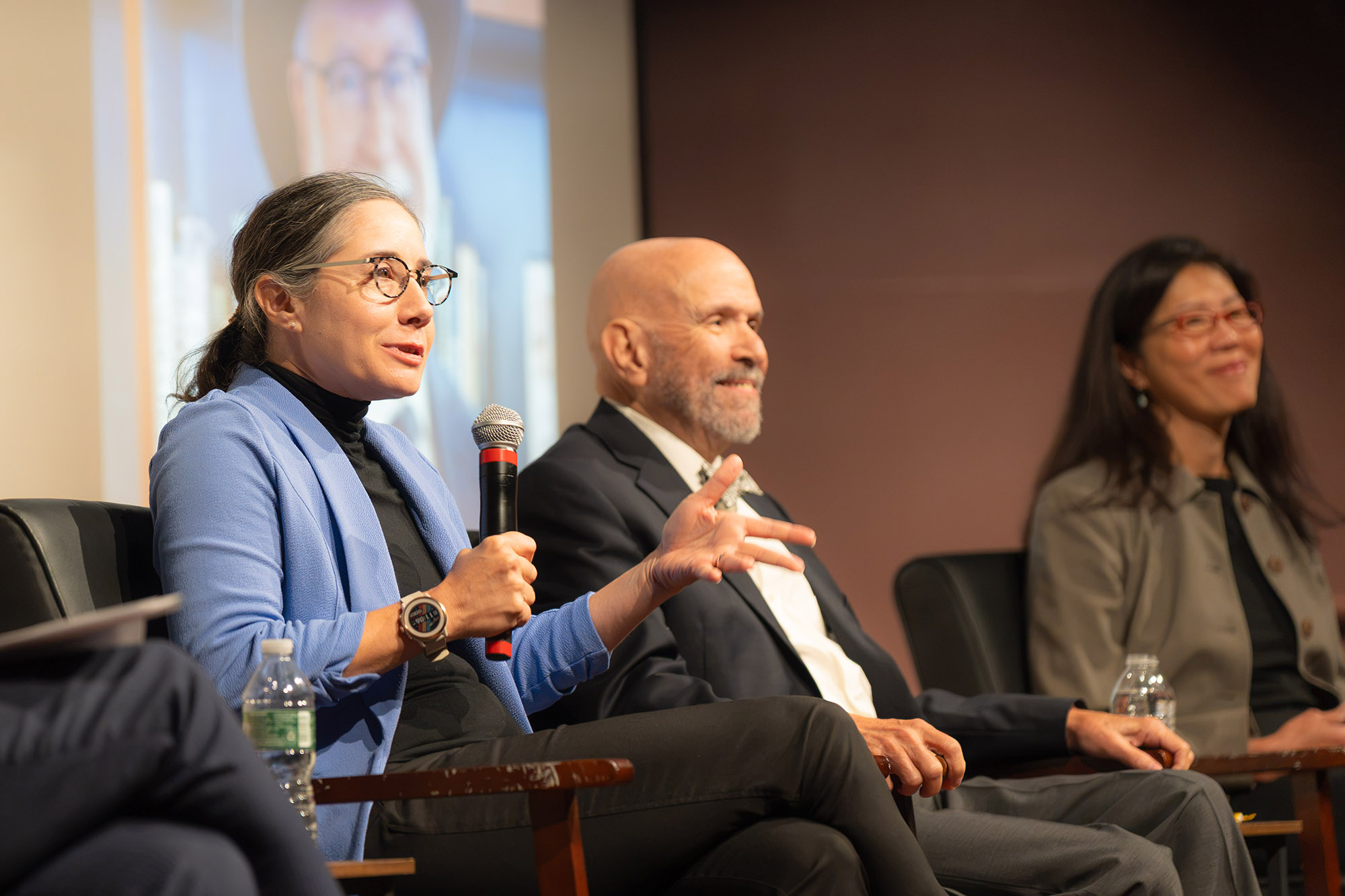
- Dr. Diane Pataki, Chief Scientist and Vice President for Science, National Wildlife Federation
Together, the panel further dissected many of the themes present in Dr. McPhearson’s keynote.
“We’ve forecasted [global] urbanization and if we convert that to the land requirements, it translates to an area equal to 20,000 American football fields every day being converted into cities and towns,” Dr. Soto said. “We cannot build future cities the same way we have been building cities in the past. Radical greening will change how we build cities to conserve what [nature] is already there.”
Dr. Pickett went on to address the traditional division between nature and cities, and why it must become outmoded for positive urbanization in the future. “What is a city? What is a city for? What are the sort of connections between cities and things that are not recognized as cities?” he said. “We need to think about cities much more as systems, as aggregations, as interactive things, not as different from nature. Do away with the dichotomy of nature versus cities.”
And far from a 35,000-foot view of radical greening dictated by federal government, Dr. Pataki believes the future is in local hands. “The next wave is going to be local,” she said. “It’s going to be about local action and communities at the civil level. Because we have so much agency in cities. What about city council, city representatives? You have a lot more agency over what happens at that level, and you’ve got a lot of agency over what happens in your backyard.”
The panel discussion concluded with a Q&A—and a decidedly hopeful outlook for humanity’s future adaptation to our changing planet, be it in a city or elsewhere. In a place like New York City, where our green spaces are treasured and the world is watching, there’s infinite possibility in how we blur the line between nature and the built environment to create a sustainable, biodiverse, and inclusive urban future.
Building Partnerships and Dialogues Across NYC
After the keynote address and panel, the day’s events continued outside at the NYBG’s weekly Farmers Market. Visitors perused the market vendors for local produce while scientists and environmental organizations came out to chat about their work, including NYBG plant conservation researchers, and students from the Young Women’s Leadership School of Manhattan, who presented their summer research on urban forest ecology.
-
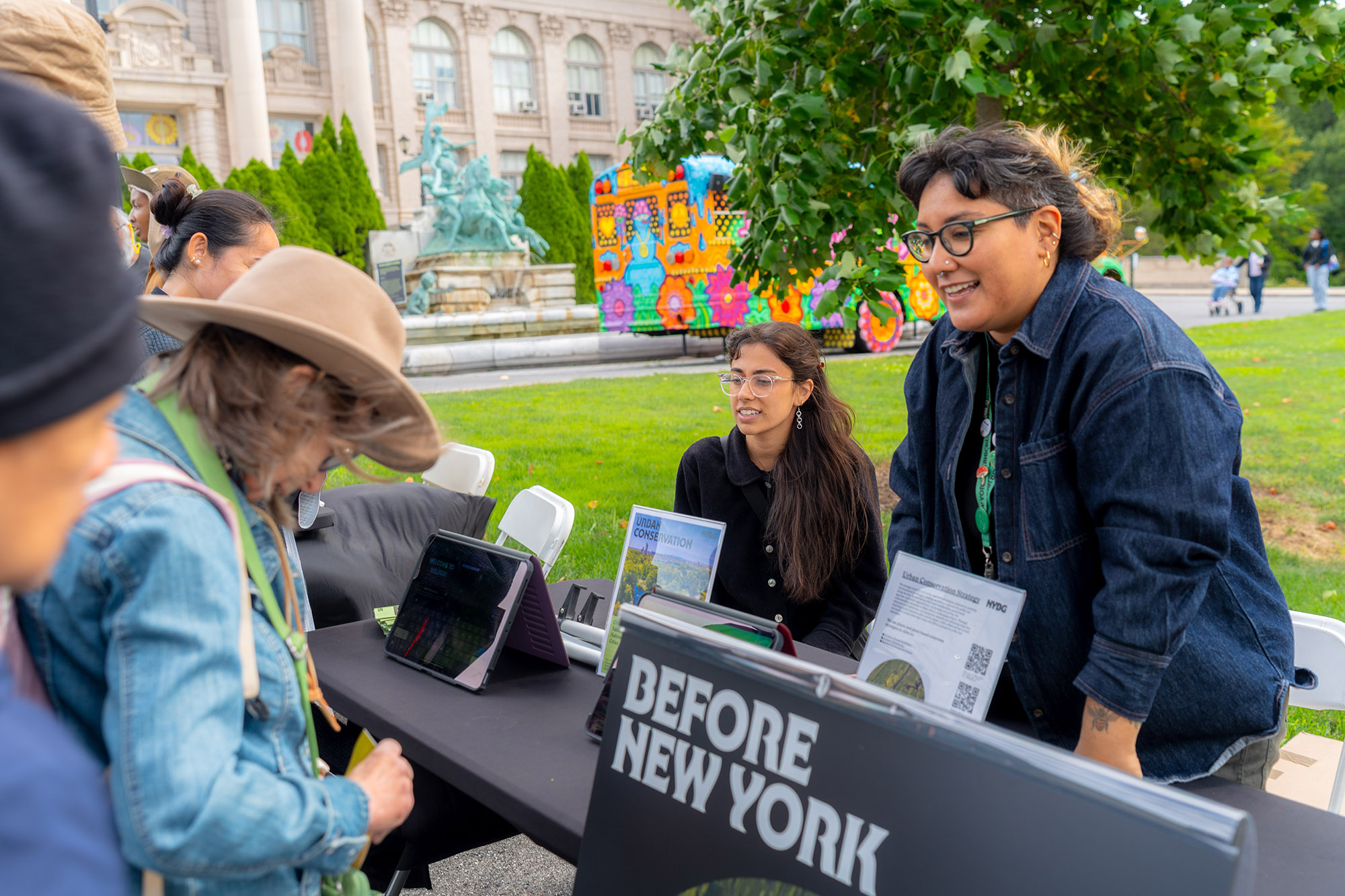
- NYBG Urban Conservation staff share Before New York information with visitors.
-
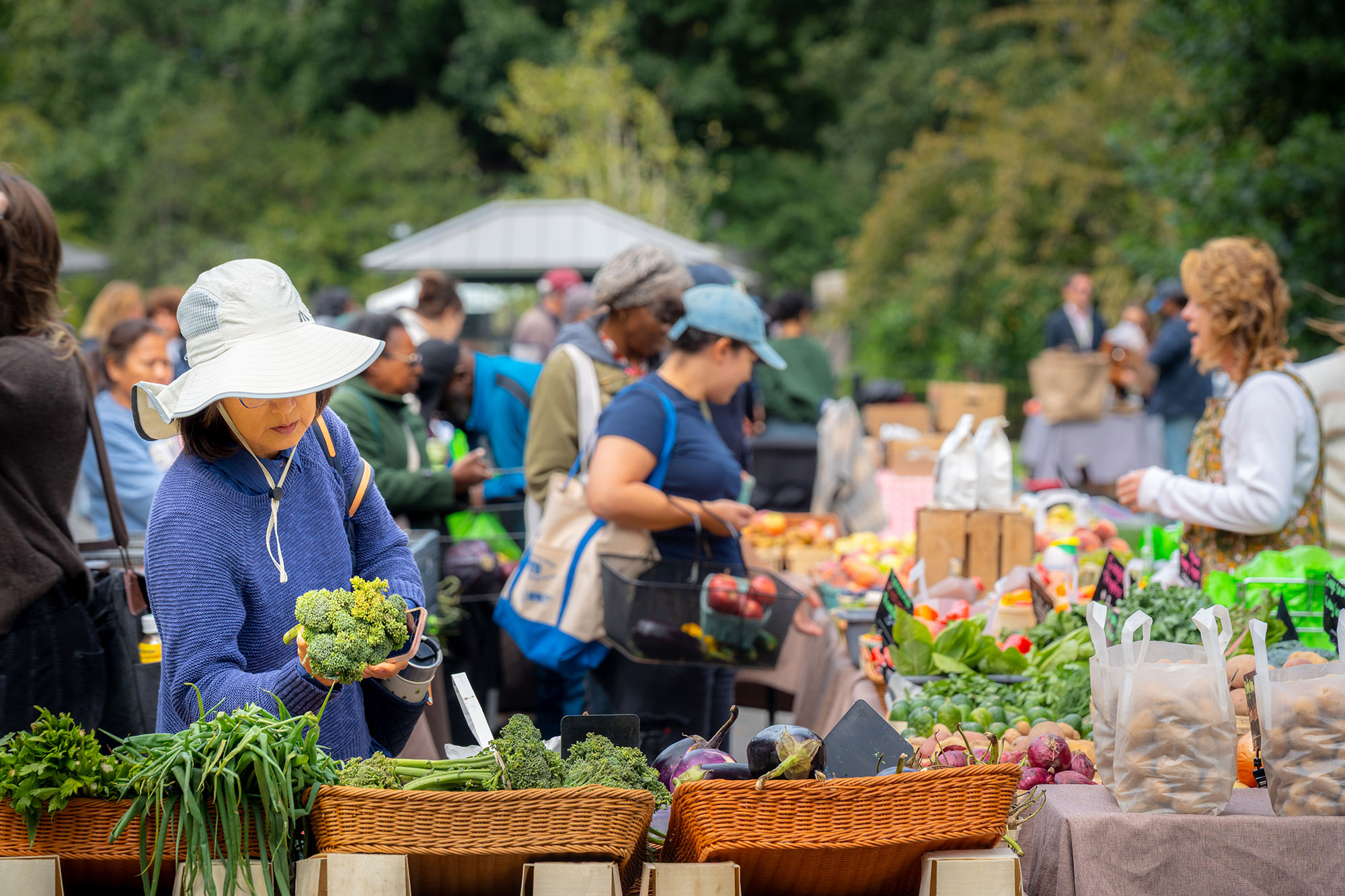
- The weekly NYBG Farmers Market invited guests to stock up on early fall favorites after the day's presentations.
-
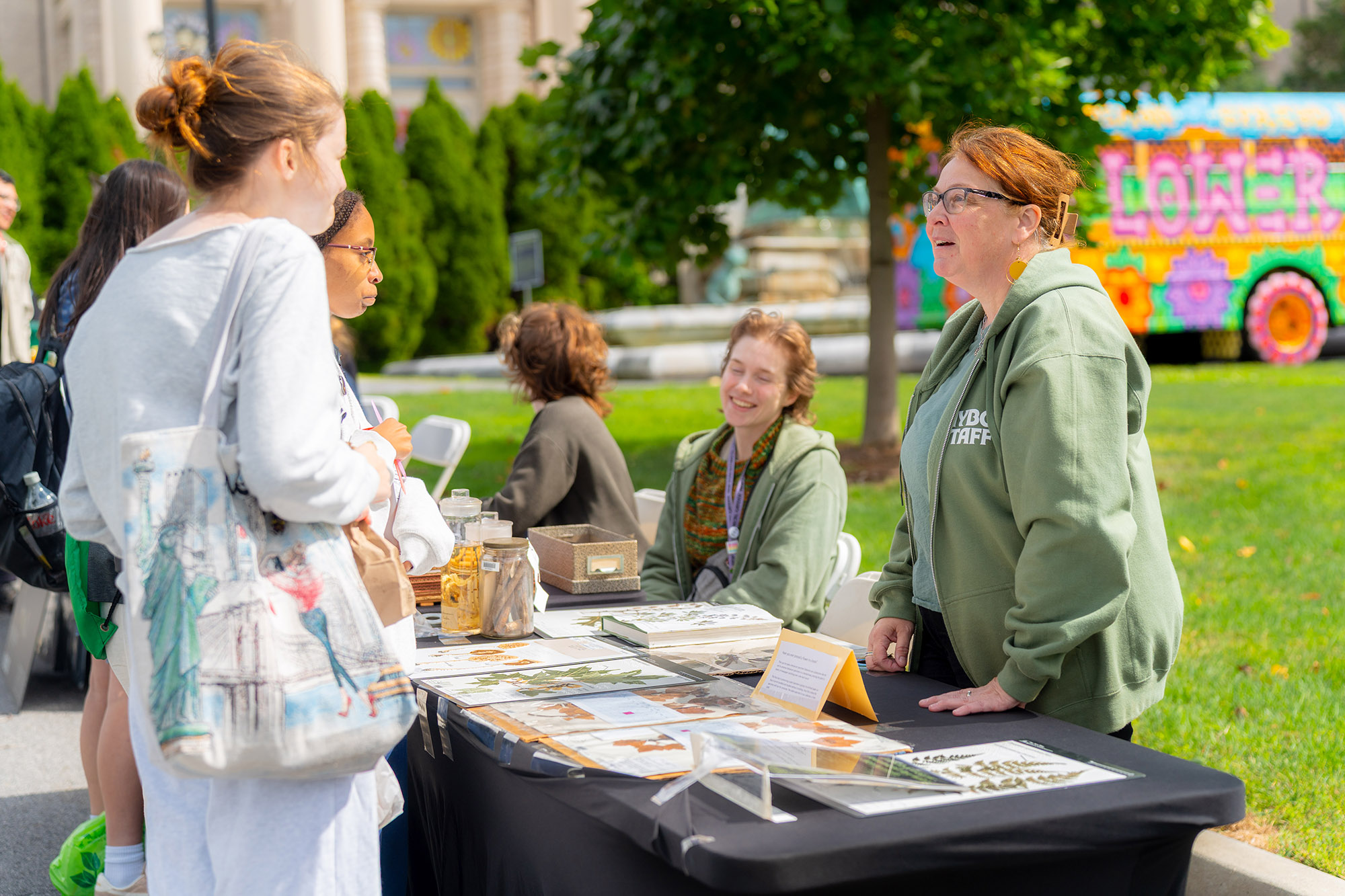
- Steere Herbarium staff were on hand to give attendees a glimpse into the diverse and historic plant specimen collections in the archives.
-
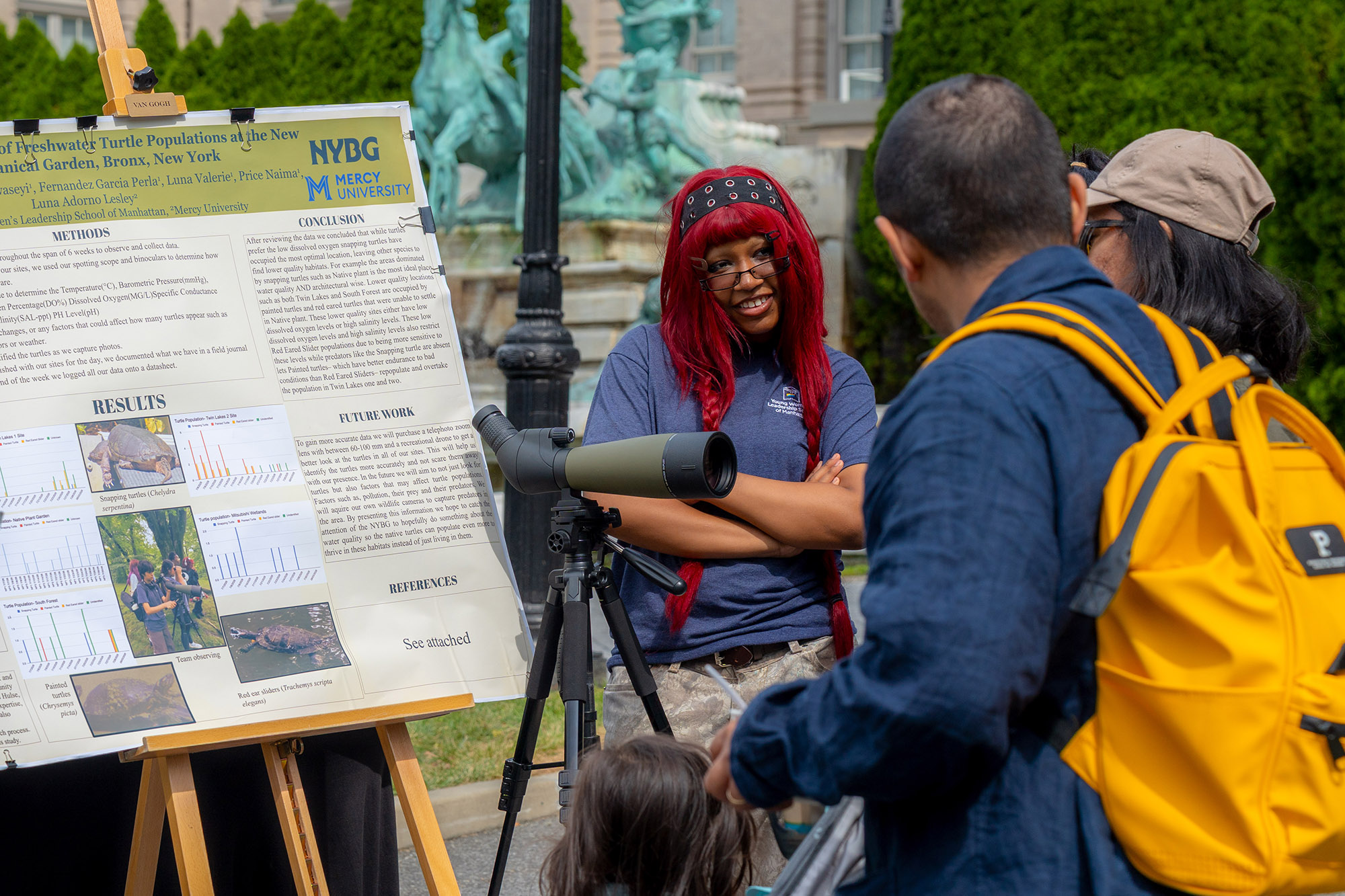
- Students from the Young Women’s Leadership School of Manhattan presented their summer research on urban forest ecology.
-
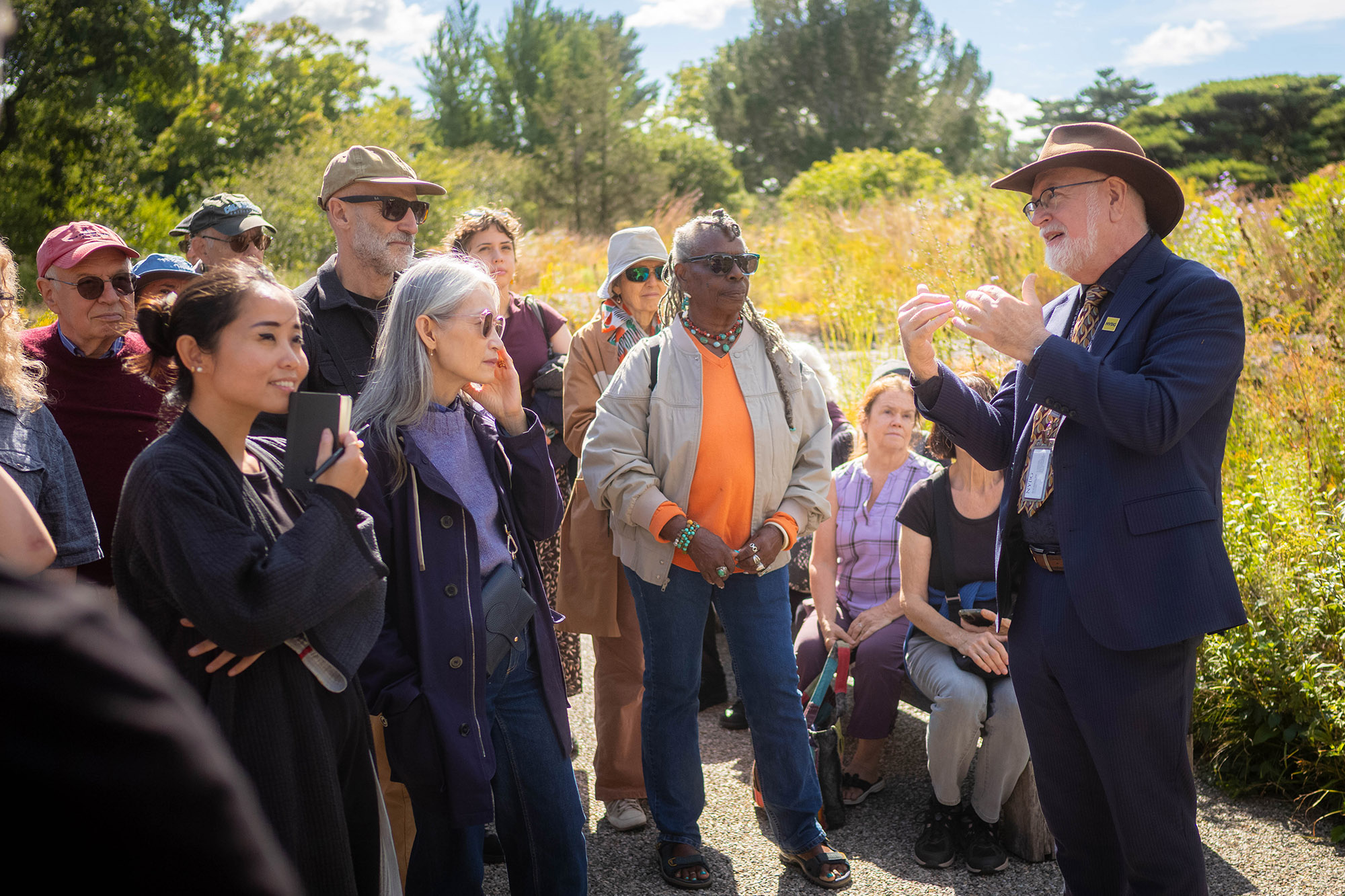
- Dr. Eric W. Sanderson shares insights into the Garden's ecological history with a group of visitors in the Native Plant Garden.
-
-
Crop Diversity Day
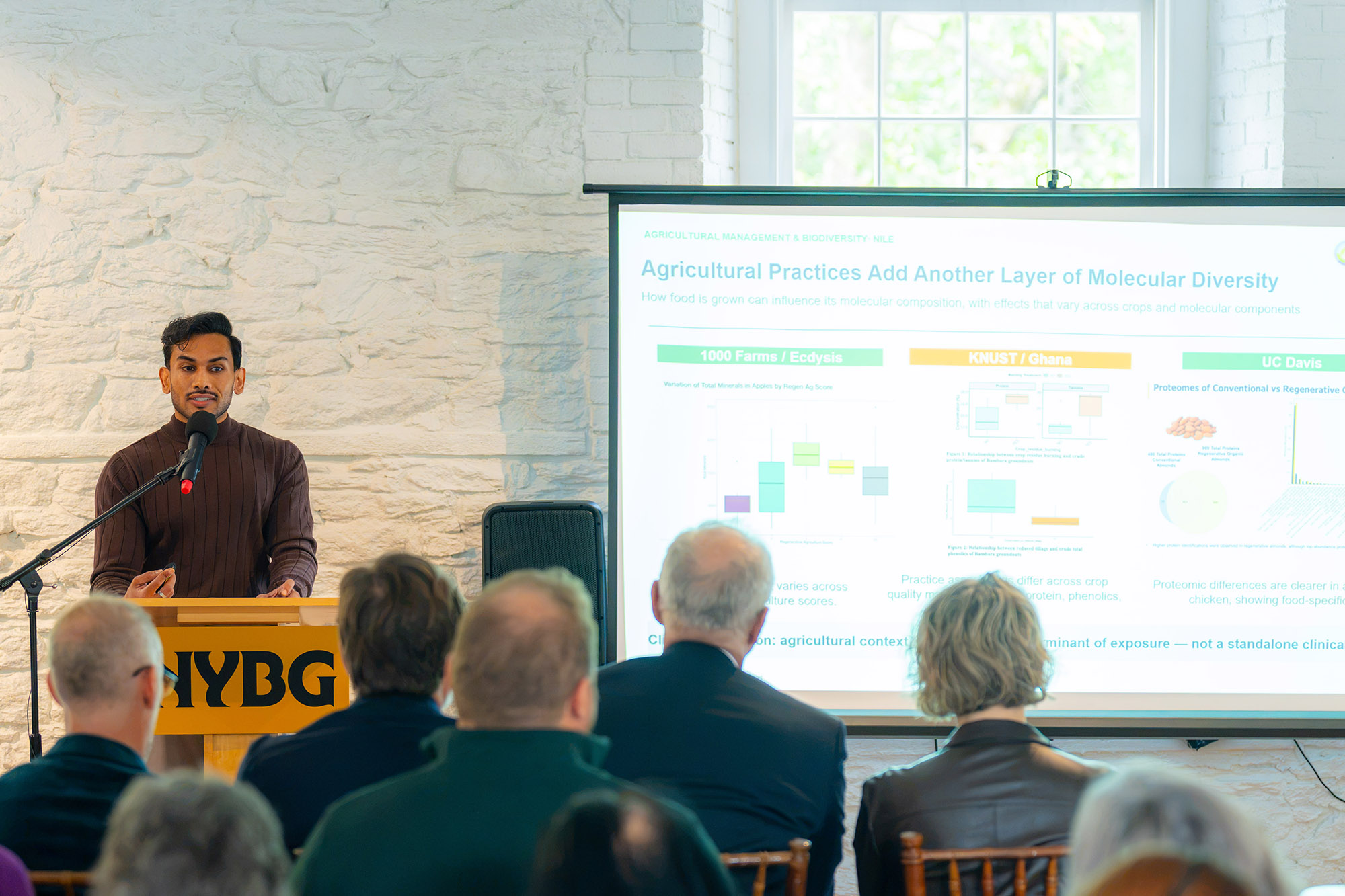
Guests gathered in the Stone Mill for Crop Diversity Day's presentations.
-
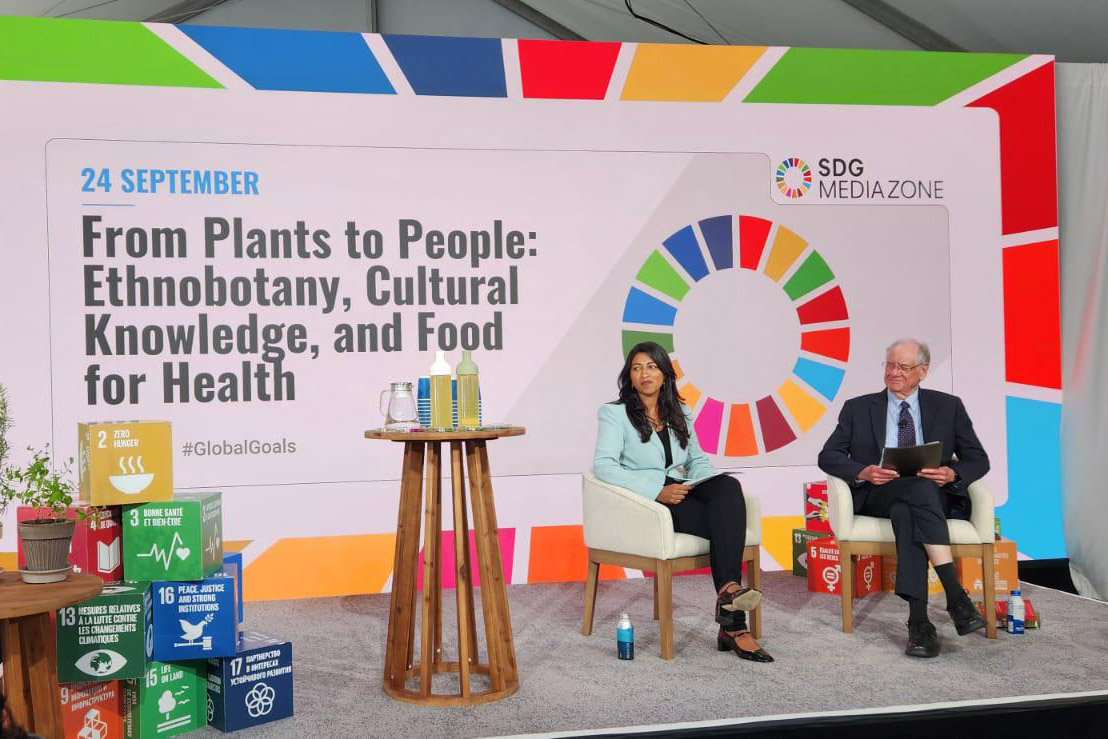
- Dr. Salina Ahmed, Global Executive Director of the Periodic Table of Food Initiative, Dr. Michael Balick, NYBG's Vice President for Botanical Science, take the stage at the 81st Session of the UN General Assembly
Dr. Eric W. Sanderson also led a guided walk in the Garden’s Thain Family Forest, giving participants a special look into The Bronx’s ecological past, present, and future.
Rounding out the week, a number of events both on-site and elsewhere in NYC continued the discussion of naturing our city, with the Before New York pop-up exhibition at Pier 57, and a talk featuring Dr. Mike Balick at the SDG Media Zone during the 81st Session of the UN General Assembly.
NYBG also hosted Crop Diversity Day on Friday, September 25, bringing together experts to contribute to global dialogue on food systems transformation by elevating the role of crop diversity as a foundation for healthy diets. Included in the day’s events were the launch of the World Food Map; a keynote from Arielle Johnson, author of Flavorama; and a commemoration of the first year of the Global Conservation Consortium for Food Plants.
Be sure to check out the full recordings of this year’s Climate Week keynote and panel discussion, and we look forward to seeing you at next year’s event for new insights into our changing planet from the world’s top experts.
SUBSCRIBE
Enter your email address to subscribe to this blog and receive updates on new posts.